


Dear readers, can I briefly take you back to February 2014? I realize many of you might want to return there for real and stay, given the state of the world today, but I have a special reason for this imaginary time travel experiment.
Opinion
Things were looking pretty good for Wyoming then. The state had a budget surplus of $238 million heading into the legislative session, plus $1.7 billion banked in a “rainy day account.” Lawmakers had tackled a pretty big problem the year before by raising the state fuel tax by a dime per gallon.
Just like today, tax increases weren’t popular. But the 14-cent per gallon tax on gasoline and diesel was the lowest in the country and hadn’t been raised since 1998. In 2013, the state had about a $100 million shortfall for its highway construction and maintenance budget.

Legislators didn’t think they could raise the whole amount by increasing the fuel tax, but they passed a bill that got them part of the way. The dime-per-gallon hike to 24 cents brought in $47 million to build and fix state roads, $16 million for county roads, and $8 million for local roads and state parks.
In February 2014, the Wyoming Department of Transportation asked then-Gov. Matt Mead for $50 million from the general fund to catch up with its backlog of road-building and maintenance projects.
Mead was a strong supporter of the fuel tax increase the year before, which took some political courage. I recall it was the No. 1 area of criticism from voters and his opponents in his re-election campaign.
But the governor balked at the Wyoming Department of Transportation’s $50 million request, which I saw as short-sighted given the state’s fiscal situation. This was my “Drake’s Take” after he told the department no:
“Given the importance to our economy and the health of our people in maintaining a safe roads system, the failure of our government to address our highway problems when we have the funds to do so is inexcusable.”
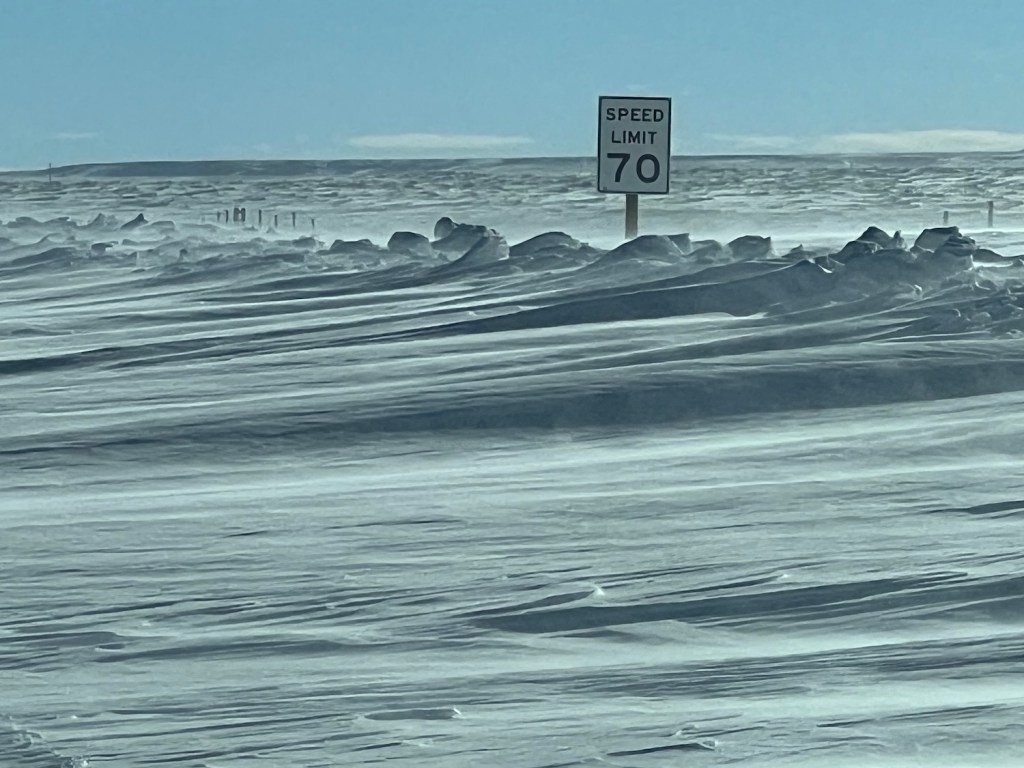
Let’s return to the present. I still agree with myself — I usually do — and contend that Wyoming’s decision not to invest in our highways when we’ve had opportunities to do so is the primary reason WYDOT is now facing a $400 million annual shortfall in state highway funding. That would be a big deal in any state, but let’s not forget Wyoming roads must withstand months of brutal winter conditions each year. Anyone who’s driven on an icy Wyoming road knows what’s at stake.
The Joint Transportation, Highways and Military Affairs Committee voted 7-5 against sponsoring a fuel tax increase. A working group developed a draft bill to raise the tax by a dime — 5 cents in 2026 and another nickel in 2028 — which was whittled down to just 5 cents, but that was still too much for the panel.
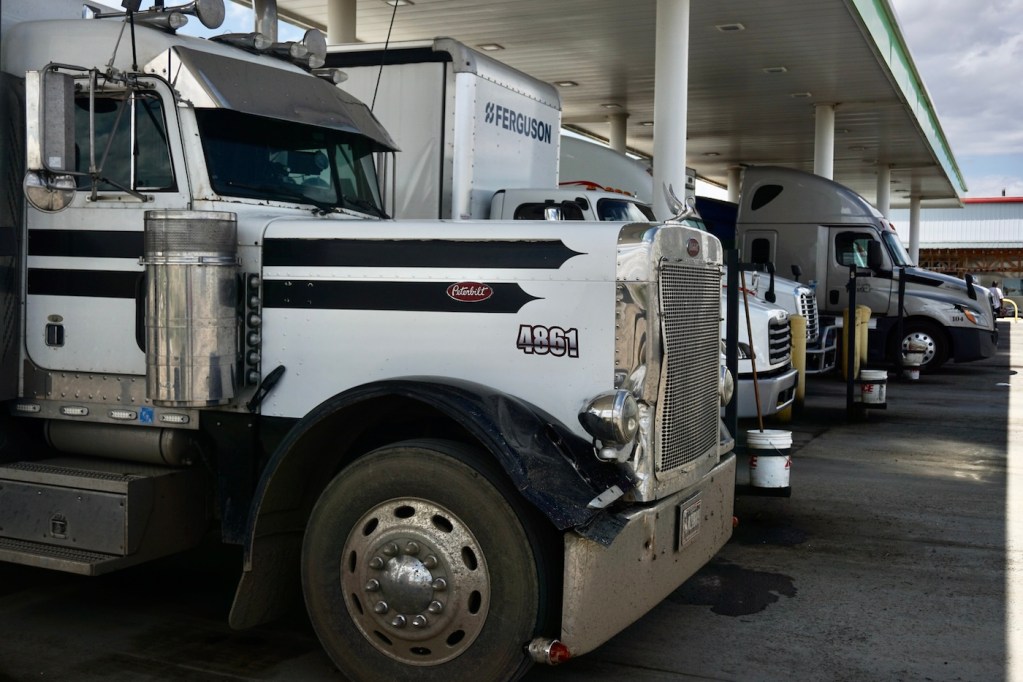
Someone may sponsor a bill during the upcoming legislative session, but in a budget year, which requires two-thirds support to be introduced, it has no chance. Even if it could make it past the far-right Freedom Caucus that controls the House, the notoriously anti-tax Senate would kill it.
There’s no way to accurately determine how much lower today’s WYDOT shortfall would be if the Legislature had been willing to pass another fuel tax hike since 2013, but I think it’s safe to say the figure wouldn’t have ballooned to $400 million a year.
In 2019, WYDOT’s highway budget was only $79 million underwater. A bill to index the fuel tax to the rate of inflation — a popular strategy in other states — died when it wasn’t assigned to a committee.
Wyoming lawmakers blew their chance to keep pledges not to raise taxes out of the political equation. Legislators wouldn’t need to explain their votes every year, because a variable-rate fuel tax structure would allow the state to automatically raise sustainable gas tax revenues long-term.
Even a three-cent-per-gallon increase the next year couldn’t pass, though its main proponent, then-Rep. Tim Hallinan, R-Gillette, promised it was so small “it won’t hurt anyone.” To no avail, he tried to explain that the 3 extra cents would at least allow the state to keep up with inflation through 2022, when the issue could be addressed again.
In the 2022 session, the Transportation Committee considered two proposals to boost highway funds, and only one was a tax increase.
The more conventional measure would have increased fuel taxes by 5 cents in each of the next three fiscal years. It would have raised an extra
$22.5 million in FY 2023, $44.9 million in FY 2024 and $67.4 million in FY 2025.
But it never got out of the starting gate as the House leadership wouldn’t hold a vote to introduce it.
The most intriguing, out-of-the-box suggestion was made by then-Rep. Jerry Obermueller, R-Casper. He convinced the Transportation Committee to sponsor a Senate bill to divert mineral severance tax monies that normally go to the Permanent Mineral Trust Fund and earmark them for highways ($60.9 million) and community colleges ($26.1 million).
That one did get an introduction vote but fell six votes short in the Senate.
Improving the state’s highway infrastructure is a goal that legislative leadership likes to claim as a priority, but the track record over the past dozen years proves it actually isn’t even on their radar.
So what happens next? Will Wyoming be staring at an $800 million highway budget shortfall by the end of the decade, or can the Legislature find a way — through fuel tax hikes or other means — to finally provide a stable revenue source?
After the latest fuel tax increase failed to get out of the Transportation Committee, Co-chair Sen. Stephan Pappas, R-Cheyenne, suggested lawmakers may be forced to cover highway costs with general fund dollars.
If the Legislature can’t find the political courage to raise taxes, implement an indexing system to cover inflation, or divert Permanent Mineral Trust Fund revenue streams to highways, the general fund may indeed be the only place to go. But there’s so much competition for those monies, I fear the highway funding crisis will continue to spiral out of control.
Remember our initial experiment, when we pretended to go back to February 2014? That relatively small $50 million WYDOT request denied by the governor would have come from the sacrosanct general fund, which was apparently too important to be raided for highways.
In my experience as a Wyoming-watcher, the state often repeats its mistakes or fails to recognize them as mistakes. If we don’t want to be remembered for having the nation’s most treacherous roads or biggest collection of potholes, we need to get our act together.


Legalize pot. How much money for ganja is being spent in colo and Montana? We can do it and increase revenue exponentially.
I’ve read this opinion piece about four times trying to come up with something but to no avail .
A lot of Wyoming economy is directly affected by how good the roads are.
Wyoming is heading to a big train wreck or maybe a big car wreck or maybe just a wreck. So all I have to say is people of Wyoming please pay real close attention to what your legislators are doing. I’ve been voting for about 50 years and have voted for Democrats and Republicans and I have never seen such a dysfunctional legislature. We need a good old-fashioned Republican Party passing legislation that is not related to what the orange one is doing in Washington
I’ll leave you with this. To the people out there in the communities out there please donate to a local food bank. Even if it’s just a dollar it helps.
Wyoming has enacted legislation imposing a 3.5% excise tax on the production and sale of electricity within the state, effective January 1, 2026. What will this money go to?
Kerry, good work. If I may be so bold, let me propose an explanation beyond the usual aversion to raising taxes. The Freidumkopf Carcass is closely aligned with the MAGAT wing of the cult in D.C. And what are they doing besides breaking the Posse Comitatus Act? They are attempting to privatize all government functions… Privatization of highway maintenance falls right in line with MAGAT ideology. Of course, privatizing highway maintenance would make the failed tax increases seem like a real bargain… Just a thought.
Hmmm? Same story, different day. So what did they think was going to happen? I guess when your income and political career are your top priority, that “stuff” is going to roll downhill, right? Duh.
What is Wyoming’s $32,584,454,727 (as of Aug 31, 2025) rainy day fund for?
This fund was established 50 years ago so the state could accrue savings from the new mineral boom. Legislators knew that the coal boom would not last forever and they wanted to insure a source of revenue when it ended. Individual Wyoming taxpayers never have been able to fund the basic needs of government. These monies are for the future when the mineral revenue is gone, not for lowering taxes now. We cannot rob from our children. Wise legislators in the 70’ understood that.