


Wyoming’s world-famous national parks are slated for upgrades with projects proposed to fix up a flood-damaged section of highway and address trailhead crowds.
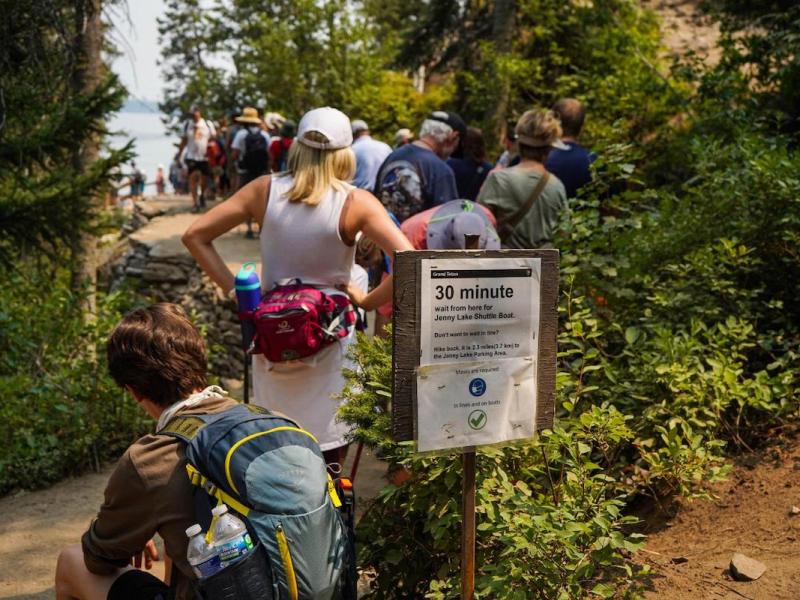
Grand Teton National Park officials will host a public meeting Wednesday on their plans for improving the Taggart Lake Trailhead — where mounting visitation has led to overflow parking, deteriorated trail conditions, vegetation loss and insufficient facilities.
Yellowstone National Park, meanwhile, seeks comment on an upgrade to 27 miles of its Northeast Entrance Road. The aging highway was damaged by the 2022 floods, including many sections that were washed away.
Taggart Lake Trailhead
The Taggart Lake Trailhead sits in the southern end of the park and is easily accessed from Jackson Hole. The popular year-round trailhead is a launch point for activities like hiking, skiing, biking and camping — with several trails leading into mountain lakes at the base of the Tetons.

But visitor use has mushroomed in the past decade, and existing facilities do not adequately support the crowds, according to the park.
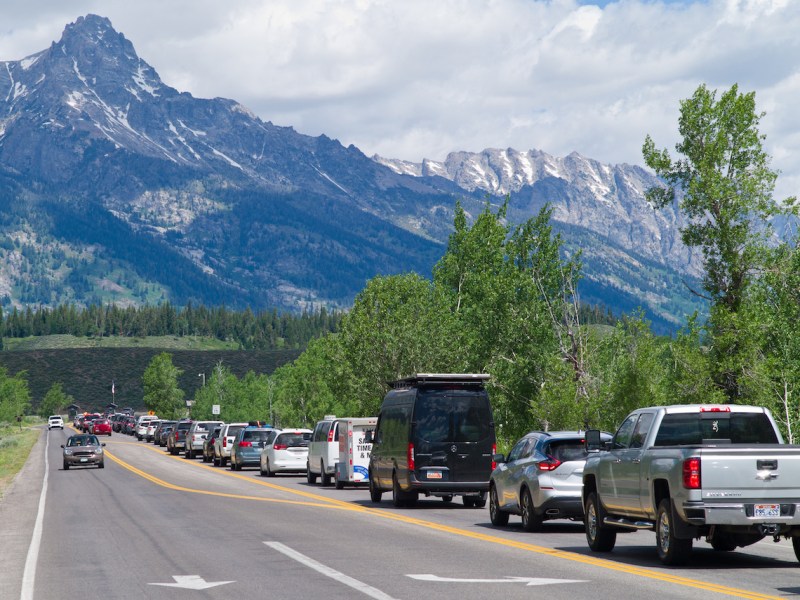
During the peak summer months of July and August in 2023, more than 6,000 vehicles on average drove past the trailhead daily. Summer use on the Taggart Lake Loop Trail has increased more than 100% in the past decade. Parking spots are often filled, and overflow parking coupled with larger crowds have damaged the resources.
The park’s so-called Reimagining the Taggart Lake Experience planning effort focuses on improving the site through upgrades to: year-round parking and facilities, accessibility, the summer trail system, shoreline destinations, viewsheds, wayfinding and interpretive information.
The plan is still in its pre-National Environmental Policy Act phase. Grand Teton park officials are asking for public comment on a draft document that lays out several options for relocating or expanding the parking lot, altering the roadway and girding the trail. These include concepts like adding a backcountry toilet along the trail system or realigning a multi-use trail.

“We are asking people from near and far to weigh in on how we can continue to preserve the park and provide opportunities for high-quality experiences in the Taggart Lake area,” said Grand Teton National Park Superintendent Chip Jenkins, adding that participation is “vital to the success” of the initiative.
A public comment period opened Oct. 18 and will last through Nov. 21. The park will host a virtual public meeting on Wednesday from 5-6:30 p.m. For meeting information, more details on the plan or to submit written comments, visit the project website.
Following the comment period, park officials will prepare pre-NEPA documentation over the winter. A NEPA document will then be posted for public review, likely next summer.
Northeast Entrance Road
In Yellowstone, park officials have drafted a proposal to significantly improve 27 miles of highway between Tower Junction and the Northeast Entrance.
The Northeast Entrance Road is open to visitor vehicle traffic year-round and provides winter access to Cooke City/Silver Gate in Montana and to Lamar Valley, where visitors from around the world flock to view wildlife.
The section of road saw heavy damage during the devastating floods of 2022. The project, which is in cooperation with the Federal Highway Administration, aims to update the aging road for safety and ease of use and shore up its resilience to future floods.

The park has not undertaken substantial improvements on the road since the 1980s, according to park officials. The existing pavement has exceeded its 20-year design life and was not designed for the current amount of traffic. Bridges, retaining walls and culverts are worn, and the road is susceptible to frost heaves in areas.
The project proposes to expand the road’s footprint from its current width of 20-22 feet to the modern park standard of 30 feet. It would also build additional road shoulders, parking areas and turnouts. Finally, it would realign the road in areas where it either washed out during the 2022 flood or may be vulnerable to similar future events.
The public can review the project online and submit comments until Dec. 3.
Input will help the park develop an environmental assessment. A draft environmental assessment will likely be released for public review in June 2025.

The goal is to keep the area as much as it was 150 years ago. I suggest limited number of permits to use the hiking trails, and permits would have to be
reserved ahead of time. No new trails cut. We have to keep in mind, these mountains belong to wildlife not we humans. Cars do damage just
because they are vehicles. What can exhaust be doing to the animals there, large or small and the trees, etc. I lived three summers in Jackson in the early
60s, a few years back I was in Jackson and could hardly recognize it.
Sad to say thanks to development it is no longer a quaint mountain town.
I think a certain amount of people a year and no more should be a policy for Yellowstone Park. I was born and raised in Montana and I feel like we are not protecting the treasures of Montana like we should for future generations. By only letting x amount of people in a year we are protecting the land and the wildlife. Thanks for taking the time to read this and consider our options. Sincerely, Kelly Larson