



While passing a state budget remains the key priority this legislative session, lawmakers will also consider reforms and updates to the state’s policing and public safety laws, from restrictions on certain library books to better funding 911 services.
The Wyoming Legislature’s Joint Judiciary Committee sponsored seven bills, an unusually low number, for lawmakers to consider this session. The measures tackle issues ranging from housing inmates with mental health needs to tightening penalties for various criminal offenses. Bills from other committees — such as the Joint Corporations, Elections and Subdivisions Committee proposal to study and fund Wyoming’s 911 operations — also deal with public safety issues.
Inmates and mental health
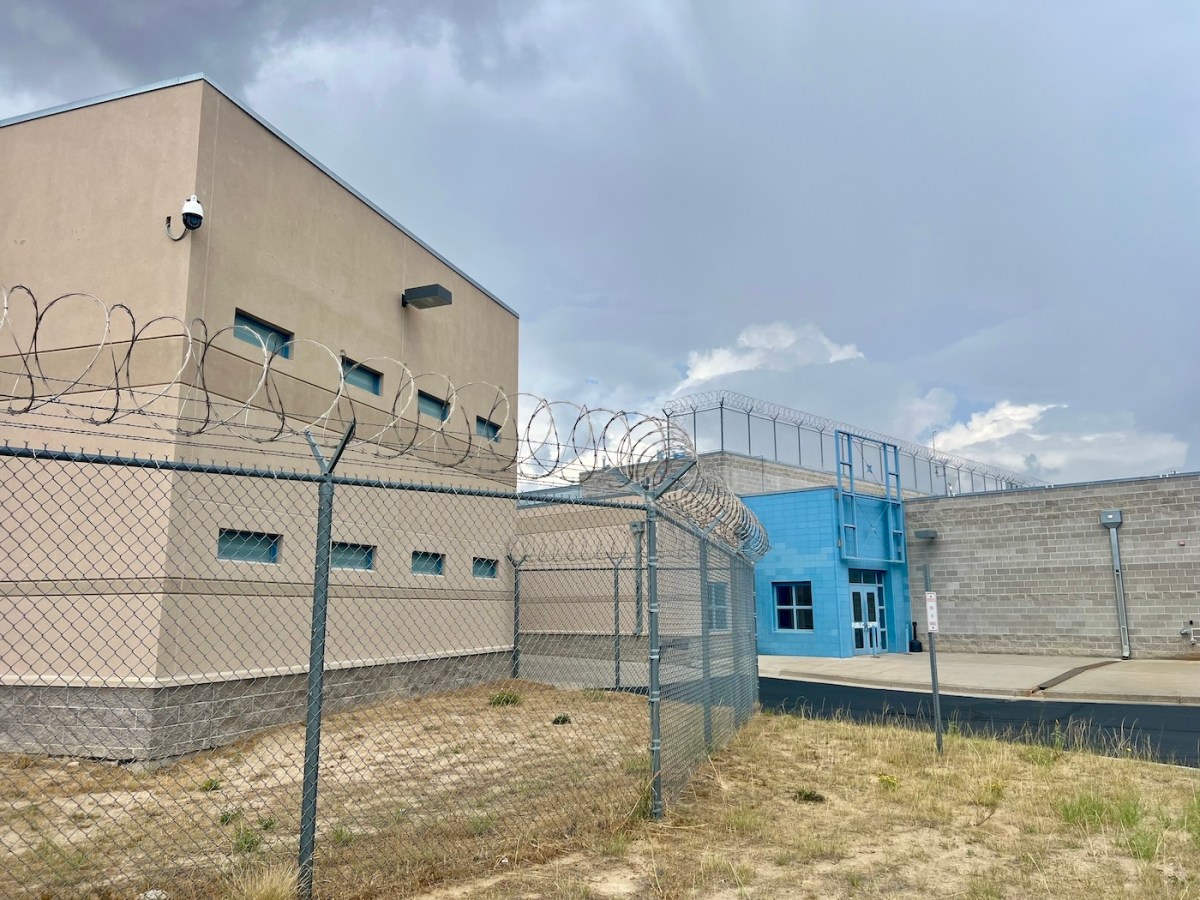
In January last year, Uinta County Sheriff Andy Kopp emailed a letter to members of the Legislature that described a growing problem in jails: More and more, jails have housed people with mental illnesses while they wait for a bed at the state hospital. Meanwhile, their mental health issues go untreated.
“Without timely and adequate resources or support systems, many of these individuals continue to suffer and deteriorate more,” Kopp wrote in the letter.
While the health department recognizes this situation as a problem, current statutes don’t provide the agency with resources or authority to pay for housing inmates or providing care while they wait in jails.
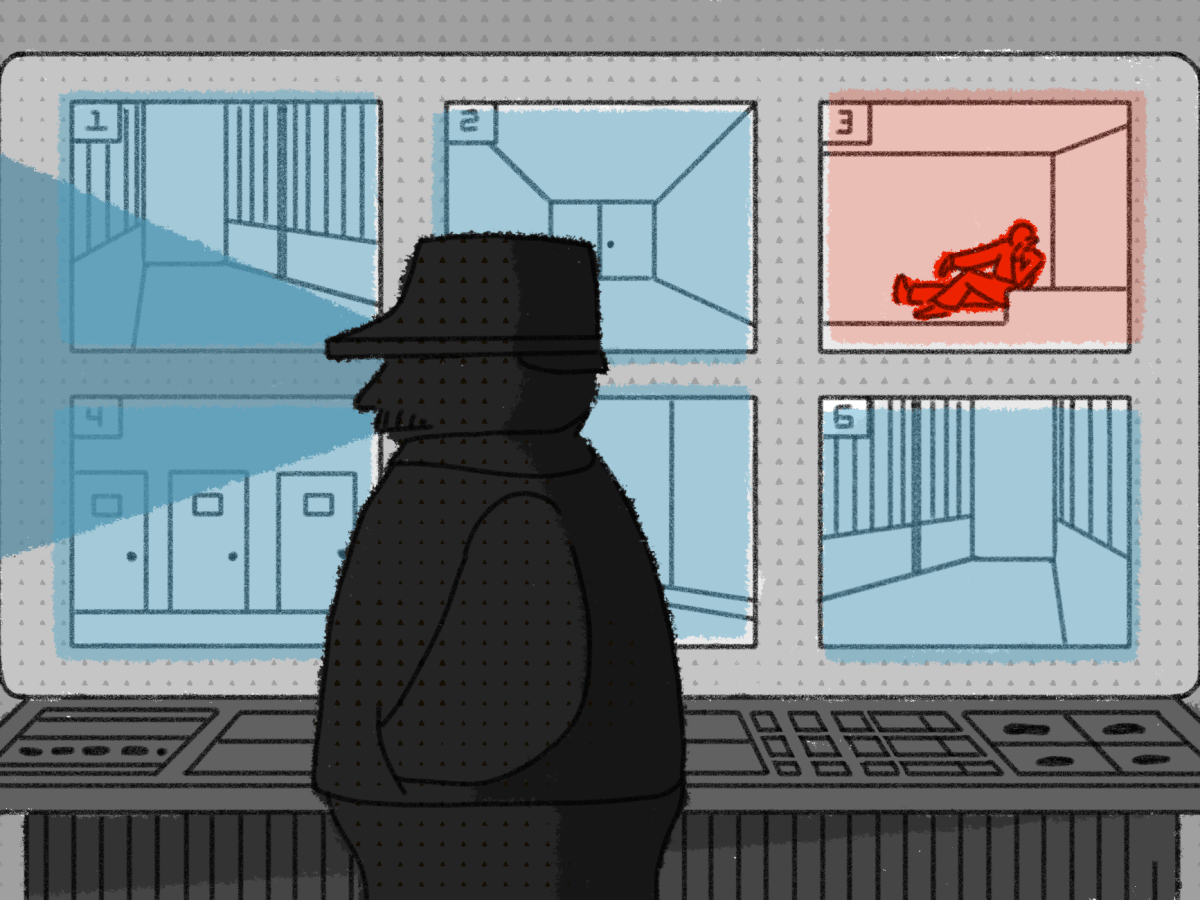
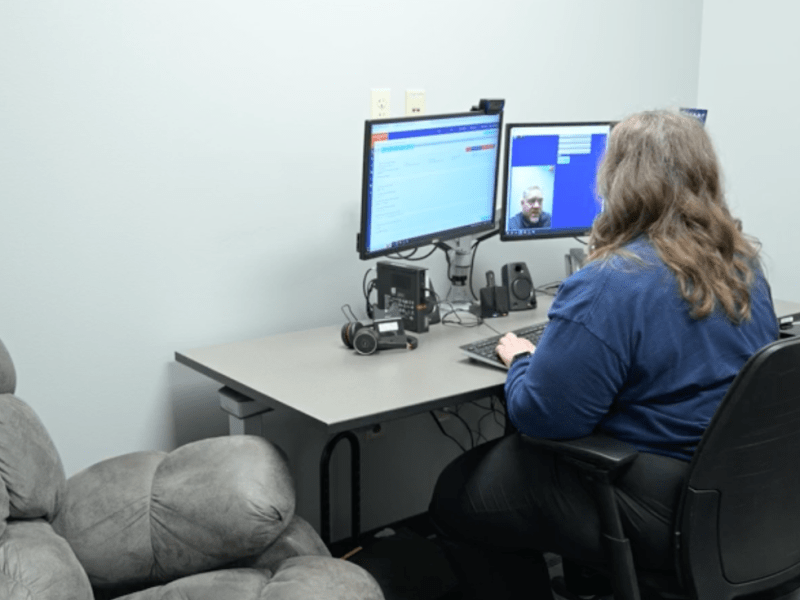
The letter spurred health officials and law enforcement to work on a new measure that would enable the state’s health department to help cover these costs. From that effort emerged the Joint Judiciary Committee’s Senate File 10, “Contracts for holding and treating mentally ill detainees,” which allows the health department to enter into contracts with detention centers for holding and treating detainees with mental illnesses until they receive a competency evaluation or restoration, which often means an inpatient commitment to the Wyoming State Hospital.
This reimbursement model is similar to one that now allows the Wyoming Department of Corrections to reimburse sheriffs for housing inmates until they get transferred. The bill’s contract language aims to provide some flexibility so the health department could simply reimburse sheriffs for housing inmates or providing mental health services to these individuals through local practitioners.
English proficiency for truck drivers
President Donald Trump issued an executive order in April to crack down on commercial drivers’ English. Previously, authorities allowed commercial drivers who lacked English proficiency to continue on the journey. Now, highway patrol officers across the country work under guidelines that direct them to test drivers’ English if they suspect a lack of proficiency in the language. If drivers fail the test, they are taken out of service and forced to park until a different driver arrives to take over.
Wyoming’s U.S. Rep. Harriet Hageman backed Trump’s move and cosponsored legislation to codify Trump’s executive order into law.
“This has been a hot topic nationwide amongst all states across the United States,” Wyoming Highway Patrol Lt. Kyle McKay told lawmakers at an August meeting.
From June 25 through Aug. 17 of last year, the Wyoming Highway Patrol encountered 236 violations of English proficiency standards where drivers were put out of service, McKay said. (Only Wyoming Highway Patrol inspectors are now certified to enforce this federal regulation. Normal troopers can’t enforce it.)

House Bill 32, “English proficiency-commercial motor vehicle drivers,” sponsored by the Joint Transportation, Highways and Military Affairs Interim Committee, would codify this requirement in state statute. It also directs county and municipal law enforcement and other officers designated by highway patrol to police and enforce English proficiency among commercial truck drivers.
The measure would establish a $1,000 fine for drivers who fail the test and bar them from driving until they can demonstrate English proficiency. If a driver is found continuing to operate a commercial vehicle while still lacking English proficiency, they would be guilty of a misdemeanor and punished with another $1,000 fine, up to 90 days in jail, or both.
Arkansas and Oklahoma have passed similar bills. Oklahoma’s bill “has a little more teeth in it,” Wyoming Highway Patrol Col. Tim Cameron said. Like HB 32, Oklahoma’s statute also addresses situations where drivers who are found to lack English proficiency are later caught continuing to operate a commercial vehicle.
Funding 911 operations
Wyoming has an estimated $3 million funding shortfall across its counties for 911 operations, Nate Smolinski, Wyoming Department of Transportation’s chief technology officer and 911 coordinator, told lawmakers at a November meeting.
Current 911 funding is based on a maximum $0.75 monthly surcharge per phone line set in 1986, which hasn’t kept pace with inflation and rising costs of running 911 centers, according to a Wyoming Department of Transportation memo. “Many counties are experiencing deficits, and the current funding model doesn’t cover all of the operational expenses,” the memo states.
What’s more, funding struggles combined with aging infrastructure have impacted the reliability of 911 operations — Smolinski told lawmakers at the November meeting that there had recently been a 911 outage in Sheridan County, during which emergency calls had to be routed through Johnson County. According to the transportation department’s memo, these outages “are increasing and can have life-threatening impacts.”
Senate File 32, “911 funding,” sponsored by the Joint Corporations Committee, aims to address these challenges in one measure. The bill directs the Wyoming Department of Transportation to conduct a study that examines potential upgrades to Wyoming’s 911 system. The study would cover the governance, operations and expenses of operating the 911 system and would also seek out efficiencies to implement. The measure would appropriate $750,000 from the Legislative Stabilization Reserve Account to cover the costs of conducting the study.
It also earmarks $3 million from the same account to provide a stopgap for existing 911 operations until the state and counties improve systems and establish long-term sources of funding. The $3 million would be distributed through grants, though lawmakers have yet to decide which agency would administer the grant program.
Library book restrictions
The Joint Judiciary Committee also sponsored a bill related to the now long-running debate in Wyoming and across the nation over what library books should be available to minors. Much of this debate has centered on books about LGBTQ experiences.
While this debate originally focused mostly on school libraries, lawmakers have also tried to restrict — so far without success — the availability of “sexually explicit” books in public libraries.
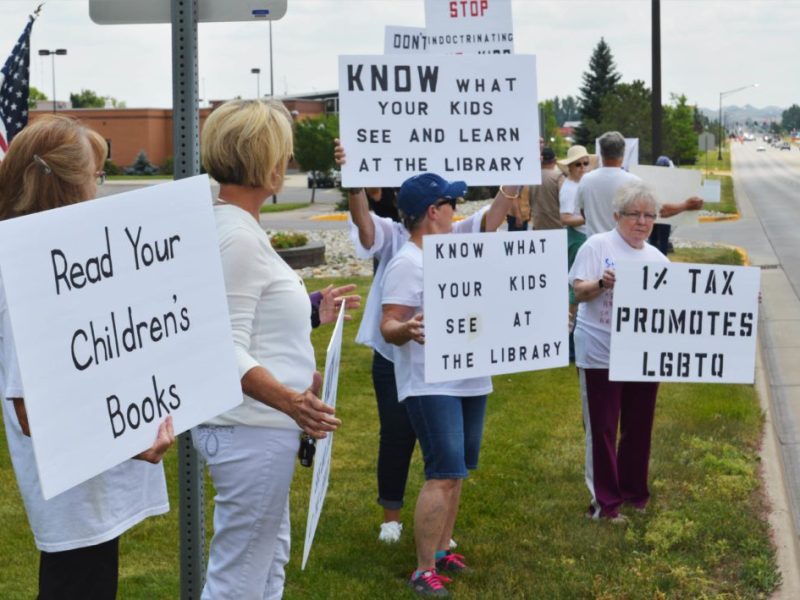
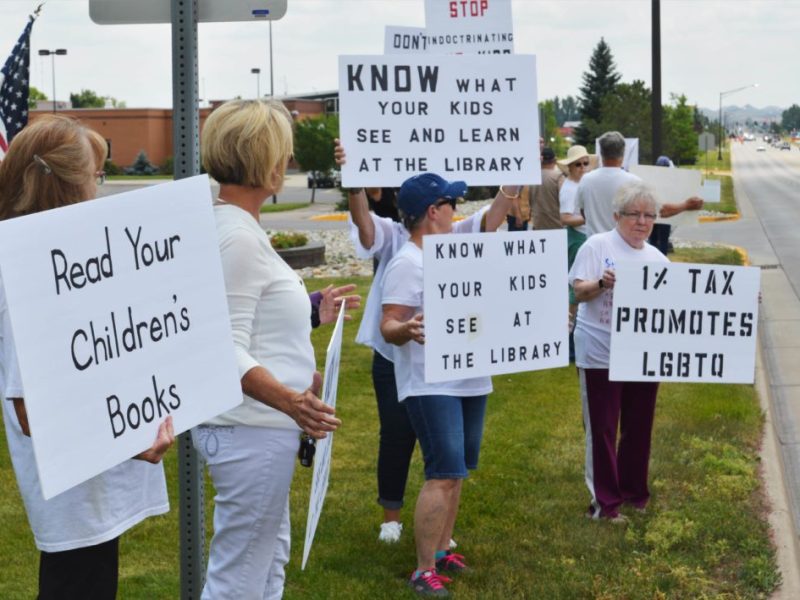
House Bill 10, “Sexually explicit materials in libraries-requirements,” covers both, dictating where public libraries can shelve certain books and banning what the bill defines as “sexually explicit material” from school libraries altogether. The measure would also require counties and school districts to create processes for people to challenge the inclusion or placement of books in libraries.
The bill’s supporters use the word “pornographic” to describe the materials they are trying to weed out of libraries. Meanwhile, opponents of the measure say lawmakers are intruding into libraries in an attempt to silence LGBTQ authors primarily.
Tightening criminal penalties
The Joint Judiciary Committee approved several bills to tighten penalties and lower punishable thresholds for various crimes.
Currently, a person could be guilty of a felony and be punished by up to 10 years in prison and a $10,000 fine if they are convicted of five or more theft offenses. Senate File 7, “Theft amendments,” would cut that threshold down to three offenses.
The bill would also increase punishment for one-off theft offenses, raising the max time for imprisonment from six months to a year and fines from $750 to $1,500.
Lawmakers also proposed revising Wyoming laws around distributing methamphetamine and Schedule I and II controlled substances to minors. The law now provides a more lenient punishment if the distributor is within three years of the minor’s age. Senate File 9, “Fentanyl to minors-enhanced penalty,” would axe that exception for distributing fentanyl to children.
Under existing Wyoming law, a person who stalks someone in violation of probation, parole, bail or a restraining order is guilty of a felony and could go to prison for up to 10 years. House Bill 8, “Stalking of Minors,” would add stalking a child to the list of stalking offenses that could result in a felony.
Senate File 8, “Absconding for criminal purposes-criminal offense,” would create penalties for fleeing across county or state lines for criminal purposes. The penalty for fleeing would be the same as that for the most serious crime committed, intended to be committed or furthered as a result of running away.
House Bill 9, “Grooming of children-offenses and amendments,” would create a new criminal offense for grooming minors. The offense would be a felony punishable by up to 10 years in prison and a fine of up to $10,000, or both.
Those penalties would increase for younger ages. If someone committed this offense against a child younger than 16, they could be imprisoned for not less than four years and up to life. For a child younger than 12, the punishment would be at least 25 years in prison and a fine of up to $50,000, or both.
Bills yet to be seen
While lawmakers typically prioritize committee bills, given that they’ve already spent time and money vetting them, these proposals make up just a portion of all the measures they consider in a session. Bills sponsored by individual lawmakers, like Casper Republican Rep. Steve Harshman’s measure that would require people to help others at risk of serious injury or death, will also be on the books for lawmakers to mull over. More bills from individual lawmakers can still surface, and they likely will.
In early January, lawmakers on the Joint Appropriations Committee convened behind closed doors to discuss reducing the Wyoming Supreme Court’s bench from five justices to three, WyoFile previously reported. The discussion was in response to the Wyoming Supreme Court’s recent ruling striking down two abortion bans. Although the committee ultimately didn’t take action on this proposal, it’s still possible that an individual lawmaker would try to carry a bill.
For more legislative coverage, click here.

I thought the state was facing an existential funding crisis? From all the talk I’ve been worried that there will be no potable water and there will be no police and this will be left a dry and lawless place. But, we have time to worry about library books?
I appreciate this “heads up” about bills likely to come up in this legislative session.
Brief, clear descriptions with links to the actual bills make it a great resource. Thanks.
Ya, let’s copy Oklahoma and Arkansas. They’re pretty much last in just about everything- except Trumpism. Remember, Trump loves the uneducated, NOT.