

This story discusses suicide. If you or someone you know is having suicidal thoughts, you can call or text the Suicide and Crisis Lifeline at 988.
In 2023, Wyoming shed a dubious title: For the first time in five years, it no longer held the nation’s highest suicide rate.
It has hovered in the top three spots in the years since, however, and in 2024, Wyoming experienced the highest 10-year increase in its rate, at 35%, reports KFF. Wyoming’s rate was second only to Alaska, according to the National Center for Health Statistics.
Along with representing countless personal tragedies that devastated families, friends and communities, Wyoming’s suicide crisis is a public health issue. That’s why Gov. Mark Gordon and the Wyoming Department of Health launched a multi-pronged approach that includes increasing access to mental health resources, training for health care providers and support for grieving families.
This month, the governor’s WY We Care Initiative hosted a series of free suicide awareness and prevention trainings. The trainings finish Wednesday and Thursday with in-person sessions in Rock Springs. Admission is free for Wyoming residents.
More than 3,000 residents had already taken suicide awareness and prevention trainings through the statewide initiative before the March offerings, according to Gordon’s office. With the state’s suicide rate still at concerningly high levels, Gordon encouraged all residents to access the tools to help care for friends, family and colleagues who may be struggling.
“As long as people are dying by suicide, we absolutely must pull together and expand our efforts to stop it,” Gordon said in a press release. “Learning how to talk about suicide and knowing the steps these trainings provide, has proven valuable in mitigating risk.”
Wyoming’s numbers
Wyoming has consistently joined Alaska and Montana as the states with the nation’s highest suicide rates. All are rural, vast and sparsely populated states with strong hunting cultures. Firearms are a common household item.
A variety of factors contribute to the states’ high rates, experts say, including lack of counseling and psychiatric services, social isolation, high poverty rates and a “cowboy up” philosophy that stresses individualism.
In Wyoming, there were 168 suicide deaths in 2024, according to the health department. That was an increase from 156 in 2023 and 155 in 2022, but a decrease from 190 in 2021 and 182 in 2020.
Men account for about 88% of Wyoming’s resident suicide deaths in 2024, the department reported, with the majority being 80 or older. Roughly 72% of suicide deaths involved firearms.
Gordon, mental health advocates and lawmakers have responded to the state’s suicide crisis in recent years with a host of initiatives aimed at bolstering suicide prevention efforts. That includes mandating the health department to establish a statewide suicide prevention program, which provides administrative support for the Wyoming Alliance for Suicide Prevention. Wyoming has two 988 call centers where trained personnel staff the free, confidential and 24/7 lifeline, and the state funds community prevention specialists in every county.
A statewide suicide prevention plan for 2024-2028 describes in greater detail the measures Wyoming plans to reverse the tide.
Advocates have also faced challenges, however. Wyoming House Freedom Caucus members mounted an effort to significantly slash the health department’s budget this year, with mental health resources on the chopping block, and a years-long effort to pass a bill requiring suicide prevention education for public schools students failed again in February.
Resources
For years, Wyoming did not offer a crisis lifeline staffed by local residents. That changed in 2022, when the state began offering round-the-clock voice and text help via 988.
Agencies promoted it heavily for those experiencing mental health crises, substance abuse issues or thoughts of self-harm. In March 2025, the crisis line took 739 calls, according to the health department.
The state also backed an array of initiatives, from grants to health care providers to a biennial symposium and a host of suicide prevention trainings.
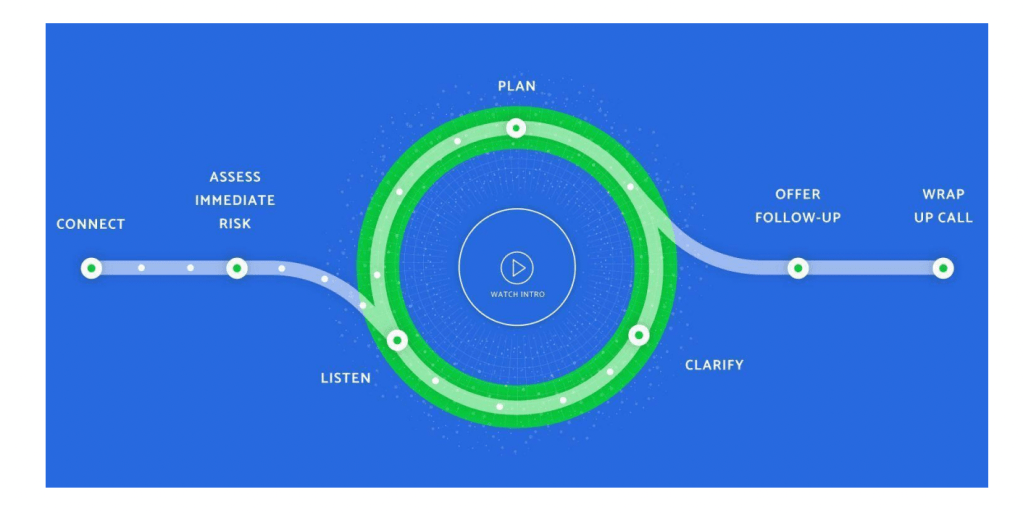
That includes those offered this month through Prosper Together, which provides suicide prevention training using a model based on what it calls “Proactive Reduction Of Suicides in Populations via Evidence-based Research.”
“I can say with confidence that the training works,” Rock Springs Mayor
Max Mickelson said in a release. “It equips you with the words, the awareness, and the courage to step in when it matters most.”
The health department’s Injury and Violence Prevention Program also provides free trainings to Wyoming citizens who participate in the Wyoming Alliance for Suicide Prevention.
Other efforts can be heard on Wyoming’s radio waves. Wyoming Health Fairs launched a year-long statewide suicide prevention radio campaign in January. The series, “The Last Fence: Keeping Wyoming Neighbors Safe,” is primarily focused on older Wyoming men, who are at the highest risk.
Older Wyoming men remain among the state’s most consistent radio listeners, particularly in rural areas, according to Wyoming Health Fairs co-founder and board member Bob Price. The radio PSAs can also reach folks who aren’t active on social media.
“This campaign is about meeting people where they are,” Price said. “For many older Wyoming men, radio remains a trusted, familiar companion. These messages are designed to be steady, human reminders that help is available and connection matters.”
In January alone, 69 Wyoming radio stations participated in the campaign, airing nearly 8,000 PSA broadcasts.

If I had to contend with hyper-focused micromanagement of the healthcare I need and the dangers my healthcare provider faces, the worry of whether or not my vote counts for ANYTHING, rising food and housing costs, the banning of well-loved books and other published information I seek, AND/or ICE tracking my every move I think I would also pause to think about my life, in Wyoming or anywhere else.
The problem is that talking is not always enough. Its about affordability of mental health access. Its about when life gets to be so stressful and it feels like no matter what you will always struggle. Our system itself is broken and until we take a seriously look at that, there will not be long term solutions.
I lost my son Joran in 2023 and have been advocating for change much of which I wish had been done better before. I would love to see some county break downs as well as who has implemented a suicide fatality review and for how many years. I live in Sweetwater county and it was brought up and said it was in the works but I have heard no updates. The numbers above touch on and mention the number of people who have recieved trainings , have you looked at the counties who have provided the most trainings and the impact it has had with suicide numbers. I continue to hear the same stories and it makes me sad. I also know that providing education and trainings do help but only so much without proper resources . Our local police department is piloting a crisis therapist connection with suicide calls and I would love to know some data and information on that impact and what other city’s are doing that. We have project aware in our schools which is helping young kids gain skills and work through issues. But here in Sweetwater county we have lost a high number of recent graduates to suicide and I question if this is something that is happening in other counties. I hate thinking of loosing anyone to suicide , but today I again was told of the waits to get into certain programs or people who can’t afford certain services and need help.
I didn’t realize the majority of suicides were of people over 80 years old. Suicide in the case of young healthy people is a tragedy & intervention is important.
I am well over 80 yrs and healthy for my age with no suicidial thoughts, but if I were frail, sick and looking at spending the rest of my life in a nursing home or hospital I would see suicide as an option. I see no reason to force someone to live when they are terminally ill, in pain and only have a life of dependency to look forward to. I think it is wrong to deny people the right to medically supervised end of life.
I recently retired from working 30 years in the mental health system, which is partially funded by State funding. Each year the State’s requirements have increased, and the funding has decreased, for each county to to ‘pull’ down the funding. This process is slowly strangling the mental health system. And yet the special programs get the funding and media coverage. The mental health system provides services based on income and no one is turned away for lack of payment. It has been in existence since The Great Depression. Every county has it. Maybe some of the PSA’s can also mention the resource that is always available, in every county, with 24/7 emergency on-call services. Your LOCAL resource–with face-to-face help, if requested.