

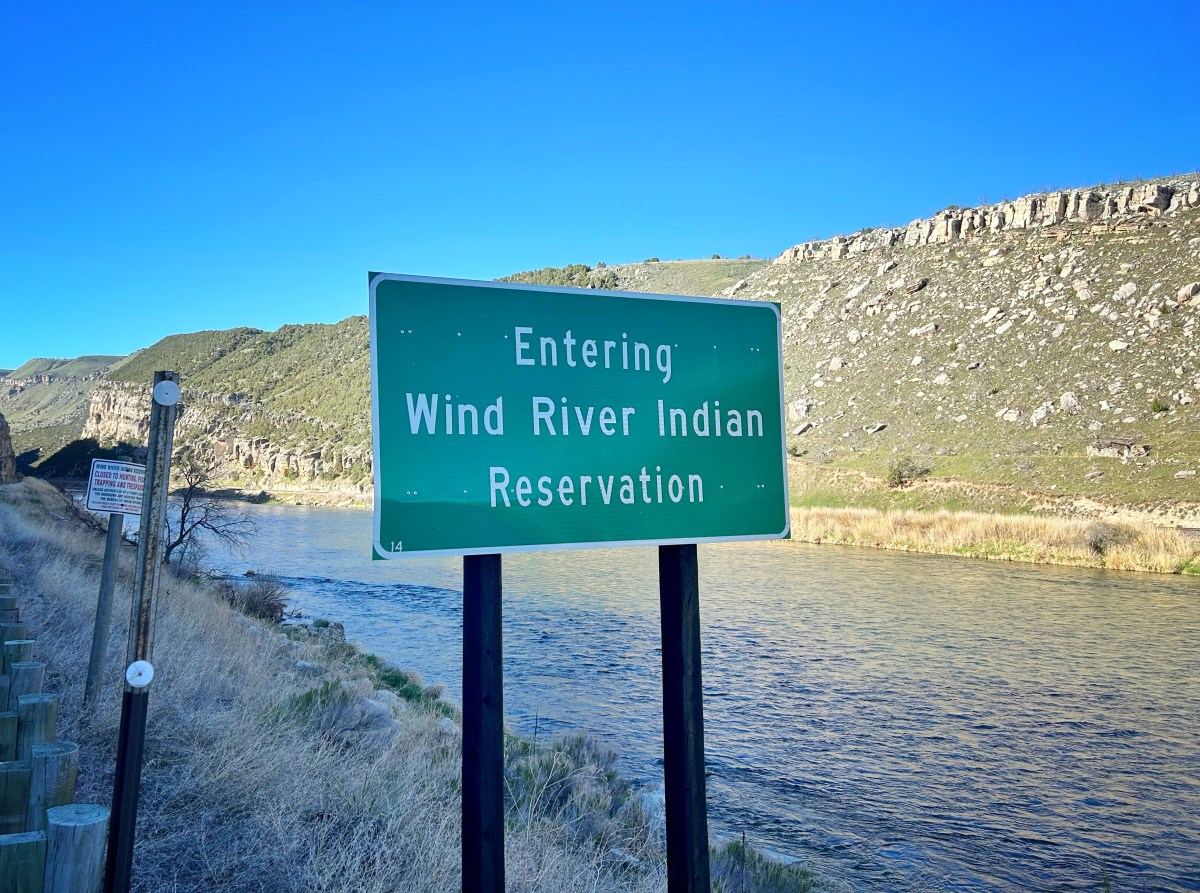
The Eastern Shoshone and Northern Arapaho business councils denounced this week Secretary of State Chuck Gray’s calls to examine electoral boundaries on the Wind River Indian Reservation.
“The Secretary of State’s actions are particularly offensive because they target the very communities that were here long before the State of Wyoming existed,” the Northern Arapaho Business Council wrote in a statement to WyoFile. “Tribal Nations are not outsiders seeking special treatment; we are sovereign governments and the original peoples of this land.”
In letters sent last week, first to the Fremont County Commission and then to Gov. Mark Gordon, Gray highlighted the U.S. Supreme Court’s recent decision in Louisiana v. Callais, which narrowed the ability of states to use race as a determining factor in creating election districts. As such, Gray argues, certain maps for the Wyoming Legislature and the Fremont County Commission are unconstitutional because their lines were drawn with consideration to race.
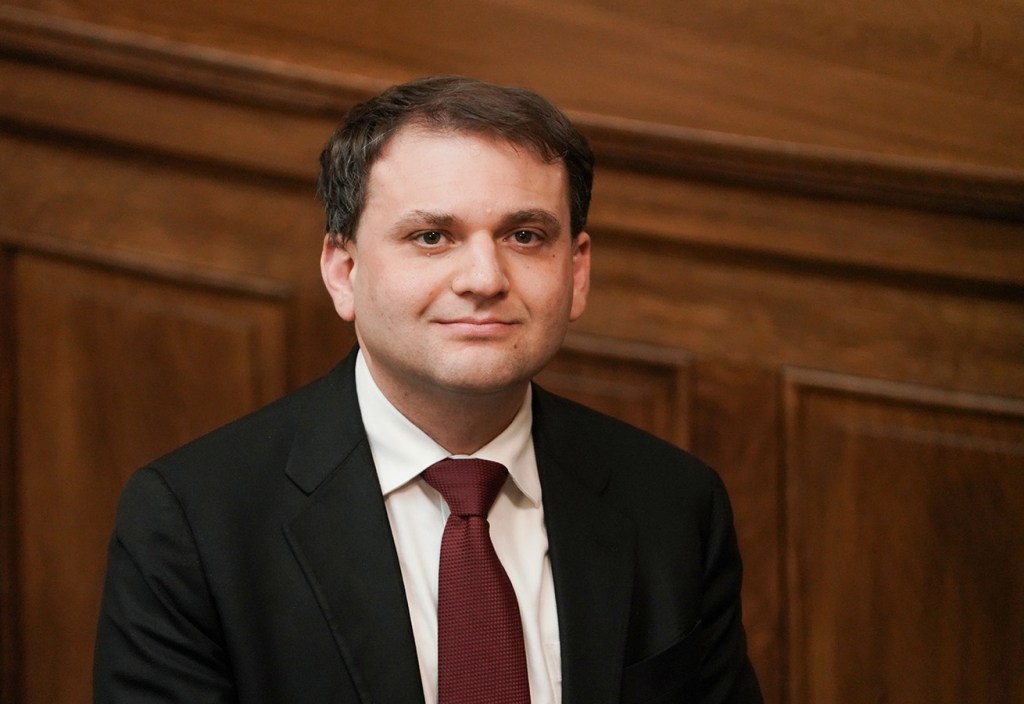
He reiterated his position Tuesday in a statement to WyoFile.
“I have been clear and consistent that drawing districts based on race is a blatant violation of the United States Constitution. Any idea being spun up by the leftwing media that Wyoming is immune from the Supreme Court’s ruling in Callais is absolutely wrong,” Gray wrote in an email. “The Supreme Court’s ruling in Callais applies across the United States, including in Wyoming, and the districts drawn by all governing bodies must abide by the Constitution.”
Gray’s letters coincided with the official start of Wyoming’s 2026 election season. He stopped short of explicitly asking the governor to suspend the state’s primary elections, or to call lawmakers into a special session to redraw maps — two measures GOP governors in other states have taken since the ruling — but has maintained state law puts things in Gordon’s hands.
How we got here
Gray is taking exception to electoral maps that surround the Wind River Indian Reservation, home to the Eastern Shoshone and Northern Arapaho tribes. More specifically, he objects to the electoral boundaries related to House District 33 and the Fremont County Commission, which has used a district system since a 2010 court ruling.
In Large v. Fremont County, five enrolled members of the Eastern Shoshone and Northern Arapaho successfully challenged the commission’s at-large method, arguing that it diluted Native American voting strength and violated the federal Voting Rights Act. The court ruled in favor of the plaintiffs, forcing the county to adopt a district-based election system.
The Northern Arapaho Business Council pointed to the ruling in its statement.
“Secretary of State Gray’s letters suggest that the Supreme Court’s recent opinion in Louisiana v. Callais directly impacts Fremont County’s districting. Yet the application of the Callais case to Fremont County is not that simple,” the council wrote in a statement posted to Facebook.
“The Supreme Court’s recent decision in Callais concerns a legislative and not a court-ordered districting plan and does not overturn the Voting Rights Act’s Section 2 or its earlier decisions concerning Section 2 as applied to Fremont County,” the council wrote. “The Supreme Court’s holding in Callais does not replace the findings that Wyoming’s at-large districting is not lawful under federal law in Fremont County.”
To return to an at-large system, the council wrote, “would be a return to the very issues that were found to be unlawful by the District of Wyoming, including the dilution of the Native vote and the elimination of fair opportunities for Native representation in elected office, and would require reopening sixteen-year-old wounds for an uncertain outcome at great expense to both the County and the Tribes.”
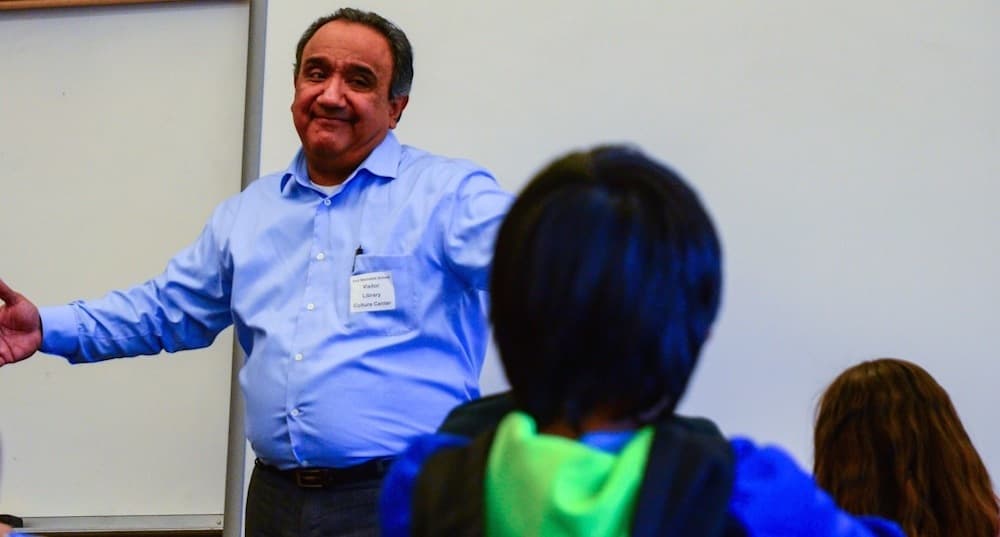
Commissioner Clarence Thomas, who represents District 1 and serves as the liaison between the board and Wind River’s tribal governments, previously told WyoFile there’s more to the district than what Gray wrote in his letters.
“It’s not just tribal members. It’s everyone. Ranchers, farmers, middle-class workers, who all live within the boundaries of District 1,” he said. “And so they all want a voice.”
Meanwhile, the Legislature’s House District 33 stretches across Fremont County and encompasses the tribal towns of Fort Washakie, Ethete and Arapahoe, as well as the small non-tribal communities of Atlantic City, Crowheart and Hudson.
Over the years, its representation has flipped back and forth between Democrats and Republicans, as well as enrolled tribal members and white ranchers. Most recently, Rep. Ivan Posey, a Democrat and Eastern Shoshone educator, ousted Freedom Caucus-backed incumbent Sarah Penn, a Republican.
The practical effect of Gray’s request, the Northern Arapahoe Business Council wrote in its statement, would include “threatening the continued representation of Representative Ivan Posey, the only enrolled Tribal member currently serving in the Wyoming Legislature.”

Posey did not respond to WyoFile’s request for comment by publishing time.
Both tribal councils called upon elected officials and the state’s citizens and leadership “to reject efforts” that would take Wyoming and Fremont County “backward” and “undermine the principles of representative democracy.”
The commission and the Governor’s Office previously told WyoFile they had sent their respective letters from Gray to the Attorney General’s Office for guidance.
Amy Edmonds, Gordon’s spokesperson, told WyoFile on Tuesday that the Governor’s Office did not have “anything new at this time.”
The Legislature’s Joint Corporations, Elections and Political Subdivisions Committee is meeting in Lander later this week, where the topic of Gray’s letters is expected to be discussed.

“I have been clear and consistent that drawing districts based on race is a blatant violation of the United States Constitution.” Gray. It is unfortunate that our chief elections officer is so uninformed that he thinks these districts were drawn on the basis of race. He has failed to define what race they were drawn to protect. He has failed to read all of the SCOTUS decisions on redistricting. He has failed to read minutes from the Joint Corporations Committee meetings where the redistricting plans that established House District 33 were drawn up. In a nutshell, he has failed, again.
According to my values, districting should maximize proportional representation of different ethnicities, political orientations, and interest groups. According to MAGA it is the opposite, the goal being one party rule.
Yet, it’s okay to re-district if there are democrats in the district.
“I have been clear and consistent that drawing districts based on race is a blatant violation of the United States Constitution.” Gray
This trend to discourage voters that republicans think might vote for democrats is running rampant in our country. It is a maneuver that rigs votes. It’s not democracy. It’s white nationalism or authoritarianism. Resist.
Just one more reason why we need to return Chuck Gray to private citizen status.
It will be a great day in Wyoming when Lil’ Chuck Gray packs up his office and walks out of the SOS office for the last time. He’s finished in politics as he will lose his bid for a seat in congress. Since he’ll be looking for meaningful employment, I’d like to offer him a position as my garden gnome.
What Kelly said. Couldn’t agree more.
♥️
This ruling came by the U.S. Supreme Court that voting districts can not be made up by race. As it has a tendency to create gerrymandering which is unconstitutional.
Secretary Gray’s only following the Supreme Court’s decision.
Therefore, the tribes are rebuking honest districting from potential gerrymandering?
Now that’s a first thus far.
Sorry Drew but everything you said is incorrect. First gerrymandering is not unconstitutional, that has been made clear in several court cases. Second, Secretary Gray is not following the Court’s decision. Third, the district he is discussing was not based on race. Perhaps it would be helpful to actually read all of the SCOTUS decisions on districting.
Chuck has to go.
What irony that Wyoming wishes to think of itself as “The Equality State.” Sad.
Gray is the issue.
This actually isn’t about race. It is about a sovereign nation that has has voting rights. Gray made it race.
He now demonstrates that he is indeed a racist also under the guise of a non applicable supreme court ruling.
It is shameful and he needs to shut up.
Chuck Gray is middling on the behest of race or getting more republican votes ( we have plenty). But it is not a sovereign nation. A sovereign nation whose law enforcement, healthcare and a myriad of other things are provided by employees of another sovereign nation , the United States government ? If it was a different nation why would they have any voting rights period in United States elections ? Playing on the sovereign nation fallacy just gives the Chuck Grays of the world more desire to turn the screws.
Great article, to the point, and factually articulates both tribe’s history with state and our original status as Sovereign people. Grey fails to acknowledge this with his words of subjugation and lack of knowledge with both tribe’s. Lastly, the under current in his words is one of subjugation, discrimination and the potential veiled racism.
The California goofball must be voted out of office.
And not elected to any new ones.