

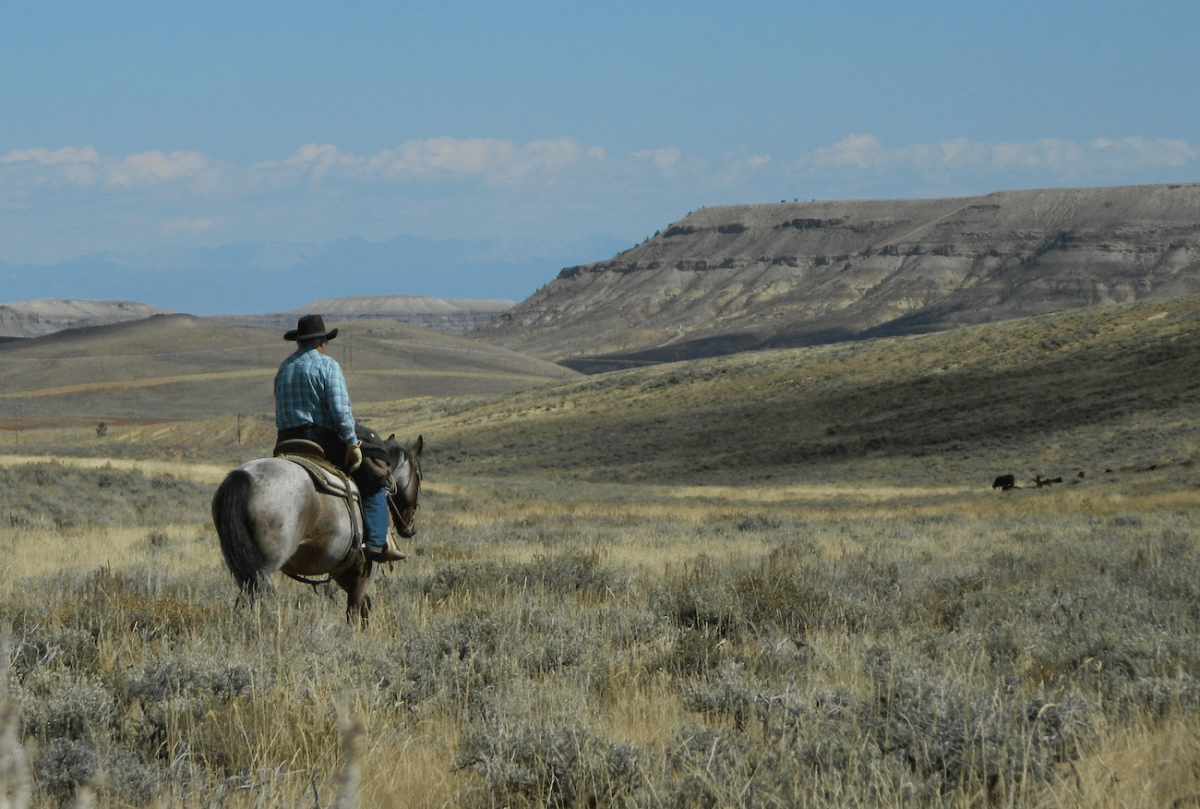
If your mailbox is anything like mine, it’s starting to fill up with gaudy campaign mailers from politicians who are trying their damnedest to channel Chris LeDoux (and we’ll tip our Stetsons when that name is mentioned) and failing miserably. It’s comical to watch these dudes and dudettes try to cowboy up just to get the voters’ attention!
Opinion
I don’t own a television, but I’ll bet a dollar to a donut the same stuff is assaulting your eyeballs from the boob tube screen.
Their mailers and ads show politicians standing nervously next to a photogenic horse, forcing smiles through their fear. That’s because there isn’t enough money in the campaign budget to convince them to climb aboard a critter as big and scary as a horse. They wear a sombrero that looks like it was purchased under the stands at Frontier Days, and a brand new pearlsnap shirt with the price tag still attached.
Or they pose in front of a buck n’ rail fence in some rustic Wyoming meadow, clutching a gun with their trigger fingers outside the guard, as the director instructed. You can almost hear the photographer’s voice off-camera suggesting, “Now, try to look tough.”
What we are seeing in our mailboxes and on our screens is the classic Madison Avenue ploy of manufacturing opinion through an appeal, not to the consumer’s logic or reason, but to emotion and attachment to symbols. The American cowboy is one of the most powerful symbols in the propaganda professional’s toolbox, and he gets trotted out to work his magic every election season.
Decades ago, I worked on several Marlboro commercials as a wrangler and background model. The producer, from Leo Burnett advertising company of Chicago, told me that the image of the Marlboro Man was worth several billion dollars a year to the tobacco company, because the cowboy symbol sold cigarettes to folks in countries like Libya and North Korea who hated America but loved cowboys.
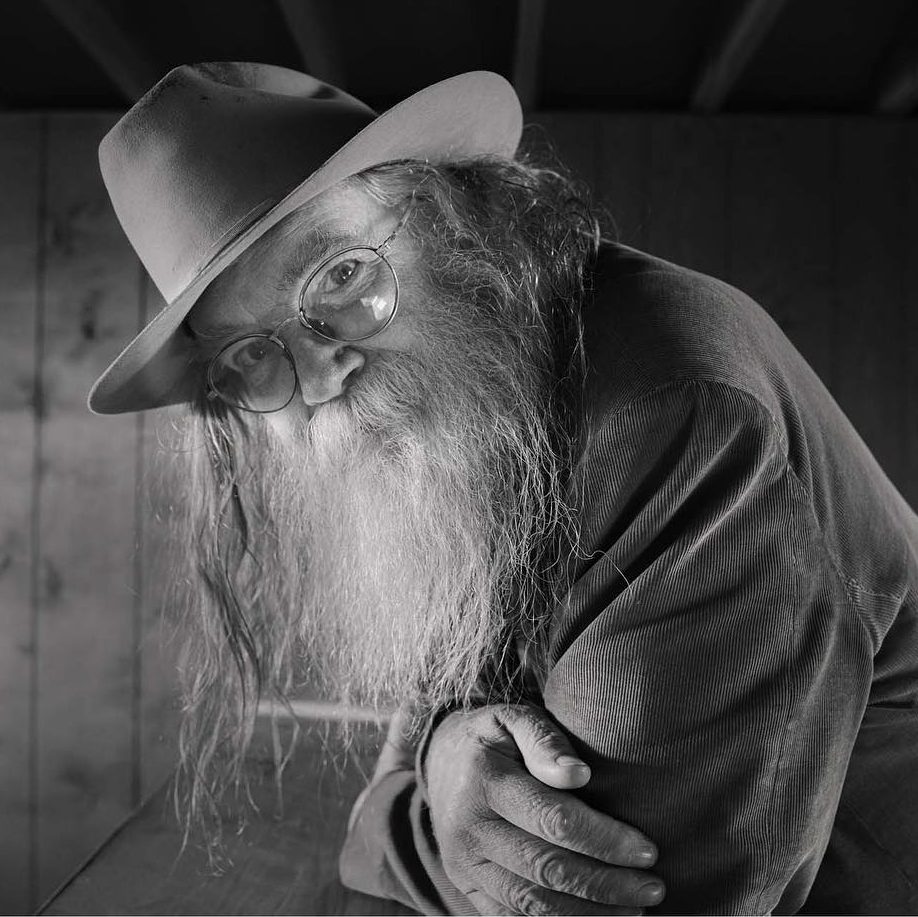
Think about that for a moment. One simple image is powerful enough to sell a carcinogenic American product to millions of people who hate America but identify with cowboys. That is the psychological power of advertising symbols.
Edward Bernays, Sigmund Freud’s nephew, is widely regarded as the godfather of modern advertising, public relations and propaganda. Bernays understood, in the early 20th century, how symbolic images and slogans could bypass critical thinking and implant a message directly into the subconscious reptilian part of the human brain, where instinct and emotion rule. When that part of our brain is stimulated, we act instead of think. We just say “ditto!”
That is precisely how political media manipulation works on us.
The political advertisements, resplendent with drugstore cowboy politicians, that bombard us every election are the direct lineal result of Bernays and the public relations/advertising/propaganda machine he created, and it has made vast fortunes and influenced our society for over a century.
The irony is that these mailers and videos never show politicians doing real cowboy stuff — like indulging in a three-fingered dip of Copenhagen, drinking Wild Turkey 101 straight from the bottle or getting bucked off into cactus and rattlesnakes. Images like that aren’t very mythological and won’t gather many votes.
But I digress. Every election season, we become lab rats in an ongoing experiment in politics and psychological manipulation, and the laboratory is our own brains. We are inundated with evocative pictures and slogans intended to short-circuit our intellects and engage our emotions. We are force-fed politicians who wrap themselves in appealing images and focus group-approved slogans that are intended to make us switch off our brains.
We confront Edward Bernays’ ditto-ism machine whenever we open our mailboxes or look at our screens. With every political advertisement, we are invited to suspend our intellects and just go along with the crowd.
A real cowboy would call bullshit on that nonsense.
So, it is critically important that we understand how and why political advertisers try so hard to make us act without thinking. Knowing the forces at work during a political campaign, and how they try to worm their message into our noggins, builds a healthy immune system that can resist manipulation by seductive but meaningless symbols.
A healthy skepticism toward political messaging is a necessary component in a functioning bullshit detector. Here endeth the lesson.
Way back in the 1900’s a fella learnt real quick that shoveling manure while you’re flapping your gums always makes the Copenhagen in your cheek taste just plain wrong. I’d say that the manure is about the same quality these days, but there ain’t near enough sense or Copenhagen left in the world anymore…
Thanks Rod. The cowboy image IS a powerful one, and I agree that we should preserve its reputation by keeping things real. From TR to Reagan, many politicians have co-opted the cowboy image to their benefit. Some have legitimate claims to being cowboy, some less so. I suppose they will continue to do so forever. What I have always liked about folks in Wyoming is that they’ve typically had a better functioning BS-detector than do a lot of other Americans.
I’m glad we’re able to recycle most of these colorful pieces of whatever you want to call them. I’ve had to spend a fair amount of time lately having my “detector” serviced.
If you think the politician’s ads in Wyoming are nuts, come to Oklahoma. Rod would have a great time with the candidates who tell us the Chinese own all the land in the state and try to out do each other with their love of dear leader Trump. People actually believe this garbage.
I got a flier from Steve Friess just a few minutes ago. Seems he is running against Obama. Fortunately, my local Post Office has a round container in the lobby designed for just such bullshit.
Gray, Rasner, and Friess are certainly killing a lot of trees that’s for sure. I would return them all “to sender” but it would just create more work for my poor mailperson so in the trash they go upon arrival without ever being looked at.
Sad commentary on the common man. It is troubling that we are so easily fooled and led around by the nose. But there has to be a reason we’ve been exploited throughout history. Critical thinking and questioning authority has never been the strong suit of the rank and file. Dave Gustafson
Didn’t fans of Rush Limbaugh call themselves “ditto heads?” He was good at appealing to people’s emotions, bypassing their pre-frontal cortex.
The reason we are constantly bombarded with at best insipid advertising – not just during political campaigns but all the time, for pretty much every product on the market is that it works. Why does it work? Because consumers, and voters are consumers of political messaging, are largely a pretty stupid and or ignorant/ill-informed lot, regardless of which side of the aisle they lean toward. My comment may seem unfairly misanthropic, but my lifetime of observing the other members of my species has convinced me that it’s not far from the mark. Cheers!
Little Chuckie Gray is the poster child (toddler) example!
Yet again- a superb summary of the ridiculous crap foisted on the public by political campaigns. I just have to laugh at their insane posturing every time!
Extra credit is will be given for evoking a sense of outrage and/or worshiping Trump.
By holding the primary so late, we avoid any discussion of real issues before the general election. The ads don’t mention that the rugged cowboy probably doesn’t have health insurance and neither do his wife and kids. Or that those who have insurance are scheduled to lose it this fall. What about the fact that Wyoming is #1 in workplace injuries? What about the idea that windmills and solar panels are intrusive but data centers are okay? Discussions anyone…Anyone?
Nancy, you bring up the interesting concept of the primary elections running fairly close to the general. Agreed that does not give much time to separate the wheat from the chafe before the general.
Amen to both of you ladies. Well said.
It’s all about feeding the anger.
I believe it was Gail Symon’s, in a recent interview, that talked about the mailbox mainline of mad making: if the arriving piece pisses you off, flip it over and see who put the postage on it and you’ll know the purveyors of propaganda.
Not that there isn’t a lot to be angered about; it’s most important to know who is shoveling and what of it should go in the garden to be of benefit and what will sprout out-of-state weeds we will never free ourselves of as their shallow roots take hold. Keep that hoe, shovel, and burn pile at the ready and make sure the voter registration is up to date!
Let us not forget that five men who appeared in Marlboro-related advertisements: Wayne McLaren, David McLean, Dick Hammer, Eric Lawson, and Jerome Edward (Tobin) Jackson died of smoking-related diseases. This earned Marlboro cigarettes, specifically Marlboro Reds, the nickname “cowboy killers.”
The ads were originally conceived as a way to popularize filtered cigarettes, which at the time were considered feminine.
Rod in some ways I envy your lack of a television. But you are missing the longer advertisement of television political ads and their voices. I believe you are asking voters to think for themselves and not be swayed by nostalgia. Promoting interest in agriculture requires more information than feeding bottle lambs or leading a horse with the wrong hand