

NATRONA COUNTY—Driving eastbound toward Martin’s Cove, Lloyd Larsen tried to hammer home the profound cultural significance of the place he was headed.
His destination, about an hour’s drive southwest of Casper, is holy ground for nearly 18 million members of the Church of Jesus Christ of Latter-day Saints.
“If you’re a member of the church and you’re growing up in Moscow, you’ve heard of it,” Larsen said July 6 from the cab of his Ford F-150.
To the LDS member and longtime state representative for Lander, Martin’s Cove is more than a place. It’s also a good story.
“The efforts of the rescuers, it’s kind of the best of humanity,” Larsen said.

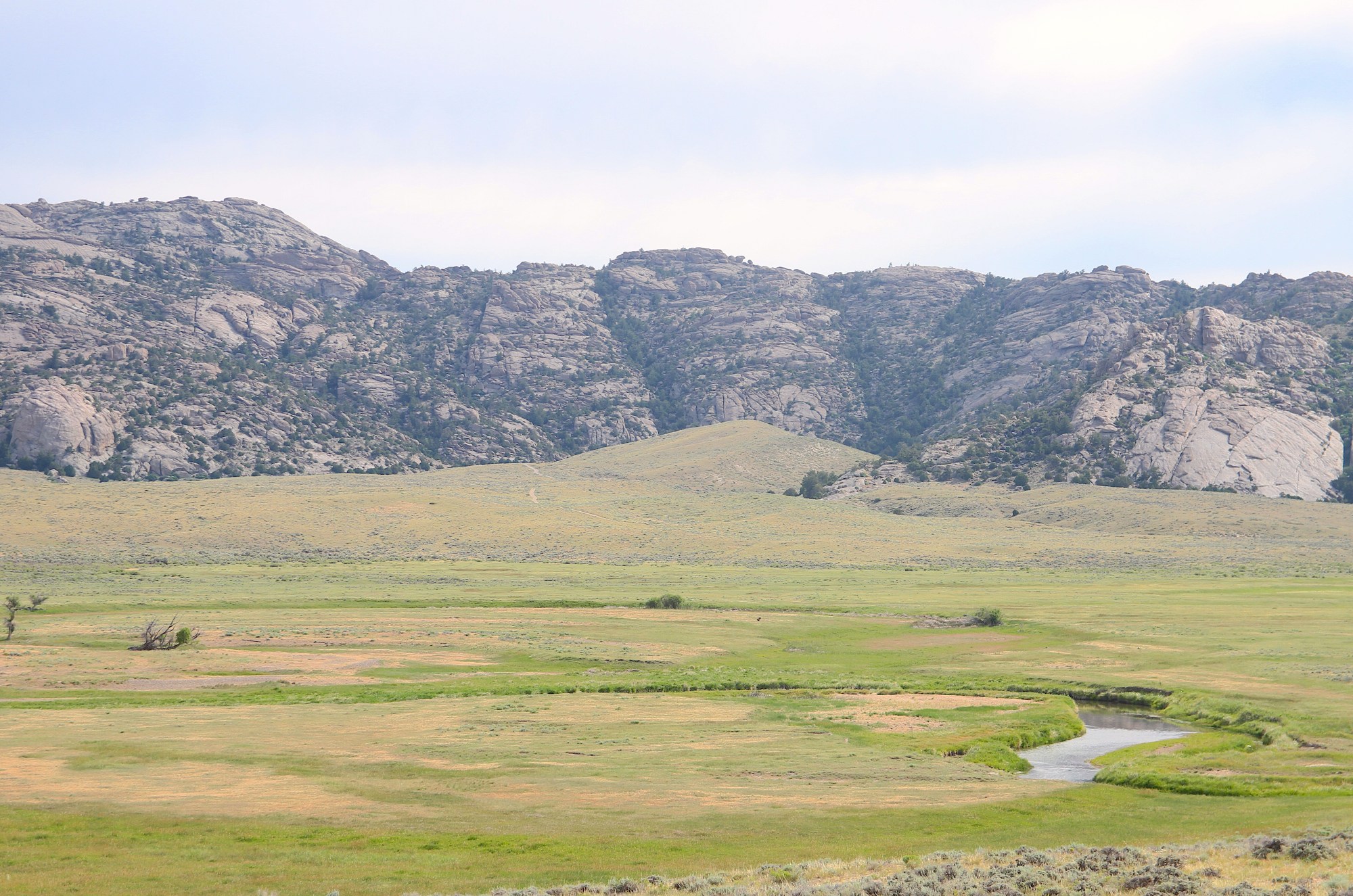
Martin’s Cove is a nook in the Granite Mountains that, from afar, doesn’t look like much.
But in 1856, a party of hundreds of famished, battered and dying handcart-pulling Mormon emigrants rendezvoused around this spot with a rescue team dispatched by then-LDS President Brigham Young. Taking shelter for five days from the frigid winds of an October blizzard, many who would have died survived.
Now, the tragedy and Mormon settlers’ efforts to save emigrating strangers is an integral part of LDS church lore. It is such a central part of the Mormon story that the church has sought to acquire Martin’s Cove. Those efforts, and the church’s management of the site, have historically spurred significant controversy, and even a lawsuit, mainly because the cove is located on public land administered by the Bureau of Land Management.
Larsen is part of a new effort and nonprofit organization whose sole purpose is to facilitate a land deal that would turn over 933 BLM acres surrounding Martin’s Cove to the LDS church. In exchange, the public would gain an equal number of LDS-owned acres split between two tracts: a 358-acre parcel along the Sweetwater River near Independence Rock and 575 acres that’s hugged between the mountainous Miller Springs and Savage Peak wilderness study areas.

The idea is to bring the public on board, and then do the same for Congress, which would be asked to execute the land trade. It’s a plan that’s attracting considerable support: “friends” listed by Wyoming Friends for Martin’s Cove include three former Wyoming governors — Matt Mead, Dave Freudenthal and Mike Sullivan — and Rob Wallace, a former Interior Department political appointee who played a pivotal role in administering federal lands during the first Trump administration.
“My sense is this is going to be a very high-quality effort that is going to benefit Wyoming,” Wallace told WyoFile on Friday. “They’re trying to think about this so everybody wins.”
Deep and more recent history
Although the Martin’s Cove story is now known for heroics and saved lives, it was also a tragedy and one of the deadliest episodes of overland emigration in the western United States. Recordkeeping was poor and the precise death count is unknown, but historical accounts show that more than 200 of the 1,100 people led by handcart company captains James Willie and Edward Martin perished while crossing Wyoming on the way to Salt Lake City.
“It was by far the worst non-military disaster on the emigrant trails,” writer Annette Hein wrote about the Martin’s Cove rescue on WyoHistory.org.

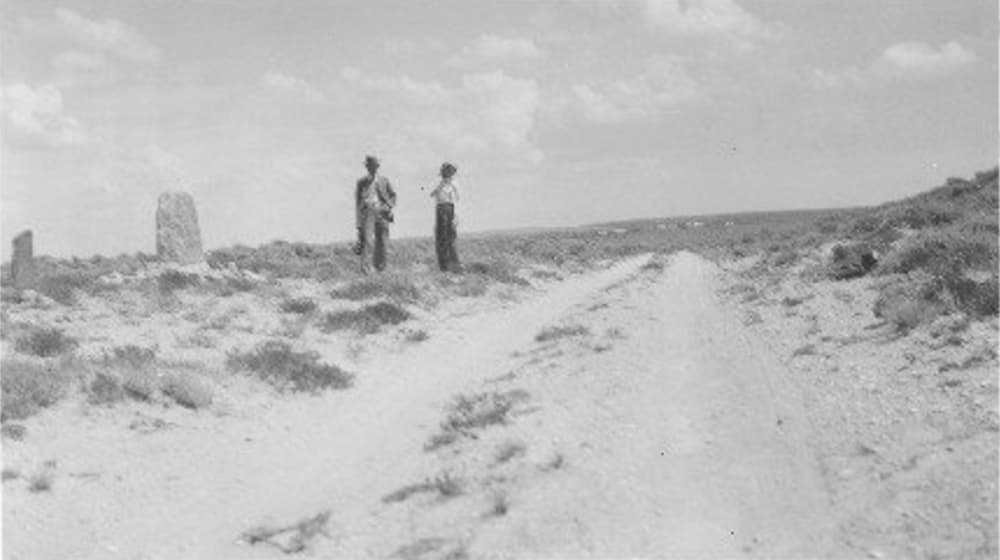
It took 74 years before LDS leaders tried to locate the site where the Martin Company handcart party took refuge. They pinpointed the site as a cove in the rocks about two miles up the Sweetwater River from Devil’s Gate, even though its “whereabouts were sketchy,” according to WyoHistory.org, and no survivors of the 1856 event ever returned to verify where they sheltered. In 1933, the Utah Pioneer Trails and Landmarks Association established a monument and named the spot Martin’s Cove. By 1977, the cove was listed on the National Register of Historic Places.
In 1996, the LDS church acquired the 13,000-acre Sun Ranch, which runs along the Sweetwater River and abuts Martin’s Cove. Around that time the church acquired a five-year lease from the BLM. During that era, U.S. Rep. Jim Hansen, a LDS member and congressman for Utah, introduced legislation that would have enabled an outright sale to the church.
The legislation met stiff resistance, recalled WyoHistory.org founder Tom Rea, who presides over the Wyoming chapter of the Oregon-California Trails Association.
“There was quite an uproar opposed to the idea of the LDS church being able to buy federal land,” Rea said. “People were pointing to Devil’s Tower, saying, ‘The tribes could come back and say this is holy ground for us.’”

In the aftermath, the LDS church and BLM worked out a 25-year lease for Martin’s Cove, which spans from 2004 to 2029. Early on, however, the ACLU sued, arguing that non-LDS visitors were being improperly proselytized while passing through the Sun Ranch and on signage in the cove. The church agreed to a settlement.
“We believe that we’ve filled that obligation,” Larsen said, “and not imposed our religious beliefs.”
The proposed land swap is Larsen’s wish for the next chapter in the Martin’s Cove saga. He’s not a fan of the land remaining in the federal domain because of changes in “public land policies from administration to administration.”
“Our hope is that the past 25 years have resolved the concerns that existed,” Larsen said.
The deal
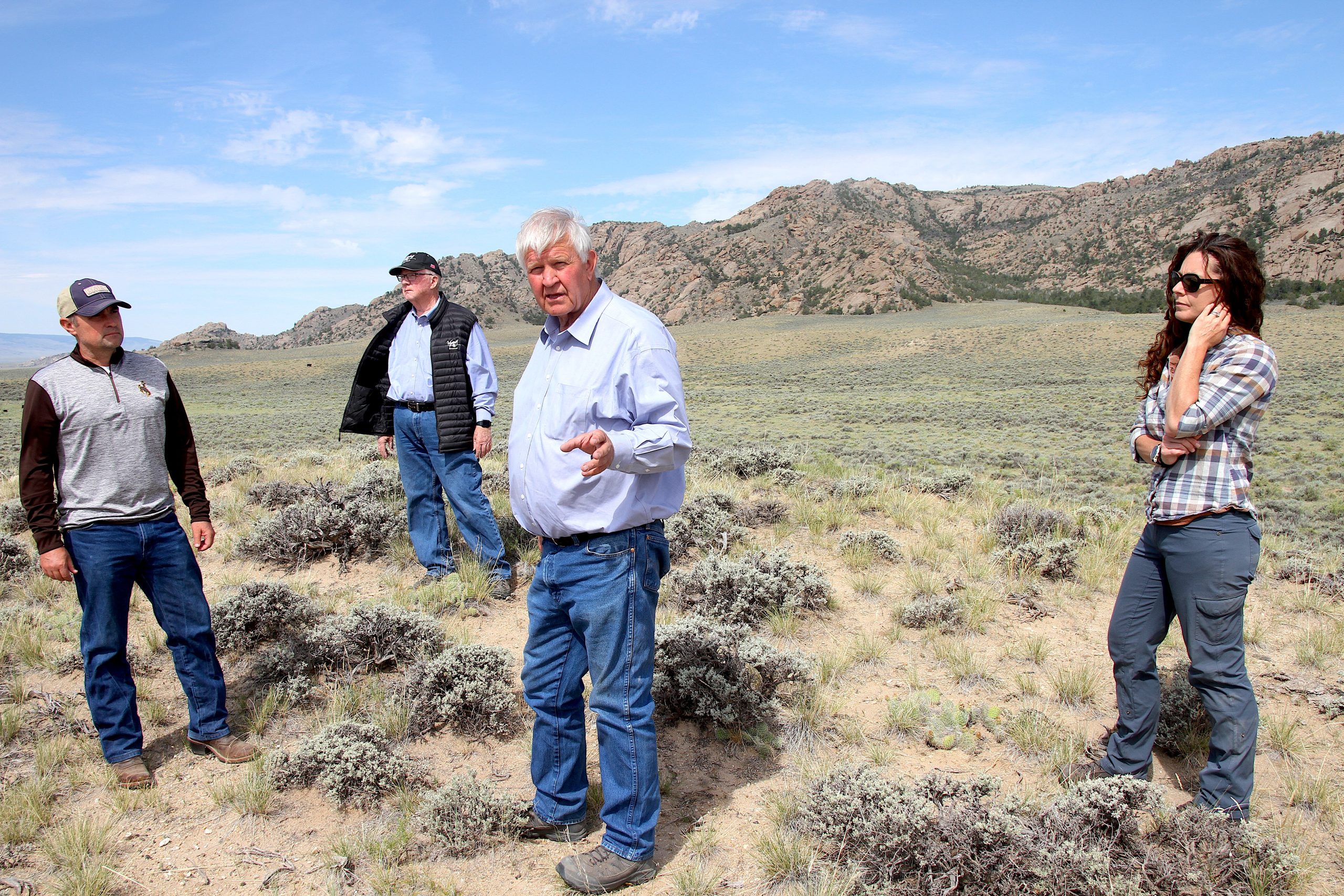
On July 6, Larsen led a tour of Martin’s Cove and the LDS property proposed for the land swap. LDS church spokeswoman Beth Worthen joined him, as did State Sen. Dan Dockstader, Wyoming Friends for Martin’s Cove board member Travis McNiven and Bralli Clifford, a Wild Sheep Foundation board member.
The idea of a land swap, Larsen said, came from outside the LDS church. In a meeting while doing due diligence in anticipation of another attempted purchase, a conservationist suggested a trade.
“We said we agree,” Larsen said. “We didn’t want to just go out and say, ‘This is our grand idea, it’s better than anything, don’t you agree?’”
The parcels that the LDS church would give up in the exchange were selected strategically to entice different stakeholders.
“We’ve got a great argument,” Larsen said. “The public comes out ahead.”
The Lander resident’s contention came while en route to “Beef Gap,” which is a sagebrush-strewn opening in the Sweetwater Rocks between the Savage Peak and Miller Springs wilderness study areas.
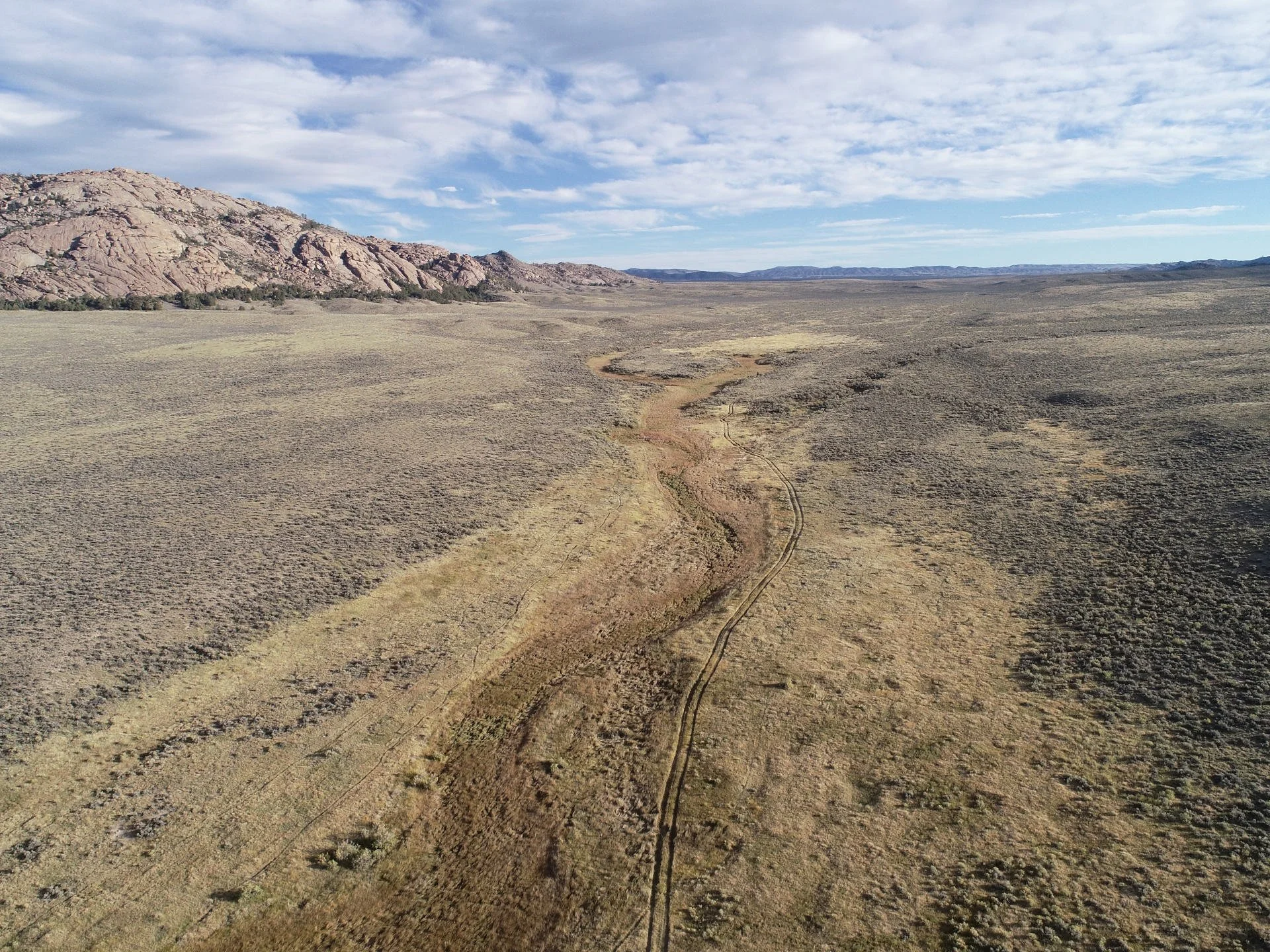
Nearly a square mile of LDS land in the beef-filled gap — cattle actually grazed nearby — would turn over to the BLM under the proposed deal. Standing atop a knoll overlooking the tract, Dockstader, a state senator from Afton, argued that the public would be acquiring “quality pieces.”
“One’s centered on wildlife,” he said, “one centered on historic values.”
According to a consultant’s survey, the Beef Gap parcel contains “crucial year-round range” for mule deer and pronghorn. The acquisition would also link federal land in an area that’s long been eyed as a reintroduction site for bighorn sheep.
The remote parcel is not easily accessible to the public, however. Access would require a long ATV drive or horseback ride down two-track roads across BLM and state land. Alternatively, it could be reached with permission from either the LDS church to cross the Sun Ranch or an OK to trespass across the Pathfinder Ranch. At this time, a permanent easement with the LDS church isn’t in the plans, Larsen said.
The 358-acre tract near Independence Rock does offer easy public access. It borders state land and is bisected by nearly 2 miles of the Sweetwater River. And there are a trove of historically significant cultural resources.

Visiting the site, Larsen nabbed an old rusted square nail from the soil. Soon, the party found a metal chunk of an old buckle and shortly after that they hiked up to the site of a now long-gone pioneer bridge across the Sweetwater River.
“You can see the abutment on the other side,” Larsen said.
A marker the trade advocates also walked by denoted where a Pony Express station once stood.
Rea, at the Oregon-California Trails Association’s Wyoming chapter, remarked that the historic resources on the Independence Rock site are “really, really cool.”
“The church is offering a really nice deal,” he said. “This sounds like a good idea. Especially if the church will continue doing the good job it’s been doing with [Martin’s Cove] and guaranteeing public access.”
Rea would like to see the land swap happen in tandem with a broader initiative to make the relics of the Oregon-California-Mormon pioneer trails and Pony Express more publicly accessible and meaningful. Before COVID derailed planning efforts, there was a push for a multi-agency interpretive plan for the historically rich stretch of Highway 220 that stretches from Rattlesnake Pass to Martin’s Cove.
Any naysayers?
Larsen and his fellow land trade advocates have been leading tours and pitching the Martin’s Cove proposal to the media partly because they’re trying to understand the scrutiny that lies ahead and address those concerns before introducing a single-subject bill. Partly that’s so blowback doesn’t catch Wyoming’s congressional delegation off guard, he said.
“You can step in it pretty easy,” Larsen said.
McNiven, who’s on the Wyoming Friends for Martin’s Cove board, said the nonprofit has been working “very hard” to vet the plan with “all the parties.”
It’s an approach that Wallace, the former Trump administration appointee, says is wise.
“If the Friends group and the board are successful in their outreach,” he said, “it’ll give the delegation comfort in knowing that their constituents are behind it.”
So far, no staunch opponents have emerged — at least vocally.
Julia Stuble, the Wyoming director for The Wilderness Society, said that from her view the land exchange proponents are using a “sound process” that “appears to be prioritizing the public interest.”
“They’re looking to create a solution that prioritizes access, conservation of wildlife habitat, and preservation of the historic sites,” Stuble said. “In particular, we applaud them for taking feedback seriously and seeking consultation with affected tribes.”
Because the preferred approach to the land trade is a Congressional mandate, it would forgo the customary administrative steps and be forced down upon the Bureau of Land Management. Still, Larsen “felt like we owed them” and ran the plans by interim BLM-Wyoming Director Kris Kirby.
“As you would suspect, [the BLM] said, ‘OK, we’ll do whatever Congress tells us to do,’” Larsen said.
In his ideal world, Congress will be giving BLM that direction very shortly. Although the land exchange proposal was just recently publicized, its LDS advocates and fellow gentile supporters are moving fast.
“We’re working on the draft language of a bill,” Larsen said. “We’d like to have a bill introduced this summer.”
Clarification: Information about public access to the “Beef Gap” parcel has been updated. —Eds.


Listening to NPR land swap report, if I understand Mike Koshmrl, I believe he said even though the deal by passes typical public comment, the land the LDS will trade has high interest for many groups and it will benefit wild life. Mike did not say in the NPR report that the land the will become public in the swap is not easily accessed without crossing private land owned by the LDS Corp. That corporation could trespass people from crossing their land. So, if the LDS really wants Martins cove, they should offer additional acreage. Even enough land to allow a public trail through their land.
The first paragraph of this article says Martins Cove is sacred land for nearly 18 million members of the Church of Jesus Christ of LDS. This is egregious erroneous party line narrative the LDS want people to believe. I don’t have statistic numbers of how many people it might be sacred ground for. However, credible statistics for at least 3 sources (Return and Report, Jana Reise, and Pew Research) show that only about 4 million people attend the LDS church at least one day per month. Other studies indicate of those 4 million, a large number only attend for social reasons and community. Most are referred to as PIMO (Physically In Mentally Out). Therefore, I suggest the author and editors of this article refrain from repeating the churches BS narative.
Sounds like a wonderful deal and is long overdue. Those of us carrying on the names of ancestors who suffered in the Cove appreciate all efforts being made. We would like a change of wording in the article however.
The story of Martin’s Cove is not “church folklore,” but real & personal stories well documented from ancestor’s journals documenting their faith and suffering and their rescue.
I wish Representative Larson the best in his endeavor. I would be nice if BLM would put as much effort into repatriating the Sacred Lands of the original inhabitants of Wyoming.
This land exchange the Mormons are contemplating, if there’s no access through Beef Gap is a big NO GO. In fact, maybe kick them off the present Martin’s Cove area and return that parcel to regular BLM status. The LDS has billions and billions of tax sheltered money sitting in their pockets as well as 100’s of thousands of acres of land across the nation, they don’t need any given to them that blocks public access
Gordon Townsend is right. No permanent public access to Beef Gap, no trade. I’ve had enough of the Mormon Church cult rewriting the history of the Oregon Trail and the historic Sun Ranch. Everything this cult does downplays the historic trails and historic ranches along the Sweetwater. The cult wants dominate the historical record through their land acquisitions. Look what they’ve done at Sweetwater Station. And the cult doesn’t even know for sure where the exact location of Martin’s Cove actually is.
And there is still swamp land in Florida.
Unfortunately Mr. Larsen does not address public access to Savage and MIller as well as Lankin and Split Rock. Why, because that will never happen. Sweetwater Rocks WSAs have no public access and are surrounded by about 95% private land. If you choose to go to any of these WSAs better contact helicopter operator. How about providing vehicle access to all the WSA from Highways 287 and 789? In addition, any proposed law should designate all the WSA as wilderness. Then and only then is it a good deal?
Watch out for the fine print! Only those with a vested interest agree with this proposal. Ceding public access is never a good idea. These land swaps always come with an asterisk, it seems. Watch out, people! This land swap bears scrutiny!
Mike,
AmbI correct that there will be no access granted by the mormon church across this 13,000 acres to the Beef Gap parcel or some of the other property it is offering to swap? If that is the case, it seems to be a bad deal for the residents of Wyoming. The mormon church would not be giving up anything with regard to those parcels as they would be the only party having access to it and not the residents of Wyoming.
Is me reading correct!
Thanks for reading, Brad. When I asked about possibility of an easement so the public could access the Beef Gap parcel, Lloyd Larsen said he thought it would not be a permanent access but that people could ask. That’s all I know on the matter, but I’m sure the Wyoming Friends for Martin’s Cove folks would give you some more clarity if you reach out.
No access, no trade. A church doesn’t need our PUBLIC land. The whole earth is sacred ground.
Your article repeatedly erroneously refers to the church name as “The Church of Latter-day Saints”.
Whether done so by personal bias, or truly just ignorance, please use the correct name of the church, which is, “The Church of Jesus Christ of Latter-day Saints”. As much effort as it seems went into all others details in this article, repeatedly mis-naming the church definitely reflects poorly on the author, editor, and publisher.
does it really matter?
No need to get your jesus jammies twisted up over such a silly complaint…
If the Beef gap parcel does not allow for public access and if the BLM allows the mormans to graze their cows on it then they are not really trading it. If it is a reintroduction site for Bighorn sheep then cattle grazing needs to be eliminated!
Proceed with caution.
Yeah. That pretty much sums up my concerns. It’s unclear from the article if there’s a formal process for the public to engage with this in a constructive, meaningful way? (Besides just firing off emails to Larsen I guess?)
Agreed, unless permanent easements are included with the Beef Gap parcel, then the public is being taken to the cleaners. Never make a deal with anyone asking you to “just trust us”.
Living in Fremont County, one still hears occasional anecdotal stories that make it fairly clear that non-Mormons are not exactly welcome at Martin’s Cove. Do we have any reason to believe it will be any different with the Beef Gap parcel?