

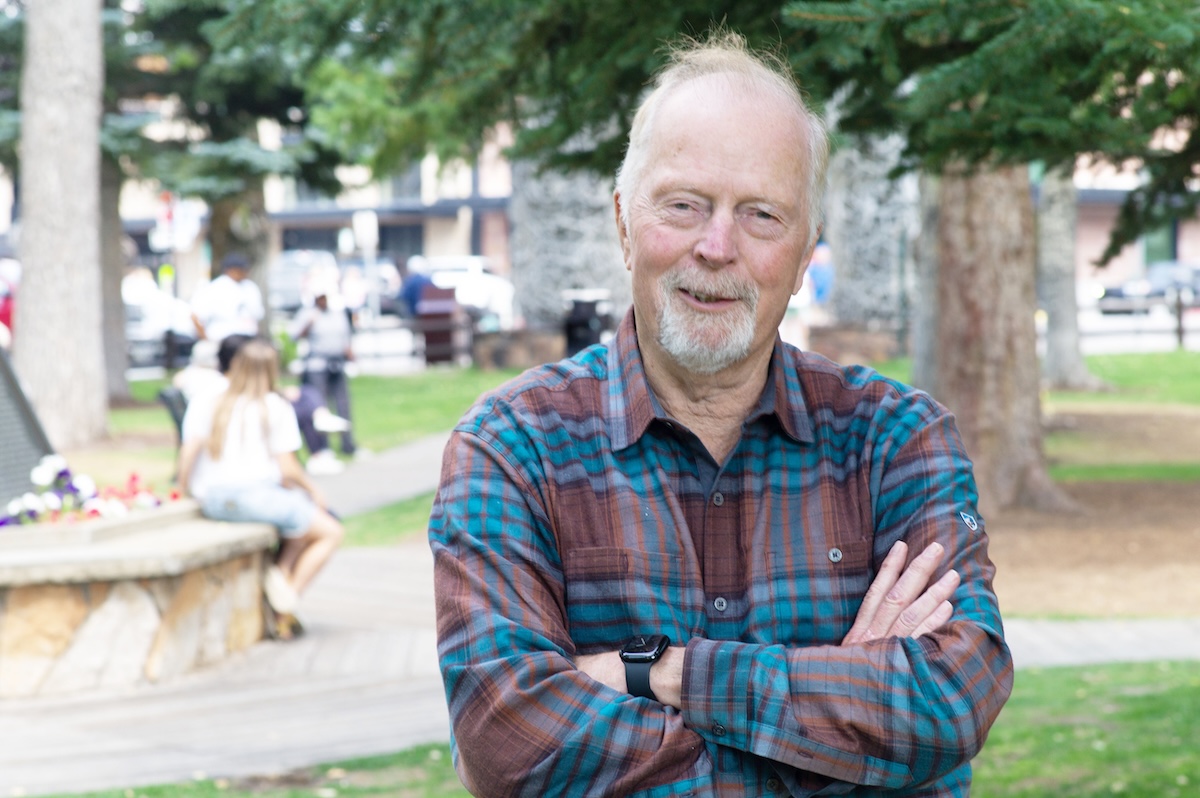
To celebrate the 200th anniversary of George Washington’s birthday, a Wyoming gubernatorial committee in 1932 rallied towns across the state to create city parks in memory of the nation’s first president. In a widely successful campaign, one of the many places set aside was the 1.09-acre Town Square in Jackson, now enjoyed by millions of visitors every year.
Back then, “town authorities” designated Block One of the Clubhouse Addition as a park, the town nurtured park-appropriate “plant material” and citizens, “by private subscription,” raised $150 for landscaping and other work.
Commission chair George Brimmer relayed the success to Cheyenne in 1933, documenting the end of the board’s official work — with a caveat. As private citizens, commission members would “continue until there is a full consummation of the plans.”
Brimmer, a Rawlins attorney schooled in law at New York City’s Columbia University and awed by that metropolis’s Central Park, might not have imagined a legacy larger than the elk-antler-arch Jackson Town Square — an international icon visited by masses on the way to Grand Teton and Yellowstone national parks.
“I knew after that summer I wanted to be part of the parks in this part of the world.”
Rob Wallace
Ninety-two years on, however, private citizens’ work continues. And Brimmer’s grandson may have bested the old man by 638.91 acres.
The Teton Science Schools will honor grandson Rob Wallace today with the Murie Spirit of Conservation Award, recognizing years of public-lands advocacy and his “most consequential” achievement — playing an instrumental role in the preservation of the Kelly Parcel in Grand Teton National Park.
“It’s something nobody will know about,” Wallace said of the conservation struggle he aided from just offstage. “It was a series of very interesting things that all went right at the same time.”
Murie legacy
The Science Schools celebration honors national and local conservation leaders and this year also recognizes Amy Brennan McCarthy, CEO of the Teton Raptor Center, who will be named a “local legend.” She is a wildlife conservation leader recognized for ecosystem science-oriented community programming.
The Science Schools will bestow the awards at the Murie Ranch in Grand Teton where Mardy Murie, called the country’s “mother of conservation,” along with her family and others conceived the modern conservation movement.
Wallace followed a winding path as he wended his way toward the recognition. An Evanston youth whose father was an attorney and mother, Nancy Wallace, was a two-term representative in the Wyoming Legislature, he found delight as a youth in the Uinta Mountains and Medicine Bow National Forest.

And also rascality with his sophomore townie high school buddies. It wasn’t a single illicit party that made his mother put her foot down.
“It was more than one,” he said.
She settled on him spending his last two high school years in the New Mexico Military Institute in Roswell, New Mexico.
“She thought I might have a better chance for a little more focused life if I left Evanston for a couple of years,” Wallace said.
Focus he did, attending the University of Texas studying petroleum engineering. After college and before a required ROTC Army stint, he got a position as a seasonal ranger in Grand Teton National Park.
“I had a job before they had standards,” he said. “It was an epiphany. I knew after that summer I wanted to be part of the parks in this part of the world.”
Into the parks
After brief Army service, Wallace spent four years as a seasonal park ranger, “paid to be outdoors, on the rivers, climbing mountains, riding horses,” he said.
He also saw the policy makers – senators, congressmen, cabinet members – drift through Grand Teton on dutiful sojourns. “How do these people come up with these policies,” he wondered about the far-from-Wyoming beltway bunch.
Serendipity took him to a Cheyenne rally where Malcolm Wallop was launching an improbable Senate run against Gale McGee. Wallace accepted an on-the-spot offer to be the first on Wallop’s campaign staff.
McGee sought his fourth term. “You had to be crazy to take him on,” Wallace said. But Wallop “just caught the wave — sort of the early years of the sagebrush rebellion.”
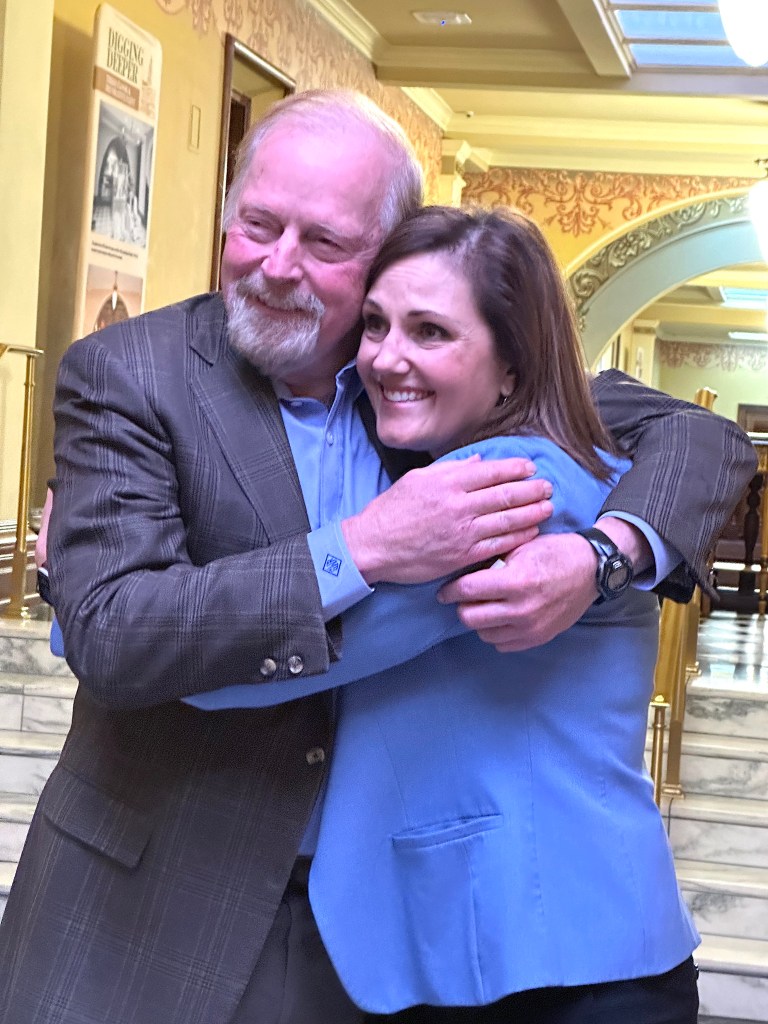
Myriad jobs in public land policy and energy followed. He was back in Wyoming for a few years working on a water project, was Wallop’s chief of staff and Republican staff director for the Senate’s Energy and Natural Resources Committee.
He jumped at the chance to work for the National Park Service as head of congressional affairs, shepherding a policy that allowed parks to keep 80% of the fees charged at entrance stations.
He ran for Congress in 1994, coming in second in the primary to Barbara Cubin. Jim Geringer, who was also in the race, eventually won election as Wyoming governor and tapped Wallace as chief of staff.
There’s more: 17 years seeing the world with General Electric, then unanimously confirmed by the Senate as assistant secretary for fish and wildlife and parks at the U.S. Department of the Interior, a post he held from 2019 to 2021.
Independent conservation
Along the way Wallace kept his hand in independent conservation. He helped launch several Wyoming initiatives and was a founding member of the Grand Teton National Park Foundation.
That group forged a new Park Service policy in the early 2000s allowing independent nonprofits to boost park projects. Until then, “all things we find important were centrally planned in the Denver Service Center,” he said. “They would pass that down from Heaven.” The construction of the Craig Thomas Visitor Center “proved that [new] model worked,” Wallace said.
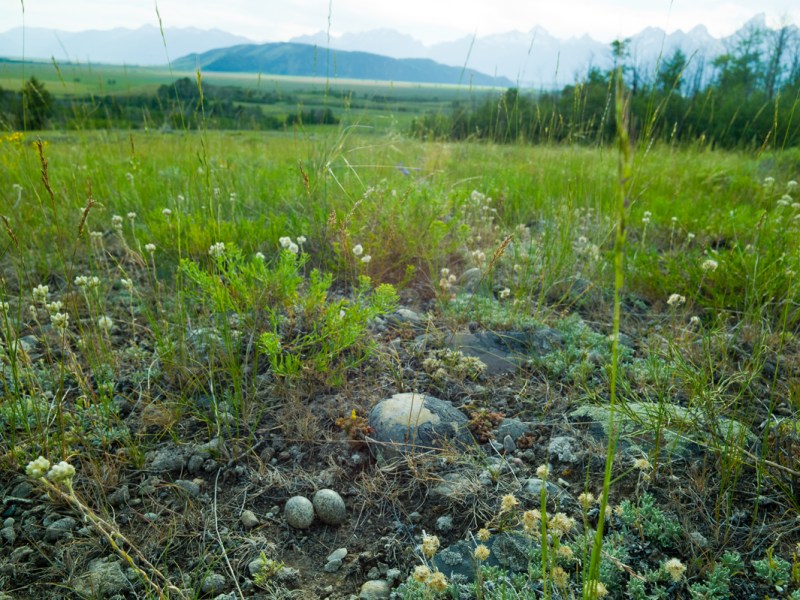
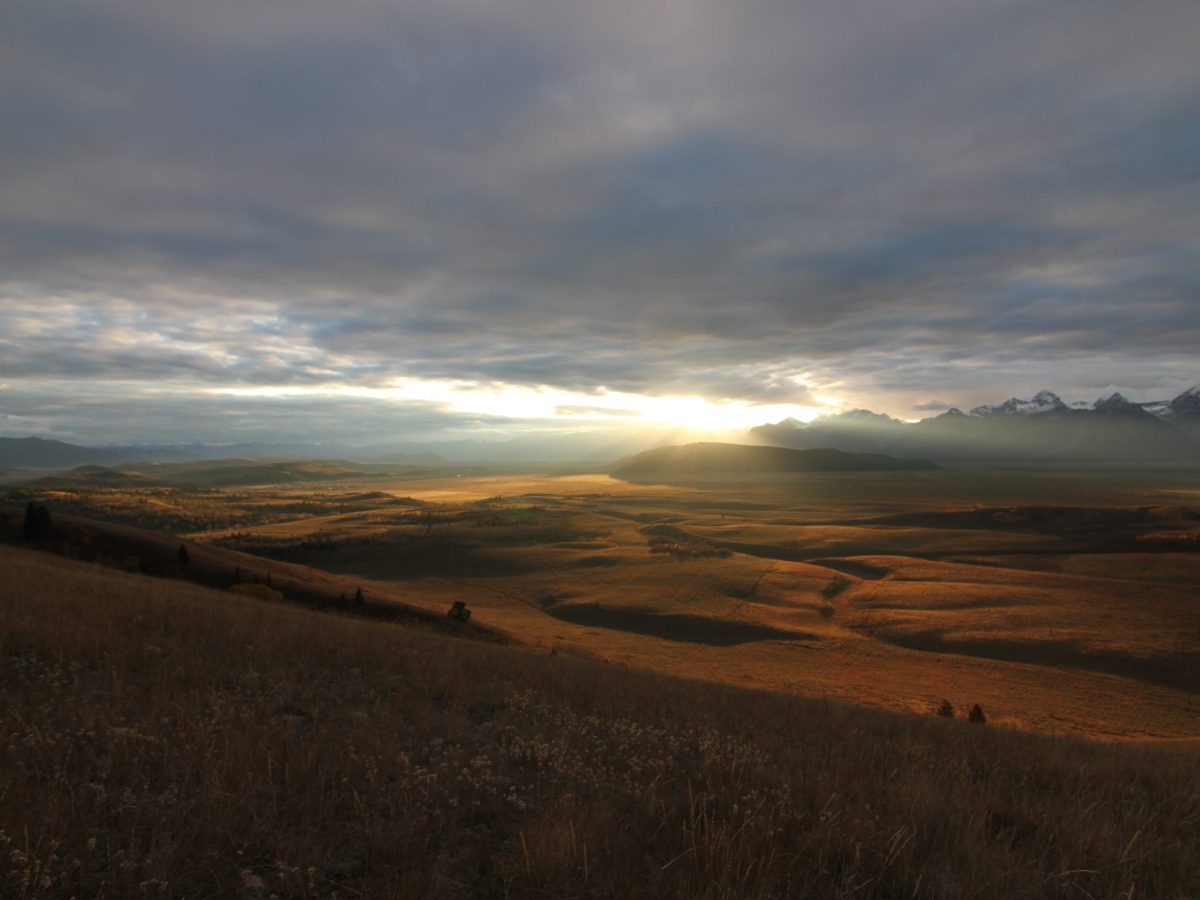
Preserving the Kelly Parcel, his “most consequential” achievement, was a drama with a large cast of characters and a tortured plot. It involved the entire Legislature as the chorus and leading roles by Gov. Mark Gordon, Wyoming Sen. Mike Gierau and Wyoming Treasurer Curt Meier.
“There were so many different near-death experiences during that time,” he said of the purchase.
The Legislature for years considered selling the 640-acre Wyoming school section that covered a critical migration crossroads inside Grand Teton. Debate swirled over whether it should go to the park or be put on the block for the highest bid and potential private development.
By law, the federal government couldn’t spend more than the $62.4 million appraised value for the square-mile section. Wyoming lawmakers believed they could get more at auction. One raised the bid, proposing $100 million.
With Wyoming’s price set, conservationists huddled – “Who’s going to call Leslie?”
That’s the indefatigable Leslie Mattson, head of the Grand Teton National Park Foundation. Her mission, and she chose to accept it, was to raise $37.6 million in a few months to make up the difference and meet an end-of-2024 legislative deadline.
At a nail-biting Wyoming Board of Land Commissioners’ meeting in November 2024, Treasurer Meier cast the deciding vote in favor of the sale.
Mom was right
“Curt Meier was the hero in my mind,” Wallace said. The treasurer agreed the plan met all conditions the Legislature imposed on the sale. “Curt did his homework and said, ‘I’m with you too,’” Wallace said.
Then came “a race across Wyoming,” a modern-day Pony Express.
Jason Crowder, deputy director of the state land office, “took off with the deed and papers,” Wallace said. He met Jeremy Barnum, Grand Teton’s chief of staff, in Shoshoni.
It was a scene out of a spy movie, Wallace said, a rural settlement in a windswept winter landscape with “two guys in heavy coats swapping documents.”
With that, the Brimmer/Wallace legacy stood at 641.09 acres, all perhaps because of a Wyoming state representative from Evanston who set her son on the straight-and-narrow.
Wallace might have missed some bender high school parties in Evanston, but acknowledges his mom’s wisdom.
“She was right,” he said.
This article was corrected to note that Wallace’s grandfather lived in Rawlins, not Riverton — Ed.

I am very proud to call Rob my friend. We went to high school together and I have fond memories of his younger days. I have followed his career, and he is truly amazing.
Rob,
Your mother would be proud of your contribution, as are all who have known and worked with you.