

Wyoming is looking for a savior to provide a robust economy and steady tax revenue to replace “boom or bust” industries, improve the environment, and create better job opportunities to stop the mass exodus of youth.
Opinion
The search for a fix to this perfect storm of needs can lead to desperation and solutions that may offer short-term benefits but longer-term headaches.
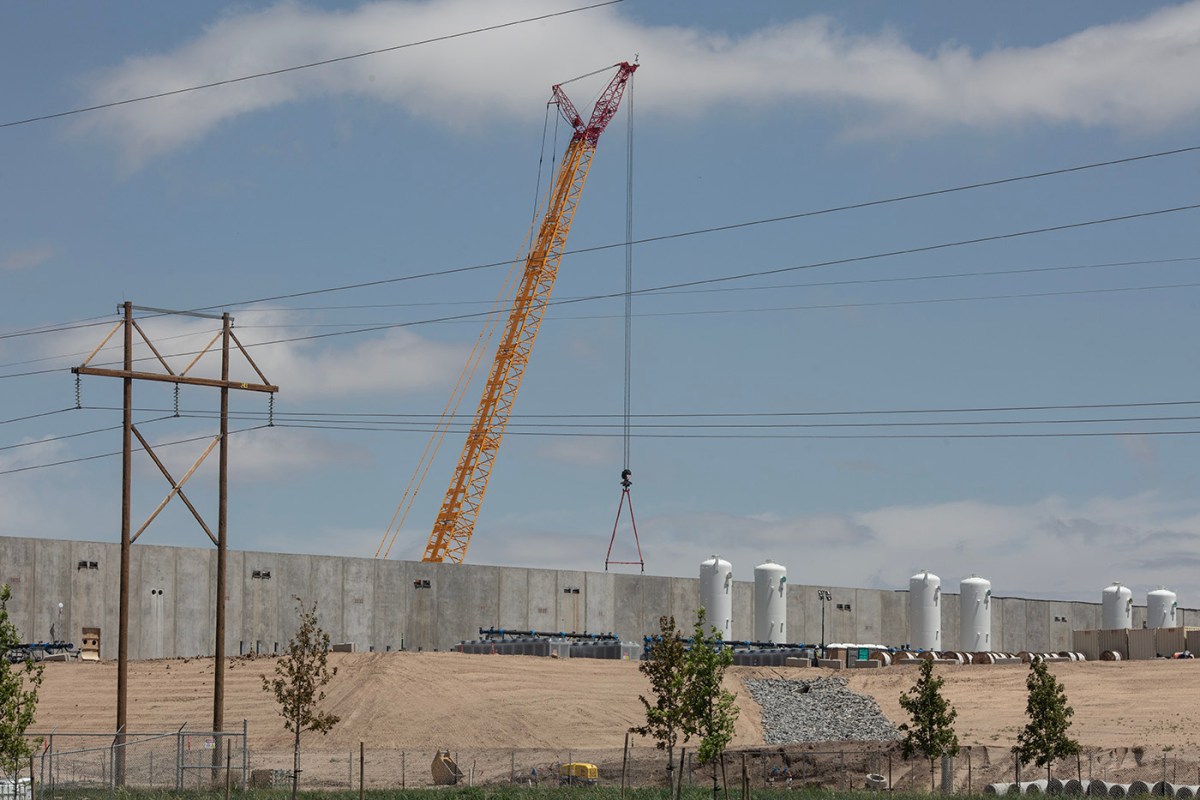
Corporations owned by billionaires have targeted Wyoming to locate and rapidly expand data centers, prepared to swoop in and radically transform the state’s landscape and reshape its economy.
How Wyoming responds is one of the most important decisions it has ever faced, dating back to territorial days. Beware of how politicians leverage the issue in this election season.
Empty promises won’t help when Wyoming needs tremendous help navigating dangerous, uncharted waters, necessitated by the need to diversify an economy that for too long has depended on polluting fossil fuel industries and created a huge carbon footprint that must be reduced ASAP to fight climate change.
Counter to its own interests, as well as the welfare of constituents, the Legislature propped up fossil fuels at all costs even as demand plunged and caused budget shortfalls.
Cheyenne LEADS, the capital city’s economic development agency, said Cheyenne and Laramie County have 10 operational data centers, five under construction, and nine more projects in various stages of planning.
But wait, there’s more! Another 36 projects have called LEADS or site selectors to express interest in Cheyenne or Laramie County, and 30 have made at least one exploratory call.
In May, loud public opposition forced a Cheyenne City Council vote on a one-year moratorium on new data center development. But it was rejected, 9-1.
City, county and state officials and businesses have generally supported more data centers; some are incredibly gung-ho, obviously for economic reasons.
But many residents have flooded hearing rooms and expressed deep concerns about impacts on water and electrical power. In a drought-stricken state that perennially lacks water, and where utility customers already protest huge rate hikes, the political climate hardly seems ripe for welcoming an industry that uses a massive amount of both.
Officials in at least 14 states have recently introduced or considered legislation to slow new projects while they review the effects on water, power grids and growth. Wyoming, still trying to snare the golden ring, is not one of them.
Google is building the state’s largest data center at 2.7 gigawatts, 8 miles south of Cheyenne. It will use more electricity than all of Wyoming’s households combined. It’s designed to scale up to 10 gigawatts, which would make it the biggest single data center in the nation.
An $800 million data center campus owned by Meta is scheduled to open next year. The news that a rare and deadly bacterium, cupriavidus gilardii, was discharged from the center and recently found in the city’s wastewater system sparked public outrage, which will likely spur more intense data center opposition.
Cheyenne Mayor Patrick Collins has promised residents transparency about impacts on the community and pledged to mitigate the public’s concerns.
In May, the mayor told the Legislature’s Select Water Committee, “I know today your focus is on water, but I want you to know that our expectations of the company will be to do no harm when they come into our community.”
That may sound like some degree of caution, but he’s an unabashed industry supporter. “Meta’s investment will bring great jobs to our community and help build our tax base — this is a great day for Cheyenne and Wyoming,” Collins said when Meta made its data center announcement.
“They’re building great, great opportunities for people to make careers,” Collins said when Microsoft — already Cheyenne’s largest taxpayer — announced plans to triple the size of its existing plant footprint.
Gov. Mark Gordon issued an executive order called “Data Centers the Wyoming Way” that requires state agencies to coordinate regulation as tech companies eye the state for its cool climate and energy resources to meet the nation’s high demand for artificial intelligence and advanced computing.
“We welcome investment, jobs, and economic opportunity while protecting our communities, our natural resources, and our citizens from unintended costs,” Gordon said in a press release.
I’m not comforted by this promise. I shudder every time I hear any official say we’ll get it right by doing it “Wyoming’s way,” whether it’s tax reform, Medicaid expansion, etc. It never materializes. The only Wyoming Way I believe in is a street in Madison, Wisconsin. It actually exists — here’s proof on Zillow.
Opposition to data centers in Cheyenne started strong and keeps growing.
“We are losing the soul of our community to an unchecked explosion of growth,” Patricia McCoy told the Cheyenne City Council when the topic turned to annexation for data centers. “This isn’t just vacant land. This area is the gateway to our natural beauty … You are destroying the very landscape that makes Wyoming Wyoming.”
Thomas White, who lives near the Google data center site, told Inside Climate News he’s concerned the corporation’s explanation that it’s going to drill deeper to prevent aquifer contamination won’t work.
“What happens when they punch a hole and there’s leaks that contaminate the aquifer?” White asked. “How much [drinking] water will they be taking out of the ground?”
Data centers may fill some fundamental needs Wyoming has been looking for to greatly improve its economy. But the state can’t let the regulatory process be rushed in a matter that contains so many environmental risks and a wealth of other valid public concerns.
The Legislature needs to address the data centers’ unprecedented electrical power, water and land use, and how state and local governments exercise their authority to manage the industry’s growth.
The far-right Freedom Caucus last week issued its position on data centers.
It blasted Gordon’s “mealy-mouthed” executive order and said, “Policymaking on data centers and their related impact on energy costs and water use should be done with many stakeholders, lots of research, and, most importantly, the people of Wyoming at the table.”
Amazingly, I agree with the group’s call for research and public input. It must have done some polling and realized it could tap into public anger over the issue.
But I just have to laugh. How can radical politicians who’ve spent the past two years wasting an enormous amount of time on red-meat issues to please its base — banning transgender athletes, passing unconstitutional laws restricting a woman’s right to make her own healthcare decisions, and trying to ban porn that doesn’t exist in county and school libraries — think voters will believe these guys and gals will prioritize a real issue they’ve never cared a whit about?
Folks, that’s a combination of chutzpah and hubris that you don’t want representing you. And it’s also counter to President Donald Trump’s executive order demanding the rapid expansion of data centers so they can be placed anywhere a billionaire wants one, public opinion be damned.
Before you vote for a Freedom Caucus candidate in the Aug. 18 House Republican primary, realize that by the time the new Legislature is seated in January, they will all have amnesia and won’t cross their beloved leader on this or any other issue.

It’s the huge landholdings and surface disruptions that cause me a lot of concern. This, along with the huge amount of water use, begs me to ask what value do our politicians put on these resources? What is the reclamation bond Meta pays Wyoming? What!? These centers will be here forever, right? Not a damn chance. With technology advancing at light speed I think it’s naive to think these huge mega acreage data centers will be around very long. A smaller and more economical center will replace the four thousand acre plus campuses and Wyoming will be stuck with the reclamation bill. Wyoming needs to require a realistic reclamation bond not like the do nothing bonds the oil and gas industry paid!
Once again, Mr. Drake hit the nail solidly on the head. Especially as it regards the so-called “Freedom Caucus.” It is a tricky time. Your vote in the primary election is important not just for the result but for the opportunity to consult your gut. Have that conversation today.
Data Centers Wyoming’s Way – appears to be letting them build wherever they want, use huge amounts of water, pollute more water, and tell us how great it is for Wyoming. Gordon has lost the plot.
When water guzzling data centers deplete groundwater resources and undermine the future of Wyoming communities, what will Wyoming officials recommend? Divert the Green River via massive pipes sending water to eastern Wyoming? Anyone else remember the 2009 goofball scheme of Aaron Million who proposed selling Green River water to Colorado? (https://wyofile.com/green-river-diversion-plan-a-big-rip-off-of-wyoming) Or maybe invade Montana and grab their water? John Wesley Powell, who warned – – in the 1870s – – about development in our high dry desert lands west of the Hundredth Meridian, must be turning over in his grave.
Beware the people you put in power this Fall. Many call for less regulation and more development. You can be sure that there will be no mine or data center next to their house.
I wasn’t going to respond to this piece as I really don’t know much about data centers
However, after talking to Alexa and Siri, I realize that I could ask them as they utilize data centers., I figured what better way to get information
They agreed that data centers can cause problems. They’re using data centers to tell me about data centers.
I’m using talk to text to write my message. Oh man it uses a data center
Even if I was typing this information into my phone, they would still be involved with a data center.
I decided to sit back and listen to my music on my echo device. I then realized
that streaming music probably uses a lot of data. So I asked Alexia. Yep sure enough streaming music uses a lot of data. Streaming movies uses major data
Good thing I only stream a movie a couple times a day😡
I was gonna jump on my computer but again data centers. Asking your computer to polish up a story for you. DATA CENTERS.
I went to get some ice to make myself a drink. Yep data centers were stressing me out and I needed an alcoholic beverage. Hopefully tequila is not made using data centers.
My ice machine is a smart ice machine, so I looked it up and if you use the smart feature on it, it uses data centers.
So now I’m stuck what do I do? I just have to realize that whatever I use to respond to this article, I’m gonna need a data center.
Mr. Drake used a data center in writing this opinion. Then he used data to send it out so his editor could proof it. Yikes data centers. Me reading this opinion probably uses a data center.
I have a smart TV. Needs a data center.
my car it’s a 2022 Hyundai Tucson hybrid it uses a data centers.
Cloud storage it uses a data center
Smart thermostats they use data centers
So I’m guessing we are stuck with data sinners. Opps data centers. My talk to text is messing up. Man I maybe need more data center use. .
So I asked Alexia how much data does a person use in a day. She indicated 3 to 8 gigabytes. There are apps where you can track your data usage. Oops they use data centers to track that
OK, hopefully I made my point. I still don’t know all the pros and cons of data centers, but I do know that without them, we could not do what we do today.
Go to the hospital. They use a lot of data.
Then I turned on the channel 5 news in CHEYENNE and just saw where the city annexed 3500 acres into the city limits.
I bet channel 5 news uses data centers
There is going be a data center going up anyway so the city decided it should be in the city for services and for tax revenue
I also saw a chucky gray commercial where he is going to stop woke wind turbines and Data centers. Trump is pushing data centers, so why is Chucky against them? So I went to you tube
Used data but didn’t get my answer. His commercial probably used data centers to generate it.
My bottom line is we’re going to use more and more data and more and more data centers. We need to be smart about it.
And I would agree with Mr. Drake that there will be lots of jobs initially but then a lot lesser amount to run the data centers
It is not the answer for wyomings booms and bust cycles but it may help.
In my opinion, data centers need to use a lot of solar power, big battery banks and possibly wind turbines to power themselves. Then on site natural gas generation for back up. They need to recycle the water they need to
Use a safe coolant. Wyoming also has some great or had some great cold winters with lots of wind. There was a lot of wind, but not much cold. Wait up to date weather. Lots of data centers
We need data centers buy we need to be careful. They want to build them here so let’s establish the right way to do it
In closing, I would like to say we probably had a better way of life before data sinners. But, our life now revolves around them and Wyoming could make lots of money off them. Or they could take over and kill us all.
I support new businesses in Wyoming but I want diversity in the types of businesses and not this influx of data centers. Diversity is key so that if/when the data center industry plummets, as it inevitably will, we are left with empty campuses and lost tax revenue that we now depend on to keep our community running.
In addition to water and energy, I am concerned about environmental pollution (including particle emissions) and heat islands. My background is public health and there is already a lot in the peer-reviewed literature about health challenges that communities face as these Centers move in – particularly air pollution.
As for jobs, many kids want to leave there community to experience life somewhere else. That is good for them. Some return, some don’t. I left a wonderful community (with all the opportunities anyone could want) and never went back because I loved living other places. I wanted to be independent and that is fine too.
Bottom Line – we have about 15-20 that will be here now. That is a lot of jobs, both temporary and permanent. Let’s adapt to these and stop opening the floodgate to every data center that wants to come in until we see the real impact of their presence in our community. Great article, Kerry!
Data centers by definition take in , process , and serve vast amounts of information. It is done in buildings measured in hundreds of thousands of cubic feet , steadily consuming megawatts of electricity and gawd know how much water/coolant. The streamflow of the resulting data is beyond the power of one meager 3 lb. human brain to get its head around. How are we supposed to shephard the digital leviathans that are suddenly rising from the plains ; islands in the sagebrush sea that weren’t there before ?
Wyoming is one of those places where intelligence and wisdom are often measured in the same units as the proverbial Box of Rocks. So it’s important to distill the arguments down to that innate scale to have the essential and quite urgent discussions.
Here’s the crux: a megadata center’s costs are measured in billions of invested dollars, so we must follow the money like hounds on a fox. Every dollar , from before the first shovel is turned or concrete poured.The initial seismic social shock is the labor required to build the data center. Nowhere in Wyoming can absorb the sudden impact of 2500 workers seeking housing and all the other necessities of supporting livelihoods and households. The first shock is those thousands arriving; the final and more severe shock comes when they leave 18 months later to go build the next data center and become some other state’s problem. The surge of the huge out-of-state labor force imploding on the community might as well be a Biblical plague of locusts, however transient. Here then gone, taking their money with them. The upfront industrial socioeconomic impact of a single data center buildout cannot be understated.
The next impulse to wrack the community or state economics is the fact that once it is up and running 24/7/365 a data center employs fewer people than a Walgreens drugstore or an elementary school. For all the billions invested and vast structural and real estate presence, a data center provides jobs for a ridiculously low number of people. Measured in a couple dozen positions. Even the really huge data campuses might not employ more than a hundred. Anyone who claims data centers will be good for Wyoming’s overall jobs picture is full of more zeros than ones. The thousand construction jobs are history ; the day-to-day workforce at the server ranch is merely moderate. The day is coming when the day-to-day workforce might just as easily be mostly humanoid robots. I am not kidding when I say that. The first Tesla Optimus Gen 3 human robots are comiong off their assembly line as we speak , and they will head straight to the Tesla factory floor to build EV cars . Built by machines to serve machines , with a few human shephards outside the loop.
That’s what the brave new World really looks like , from the Wyoming perspective. Go ahead and be concerned and proactive about the land, water, and power needed for data centers when they replace farms and ranches in the Cowboy Stae. But fergawdssakes take the long view on the human resources. The socioeconomic dynamics across the lifespan of a data center are monumental ; epochal ; transformative. Any Reckoning should rightly be done before they are built , not after. Wyoming need not reinvent the Wheel. But we do have to be smarter than a Box of Rocks.
Footnote: as of June 2026, there are over 700 data centers being actively constructed in 38 states. That many more are on the way . [ Source: Pew Research Center ]
Tell us, Mr. Drake, what types of industries should be allowed into WY? What businesses would encourage younger people to stay and build their lives in WY?
Corporations aren’t owned by “billionaires”. Corporations are owned by stockholders.
Kelly: Sorry to disappoint you, but, yes, billionaires do own many corporations, either by founding them and retaining large ownership stakes, or by acquiring them as private investors.
While they do not own all corporations (as millions of public companies are owned by diverse shareholders), billionaires frequently own or hold controlling, voting shares in major global enterprises.
who’s calling the shots at Meta, Microsoft, etc. —- Billionaires
Kelly, to those that like to extrapolate hyperbole, any chance to use emotional words are used. Them evil billionaires!