

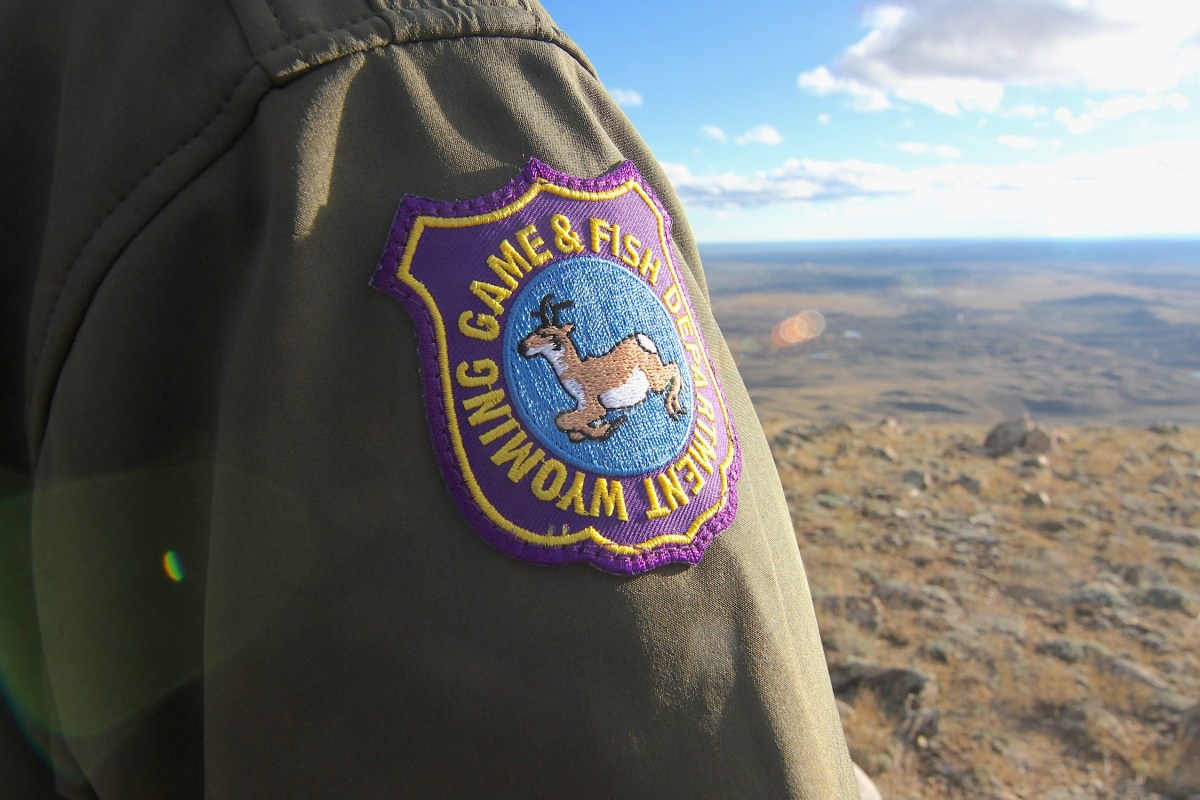
When the Wyoming Game and Fish Department anticipates a budget crunch, and one’s coming in the near future, it often asks state lawmakers to boost the cost of hunting or fishing licenses.
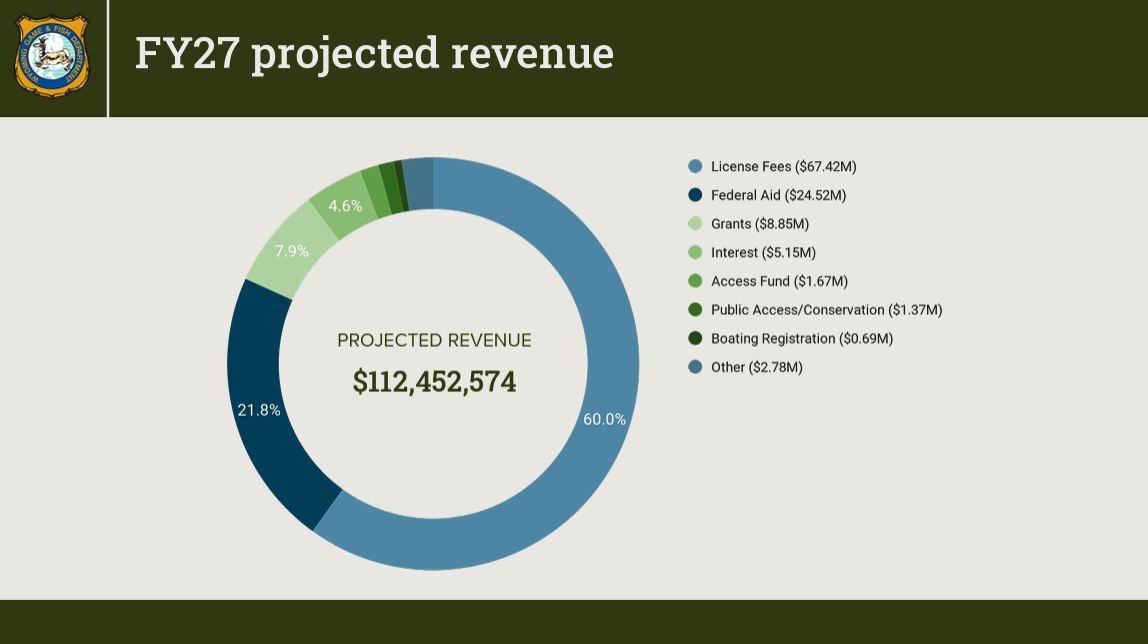
That’s just the reality of the wildlife management agency’s funding structure. There’s some diversification in Game and Fish’s budget: Federal excise taxes, for example, provide roughly 22% of revenues, grants cover about 8% and interest on savings another 5%. But license fees account for the majority, providing nearly 60% of the revenue Game and Fish uses to pay for its green trucks, red shirts and myriad other expenses. In an era of high inflation, it’s a formula that has its financial forecasts looking increasingly dim — “dire” has even been suggested — especially when the main commodity, huntable wildlife, is a finite resource.
“We’re on a starvation diet, and things do not look good going forward,” Wyoming Game and Fish Commissioner John Masterson told state lawmakers in September. “I believe the department has proven itself to be prudent stewards of the money of its sportsmen. But it can only stretch dollars so far.”
Masterson made those remarks to the Wyoming Legislature’s Travel, Recreation, Wildlife and Cultural Resources Committee at a Jackson meeting in September while advocating for a significant addition to Game and Fish’s revenue makeup. Specifically, he was recommending a funding tool — a trust account “of paramount importance” — that would potentially endow Wyoming wildlife managers for generations to come.
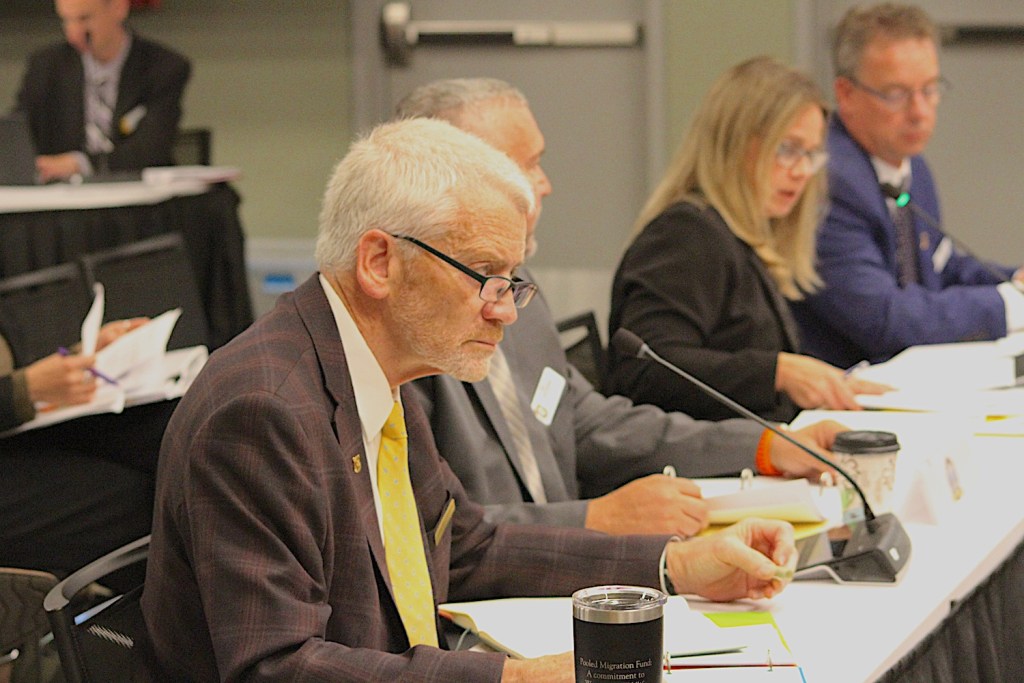
“The alternative is that we nickel and dime license fees … going through the entire bill process to raise the cost of a resident doe-fawn license from $22,” Masterson said. “I don’t feel that that’s efficient.”
A bill is in the works that would make the Game and Fish trust fund a reality. It’s a top priority for the Travel, Recreation, Wildlife and Cultural Resources Committee, which is expected to finalize and ready the bill for introduction to the broader Legislature this coming general session at its Nov. 9-10 meeting in Cheyenne.
When the budget-slashing Wyoming Freedom Caucus wielded significant power in the Legislature, the idea of a Game and Fish trust fund likely would have been farfetched.
“It would have never passed the House, and it would have had a snowball’s chance in hell in the Senate,” said committee member Bob Wharff, a state representative from Evanston who often voted with the Freedom Caucus. “All that may change.”

The change in outlook is due to the Freedom Caucus suffering a resounding statewide defeat during the August primary elections. Wharff, who was reelected to his old House seat in 2024, was among the casualties, losing to Kemmerer native David Walton by a 20% margin.
With the more moderate faction of the Republican Party seizing control, passing a savings- and spending-centric bill that would create a Game and Fish trust fund becomes more feasible. Wharff didn’t divulge whether he’d vote to advance it during the upcoming committee meeting, but he spoke highly of a similar savings account, the Wyoming Wildlife and Natural Resources Trust, that he helped pass while working in an advocacy role two decades ago.
“That’s a legacy that I’m very proud of,” he said.
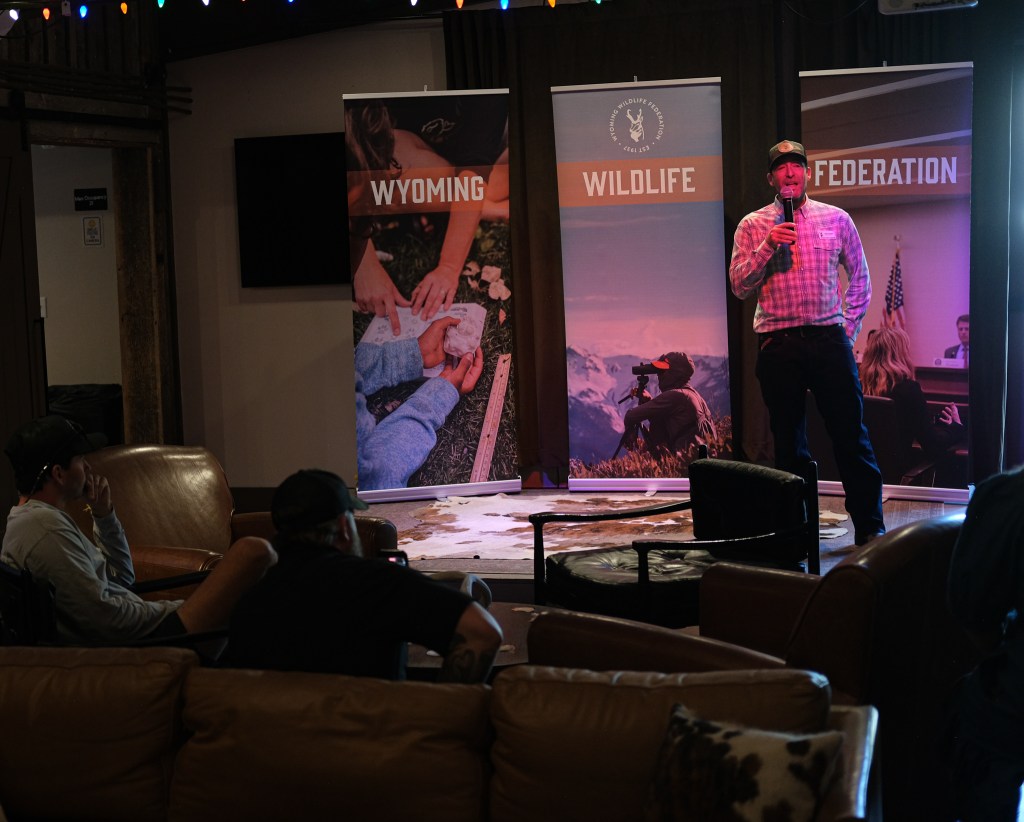
While a trust fund’s political palatability in modern Wyoming remains to be seen, wildlife advocacy groups are providing momentum and a strong push. The day before Wharff and fellow lawmakers met in Jackson, the Wyoming Wildlife Federation hosted a reception to build support for the idea.
“Wyoming has a chance to make a generational investment in wildlife conservation, and that’s exciting,” said Craig Benjamin, the federation’s executive director. “Hunters and anglers have carried the system for decades, and Game and Fish’s responsibilities have grown. The question now is, ‘How do we build a durable funding model for the next generation?’ and it’s exciting that the Legislature is having that conversation.’”
Exactly how much of a difference the trust fund would make to Game and Fish’s bottom line depends on the details, like the funding level required by the Legislature. At present the bill is structured similarly to the Wyoming Wildlife and Natural Resources Trust, which allows up to 4% of its market value to be expended annually (the rest of investment earnings go back into the account).
Pushing for the trust at the commission’s September meeting, the Theodore Roosevelt Conservation Partnership’s Alex Aguirre told lawmakers that he’d love for Wyoming to “shoot for the stars.”
“We stand in full support of the proposal to increase funding for our Wyoming Game and Fish Department,” Aguirre said, “with an ask of at least $500 million.”
Other groups echoed the ask.
Trout Unlimited Wyoming State Director Leslie Steen suggested the same dollar amount for a fund that she called an “incredible opportunity” at giving Game and Fish a “stable, long-term foundation.” Muley Fanatic Foundation President Joey Faigl also uttered $500 million, while pointing out that the cost of habitat work needed to help arrest the decline of struggling mule deer is estimated at $300 million alone.
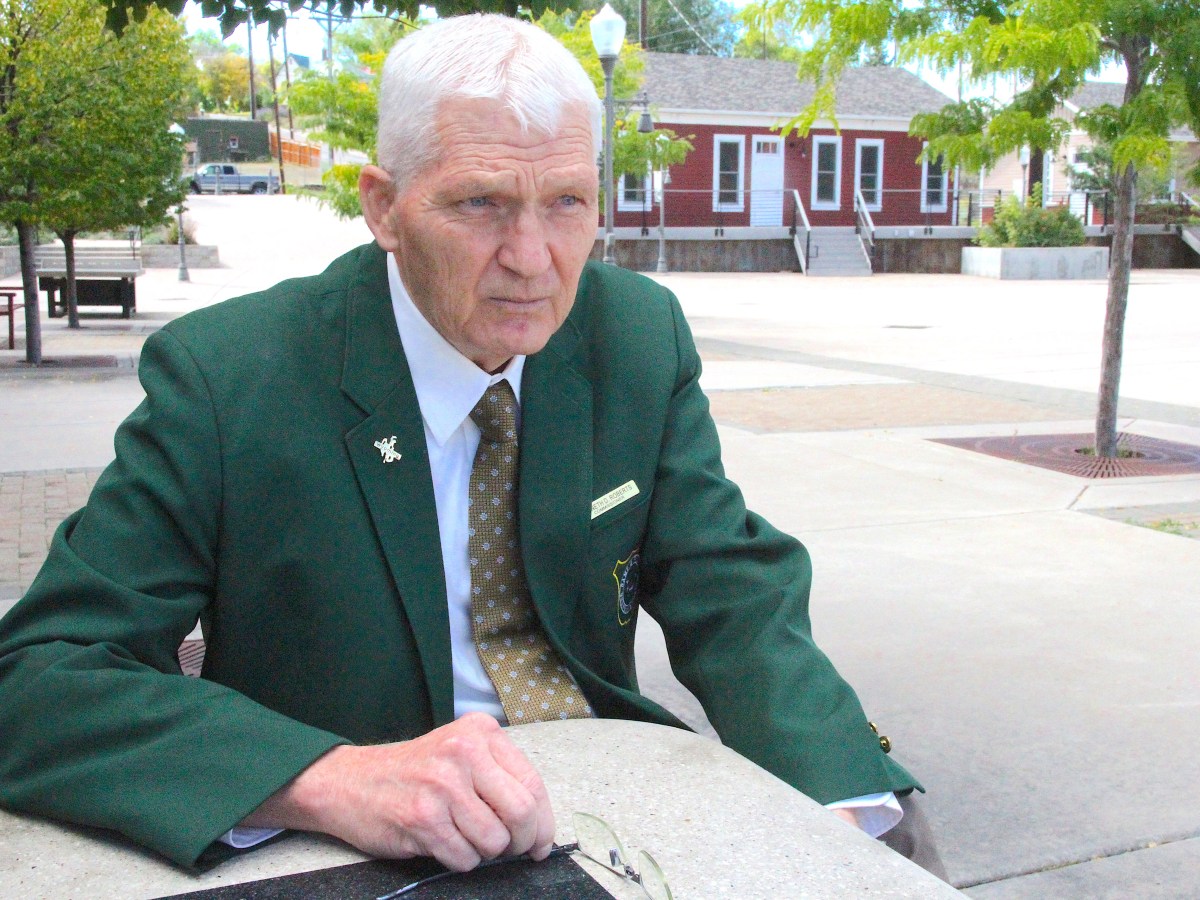

The degree to which a hypothetical trust provides Game and Fish with a financial lifeline for the long-term depends “100%” on the size of the account, Game and Fish CFO Meredith Wood told WyoFile.
A “major influx” in contributions could be “transformative in perpetuity,” Wood said.
Although the half-billion-dollar funding level may sound astronomical — the figure is roughly 15% of Wyoming’s general fund expenses — only a fraction of that amount would be available annually. If lawmakers limit withdrawals from the trust account to 4% annually, that would generate about $20 million a year from a $500 million corpus.
The agency’s projected fiscal year 2027 revenues are about $112 million. A $500 million trust would provide about an 18% revenue bump.
Nevertheless, many wildlife advocates and lawmakers are excited about the prospect. Sen. Bill Landen, who chairs the wildlife panel, chose not to run again after a two-decade-long stint representing Casper and Natrona County. As he prepares to leave the Legislature, he’ll go out pushing for a trust account to diversify Game and Fish’s funding structure and alleviate pressure on hunting and fishing license sales.

“It just didn’t seem reasonable and right that we say, ‘Well, it’s all up to the hunters and fishermen,” Landen told WyoFile. “I think we all need to be a part of this. That’s one of the underlying principles of the bill.”
Landen didn’t hazard a guess about the likelihood of the Wyoming Legislature creating such a trust fund during the 2027 general session, though he hopes it gets some traction.
“It’s one of those issues that you may not be able to get done in one year,” Landen said. “You might just need to keep working on it. But I can’t think of a better thing for Wyoming to be investing in than what we’re talking about.”


If the current funding mechanism for WGFD persists, we will continue to have a hamstrung wildlife/wildlands state agency. As its title proclaims, WGFD remains focused on big game and tasty fish, as these activities generate much of its annual income. The lobbyists it listens to most attentively – landowners, hunters, trappers, fishermen – continue to influence commission meetings. The rest of us, who care about how native wildlife and public lands are managed and yet do not hunt, will be listened to politely (for the most part) and, with equal tact, ignored.
As with much else, it is pay to play. We need a mechanism whereby the non-hunting public contributes directly and visibly to the upkeep of our state wildlife agency. Only then will this part of the public be listened to. If that should ever happen, it will be time to rename WGFD as Wyoming’s department of wildlife and native habitat, or some such. All of our native wildlife species are ecologically important, not just those whose muscles look good on a plate.
I am dubious about the common claim that WGFD is/was the best in the country because it is considered financially independent. The agency remains on a short leash since the legislature controls when fees go up, and by how much. I get the impression that some legislators relish denying requests from the commission for small bumps in licenses, just to remind the agency who calls the shots.
As for the common complaint that WGFD employees have new trucks and decent offices, it baffles me. It is the Wyoming Begrudgery Complex. I never hear this plaint about sheriffs’ offices or fire departments. Do Wyomingites really want state employees driving around in beat-up, rusted-out tracks, and operating out of dilapidated offices? State employees deserve decent facilities and working equipment to do the job – just like the rest of us.
Didn’t the recently fired G & F Director state that the agency wasn’t about emphasizing wildlife, it’s mission was to serve people. With all of the new trucks and millions $ of equipment sitting at these new huge regional offices and redshirted employees everywhere, it looks like the mission is to serve themselves. I agree the hunting and fishing opportunities are a ghost of what they used to be. Another point is, hey, we’re in the year 2026, do we really need these heavily subsidized guides and outfitters capitalizing on our big game herds? They sure take a lot but put back in very little. G & F needs to clean house with their current regime of assistant directors and regional managers and get people in there that have the gumption to right this sinking ship
Let’s be real, WYGFD has been poorly managed for quite a while now. Lackluster leadership, cow-toe’ing to the rancher and large landowner interests and seemingly going to war against the everyday sportsman, a whole bunch of redshirts driving around in new green trucks burning millions of dollars in $4 gas and $6 diesel, regional new palaces that went over budget by millions, million dollar lawsuits caused by a rogue game warden (Powell area) and yet this particular individual was allowed to retire early with full bennies and the hunting and fishing opportunities are about 30% of what they were 20 years ago. Since WYGFD has sold out to the land barons, why don’t they pitch in and make up the difference? When you see them orgs T.U. and the W.W.F. mentioned, please remember that neither of them took part (or even commented) during the public lands corning crossing case. Sometimes you need to just burn something down and rebuild vs throwing more money at it.
What a quandary for G&F. What a reprieve for wildlife. Hunting and fishing license revenues are a bad business model on their best day in Wyoming.
Sure, Wyoming is the #2 state in eligible per capita residents who buy game and fish tags… but it’s only 24 percent. Number 1 is next door in South Dakota, at 27 percent participation but with almost double the population to draw on . Likewise , Montana is the #3 state for percentage of eligible population that buys tags , one percentage point behind Wyoming but with double the population to buy in.
If 60 percent of Wyo Game & Fish’s budget comes from game and fish tag revenue , the department is screwed financially. Nonresident hunter and anglers already pay too much for their tags, IMO, given they mostly hunt on public lands that belong to all 50 states. ( especially when hunting on private lands doesn’t automatically pour more money into G&F . The landowners and outfitters pay themselves well and usually firstly ).
It gets worse. Hunting numbers are on a sharp decline nationwide, and that trend is creeping into Wyoming as the next generation hunt and fish less than the last. The sporting outdoorsman culture is waning in favor of nonconsumptive wildlife interaction. Elk Deer Sheep Moose et al are more often shot with cameras these days , not Winchesters.
Having said all that , I deeply wish that our huge Permanent Mineral Trust Fund vaults and all those other coffee can accounts in Cheyenne were invested in a huge Wildlife and Natural Resources Endowment fund, reckoned in the billion$. We could’ve and should’ve done that. The dividend for hosting all that public land, watersheds, open range, and landscape ecosystems-at-large should first go back to the creatures that reside there. And I don’t mean the Hominids…
Well said.