

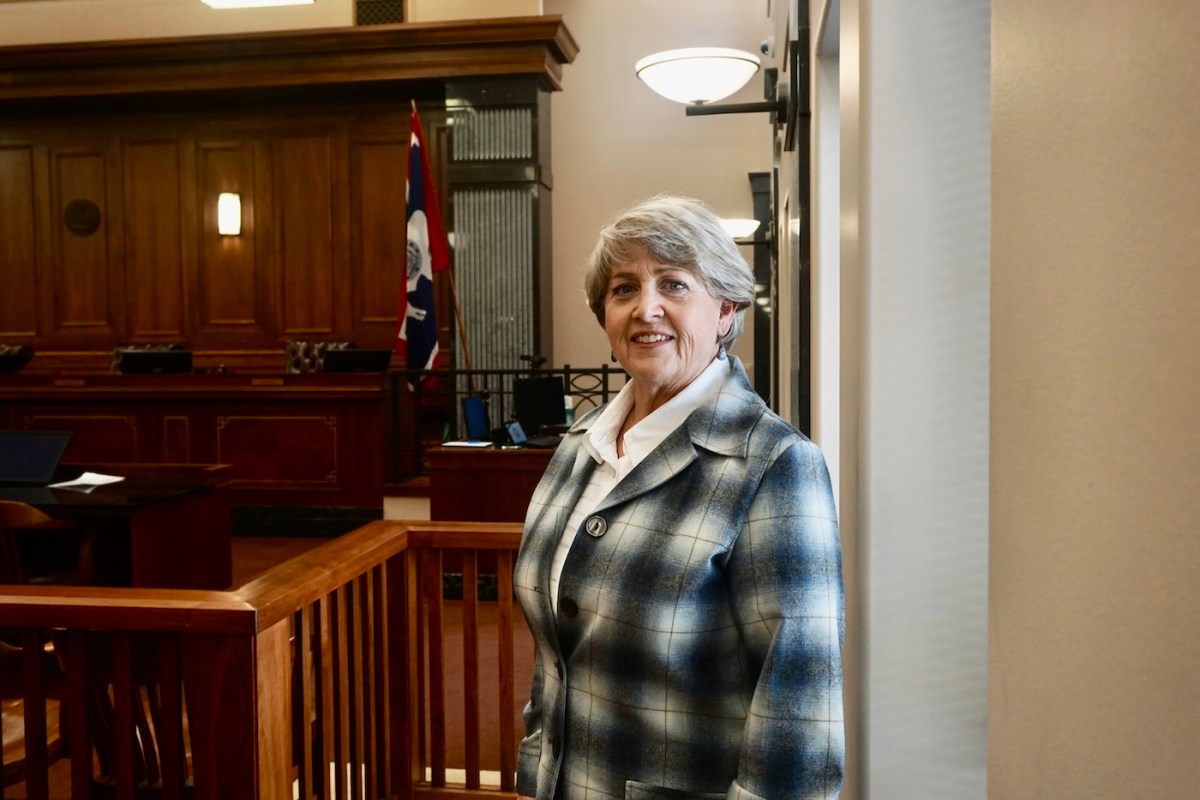
The Wyoming Supreme Court may not issue its highly anticipated decision on whether the state constitution protects abortion rights until sometime closer to December, Chief Justice Lynne Boomgaarden told WyoFile.
“I can’t tell you when the opinion will be out,” Boomgaarden said, “but it is my best guess that probably by the end of the year — in that timeframe is kind of where we are on it right now. But I’m making no promises.”
The timeline put a damper on any expectations for a rapidly forthcoming ruling, which court watchers have said could come any day since mid-summer. The justices heard oral arguments in April, and under their basic timeline, they then have 90 days to craft and circulate an opinion — the legal explanation from the majority side.
But any justice can call for an extension to that timeline as they debate and craft an opinion that satisfies a majority of the justices, Boomgaarden said after WyoFile asked about the decision’s timing in a rare interview Wednesday. Boomgaarden did not offer any indication which way the court is leaning, and said the justices could not discuss case specifics.
The justices are deliberating an opinion that many in the state have waited on for more than two years.
The case centers on whether a 2012 amendment to the state constitution, which appears to give individuals a right to make their own health care decisions, is overshadowed by language that allows the Legislature to act to protect “the health and general welfare of the people” of Wyoming.
Lawmakers in 2022 passed a “trigger bill” that would ban abortions in Wyoming if the U.S. Supreme Court overturned the landmark Roe v. Wade case, which it did in June 2022. A group of doctors, women clients and an abortion aid group sued in Wyoming a month later, and a judge temporarily blocked the law. In 2023, the Legislature passed two new, more restrictive bans, including one that rescinded and replaced the trigger bill. The same group of plaintiffs sued again that March, kicking off the legal fight that awaits resolution from the high court.
Abortion has remained legal in Wyoming during that court fight. In November, District Court Judge Melissa Owens struck down the more restrictive ban, which the state of Wyoming quickly appealed to the state high court.
The justices are not trying to publish the opinion at some opportune moment on the state’s political calendar, Boomgaarden said. “What I don’t want people to think is, ‘oh yeah, it’s going to be two years.’ Or ‘they’re going to wait till after the [legislative] session is over.’ No.”
A thoughtful and collaborative process is what’s driving the long wait on this particular opinion, she and Justice John Fenn, who joined her in the interview, said.
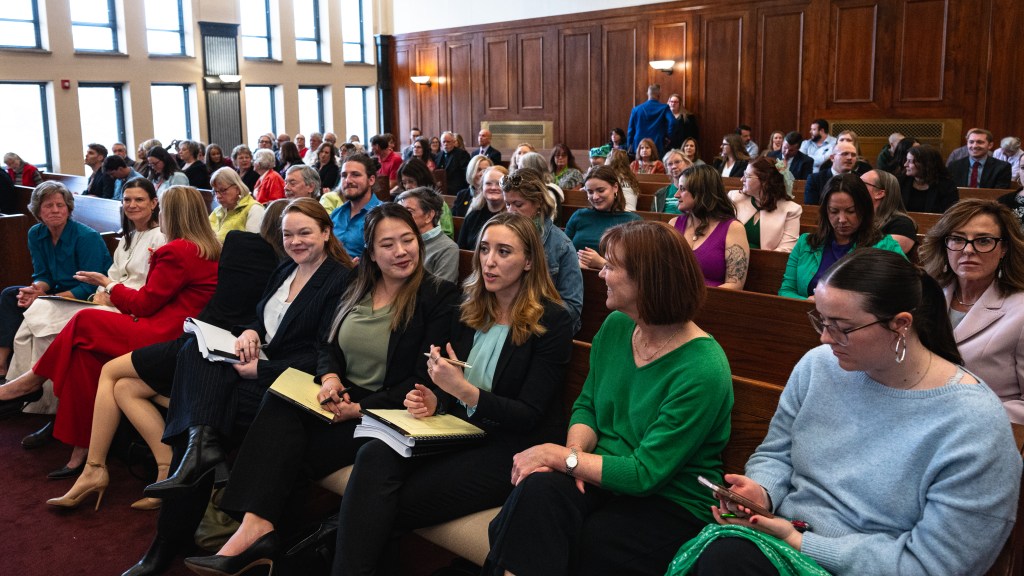
Boomgaarden and Fenn went on to outline the steps judges take before issuing a decision.
After receiving legal briefs from both sides — and in this case, but not all, after hearing oral arguments in the court chamber — the judges sit around a conference table and speak their piece. One justice serves as the leader of those discussions — a position that rotates randomly throughout the year, Boomgaarden said.
“We just go around the table,” she said. “Everybody gets a chance to speak. If we need to speak again … We just keep going around the table.”
As a majority opinion begins to form and after a straw vote is held, a justice is chosen to write the opinion. Unlike in the U.S. Supreme Court, justices do not have the opportunity to lobby for the opportunity to be the lead author of an opinion because they feel strongly about it or have some expertise in that area of the law, Boomgaarden said.
The justices “try to keep those assignments as random as we can,” she said.
Within 90 days of that discussion, the first draft of the opinion gets circulated among all five justices. They have 10 days to vote on whether to join the opinion. But they can also offer suggestions for additional analysis or push for a rethinking of some portion of the opinion. “There’s just a lot of back and forth among the members of the court,” Boomgaarden said.
Justices who find they can’t join the majority opinion then begin crafting the minority opinion, which goes through the same level of collaborative drafting.
And justices’ positions can change over the course of opinion writing.
“It’s rare, but you can have a case where you assign it to the majority, the majority opinion is circulated, and someone says I’m going to dissent,” Boomgaarden said. Then they win their colleagues over with them.
“They write the dissent, and pretty soon they’re in the majority,” she said.
Sometimes, Fenn said, the justices have to get together again in the conference room. “There’s enough to talk about that we want to get the five of us in a room and talk through it again,” he said.
Though the justices didn’t offer specifics, it’s clear the abortion case is going through some iteration of that deliberative process — and perhaps an even more thorough one than usual, given the weight the opinion will carry in Wyoming and in the lives of women in the state who may seek an abortion.
“The court is working very diligently on it right now,” Fenn said.

The states constitution is very clear. A high school graduate could make this decision.
A fetus is not a child or a baby.. It is not self sustaining. It is has no means to live outside the womb. It therefore is a parasite. And the determination of how to treat a parasite us up to the individual affected by it.
I truly am offended and extremely disturbed that men prmarily feel they should have control of a woman’s body and determine the woman’s future and fate. We need matriarchal society.
At what stage pf life is ending another humans life ok? If they are too young, too old, too impared in some way, wrong sex? At what point is it no longer acceptable to end the life of a human?
Children have different DNA from their mother because they inherit half their DNA from her and half from their father, and the specific genes they receive are a unique combination of their parents’ genes.
It’s not a “womans body”, it is a developing child.
The most vulnerable innocent human beings should be defended and protected.
Americans have been brainwashed since the 60s to disregard these innocent human lives.
As long as it’s in the woman’s body it’s the woman’s body.
You go ahead and tell yourself that Gordon, if it helps you sleep better at night.
The SCIENCE is irrefutable; it is a separate human being with separate DNA from the mother.
I don’t disagree with your DNA analysis, but to date there has never been a male that carried a fetus to full term for birth. Nor is a fetus with separate DNA, as you state, capable of surviving on it’s own outside a womb. I support the right to choice. It’s a personal decision, not yours or mine to make.
Why do liars and no integrity having folks feel the need to push their religious beliefs onto others?
Religion Chuck, has absolutely nothing to do with it.
It’s science, plain and simple.