

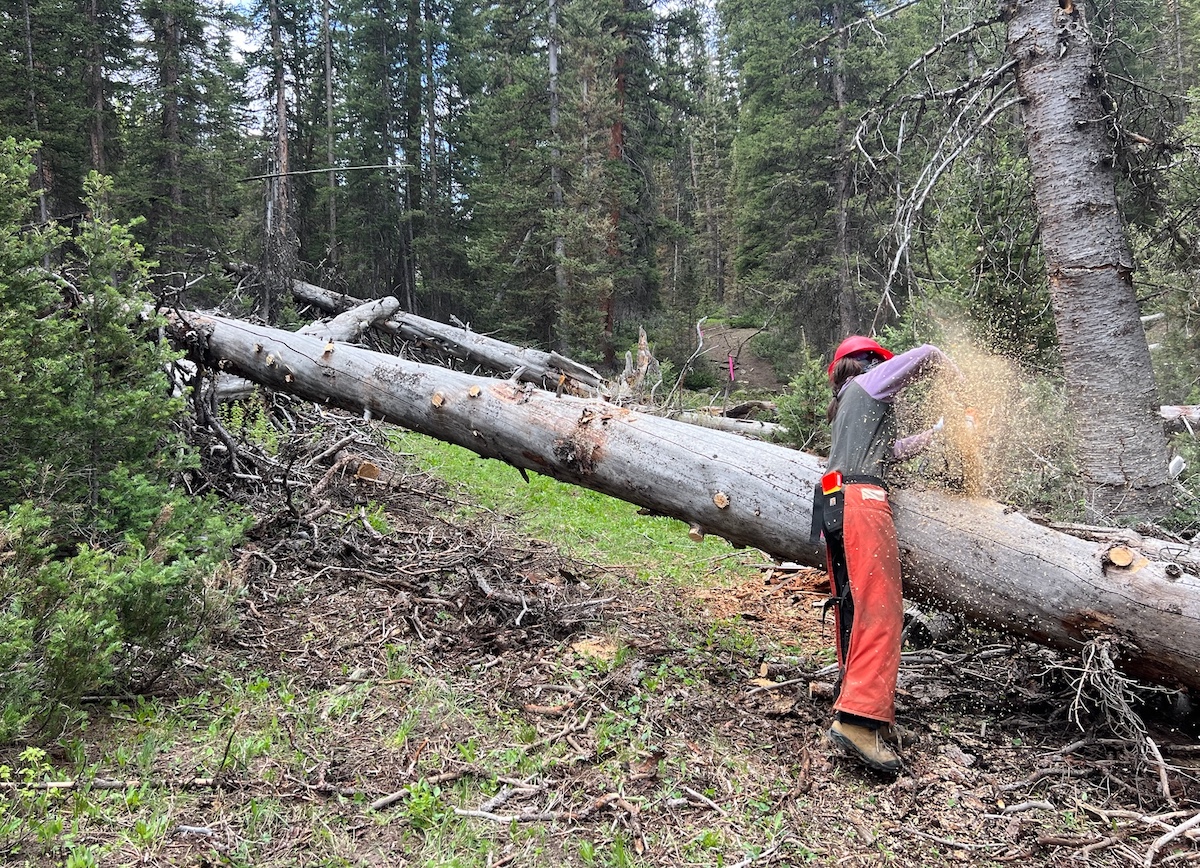
Monica Elliot joined the U.S. Forest Service last year when she was hired to work on a backcountry trail crew based in Pinedale. Clinching the job felt big, she said.
“I found so much value and love and purpose in trail work and working with the outdoors,” she said. “So having this permanent seasonal gig was kind of like the entryway into having a career out of it.”
Then came Feb. 14, when a wave of federal-employee layoffs swept the nation, resulting in chaos and uncertainty at agencies like the Forest Service. Elliot was among employees with so-called permanent seasonal positions, a categorization that was axed wholesale. She was suddenly out of a summer gig.
“It was a huge bummer,” Elliot said.
She spent a couple months casting about for work until her fortunes reversed once more. Friends of the Bridger-Teton, a nonprofit that helps the Bridger-Teton National Forest manage growing crowds with initiatives like volunteer ambassadors, created what it dubbed the “Forest Corps” in response to the federal layoffs. The team was designed explicitly to help the agency on summer-season field projects.
And Elliot was tapped as the crew lead and program manager — a job that combined her passions for trail and nonprofit work.
“Which worked out really well for me,” she said.
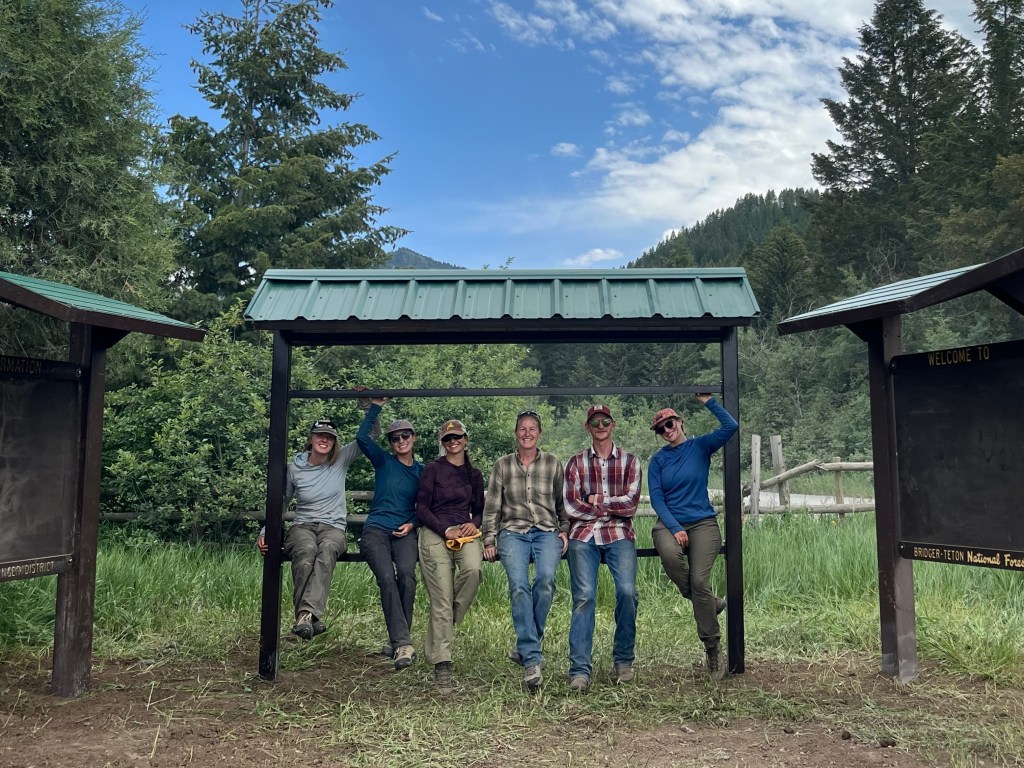
In the months since, the Forest Corps has acted as an auxiliary crew for the 3.4 million acre Bridger-Teton National Forest. The five-woman team has communicated with each of the vast forest’s six districts to identify a high-impact project it can assist on.
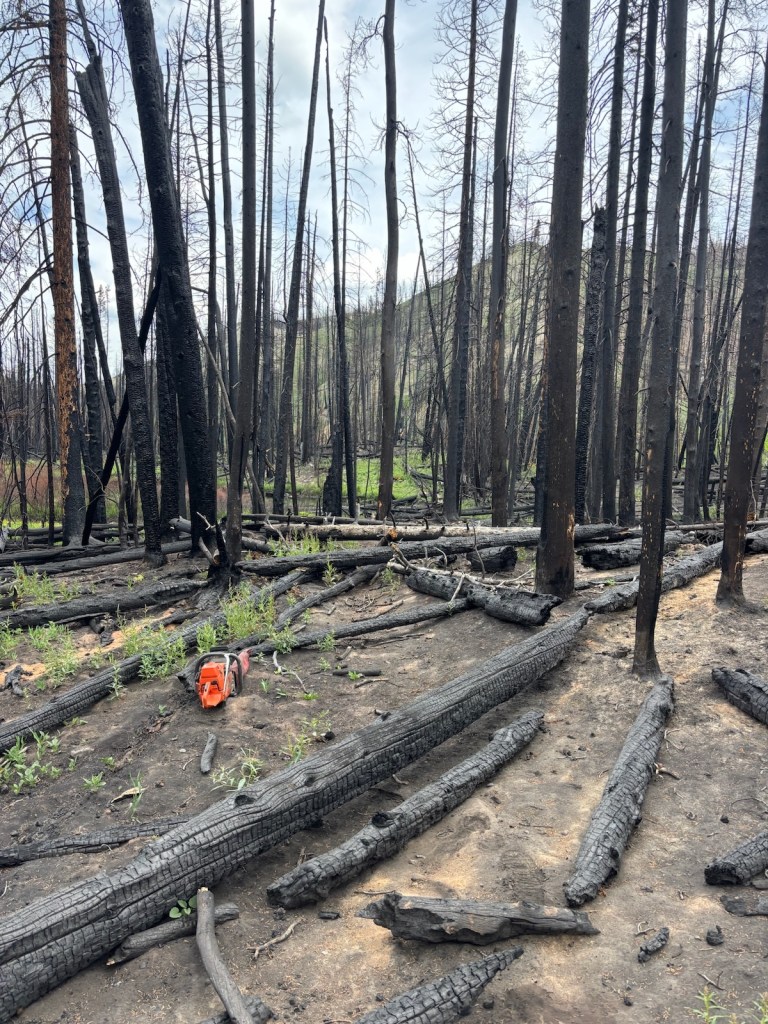
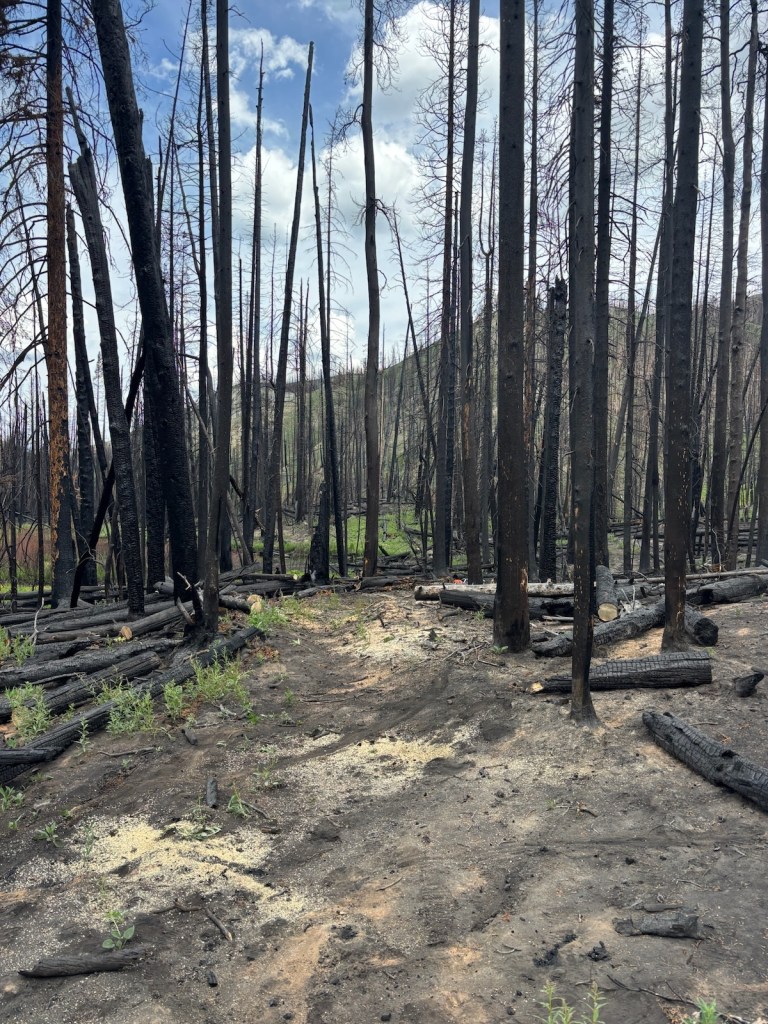
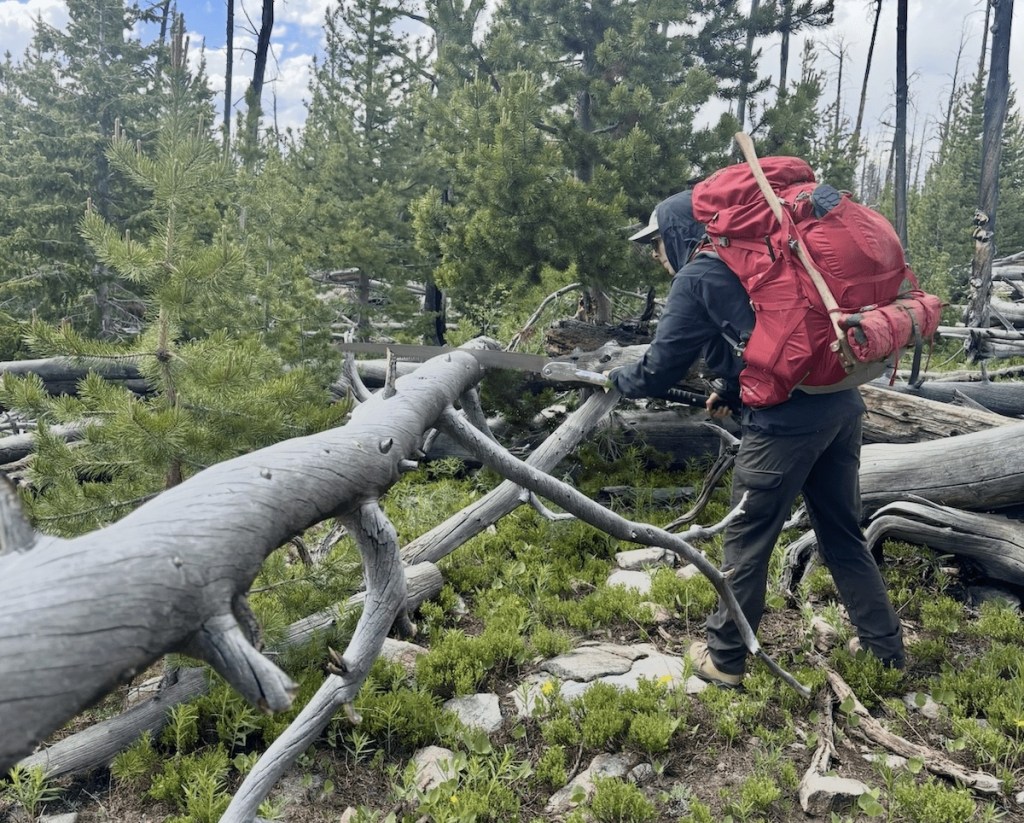
The crew used handsaws to help clear dozens of trees from heavily used trails in the Pinedale District’s Bridger Wilderness. They painted front-country picnic tables, installed a puncheon trail over marshy terrain in the Blackrock District, cleared deadfall and opened up 15 miles of trail in the Pack Creek burn area near Togwotee Pass.
“So with the way the schedule worked out, each district basically got us for one big project,” she said.
One one hand, it’s only five people. But for national forest district offices that were already stretched thin before the federal government further shrunk staff, the Forest Corps has been welcome help.
“They’ve been really happy so far,” Elliot said. “Just any help is really nice for them.”
Temporary band-aid
Without entrance gates or crowd counters, it’s difficult to pin down exact visitation numbers on Wyoming’s 9 million acres of national forest, but managers agree visitation has mushroomed in recent years.
While the growth has fueled issues like improper human waste disposal, user-created roads, wildlife conflicts and vegetation damage, the federal agency that oversees the lands has faced limited budgets and staff. Since the 1990s, the Forest Service has experienced a major reduction in staffing across nearly all types of jobs.
That’s where Friends of the Bridger-Teton comes in. The nonprofit aims to assist the agency in managing visitor impacts in the huge — and hugely popular — destination of the Bridger-Teton National Forest. Until this year, however, initiatives were fueled more by volunteers — such as ambassadors who educate campers on things like extinguishing campfires and securing food from bears.
Seeing the Forest Service further hobbled by the February job cuts and frozen funds spurred the nonprofit to do more, Friends of the Bridger-Teton Executive Director Scott Kosiba said.
“We recognize that staff capacity within the Bridger-Teton National Forest is really limited this year, particularly with field staff,” Kosiba said. The Forest Corps was born from the desire to assist.
The Bridger-Teton National Forest fired roughly 40 employees across western Wyoming, the Jackson Hole News&Guide reported, though some of those positions were later reinstated.
The Friends nonprofit launched a specific fundraising campaign that has raised more than $50,000 to fund the Forest Corps initiative. Partners like Trout Unlimited and the Wyoming Wilderness Association have chipped in, and the bulk of funds have come from private donors, Kosiba said.
They are still raising money for the program, which is estimated to total $180,000.
Friends of the Bridger-Teton hired five women who all formerly worked for the federal agency, and the team has collaborated with district officials on projects the federal agencies need more capacity to complete.
Projects, or “hitches,” have ranged from quotidian to rugged, Elliot said. The Greys River District had been storing new frontcountry signs for that it didn’t have the manpower to install, so the Forest Corps helped put them up. On the other end of the spectrum, the crew ventured deep into the Wyoming Range in the Big Piney District to clear deadfall from trails in stunning and seldom-visited terrain.
It’s been a great experience to serve on an all-female crew that’s providing tangible relief, Elliot said. But she warned against the presumption that this approach is a silver bullet.
“It’s not a solution,” Elliot said. “It’s just a band-aid. All of us would have been working for the Forest Service had it not been for the cuts. So there’s really no new numbers being added.”
Kosiba echoed that. Even though he can see the Forest Corps becoming a lasting initiative of the nonprofit, he said, “there is no reality where private industry or a nonprofit can or should step into the role of the federal government or dedicated civil service.”
Drop in the bucket
When the Forest Corps assisted a three-person crew on the Continental Divide Trail in the Pack Creek Burn area, the support was invaluable, said Jackson Ranger District trail crew leader Erica Baker.
“Together, the crew cleared more than 250 downed trees across 20 miles of trail, installed 12 new posts to assist visitor navigation, and completed over a mile of [vegetation clearing],” Baker said, calling their contributions “essential” to maintaining the nationally significant trail.
“With such a small trail crew, this level of trail recovery would not have been possible without Forest Corps,” she said.
Though the corps is assisting on high-priority projects, Kosiba said, it’s a small dent given the significant backlog of work to be done on the forest.
“The work that this crew is going to be able to do this summer is really a drop in the bucket,” Kosiba said.
With staff reductions and the Forest Corps crew spread thin across the Bridger-Teton’s vast federal lands, the public will still encounter unfortunate impacts on access and maintenance on Wyoming’s public lands, he said.
Meantime, the uncertainty continues for federal workers whipsawed by layoffs and subsequent reinstatements. The latest twist came last week, when the U.S. Supreme Court removed a block on reductions in force planned across most federal agencies. Now, employees and observers anticipate further cuts.
UPDATE: This story has been updated to reflect comment from USFS employee Baker. -Ed.

Thanks to the all-female crew for taking care of the forest. I didn’t realize that no electric saws are used in these areas, so I’m doubly impressed at the crew’s ability to clear the pathways of logs/trees/debris with only handsaws. Congratulations to all of the crew and the journalist who wrote this story.
The entire narrative attempts to make a federal staffing failure and an expensive nonprofit workaround sound like a triumph, but it ignores the most obvious and time-tested truth: local trail users have always stepped up to clear and maintain trails — and still do.
There’s no denying that trail work is hard and that federal budget cuts have real consequences. But when a handful of laid-off Forest Service workers are repackaged into a \$180,000 nonprofit crew to clear a few dozen trees and install picnic tables, it’s worth asking: are we solving anything, or just creating a new bureaucracy to mirror the old one?
The idea that only agency employees or paid nonprofit crews can manage public lands is both historically false and deeply dismissive of the people who use and love those lands most — locals. Hunters, horsemen, outfitters, hikers, and dirt bikers have long maintained access routes out of necessity and pride. Entire trail systems across Wyoming exist and function *because* local users pick up saws, not salaries.
The Forest Corps may be well-intentioned, but it’s not scalable, sustainable, or necessary for basic backcountry upkeep. Trail clearing doesn’t require consultants, fundraising campaigns, or nonprofit branding. It requires access, basic tools, and willing hands — and those already exist in abundance in communities like Pinedale, Big Piney, and Moran.
If we’re honest, what’s being sold as a “band-aid” is actually a distraction. The focus shouldn’t be on replacing federal jobs with nonprofit contracts. It should be on empowering and equipping the public — who already have a vested interest in seeing these trails open — to keep doing what they’ve always done. If a fire cuts off access or a blowdown blocks a trail, locals will clear it before the red tape even unwinds.
That’s the story that’s not being told. Not every problem needs a grant-funded crew. Sometimes, it just needs a community that still believes in taking care of its own backyard.
excellent perspective Bill. Yes, everyone needs to do their share of maintenance in the forests – I recommend forest users carry a chain saw or hand saw or shovel to improve or remove an obstacle. Most experienced back country users have been doing so for years – sometimes you have to cut your way in or cut your way out. a severe storm will drop deadfall across a trail and users must be prepared to cut their way out. Be prepared and do your share. Loggers used to keep many forest roads open just for access but the elimination of logging has also eliminated the free service loggers provided and they obviously had chain saws and used them.
Lee, your comment is “most experienced” back country users. Look at the photo of work done in the Bridger Wilderness. Those trees have been dead and down for quite some time. 35 dead n down, with hand saws in 4 days is nothing to sneeze at. The average recreationalist in today’s society won’t even attempt to help with trail maintenance. If there’s something in the way, they just go around it. And your comment about loggers, well sure they would help clear, but that’s only because they needed to get to a job site. I don’t disagree that recreationalists should be prepared and self sufficient, but the reality is that they are not and don’t want to be.
You go ladies…..the Forest Corps rock!
Thank You Ladies. Eventually the goofballs will be outed and life for the common person will get better. For now, it’s all about the wealthy.
Right, I guess you missed the part about this starting back in the 90’s. Did you even read the article??
Did you get the part about the lady being laid off during the wave of federal layoffs in February?
When will Wyoming wake up and see that our current administration is not helping the public but only the rich , we are loosing services and still adding 4 trillion to the debt.