


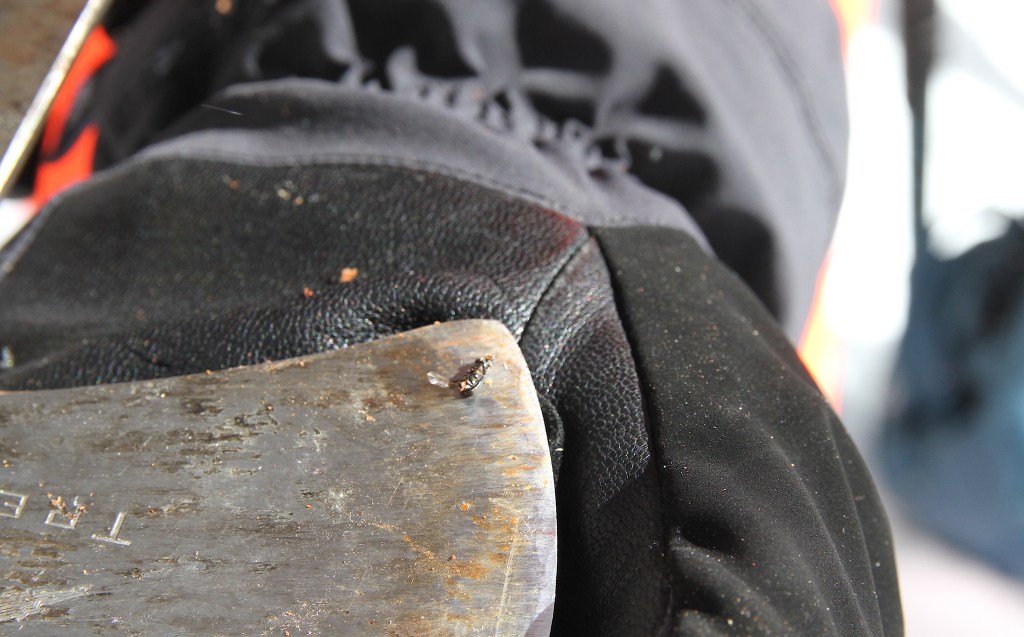
GRAND TETON NATIONAL PARK—An uninvited little chunk of pine beetle larvae clung to Colin Wann’s goggle lens.
High in the Tetons, Wann’s hatchet blade had evidently sent the fatty, sticky globule of opaque insect airborne amid a shower of whitebark pine bark. The tree, likely older than any living human, was dying. And beetles — like the remnant of one that went along with Wann for a ski — are the reason why.

Wann’s hundreds of swipes with the hatchet wouldn’t save these whitebark pines. They were already goners.
There’s a hope, however, that the bark removal effort could ease the severity of a pine beetle epidemic that threatens what’s left of the Teton Range’s whitebark pine stands.
How so?
When pine beetles invade a whitebark, they leave behind larvae that turn into the next beetle generation. Even if it’s just a few millimeters thick, the bark of the dying trees offers the native beetle species protection, both from the cold and elements. Remove the bark and the beetles and their progeny both die.
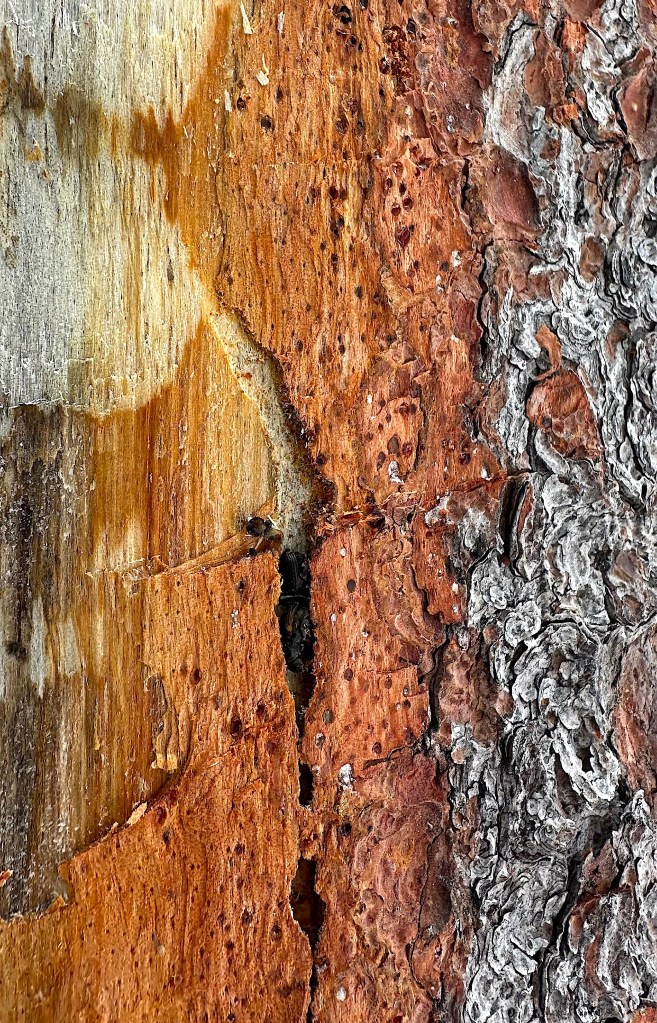
At a place like Jackson Hole Mountain Resort, land managers struggling to save the Tetons’ remaining whitebark pines will actually cut and torch beetle-infested trees, known as brood trees. That’s not in the cards anytime soon in the heart of Grand Teton National Park, where the flora of the high peaks is considered “recommended wilderness” — a classification that restricts how humankind can alter the landscape.
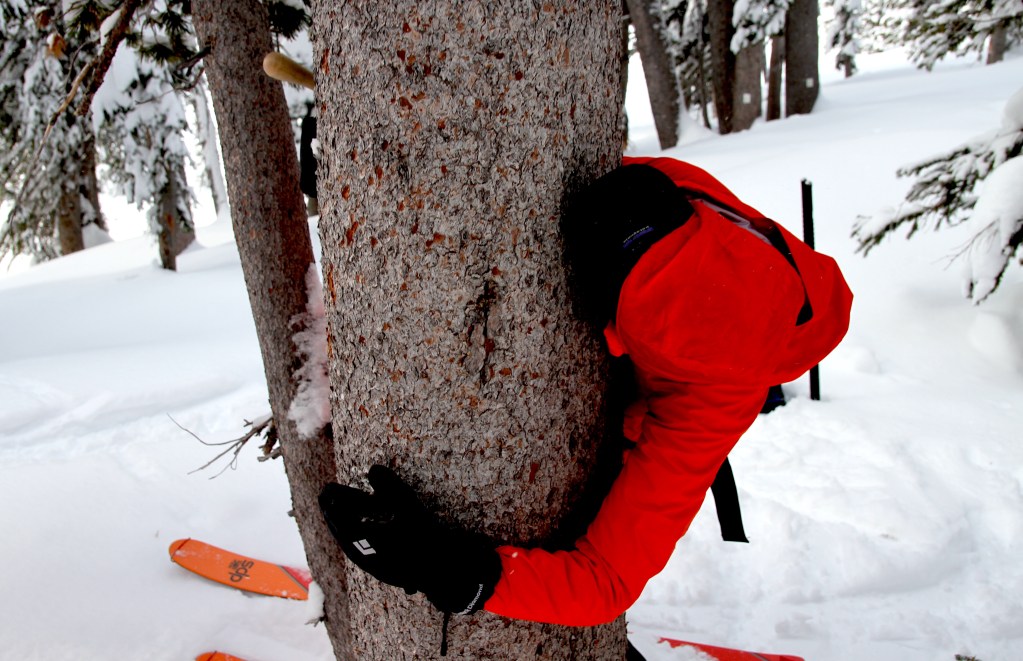
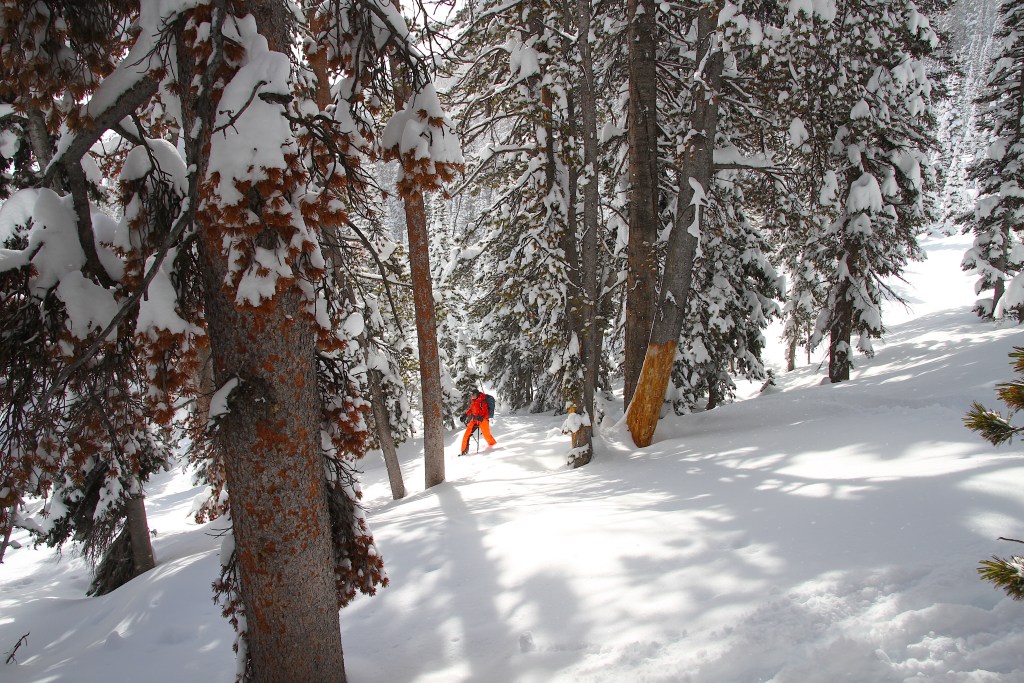
Instead of driving up ski-area catwalks and using chainsaws and fire, Nancy Bockino and Wann tour uphill with alpine-touring ski equipment, armed with hatchets and blades. In hard-hit whitebark groves like this one, named “Heart of Winter,” the base of many dying “fader” trees now sport a new look: they’re missing their lower-trunk bark.
“Obviously we’re not getting the whole tree,” said Bockino, who heads Northern Rockies Conservation Cooperative’s whitebark pine conservation program..
She looked around the grove during an early February outing. Seven dying whitebarks in sight had a haircut down low.
“That’s the equivalent of like two brood trees,” Bockino said. “It actually does make a difference, even if it’s hard to quantify.”
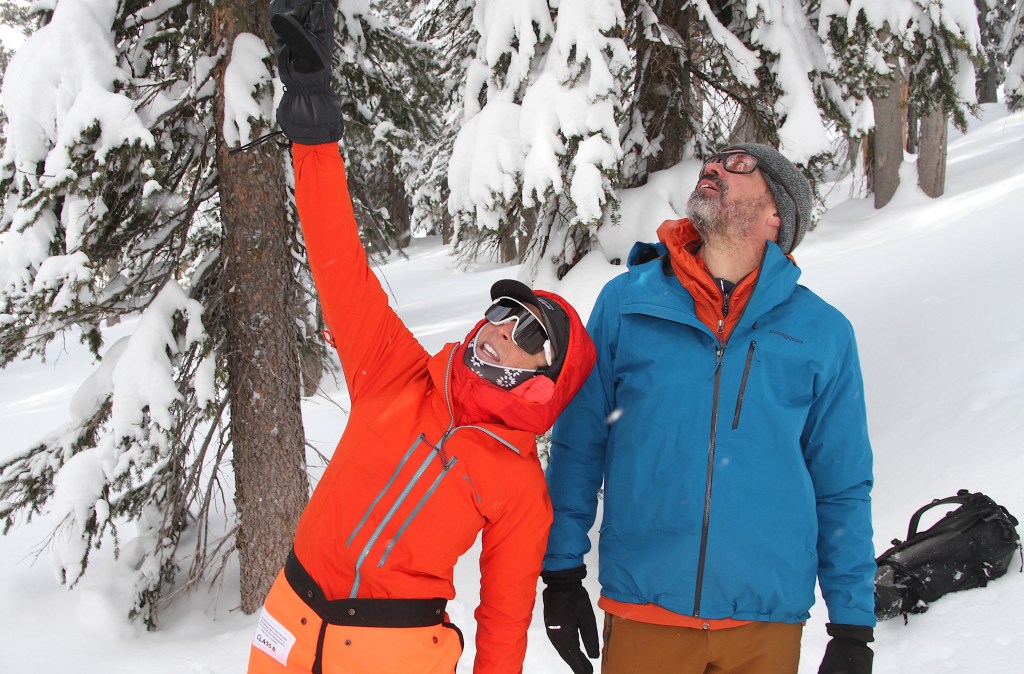
Mother Nature was also assisting. Bockino directed the group’s gaze toward the whitebark crown. The bark was spotty and small holes were visible, even from dozens of feet below.
“Woodpeckers are eating them,” Bockino said. “They’re doing it up there, and we’re doing our thing down here.”
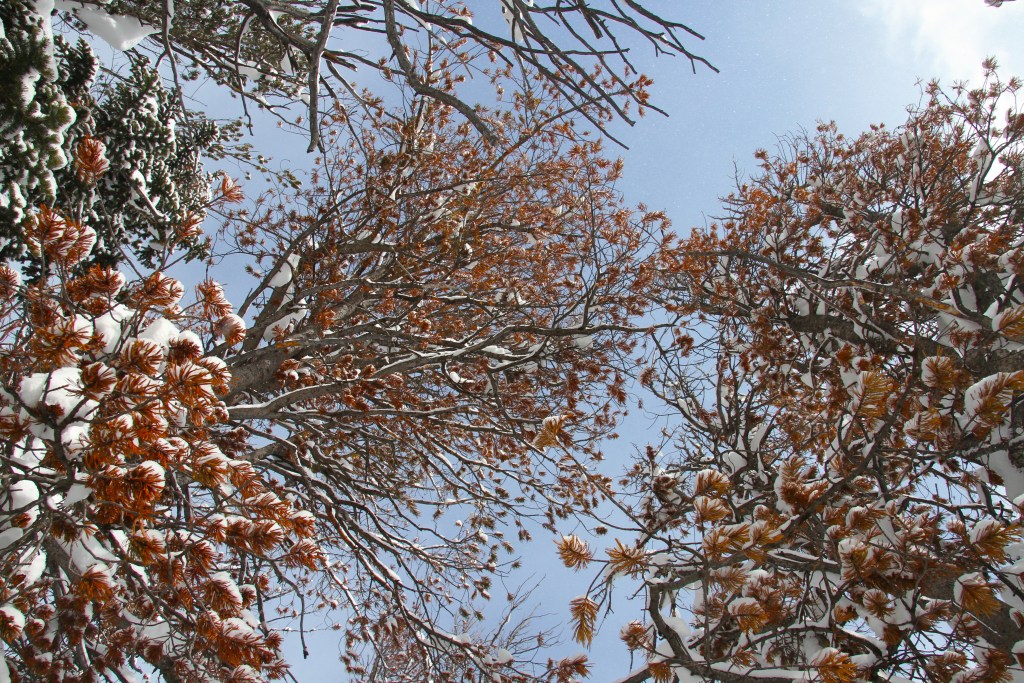
Bockino’s bark-stripping, beetle-killing experiment is just one of many measures being employed in the Greater Yellowstone Ecosystem to help save whitebark pine, a keystone species that is protected by the Endangered Species Act as “threatened.”
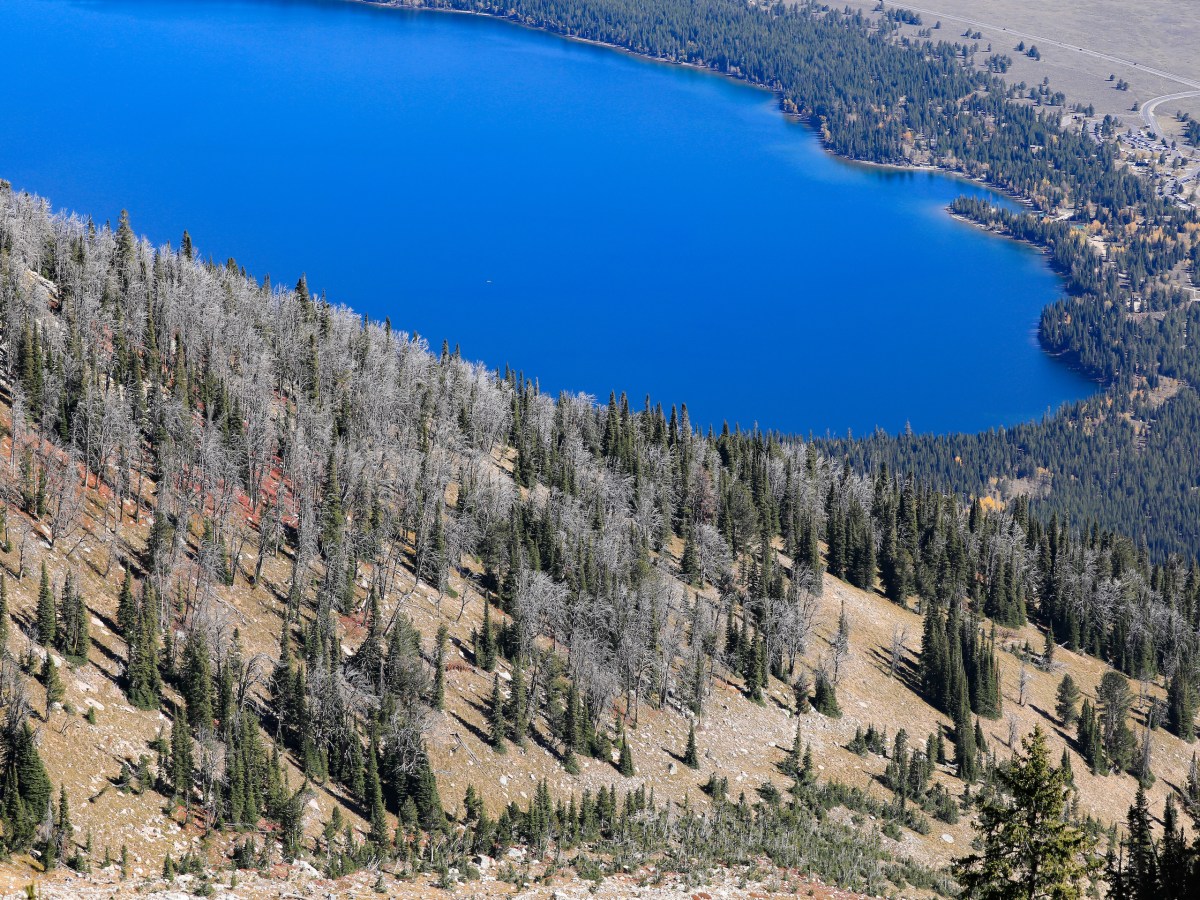
They need all the help they can get. Whitebarks in the Tetons were decimated by a pine beetle epidemic that spanned from 2004 to 2012. The reprieve lasted less than a decade. Another epidemic is now ramping up. Although whitebarks and pine beetles evolved alongside each other, human-caused climate change has upset the natural balance. It now rarely gets frigid enough in fall and early winter — before the beetles are “cold-hardened” — to deliver a devastating blow to the population.
Bockino, who holds a master’s in botany from the University of Wyoming and has fought to save whitebark pine for a quarter century, vividly remembers the last time it happened: Oct. 1-3, 2009.
“Minus 15 across the GYE,” she recalled. “2009 saved all the lodgepole on the [Jackson Hole] valley floor and all the whitebark we have left.”
In the absence of beetle-killing cold, numbers keep increasing. And whitebarks keep dying. In the Tetons the species is barely hanging on, dependent on stinky beetle-repelling verbenone pouches, plantings and desperate measures like stripping bark off beetle brood trees.
“We have sites like on Teewinot [Mountain], for example, where literally there are 200 green seed trees left,” Bockino said. “It’s because they have a pouch. I’ve lost all the other ones.”

At the Heart of Winter whitebark stand where Bockino, Wann and National Park Service ecologist Dave Thoma stripped bark, there are only about 200 mature trees total. Many are fading or dead already.
Bockino is working with others on quantifying the success of the new bark-stripping method, debuted this winter, to see if it’s working. In the meantime, she’s hopeful.
“It’s eye-opening to see so many trees stripped,” Bockino said. “It adds up to something.”
Correction: The terminology describing the ski equipment used was updated.

Whole entire trees can be cut up with chain saws into 6-8 foot long logs, piled into compact piles and burned. Its physical work and may require the use of chain saws in wilderness areas. Pile burning is rather easy when there is snow on the ground – it prevents forest fires; however, the roots of the stump may burn slowly for days or weeks under ground the only way to stop it is to shovel dirt into the hole where the stump used to be. The Forest Service burns thousands of slash piles every year when the conditions are right which usually means after a 4-8 inch snow fall. The mechanical harvesters used in timber sales commonly generate large slash piles which need burning. It is possible to run these slash piles through chippers but there is no market for the chips and, of course, these techniques can only be used outside of wilderness areas and in areas accessible to heavy equipment.