


The Bureau of Land Management’s new Public Lands Rule is a game-changing shift that, after nearly 80 years of the agency’s industry-first policies, finally puts conservation on par with mining, oil and gas development and grazing.
Opinion
It ushers in a glorious new day for Wyoming’s environment, one we should celebrate.
To hear Gov. Mark Gordon and Wyoming’s congressional delegation tell it though, radicals have seized control and the state’s economy is forever ruined.
“It appears that Wyoming’s comments — and those from our people who depend on public lands for their livelihoods — were completely overlooked,” Gordon complained in a statement. “The [BLM plan] will completely upend economies across the West, including grazing, recreation and energy.”
Wyoming interests weren’t overlooked. An overwhelming 92% of more than 200,000 public comments either supported the proposed rule or urged stronger measures, according to a Center for Western Priorities analysis.
The response is another stark reminder to Wyoming that its short-term economic interest in federal land management policy is not shared by all Americans. Our politicians routinely ignore that fact to rile up residents who are conditioned to oppose everything about the federal government except subsidies to industry and the state.
The BLM manages 245 million acres, including 18.4 million acres in Wyoming, for multiple use. That includes recreation, grazing, mining, energy development and timber harvesting.
Now, for the first time, the BLM will also lease land for conservation and to protect cultural resources. The rule codifies such activity as a legitimate use, putting it on par with industry-friendly consumptive uses, and giving managers a crucial tool for protecting natural landscapes and restoring degraded landscapes.
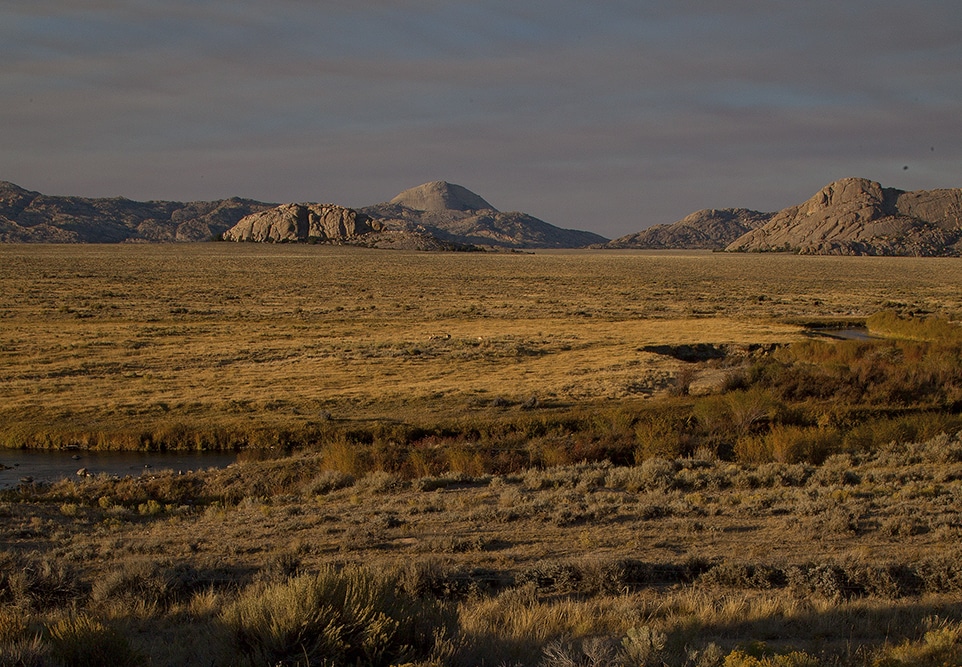
Groups could lease parcels of land to help wildlife migration routes, habitat, and water management to keep the ecosystem healthy. The rule will allow ranchers and others who use public lands to work with private organizations to restore streambeds and remove invasive weeds.
When it announced the rule April 18, the BLM noted “the impacts of climate change — including prolonged drought, increasing wildfires, and an influx of invasive species — pose increasing risks to communities, wildlife and ecosystems.”
Its conservation rule, the agency stressed, will help navigate changing conditions on the ground while allowing public lands to continue serving as economic drivers across the West.

But Rep. Harriet Hageman (R-Wyoming) claimed it “empowers radical environmentalist groups to restrict public access to public lands.”
“I will continue to fight against this [President Joe] Biden land grab,” she added.
Pure rubbish, spoken by a pro-industry politician who’s never met a favorable environmental rule that she didn’t hate. It’s not a land grab.
“It just makes sure that values such as wildlife habitat, healthy watersheds, healthy soils and public access to go out and enjoy these areas are all considered in concert with some of the other needs that we have on those lands,” Megan Riley of the Wyoming Outdoor Council told Wyoming Public Media.
The most easily debunked criticism by Republican lawmakers and industry is that the rule will halt all current uses by prioritizing conservation, previously a “non-use” of federal lands.
First, drilling and mining will continue. The rule specifically states nothing will preclude the development or transmission of energy on or across public lands “without due consideration of multiple use and sustained yield principles.”
The rule doesn’t enable conservation use to occur in places “where an existing, authorized and incompatible use is occurring.” But many uses are compatible with different types of conservation use, including sustainable recreation, grazing and habitat management.
Wyoming’s Republican U.S. Sens. John Barrasso and Cynthia Lummis independently released statements making wild accusations about the impact of the conservation rule.
Lummis called it an attempt to “appease climate extremists” that “threatens public access and use of almost half of Wyoming’s land, delivering a near fatal blow to Wyoming’s ranching, energy and tourism industry.”
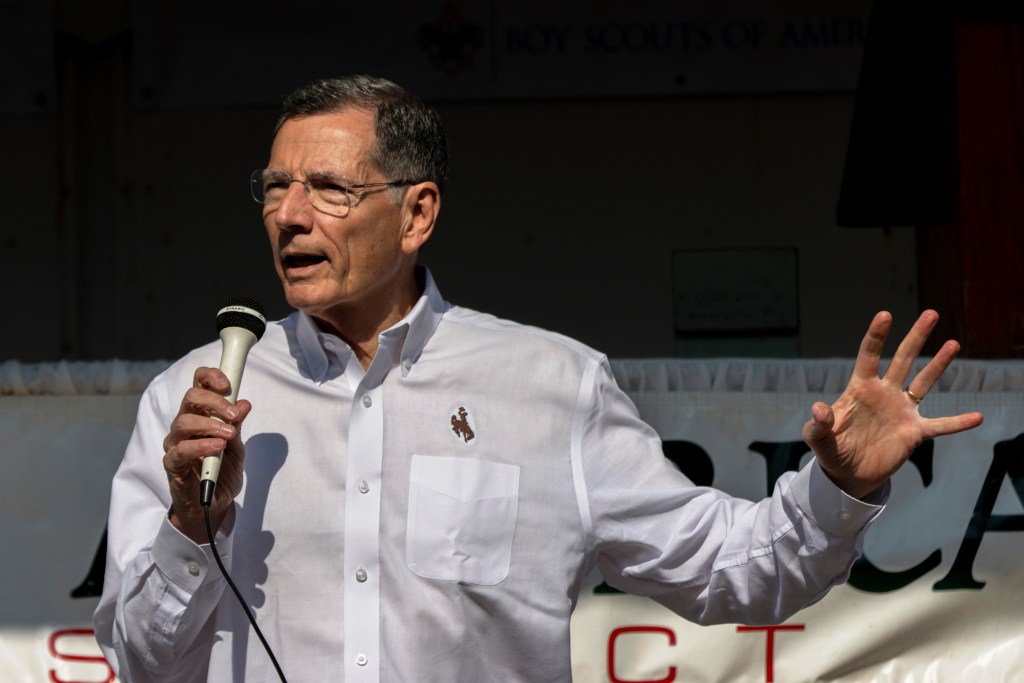
Barrasso was even more apocalyptic than his colleague: “With this rule, President Biden is allowing federal bureaucrats to destroy our way of life.”
In reality, conservation was already part of the BLM’s mission when Congress passed the 1976 Federal Lands Policy Management Act. Trout Unlimited President Chris Wood correctly called the new rule “a re-statement of the obvious.”
The 48-year-old law required BLM to protect important natural resources, such as wildlife habitat, cultural, historical or scenic values, or to protect human life and safety, through “Areas of Critical Environmental Concern.” The new rule calls for the designation of more ACES.
Drawing lines around these zones allows the agency to establish special rules to protect the resources, such as greater sage grouse breeding ground leks and mule deer migration routes.
Interior Secretary Deb Haaland put what the BLM did this month into proper perspective: “Today’s final rule helps restore balance to our public lands as we continue using the best-available science to restore habitats, guide strategic and responsible development, and sustain our public lands for generations to come.”
Despite protestations of politicians, and the extractive industry that often bankrolls their campaigns, many Wyomingites embrace Haaland’s assessment of the federal government’s vital role in managing public lands.
Gordon’s spokesman Michael Pearlman acknowledged in an email to WyoFile that in Wyoming “conservation has always been a high priority and considered with other land uses, such as energy development.”
But Pearlman added that with the new BLM rule, the Biden administration “upsets that long understood balance.”
It doesn’t. There’s nothing in federal law that states mining, oil and gas drilling and grazing leases have to be extraordinarily cheap and always obtainable, which are two of the hallmark principles behind politicians’ defense of the so-called “balance” of multiple uses.
Gordon is riding a political storm in which he literally can’t please anyone. He’s been a stalwart defender of the state’s extractive industries, including mandating the use of carbon capture technology — still unproven on a commercial scale — to revitalize the coal industry. But the primary way to make carbon-capture economical is to use it to enhance oil recovery, which only prolongs the life of a major contributor to the greenhouse gas emissions we must curb to combat climate change.
The governor has also embraced an “all-of-the-above” approach to energy development, including wind, solar and nuclear power. He’s been hammered by the far-right Wyoming Freedom Caucus for his goal to make the state “carbon negative,” which he reiterated at a high-profile speech at the left-wing Harvard Kennedy School.
Gordon obviously feels politically compelled to bash every federal regulation or rule that decreases mineral tax revenue and threatens jobs. But he also needs the federal dollars for carbon capture research that the Biden administration has made available.
I have no hope for our congressional delegation. Gordon, though, might be persuadable. What does he really think of the BLM’s Public Land Rule? Is his public negativity just a knee-jerk reaction to the feds’ environmental regulations?
Gordon has long stated Wyoming must address climate change because of its great impact on the economy. Most of his criticism about the rule centers on the false premise that Wyoming was shut out of the policy-making process.
I hope Gordon resists the urge to sue BLM over the rule. Better yet, I hope he recognizes that, far from thwarting some mythical balance of multiple uses, this new rule simply treats conservation as an essential part of the management mix.
We claim, in Wyoming, to treasure our wildlife and unsullied landscapes. Let’s prove we do, governor.


Hageman says ” it empowers radical environmental groups to restrict the public from public land.” Well, I grew up in Wyoming, and it was the rancher that restricted the public from public land. The rancher hegemony days are coming to an end.
Why do our senators and representative make everything political? We have lot of land in Wyoming and it needs to be used wisely. Not blindly!!!! We all need to be conservation extremist and maybe even climate extremist.
I may be wrong but it appears that these new rules are not really new. They are just reinforcing what should’ve happened a long time ago
Conservation is important, ranching and conservation and ranching is important. It is still necessary to Drill for oil. The rules don’t change that. Tourism needs to be preserved. Our land needs to be preserved. Our wildlife needs to be protected.
Our three Wyoming representatives need to stop blindly following the orange Satan and remember that things get done when Democrats and Republicans play nice. Hagaman is the worst of our representatives and she really needs to get her priorities straight. Her priorities should not be towards the EX alleged criminal president but should be towards the people of Wyoming. She has been bought by the energy industry and she needs to realize that they are not always the good guys. Most of them do respect the land they drill on but there are some bad apples
We need the energy industry, but we need hunting, fishing and tourism. We need to conserve some of the best outdoors in the country.
Wyoming land is forever. Conservation need to be forever.
To paraphrase Benjamin Franklin, half-truths are complete lies — so where to begin. I will mention only one of several in this piece about the BLM’s plan for the sizeable parcel in Wyoming. The half-truth is Drake’s contention that “92%” of the public is in approval of this plan, the WYOMING plan, while in truth this statistic is a NATIONAL poll in regard only to the Department of Interior’s “Public Lands Rule”. There is NO mention of the WYOMING BLM plan. Furthermore, it is unlikely that 200,000 Wyomingites were polled, or if any were polled that 92% would look favorably on this proposal. “Spin” is what Drake does, incessantly!
“Wyoming interests weren’t overlooked. An overwhelming 92% of more than 200,000 public comments either supported the proposed rule or urged stronger measures, according to a Center for Western Priorities analysis.”
Drake never said they were comments that originated from wyoming. The “wyoming interests” was in reference to Gordon’s quote in the previous paragraph.
Do you comprehend what you read? Or, do you incessantly twist words and/or misrepresent opinions you don’t agree with?
I doubt you’ll have the integrity to retract your false claim.
Yay. Same old bunch of lefties on here spouting bs. “We’re from the government and we’re here to help.” Glad I won’t live long enough to witness the destruction of our wild places that all you rubes go along with and encourage.
The sooner the gullible boomers move on, the better off the country will be.
Keep looking for those watermarked ballots Mr patriot…
Of course conservation needs to be part of the mix. That is the only way to balance short and long term needs. Our public lands many users, some that conflict. There is also the need to manage for wildfire risk. No one user or industry can be prioritized to the exclusion of the others.
This rule has been needed for a very long time! From the beginning, conservation should have been the linchpin around which other rules were based. It’s long past time this rule was adopted.
Finally “Multiple Use” has some teeth to it besides a horse, cow, and sheep feeding in the same pasture on Federal Public Lands. “We the people” need to give our next generation an inherited Legacy and not a Liability, and this new policy hopefully will fulfill that obligation.
Potentially more BLM State Director designated ACEC type management areas prior to any NEPA
https://www.eenews.net/articles/blm-rule-stirs-debate-over-little-used-conservation-policy/
If it doesn’t come from Don the Con, they can’t except it. What we have here is two and maybe three election deniers. These people ignored the peoples vote.
Priceless! On one hand, Harriett Hageman defends a North Carolina billionaire’s right to deny access to public land bordering his Elk Mountain Ranch and then turns around and accuses “radical environmentalist groups” of “restrict(ing) public access to public lands.” Barrasso goes even farther astray predicting that Biden’s policy will “destroy our way of life.” Poppycock! Wyoming ranchers are well on the way of destroying their own way of life. Go back to 1885 thru 1888. Wyoming ranchers systematically overgrazed what was publuc land resulting in a catastrophic livestock die off. Keep it up, ranchers. Why start learning from your mistakes now?
Overgrazing of public land resulted in the Taylor Grazing Act of 1934.
Barrasso is well on his way to “destroying our way of life.” Go back to Pennsylvania Mr. Barrasso. As far as Hageman and Lummis go, they are the radical ones. Remember who the election deniers are?