


Interior Secretary Doug Burgum signed a 10-year plan Friday that preserves Wyoming’s decades-long allocation for the drought-plagued Colorado River Basin.
The plan sets operating criteria for releases into and out of the southwestern reservoirs of Lake Powell and Lake Mead for an initial two-year period, calling on California, Nevada and Arizona — Lower Basin states — to cut their water use. The three states will see their collective share reduced by 2.5 million acre-feet over the period under Burgum’s signed record of decision.
“Wyoming water users continue to face significant water cuts in dry years like this one,” State Engineer Brandon Gephart, Wyoming’s water czar, said in a statement Friday. Those reductions won’t be administrative decrees, however, but the result of natural hydrography.
“They [Wyoming irrigators and other users] won’t face additional cuts under the Record of Decision or the Operating Guidelines.”
Brandon Gebhart
Wyoming irrigators and other state users “won’t face additional cuts under the Record of Decision or the Operating Guidelines because the Secretary’s authority to mandate cuts is tied to Lake Mead and our users don’t receive water from Lake Mead,” Gebhart said.
The guidelines would ensure that enough water fills the two reservoirs to generate electricity and preserve infrastructure from degradation. The plan sets a framework for future operations to be revised in two-year blocks.
Burgum and the Bureau of Reclamation imposed the plan after the Upper Basin states of Wyoming, Colorado, New Mexico and Utah failed to agree with Lower Basin states on how to manage river flows. Overly optimistic estimates of how much water the Colorado River Basin would provide and an ongoing drought have strained the system on which 40 million people have some reliance.
About 100,000 people in Wyoming live in the Green and Little Snake River basins, tributaries to the Colorado River, or rely significantly on its water.
Despite the upper and lower division states — which are supposed to share flows equally — not reaching a consensus, Burgum praised their efforts.
“We are grateful for the seven basin states, the 30 basin tribes, Mexico, and many other basin stakeholders who have provided the feedback and voluntary arrangements necessary for the development of the 2027-2028 operating guidelines,” he said in a statement.
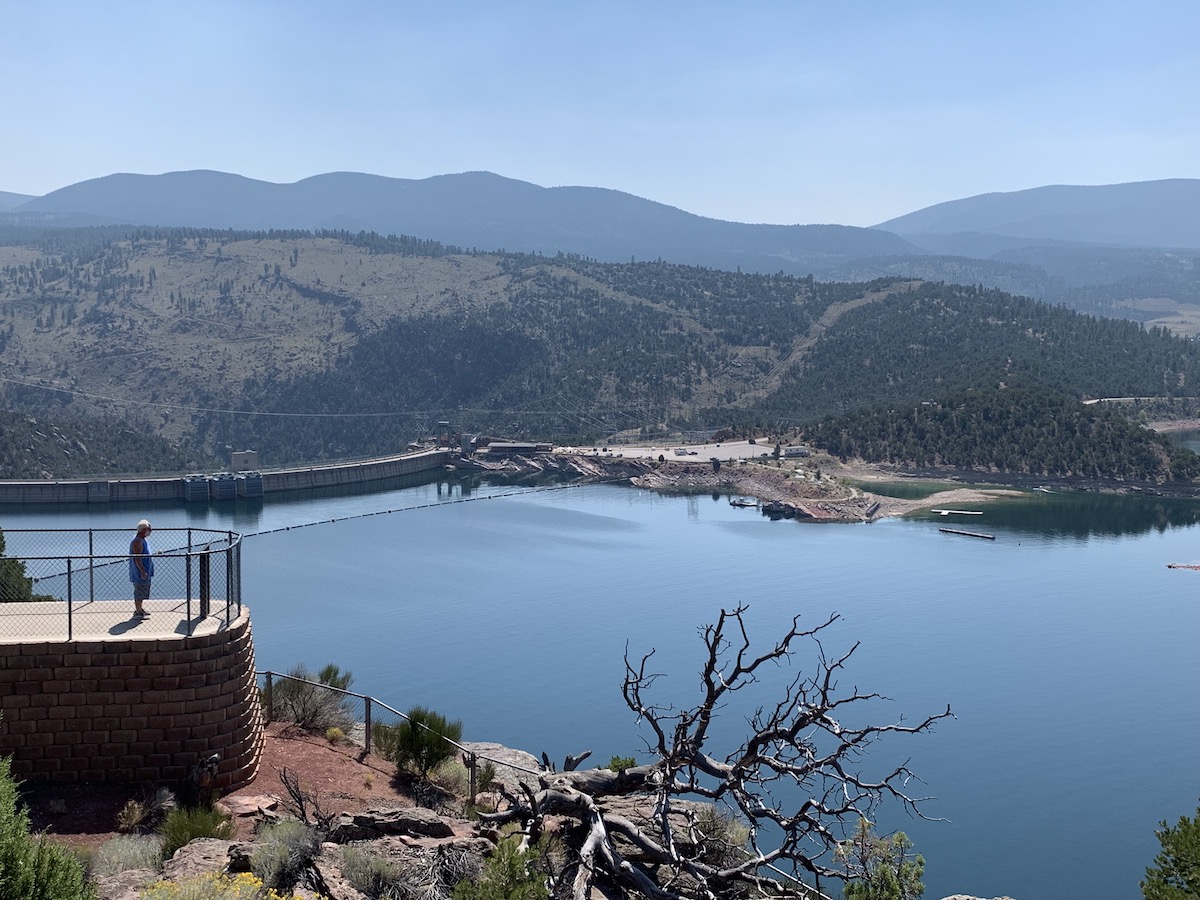
Wyoming will see some effects of the agreement at Flaming Gorge Reservoir. There, water managers will drain storage to ensure the water in the two major downstream reservoirs is deep enough to generate electricity and keep the dams and associated canals from deteriorating.
Lowering the reservoir’s water level has and will continue to disrupt recreation at Flaming Gorge near the town of Green River, Wyoming. At the same time, Lake Powell reached a new record low this month, the shallowest the reservoir has been since the Glen Canyon Dam was constructed.
“The Record of Decision and the 2027-2028 Operating Guidelines respond better to hydrologic conditions than previous operations did,” Gebhart’s statement reads. “They are a positive step towards managing the system based on available supply.”
The 10-year plan doesn’t resolve the fact that states have been allocated more water than the river system can deliver. Engineers calculated that some 15 million acre-feet a year would be available. More than 16 million acre-feet a year was allocated, but the basin produces as little as 12.5 million annually.
Not a long-term fix
Gov. Mark Gordon and his counterparts in the Upper Basin were pleased with the proposal — now finalized — when it was released earlier this year.
“We are encouraged that new operating guidelines will better reflect existing water supply, which must underpin any practicable plan going forward,” they said in a statement.
Gebhart, Wyoming’s water boss, has said the Bureau of Reclamation was acknowledging reality.
“In the Upper Basin, water use is already limited by available supply, administered under state law, and the Secretary [of Interior] does not have … authority to mandate reductions,” Gebhart told WyoFile earlier this month.
Wyoming could conserve water voluntarily, but ranchers and others who forego their rights will likely do so only for money and on a temporary basis.
Meantime, experts predict conflict and stress in the long term.
Drought will likely cause agricultural stress in Arizona, Nevada and California and may not deliver traditional supplies of winter vegetables and maybe even other crops, said Sarah Porter, director of the Kyl Center for Water Policy at Arizona State University’s Morrison Institute. She spoke in a Zoom webinar earlier this month.
Litigation, too, looms.
The plan “doesn’t place the basin on a path to stabilizing the system at all,” Porter said. “It doesn’t resolve conflict at all. It doesn’t achieve the [long-term] things that the basin really needs at this point.” She said she expects Lower Basin states to contest the plan.
Continued drought, however, could eventually catch up with Wyoming if upper division states can’t deliver a certain amount of water downstream. In such a case, lower states could make a compact call that could require Wyoming to cut its use.
“We are still reviewing the Record of Decision, but so far we do not see any significant changes to what was proposed,” Gebhart said. “We still have work to do, and the framework adopted today allows us to continue working with our federal and Basin State partners towards a sustainable, consensus-based solution for the long-term. Wyoming remains committed to that goal.”


This was bound to happen, when you decide to farm the desert and overpopulate what the local environment can support you will have issues.
“Wyoming could conserve water voluntarily, but ranchers and others who forego their rights will likely do so only for money and on a temporary basis.”
Hopefully we can have some ranchers/legislators look at more affordable and less intrusive ways to conserve water while increasing the amount of recharge to our groundwater.
This little video was partially filmed in Wyoming and is worth every second of time for anyone living in this beautiful state.
https://video.wyomingpbs.org/video/dam-it-beavers-to-the-rescue-hzic1i/
What is preventing the lower basin states from making a “compact call” at this time?
Hold back the water!
Those fools are still developing the desert further in th SW.