

A federal drought plan for the Colorado River and its tributaries in Wyoming shouldn’t stop Wyoming from building a new dam and reservoir in Carbon County, two Western water experts say.
The Bureau of Reclamation plan for the sweeping basin focuses on maintaining enough water in Lake Powell and Lake Mead to generate electricity and prevent degradation of critical infrastructure, professors from Utah and Arizona said last week.
The 10-year framework to manage water storage and releases in the complex seven-state, two-nation system seeks to balance predictability and flexibility in two-year increments. It also acknowledges that the government has little to no authority over water use in headwater states Wyoming, Utah, Colorado and New Mexico, said Sarah Porter, the director of the Kyl Center for Water Policy at Arizona State University’s Morrison Institute.
“One way of reading the final environmental impact statement,” Porter said, “is the Bureau’s determination that it doesn’t really have any authority to limit water use in the headwaters.”
Drought will likely cause agricultural stress in Arizona, Nevada and California, threatening the supply of winter vegetables and possibly other crops, she said.
“We probably won’t be eating as many salads,” she said, because Arizona is where winter lettuce is harvested. “It’s all grown in Yuma.”
More important for Wyoming might be that the Bureau of Reclamation’s final environmental impact statement recognizes the independence of headwater, or upper-division, states to essentially use water as they see fit. Efforts to conserve water in the Upper Basin “are not within the scope of this EIS,” the federal document states.
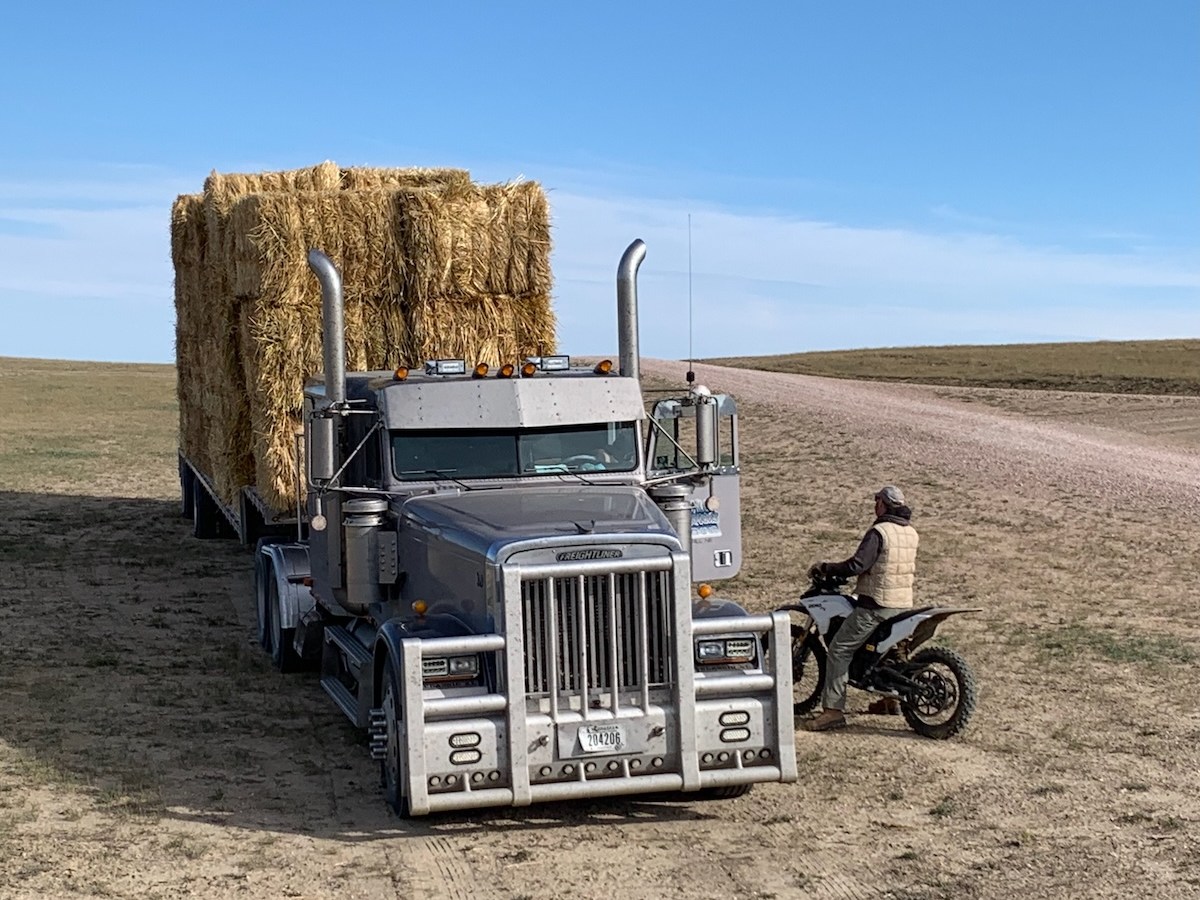
So while farmers downstream may see their traditional supplies cut, Wyoming forges ahead with plans for the 10,000-acre-foot West Fork dam and reservoir in Carbon County where 6,000 acre-feet a year would be poured onto fields for late-season irrigation on ranches.
Energy equation
The Bureau is imposing the plan after the seven states failed to agree on how to share Colorado River flows as drought crimps traditional allotments that were based on too-rosy estimates.
“We have the lowest reservoir storage we’ve ever seen,” said David Rosenberg, a Utah State University professor and water researcher. “We have very low inflows.”
He and Porter spoke in a Zoom webinar hosted by SciLine, a nonprofit that connects reporters with scientists.
The two called the Bureau of Reclamation plan a decision-making framework for distributing water in the three Lower Basin states — initially for two years.
“It doesn’t place the basin on a path to stabilizing the system at all,” Porter said. “It doesn’t resolve conflict at all. It doesn’t achieve the [long-term] things that the basin really needs at this point.”

But the plan is “a very clear statement,” Rosenberg said, “of how they’re going to protect infrastructure.”
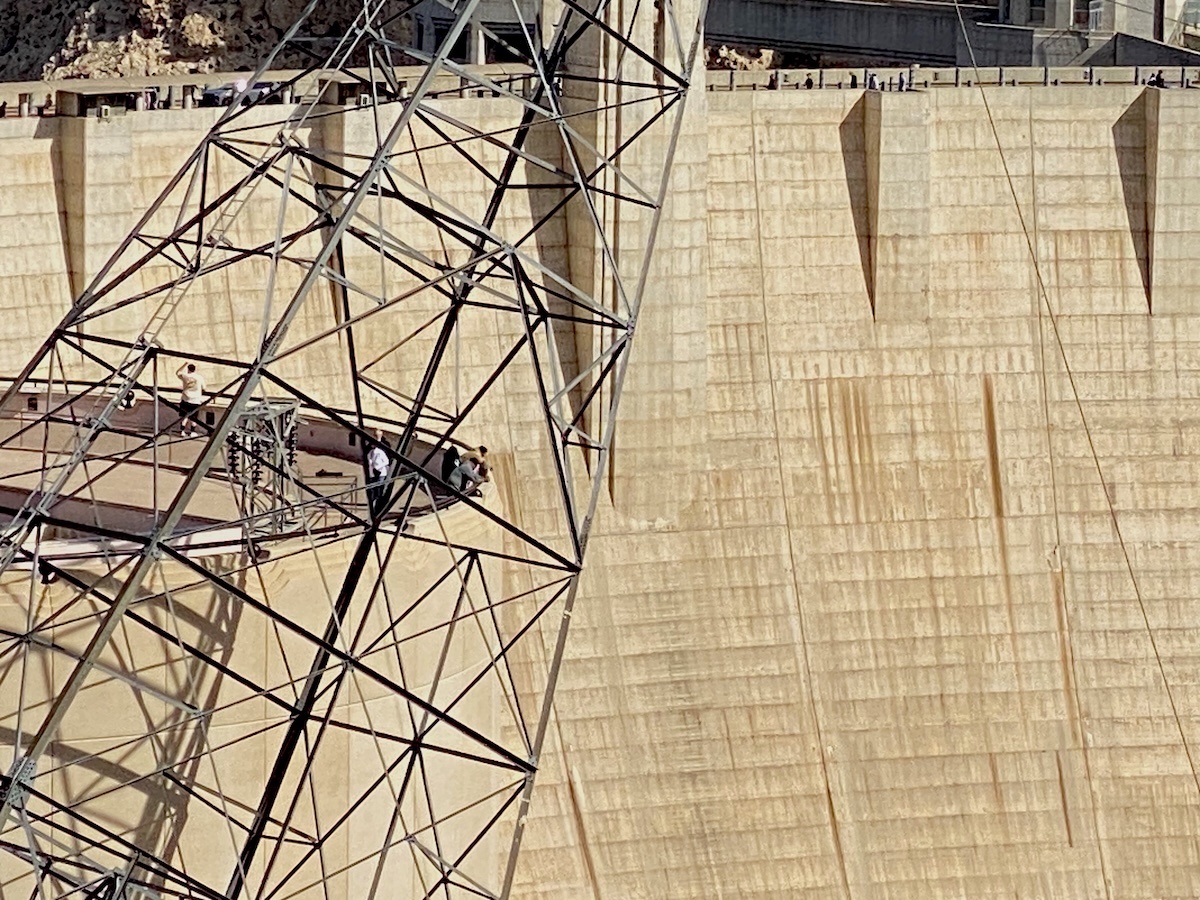
That infrastructure includes the two major dams, associated power plants and canals that would become useless, even degraded, if the water levels in Powell and Mead drop below critical levels. With the plan, Rosenberg said, the Bureau states: “We’re still going to be generating hydropower.”
Powell’s Glen Canyon and Mead’s Hoover dams can generate some $443 million of market-price electricity a year when operating fully, according to calculations from the Bureau of Reclamation and the U.S. Energy Information Administration. To keep those two reservoirs flush, the Bureau will release water from Wyoming’s Flaming Gorge Reservoir and from Colorado’s Blue Mesa Reservoir and New Mexico’s and Colorado’s Navajo Reservoir.
Beyond that, the Bureau’s plan targets the three Lower Basin states for reductions, depending on water in the river system and reservoirs.
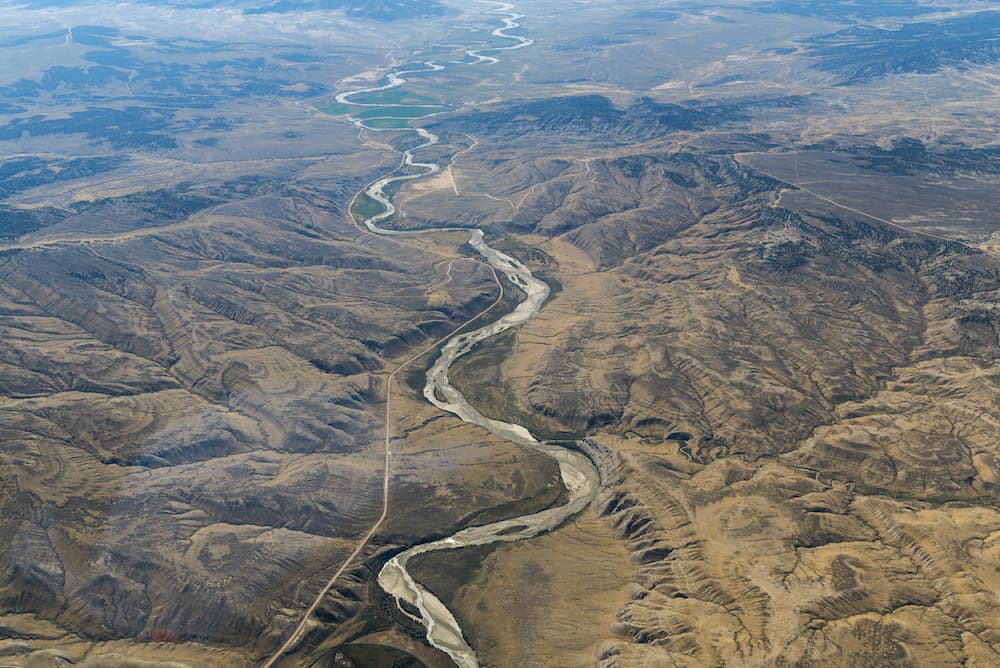
Headwater states largely rely on stream and river flows determined by spring runoff. The at-risk region in Wyoming includes the Green River and its tributaries and the Little Snake River in Carbon County.
In contrast, the Lower Basin “gets all of its water, Colorado River water, from the reservoirs,” Porter said. It’s a lot more complicated to curtail Upper Basin use “than simply to not deliver water out of a reservoir,” she said. “And that’s a sore point with the Lower Basin.”
The two professors predicted a fight. “We expect they’ll be challenging this administrative process,” Porter said of the lower division states’ reaction to the Bureau’s EIS.
Compact call coming
There’s more on the horizon too.
“I also expect that within the next year and a half, or maybe two years, there will be what we call a compact call,” Porter said, “a demand from the Lower Basin for water that the Lower Basin contends the Upper Basin is obligated to deliver.
“That challenge will occur in the United States Supreme Court and that could take 10, 20, 30 years.”
Under the 1922 Colorado River Compact and associated agreements, the upper division states can’t diminish the flow from Lake Powell below 7.5 million acre-feet annually, calculated on a 10-year rolling average. That’s half what engineers originally calculated the watershed would produce; half belonging to the headwater states, half to the Lower Basin. That estimate is now considered to have been exuberantly optimistic.
“…[W]ithin the next year and a half, or maybe two years, there will be what we call a compact call, a demand from the Lower Basin for water that the Lower Basin contends the Upper Basin is obligated to deliver.”
Sarah Porter
“We really need to figure out a way collectively to be reducing demand in the Colorado River by at least 3 million acre-feet out of the 15 million,” Porter said, “and that probably can’t all fall on the Lower Basin.
“The Lower Basin,” she said, “didn’t agree to be junior to the Upper Basin.”
If Upper Basin states don’t deliver the 7.5 million acre-feet past the Lee Ferry gauging station just below Lake Powell, headwaters curtailment will begin, starting with the most recent, or junior, water-right holders.
Until then, conservation in Wyoming will be voluntary, generally meaning that if an irrigator or other user forgoes their water right, they will need to be paid. In previous trial conservation programs, that has cost $500 an acre foot.
But a compact call by Lower Basin states would lead to curtailment — a mandatory cutting off of Upper Basin water use starting with the most recent, or junior, rights’ holders. Long-established ranches and irrigators hold senior rights while Wyoming municipalities and industries in the Green River Basin are likely among the first to be curtailed.
Under the “Law of the River,” Wyoming has rights — on paper — to 14% of the Upper Basin’s 7.5 million acre-feet annually. That’s about 1 million acre-feet. But the state engineer estimated in 2010 that Wyoming’s rights amount to 847,000 acre-feet a year, according to the state’s 2010 plan for the basin. Wyoming uses 680,076 acre-feet and has rights to another 166,924, the latest plan states.
That makes the 100,000 or so Wyomingites who rely on or use Green River water relatively water rich compared to the 40 million down-streamers who rely on the river for some or all of their agricultural and municipal needs. In essence, 100,000 Wyomingites have rights to almost 1 million acre-feet while 39.9 million down-streamers divvy up 7.5 million acre-feet.
The implications go beyond the scarcity of your garden-variety salad.
“If there are big reductions in water supplies to those [Lower Basin] areas, there really will be impacts on our food supply nationally, not to mention other impacts,” Porter said.
Recycling water
While the prospect of southwestern metropolises crashing headlong into ugly sewerage problems caused by the crisis would seem to loom, don’t put all your money into wag-bags and porta potties yet. The municipalities are figuring out how to cope.
“Those cities are making massive investments in advanced water purification to treat reclaimed water to potable to reduce reliance on annual deliveries of Colorado River water,” Porter said. “That access to other water supplies or other water management strategies isn’t really available to agricultural water users or, to a great extent, the tribes who are significant rights holders to Colorado River water.
“We may see impacts to cities really smoothed out and not be very disruptive,” she said. “If we do have disruptive impacts, they will probably fall on rural areas and tribal communities in the Lower Basin.”
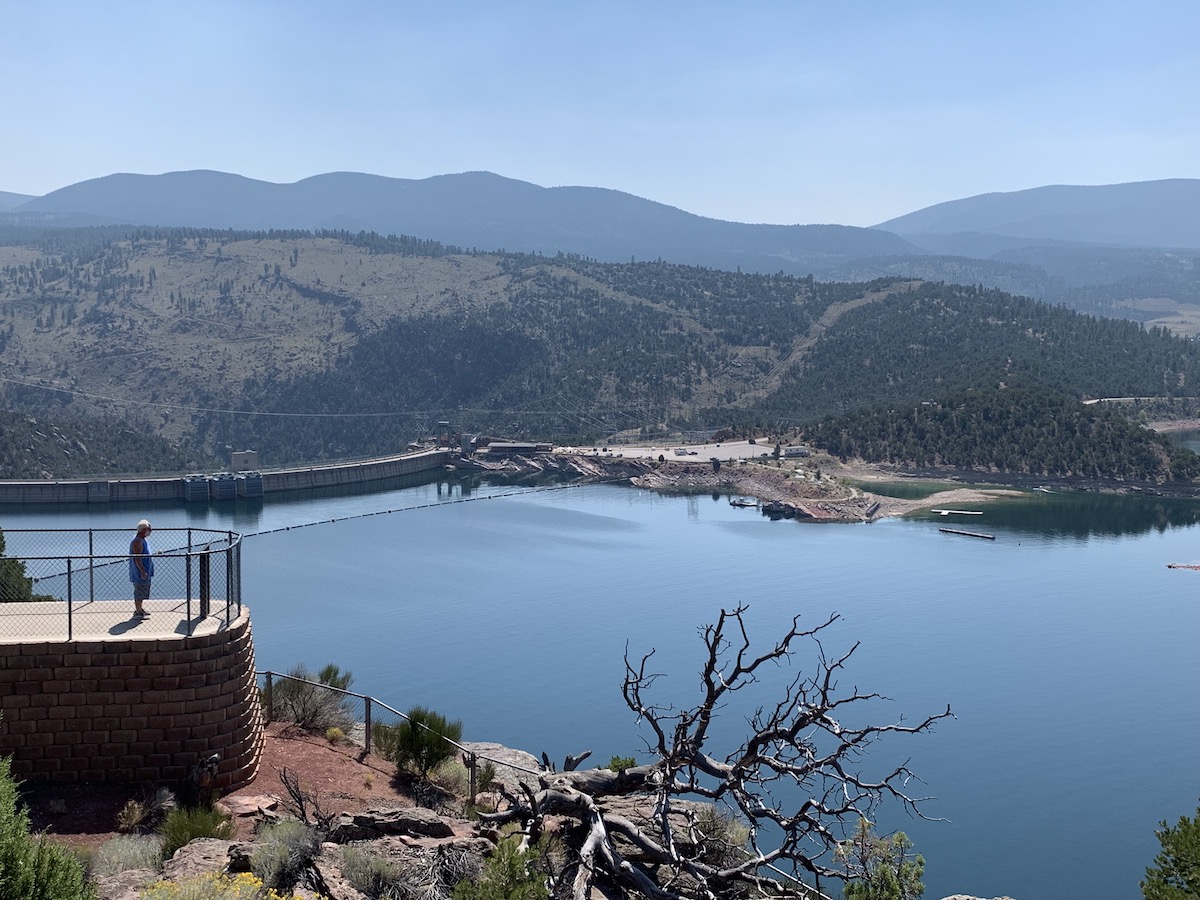
The Bureau stepped in after the upper and lower division states couldn’t agree on how to collectively trim water use.
“I don’t think the development [and] the release of the final EIS has moved the seven states closer to consensus,” Porter said. “I think, if anything, it has moved them farther away. I don’t see the state saying we will waive what we think are our rights under the Colorado Compact and come up with a new agreement.
“We are in for a lot of legal conflict, and meanwhile, we don’t have good reason to hope that hydrology is going to bail us out,” she said. “So we could have a lot of fighting over less and less water.”

John Wesley Powell told us so.
This is a very clear explanation. Good job and thanks, Angus.
Dissolve the 1922 Colorado river compact.