


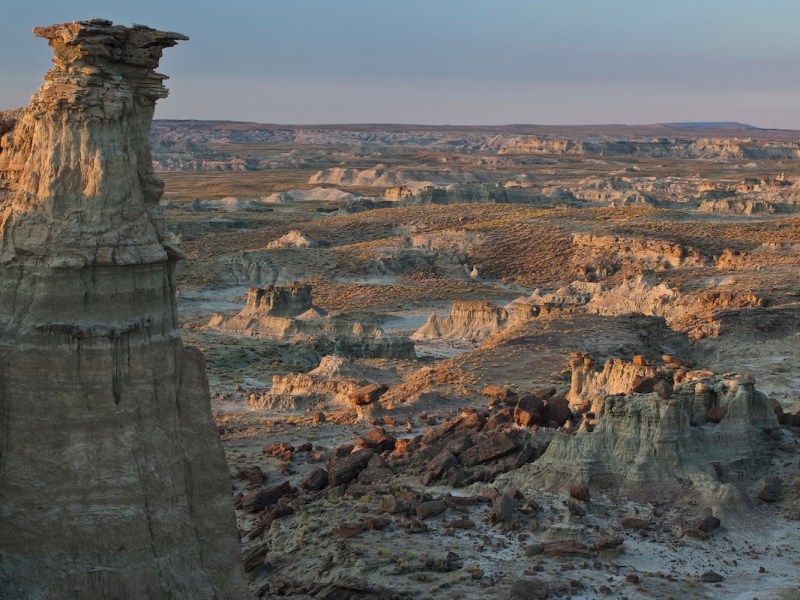
RED DESERT—Wildlife biologist Tom Christiansen stood atop a ridge and gestured to a sea of sagebrush stretching south for miles before giving way to open patches of ancient seabed dirt and the vast Killpecker Sand Dunes.
All manner of plant and wildlife that reside in Wyoming’s Red Desert are adept at surviving the area’s sparse precipitation, poor soils and seasonal extremes. But a warming climate threatens to push this place to the brink of cascading degradation, Christiansen explained to a group of journalists during a tour of the desert by wing, tire and boot earlier this month.
“Normally, we’d have 80 or 90 fawns for every 100 [pronghorn] does,” he said, noting the ratio is down by about one-third for the Sublette Herd.
“There’s example after example of this kind of stuff, and you can see it in the vegetation monitoring,” Christiansen added. “It all goes back to the climate and how we’re drying out.”
Aside from a two-track road here and there, the vantage point where Christiansen and his audience stood revealed a vista devoid of rooftops, highways or power transmission lines — a place where only the hardiest of plant and animal species have evolved to flourish in the harsh, arid landscape. In this particular spot, an area on the northern edge of the Red Desert dubbed “The Golden Triangle,” resides the largest intact concentration of sagebrush and the largest concentration of greater sage grouse in the world.
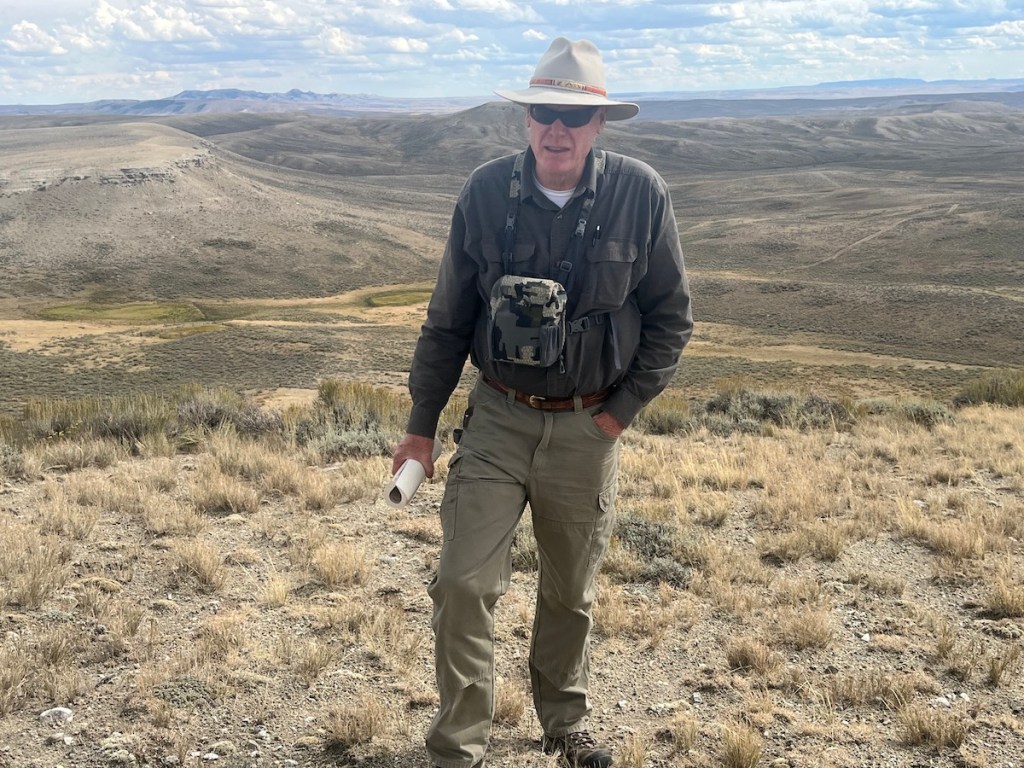
The hearty sagebrush-steppe biome, a feature beyond The Golden Triangle and throughout the desert, also provides sustenance for thousands of pronghorn and mule deer that migrate out of the surrounding mountains and foothills to survive western Wyoming’s brutal winters, Christiansen explained. Retired after a 33-year career as a Wyoming Game and Fish Department biologist, Christiansen has studied everything “from mice to moose.”
That biome is an increasingly rare commodity, he added, noting sagebrush-steppe habitat is disappearing and degrading at a rate of 1.3 million acres per year in western North America. The northern Red Desert, in his mind, is sort of an accidental ecological refuge.
“One of the reasons we still have this open landscape here — it’s not because of our intensive and intentional design to keep it wild and free and open. No,” he said. “It’s because the soil sucks and the precipitation sucks.
“We’re already on the edge of existence,” Christiansen continued. “You can’t turn this into a wheat field. If you could, it would have been done. It’s not out of the goodness of our hearts that it’s still sage-grouse habitat.”
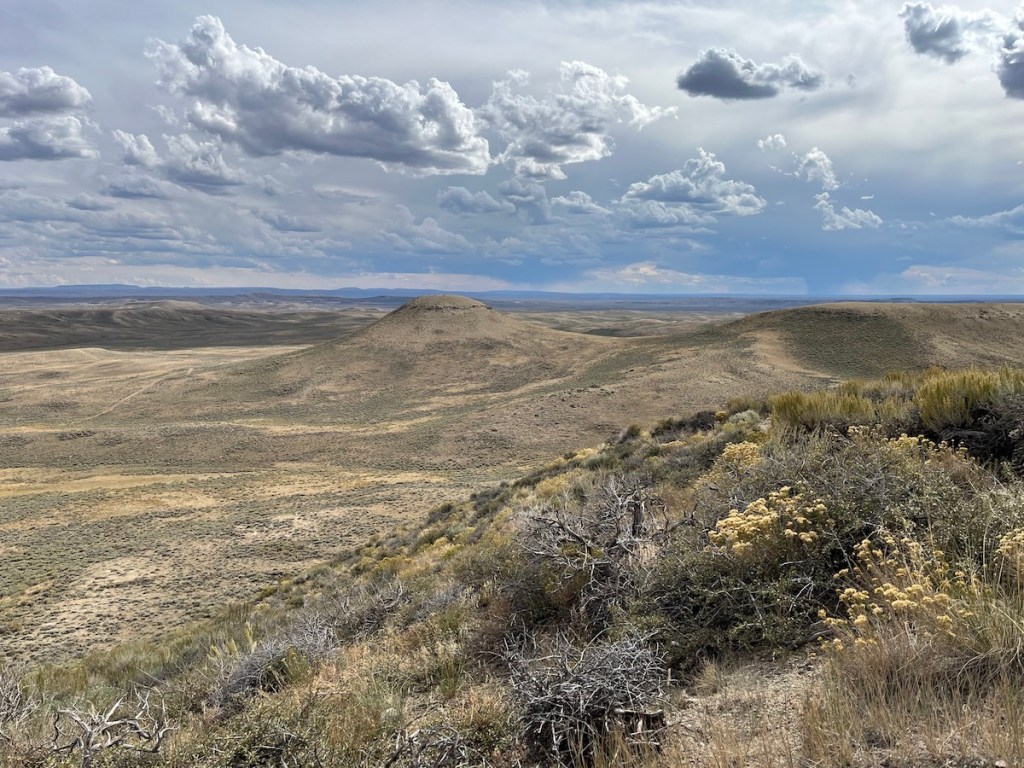
Yet the fate of this desert refuge will be no accident, according to Christiansen and the Wyoming Outdoor Council, which organized the tour. Christiansen serves as secretary on the council’s board of directors.
The group, along with Friends of the Red Desert and others, are hoping to elevate the “invaluable” qualities of the Red Desert in the hearts and minds of the American public as federal officials retool a management plan that will determine the future of this place as it undergoes increasing climate-related threats such as wildfire and invasive plant species.
Resource management in limbo
The U.S. Bureau of Land Management updated its Rock Springs Resource Management Plan in December, establishing conservation, agricultural and industrial development and recreational priorities for some 3.6 million acres in southwest Wyoming, including much of the Red Desert.
The plan blocked about 1.1 million acres from new industrial-scale development, mostly in the northern portion of the desert — the accidental ecological sanctuary, as Christiansen suggests — in part because it already lacks oil, gas and mining infrastructure. Though the BLM initially wanted to block about 2.5 million acres, conservation groups still cheered the smaller implementation of rights-of-way “exclusion areas.”
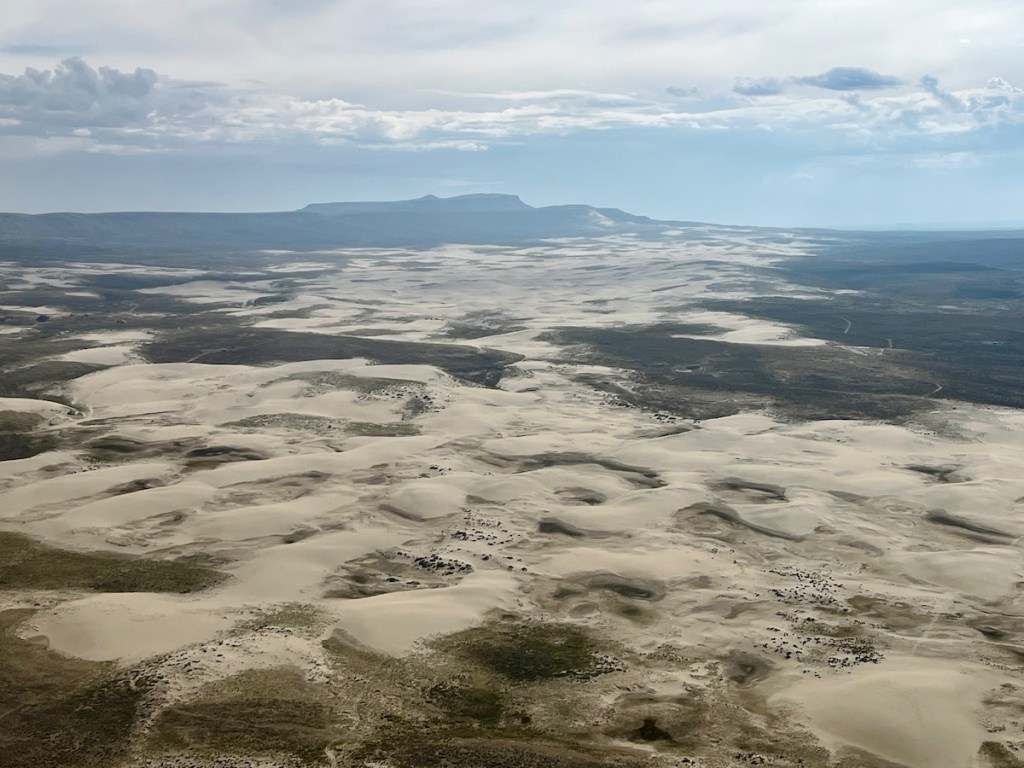
There’s a logic, both conservationists and — at the time — the BLM agreed, in not only protecting the unique environmental and cultural values of the northern region, but in recognizing there already exists an industrialized east-west swath of oilfield, mining, pipeline and powerline infrastructure following Interstate 80 and the railroad “checkboard” in the southern portion of the desert. Even with the expansion of rights-of-way exclusion areas, about 75% of the 3.6-million-acre BLM Rock Springs Field Office management area is already leased or technically available for energy development, according to a Wilderness Society report.
But the plan, after being savaged by conservative critics for being overly restrictive, is in limbo.
Interior Secretary Doug Burgum has said the Rock Springs management plan will be “reviewed and, as appropriate, revised.” The BLM is “preparing to amend” the Rock Springs plan under the Interior’s Secretary Order 3418, which aligns the agency’s actions with President Donald Trump’s Unleashing American Energy executive order, according to the Wyoming BLM office. That process will begin “in the near future,” and will include an environmental assessment “with some public scoping,” an agency official told WyoFile via email.
Conservation groups like the Wyoming Outdoor Council worry the Trump administration might exceed even what energy industry officials have asked for in terms of relaxing environmental protections. In addition to bolstering fossil fuel development on public lands, the administration proposes to roll back the BLM’s Conservation and Landscape Health Rule, rescind the Forest Service’s Roadless Rule, rescind the “endangerment finding” (the basis for limiting greenhouse gas emissions), to end a greenhouse gas reporting program and dozens of other actions to undo federal climate and conservation measures.

“The Trump administration has obviously led with prioritizing extractive industries over all other uses on public lands,” Wyoming Outdoor Council Conservation Director Alec Underwood told WyoFile. “Our concern would be … they might target some of those areas that are now closed to oil and gas via rights-of-way exclusions.”
Federal staffing concerns and new oil and gas assessment
When tour attendees climbed out of a gaggle of vehicles to chat with a local rancher near the Whitehorse Creek Overlook, a breeze was pungent with the sweet, earthy smell of sage. The unsettled sky above threatened to rain. But, true to the nature of this place, the timidly humid air merely added to the olfactory senses, and nary a drop was felt.
“It’s very dry — the driest we’ve ever seen,” said Jim Helleyer, who helps run a family cow-calf operation that, in part, relies on range in the desert. To cope, the ranch recently reduced its stock by half, he added.
A lifelong Lander resident and University of Wyoming graduate, Helleyer proudly described a recent upgrade to the ranch’s Red Desert grazing range, which encompasses a lot of BLM-administered surface. It included a water well that contributes to a small riparian area and new fencing (wildlife friendly, Helleyer noted) to keep cattle from trodding through it and to generally help sustain cattle grazing along with other natural resource benefits.
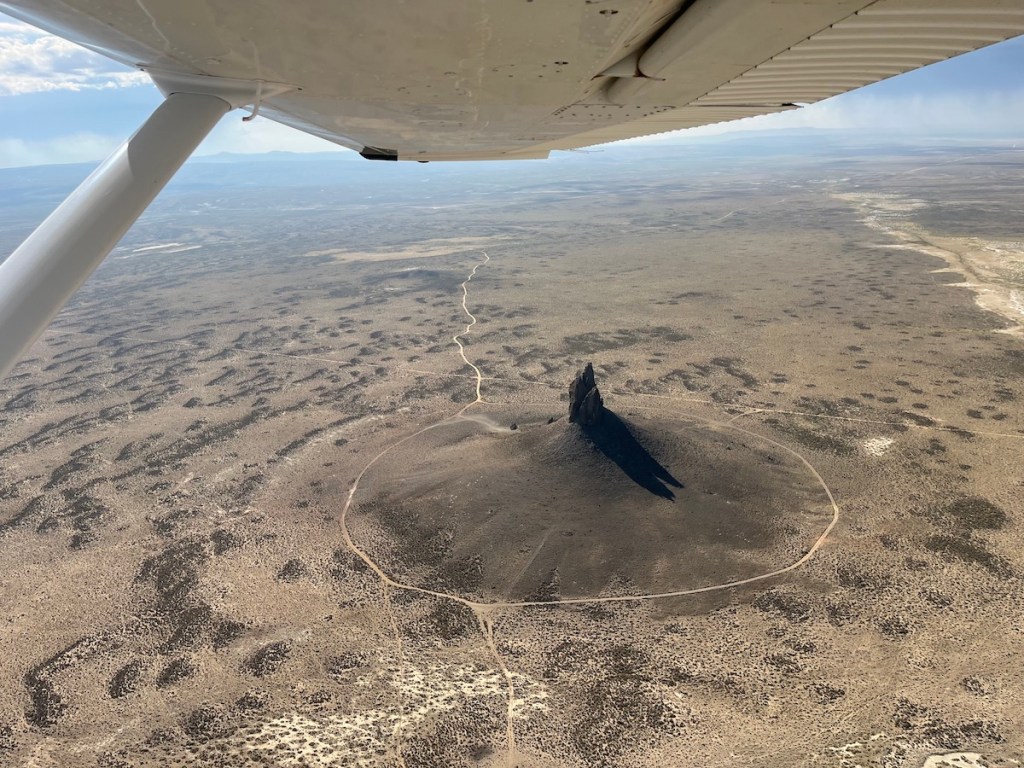
Even though the small project fit nicely with the BLM’s stewardship priorities, it took nearly 10 years to get permitted, he lamented. Outdoor Council members on the tour said they worry whether the BLM will be sufficiently staffed to steward whatever activities — and climate challenges — come next, given recent staffing reductions across all federal agencies via the Trump administration’s Department of Government Efficiency program.
Asked whether there’s much oil and gas activity that intermingles with the ranch, Helleyer said no. Decades ago, Amoco drilled a deep well near here, he said, “and didn’t stick around.”
You can find evidence of similar attempts to tap petrol all over the northern Red Desert, according to those familiar with the place. If companies had struck paydirt, there’d be oil and gas fields here, they say.
But, just months after the Trump administration took office this year, the U.S. Geological Survey published a new assessment proclaiming a massive volume of oil and natural gas previously “undiscovered” and now “technically recoverable” under a large region of northwest Colorado and southwest Wyoming. The unrealized bounty, according to the report, stretches into the northern reaches of the Red Desert.
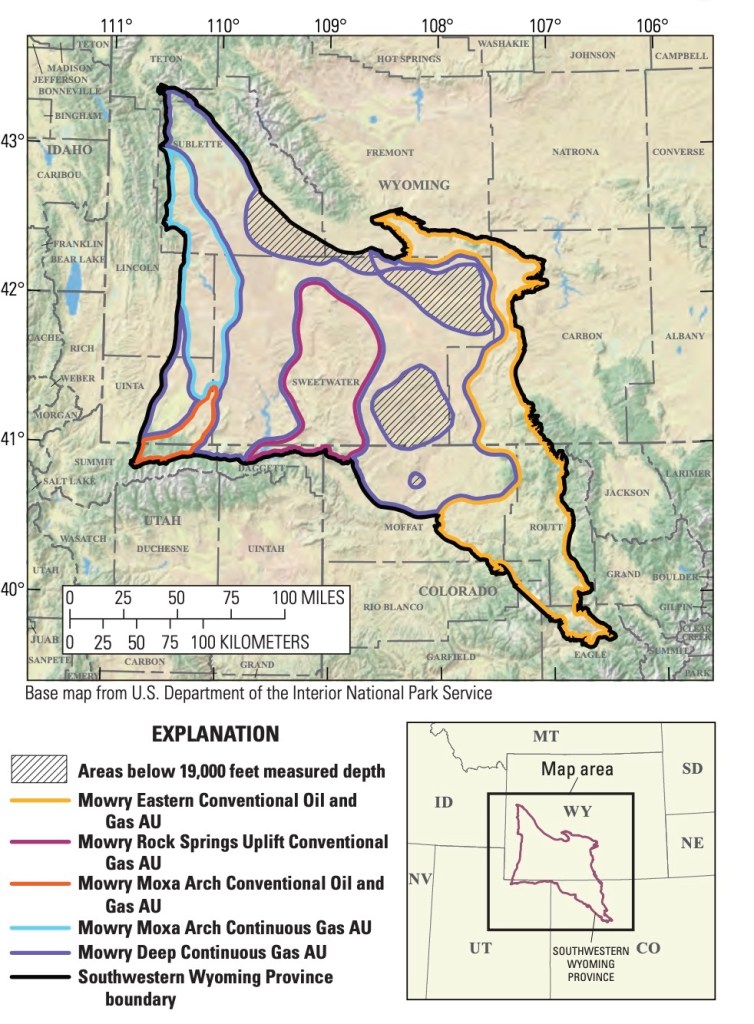
The potential riches weren’t exactly unknown, according to Wyoming oil and gas industry officials. It’s just that they were considered technically uneconomic to recover in terms of now outdated conventional methods.
“We’re constantly advancing [drilling] technology, and this new available science says that there’s a significant amount of recoverable oil and gas in the area,” Petroleum Association of Wyoming Vice President and Director of Communications Ryan McConnaughey said.
Though perhaps not all of the reserves identified in the USGS assessment are economically viable to tap today, McConnaughey added, “that may very well change in the future. So we don’t want to see a potential area locked up forever.”

McConnaughey said he believes drilling can advance into previously undeveloped areas of the desert without compounding climate-related stresses that conservation groups point to as a reason for blocking the activity. “Oil and gas production in Wyoming is done in a more sustainable and environmentally sensitive way than anywhere else in the world.”
For now, the northern Red Desert remains “remarkably intact,” the Outdoor Council’s Underwood said.
“When you look at the various values up there, including the recreational opportunities, hunting, fishing and the cultural resources, what you see is one of the highest quality landscapes to go out and enjoy the outdoors,” Underwood said. “It also happens to be one of the most ecologically significant areas in the United States of America. If that place isn’t worthy of protection, I don’t know what is.”
Editor’s note: WyoFile reporter Dustin Bleizeffer worked at the Wyoming Outdoor Council in 2018-19. The group has no involvement in WyoFile’s news content.

Richard, what seems sad to me is that? In 1991 and Wyoming there was approximately 578,000 deer in 2023 there are now around 216,000 deer. Antelope population in 2006 approximately 564,000 2024 approximately 320,000. The antelope decline due to habitat changes, fossil fuel development the presence of oil and gas wells negatively correlates with pronghorn productivity, infrastructure-fences roads, post significant barriers to pronghorn movement which is crucial for survival, especially during harsh winters. Screaming, environmentalist, highly educated scientist from all over the world 97% of the planet is warming at an alarming rate. Wyoming has been in drought for over 25 years. Southeast Wyoming got relief this summer. Hopefully we keep out a drought. Don’t believe me pick up your shovel and go dig in a place you don’t water. Human activities has consequences according to science who study this.
Drill baby drill, screw the environment. Trump told you he would and now he will..
YOU voted him in WY
When you have a governor and legislature that don’t care about wildlife or anything else that doesn’t make a buck. And you have 3 representatives who voted to sell off our public lands. And a state run by the petroleum industry….I’m starting to question whether any of this matters.
No one will say it, but it’s not just climate.
This is like a really bad movie with all the same actors. The screaming environmentalists, the poor earth incapable of self defense, the evil administration and evil companies out to destroy the world all brought to us by an enlightened media bent on suborning the tale, saving the human race from destroying the world. It’s so old and sad.