

In an apparent response to strident opposition from western conservatives, including Wyoming’s top elected officials, the Bureau of Land Management last week extended the public comment period for its new Public Lands Rule to July 5.
Environmental advocates have described the measure, which would put conservation on equal footing with energy development, grazing and other approved uses of public lands, as a clear-eyed strategy for addressing contemporary problems like climate change and habitat loss.
The oil and gas industry, stock growers, and other deep-rooted western political and economic interests vehemently disagree.
The U.S. House Committee on Natural Resources considered legislation Thursday that would require the BLM director to withdraw the rule that would elevate conservation as a “use” of public land. Gov. Mark Gordon traveled to Washington D.C. to testify before the committee, calling the proposed rule “unconstitutional” without congressional authorization.
“Simply put, if it ain’t broke, don’t fix it,” Gordon testified. “The best solution is to rescind this rule.”

During the hearing Gordon and U.S. Rep. Harriet Hageman (R-Wyoming), along with other Republican lawmakers, bashed the rule as detrimental meddling from bureaucrats who are out of touch with rural western states. Wyoming is already a model of multiple-use that balances conservation, Gordon said, echoing a common theme.
“I’m very concerned about the ulterior motives of this,” Gordon said. “It is to shut down fossil fuel development, and as I’ve mentioned, one of the things is that our fossil fuel industry is very much invested in conservation.”
Since it was unveiled April 3, the proposed rule has touched off a divide between pro-business, small-government groups who rankle at what they see as federal overreach and lack of transparency and those who believe conservation should be added to the agency’s multiple-use management toolkit to address issues like drought and climate change.
“We think that it has the potential to do a lot of good for conservation and specifically here in Wyoming,” said Meghan Riley, public lands and wildlife advocate for the Wyoming Outdoor Council. “We’re not immune to the effects of drought and increased wildfire and invasive weed species on public lands. And I think there are several provisions in the proposed rule that could help address some of the degradation on public lands.”
Equal footing
The BLM manages 245 million acres of public lands and 700 million acres of mineral estate according to the multiple use and sustained yield mandates given by Congress through the Federal Lands Policy and Management Act of 1976, or FLPMA. In Wyoming, the agency manages more than 17.5 million acres of public lands and 40.7 million acres of federal mineral estate.
Those multiple uses include energy development, livestock grazing, recreation and timber harvesting, and BLM is tasked under FLPMA with managing them to protect scenic, environmental and ecological values. FLPMA also states that the BLM, “where appropriate, will preserve and protect certain public lands in their natural condition.”

The proposed rule would direct land managers to identify and prioritize lands and waters that require habitat restoration work through the land management process, according to the BLM. It also proposes conservation leasing be used to facilitate restoration work on public lands in cooperation with community partners, as well as more “consistent and clear direction” to ensure appropriate management of historic, cultural and scenic resources that includes prioritizing protection and designation of Areas of Critical Environmental Concern.
The proposal responds to the growing need to better manage public lands, waters and wildlife in the face of devastating wildfires, historic droughts and severe storms, according to the BLM.
“As pressure on our public lands continues to grow, the proposed Public Lands Rule provides a path for the BLM to better focus on the health of the landscape, ensuring that our decisions leave our public lands as good or better off than we found them,” BLM Director Tracy Stone-Manning said when the rule was announced.
The rule would not impact valid existing uses of public lands such as already issued grazing or energy development leases, according to the BLM. But that assertion does not allay politicians like Gordon and Hageman, who say it would be injurious to ranchers and other important players in Wyoming’s economy. Wyoming lawmakers have expressed particular concern about the potential for conservation leases to be wielded as a way to shut down access for uses like grazing and mining.

“The very lifestyle of rural communities is at risk when burdensome regulations like this cripple businesses that allow these communities to flourish,” Hageman testified at Thursday’s House committee hearing.
Nada Wolff Culver, the BLM’s deputy director of policy and programs, said the proposed rule won’t affect the way the agency manages grazing under the Taylor Grazing Act. The proposal does not undermine any existing valid rights, impede development or require the use of conservation leasing, according to the BLM.
“The idea with the conservation leases is it’s one way that an entity who’s carrying out permitted activity on public lands that results in an unavoidable impact to public lands could mitigate, could offset that,” Culver testified before the House committee. “It doesn’t require that every activity be offset, that generally happens on a case-by-case basis as with the rest of this rule.”
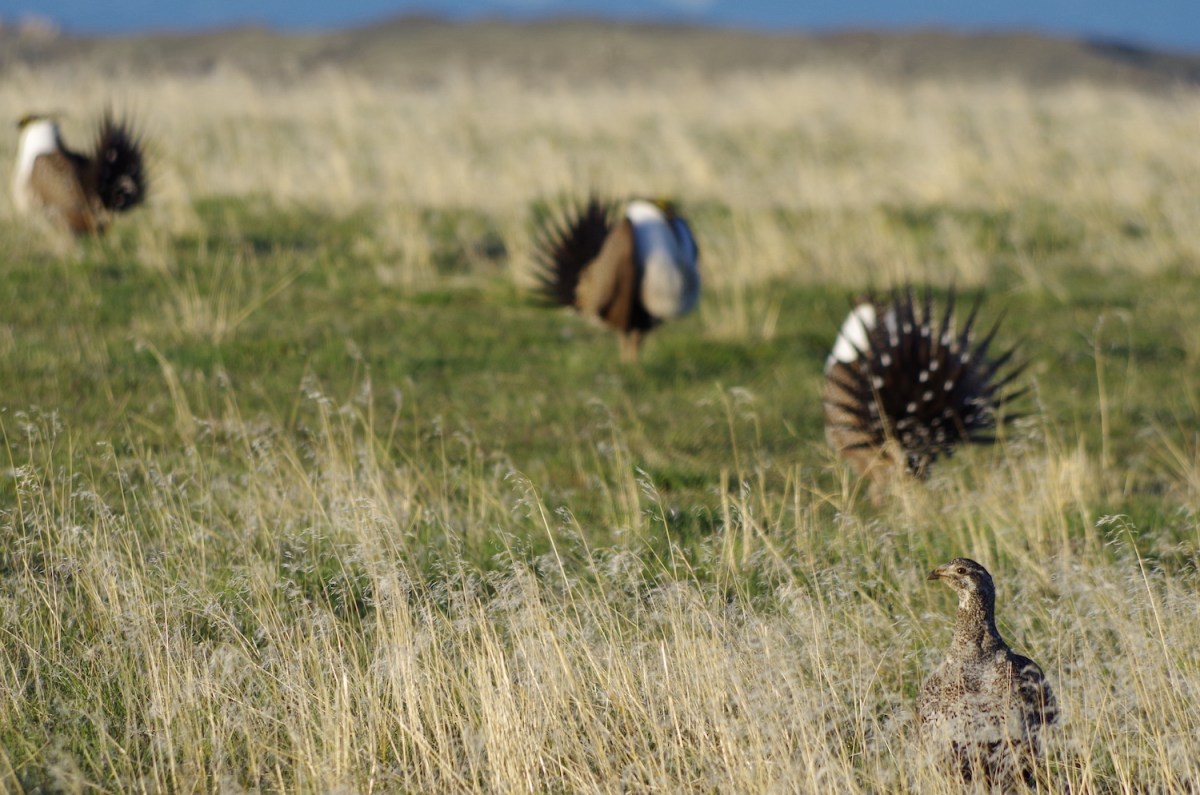
The conservation leases provide a way for the BLM to “leverage private investment towards restoration and mitigation efforts taking place on public lands, while working with partners, industry and the public to site energy development and to conserve greater sage grouse and wildlife habitat,” Culver testified.
U.S. Rep Jared Huffman (D-California) noted that western states are not in lockstep on this issue.
“Not every western state believes it would be the end of the world to elevate conservation to equal footing with grazing and timber harvesting and mining and other extractive uses,” Huffman said at the hearing. “A lot of folks think that this is just good, plain common sense and sensible policy.”
Ground-level opposition
Members of Wyoming’s Select Federal Natural Resource Management Committee voted unanimously to send a letter of opposition to the public lands rule at a meeting last week in Rock Springs. Their vote followed testimony from energy, stockgrower and county government representatives opposed to the proposed rule.
Also testifying was Adam Stewart, legislative director for U.S. Sen. Cynthia Lummis (R-Wyoming).
Lummis “believes that this proposal is a radical departure from the law and flies in the face of five decades of public land management,” Stewart said.
Lummis in May co-sponsored legislation introduced by Wyoming’s other senator, fellow Republican John Barrasso, that would, like the House version, block the proposed rule.
Superintendent of Public Instruction Megan Degenfelder, who previously worked in the coal, oil and gas industries, also submitted a letter to the BLM opposing the draft conservation rule. The measure would threaten mineral development on adjacent state lands, and with it crucial revenues that Wyoming’s K-12 schools rely on, she said.
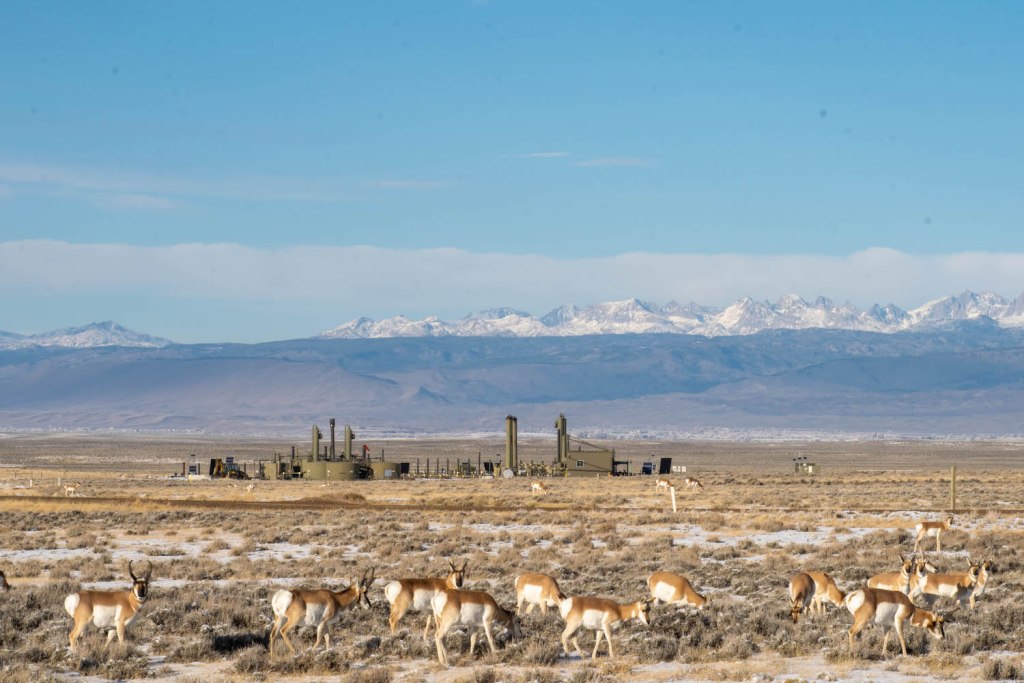
Supporters of the proposed rule say instead of blocking it outright, interested parties can use the process to refine and perfect a new framework that better fits all contemporary public land uses.
“Instead of holding bombastic hearings to decry a work-in-progress, members of Congress should sit down with the authors of the proposed rule, understand how and why it’s written the way it is, and provide constructive feedback to help make it even better,” Aaron Weiss, deputy director for The Center for Western Priorities, said in a statement.
His group supports it. “By elevating the best available science and giving land managers on the ground more flexibility, the rule would ensure America’s public lands remain healthy for years to come,” Weiss said.
Riley with WOC said the organization is excited about several aspects of the proposal, including the expansion of land health standards to all lands the BLM manages, the potential of conservation leases to aid restoration and the inclusion of tribes in decision-making.
Riley is also happy the agency extended its comment deadline. “There’s a lot of BLM land in the state of Wyoming, and folks who live here should get the chance to let the agency know what they think about the content of the proposed rule.”
The agency had received more than 136,000 comments by Monday.
Comments can be submitted here.

I agree livestock could be better managed on public lands. But that is BLM/agency’s in charge dropping the ball. But is everyone ready to give up all leather items? Can’t replace leather with plastic. You all don’t like oil extraction. Are all ready to give up gas heat? All solar panels require extracted sand so it can be melted under high heat to make the film for the panel. Aluminum frames? Well extracted minerals melted down. How about Copper for windings in motors and generators on top of your wind tower. Massive amounts of Balsa wood required for blades. Covered by material/Rosen that comes from that dreaded crude oil. How about your nylons ladies? Ready to give them up? Nylon comes only from crude oil extracted. Replace steel with Carbon Fiber? Comes from very crude oil from Wind River Basin. How about asphalt roads and concrete for roads? How about your make up ladies and transgender types. Ready to give up makeup? Good idea to shut all extraction of all minerals. Cull all the cows out. Who needs shoes. Course we could cull xxx amount of people. Skin and tan their hides to make leather goods. How about the pigskin/horse hide for footballs and baseballs. Replaced with human hide. Your computer even made possible because of extracted minerals/crude oil. Wonderful to think we can go back to good old days. Why with global warming we won’t need fires to cook or keep warm.
Larry- perhaps you need to have your databank’s neurons refreshed. Of all the crude oil pumped shipped and refined in the world, 94 percent is combusted as fuel / energy and all of that creates greenhouse gas at some point. The remaining 6 percent of crude oil is used for non-fossil fuel non-energy purposes : chemical feedstock and raw material . We should not conflate crude oil for fuel/energy/heating with crude used chemically for manufacturing. But that is exactly what your argument does… treats every drop of crude the same. When 16 barrels of crude oil are used for fuel for every single barrel used for all other uses, you need to adjust your perspective accordingly. Environmentalist know the difference and the distinction . Do you ? P.S. Putting crude oil and cattle in the same sentence to make a unitary socioeconomic argument is faulty.
I have participated in these discussions for most of my life. In Wyoming private lands are sacred. Owners believe their wishes and rights are supreme. But, many do not believe public lands should be managed for all the public.
These lands belong to all of us, not just those that use it, especially to make a living.
Those in mineral production and agriculture often see their use as the only valid use. I had one rancher tell me that wilderness is a land of not use. Seeing public land only as a way to make money and profit for the private sector is short sighted.
For years our forests were managed for a single product, lodge pole pine production. When beetles came along they wiped out most of the trees. Originally the forests were an ecosystem containing species at various stages of growth. Our use and management led to a void of living trees in many areas of the forest.
At one time grass was belly deep for cattle. Riparian areas were healthy and productive. But, poor management led to deep cut banks, higher stream temperatures and lose of species. Only in the last twenty years have turn arounds begun. The was because taking care of the the ecosystem, conservation if you will, was the highest priority. Stewardship of our lands benefits all of us.
Multiple use is great until we multiple use a piece of land to death. Elevating conservation to an equally important value and use, is prudent.
Anything that opposes the status quo is going to get push back form Big Oil and Gas, and cattlemen. This will help to rebalance the playing field.
With over 53,000 comments, most in favor, I hope this is implemented swiftly…
I hope the BLM has enough backbone to realize how valuable this proposed rule will be to the health of our public land and reject the greedy voices of the Ag groups and politicians who want to maintain their stranglehold on the use (abuse) of the public’s land.
Those opposed to fossil fuel production should take the first step and demonstrate to the rest of us how they manage their lives without fossil fuels. I cannot think of a way to avoid their use. And I cannot think of another way to get those fuels than drilling and processing. If you drive, heat your home, etc without using any fossil fuels, please, please tell us.
Giving conservation equal footing at the policy-making table, along with agriculture, oil & gas, et al, does not mean that fossil fuel production is being eliminated. Fossil fuel production is down due to market forces, and the choice of big oil & gas to not move on the leases they ALREADY have secured. Seems it is much more profitable to jack up prices on consumers, than to produce more. And if you are worried that plastics will replace leather, Mr Snow, I got news for you, that has already happened in many cases because its cheaper. I fear our governor, and Congressional reps are only standing up for corporate interests. This country is going to eventually switch to cleaner energy sources, so why wouldn’t Wyoming get on board with this change? That’s good business. And at the same time protect the most important asset Wyoming has: its natural beauty and the wildlife that that supports. I am well aware that agricultural lands are a huge component in conserving natural ecosystems, and I don’t believe their interests are compromised by this BLM proposal…..they will have the same voice as conservationists. We are talking about public lands, and the public needs, and deserves, an equal seat at the table.
Simple three question pop quiz for Barrasso, Lummis, Hageman, and Guv Gordo :
Do you even have a good working definition of Conservation ?
Do you know the difference between Multiple Use and Multiple Abuse when you see it ?
Does the Wyoming Operator’s Manual say somewhere it is mandatory to use Fossil Thinking when setting policies regarding Fossil Fuels ?
—
Apologies for being rhetorical, but we’re just not getting through to you’all that it is no longer 1892 around here…
Unlike the rest of us, the oil/gas & ag bigwigs can just call up our Congress critters & get a conference call to tell their Senators & Representative what to say, do & shout. So that clearly has been done.
Now we ordinary folks get our chance during the comment period. Please join me in letting BLM know that the (non profiting) people here think this is a long overdue improvement towards balanced public land management.
Go to: http://www.regulations.gov/commenton /BLM_FRDOC_0001-0164
Governor Gordon says, Wyoming is already a model of multiple-use that balances conservation. But at the same time, he refuses to move migration corridor designations forward due to opposition from the oil and gas industry. That is not my vision of a model of multiple use. The outdoor recreation economy in Wyoming would greatly benefit from this rule that would help balance conservation with development activities. Our elected officials are over-reacting!
Agree. Current Wyoming GOP is built on overreaction and their contributors. Real Conservatives favor conservation to pass this glorious legacy on to later generations.