


Federal officials are revising a 2009 initiative that encourages developers to “co-locate” new electric transmission lines across the West — including in Wyoming — in hopes of minimizing landscape and wildlife impacts while also accommodating burgeoning renewable energy development.
The U.S. Bureau of Land Management’s West-wide Energy Corridor program streamlined rights-of-way permitting inside some 5,000 linear miles of federal lands, presumably making the task of winning a right-of-way for power transmission lines less arduous. The federal agency is now integrating recent resource management updates to include, among other things, new climate and environmental justice parameters.
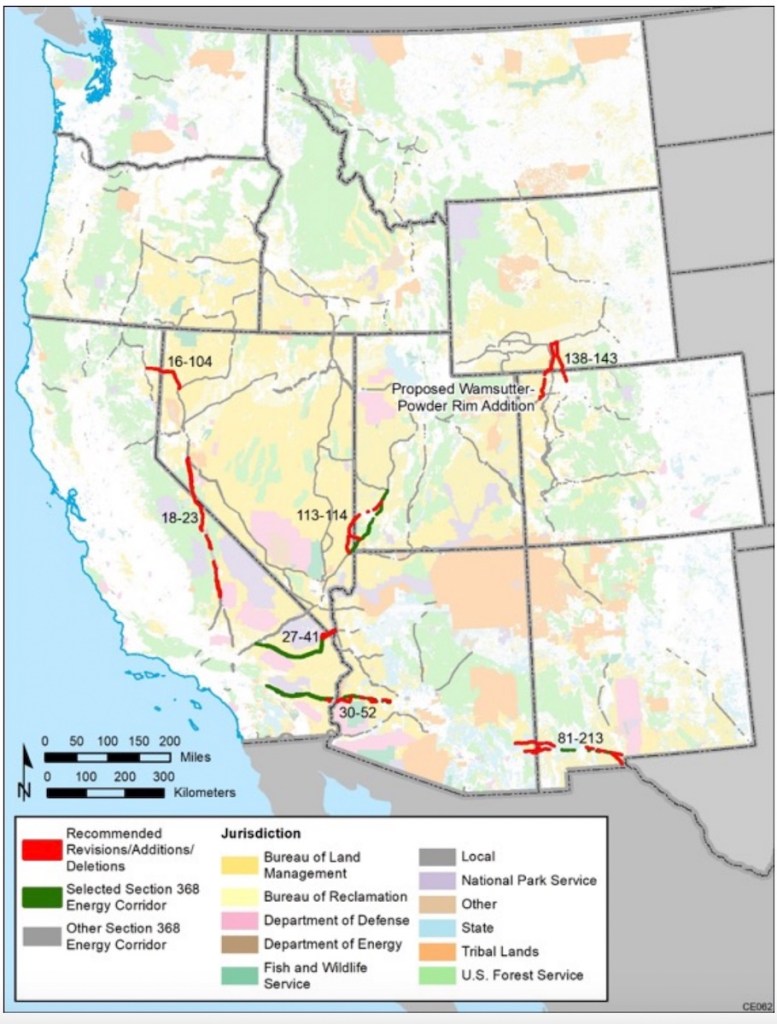
The agency has also identified seven areas in the West where it will consider tweaking the routes, including one in Wyoming. The BLM is proposing an alternate route for one 68-mile section of the 438 miles of priority corridors already established in the state. It stretches from Wamsutter south to Colorado along a path that’s several miles west of the BLM’s existing priority transmission corridor in the region.
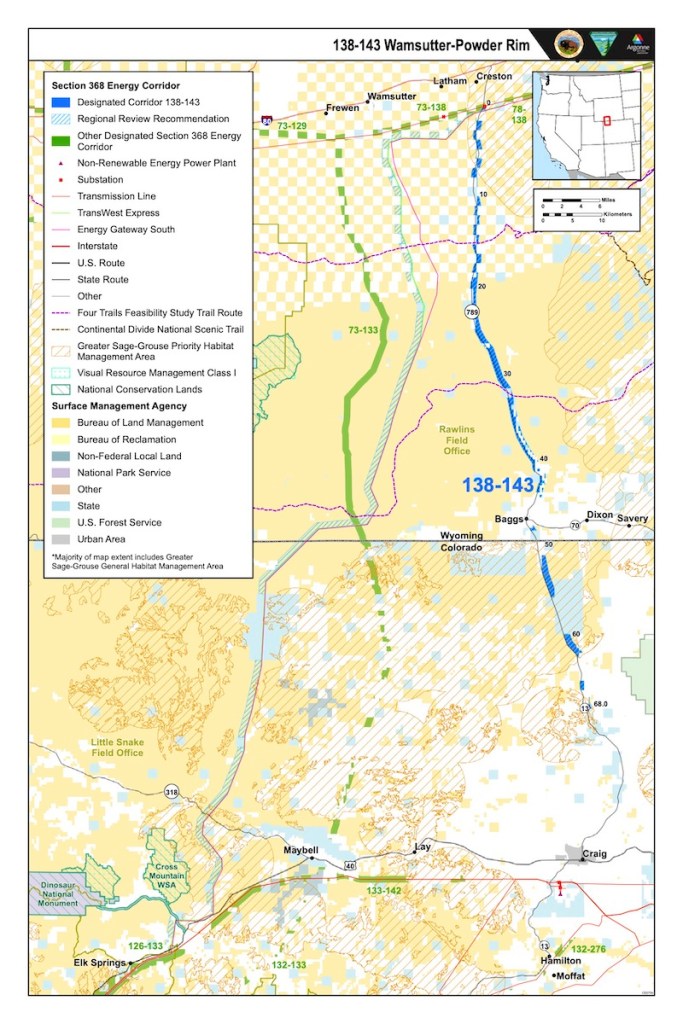
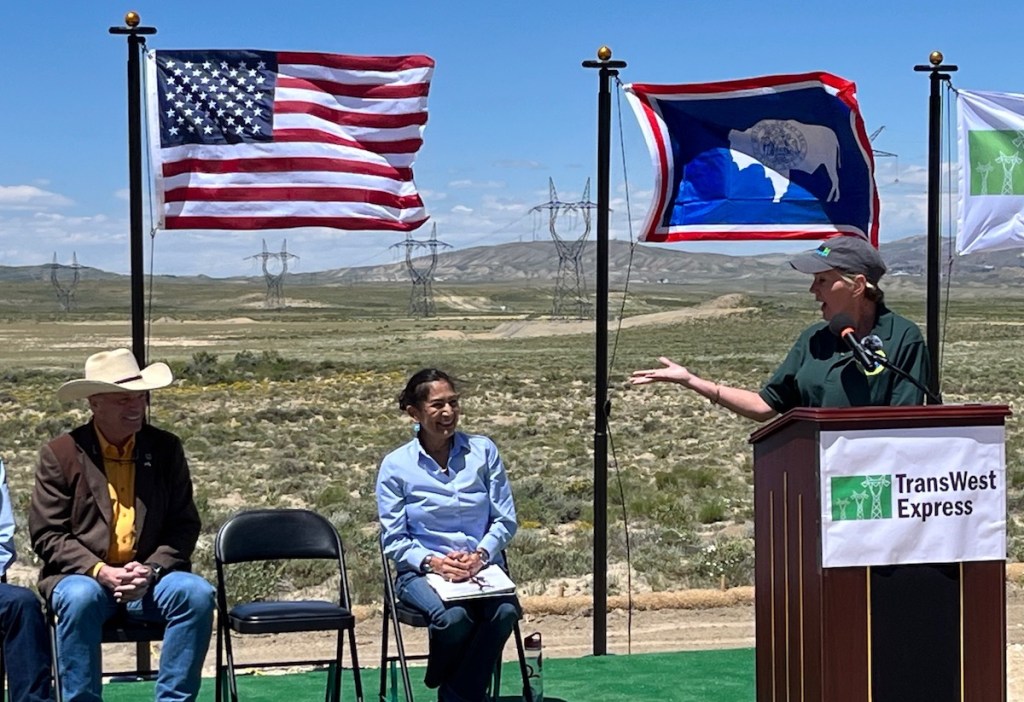
The proposed alternate “Corridor 138-143/Wamsutter-Powder Rim Addition” generally follows a rights-of-way route established by TransWest Express LLC, which is currently constructing a high-voltage transmission line to connect Wyoming wind energy to the southwest.
“The regional review concluded that the recently authorized TransWest Express Transmission Project [right-of-way] route is a preferable pathway for future potential energy development, rather than Corridor 138-143, since it would be collocated with planned energy infrastructure,” the BLM states in its West-wide Energy Corridor revision analysis.
The alternate route appears to “make a lot of sense,” said Justin Loyka, energy program manager for The Nature Conservancy’s Wyoming Field Office. “It’s farther from the mountains, farther from a lot of those [wildlife] migration corridors and farther from the crucial [wildlife] winter range.”
The BLM is accepting public comments on the proposed West-wide Energy Corridor revisions through Feb. 2. Click here for more information and to comment. The agency is also hosting two live-streamed public information hearings:
° Jan. 9, from 10 a.m. to 11 a.m. Click here to register.
° Jan. 18, from 10 a.m. to 11 a.m. Click here to register.
‘Industrializing’ landscapes
Though the BLM’s West-wide Energy Corridor initiative aims to help consolidate new large electric transmission lines, it does not attempt to force them into certain areas to fully avoid disturbing undeveloped landscapes.
“There’s nothing that says, ‘You have to be in a corridor,'” BLM Wyoming spokesman Brad Purdy said. “I think it’s easier to be in a corridor when it comes down to the [National Environmental Policy Act permitting] process. But there’s nothing that says, ‘You absolutely cannot go anywhere else except in this corridor.'”
In fact, the BLM and other federal land management agencies are actively encouraging renewable energy development. A primary objective of President Joe Biden’s climate and Investing In America initiatives and the congressional Energy Act of 2020 is to develop 25,000 megawatts of new wind, solar and geothermal energy projects on public lands by 2025.
Though the federal effort will not bypass the administration’s commitment to ensure environmental and human health protections, as well as promoting environmental justice, according to Department of the Interior officials, many residents in Carbon and Albany counties have expressed concern in recent years that flourishing wind energy development is disorganized and is industrializing landscapes that are better left alone.
Pete Gosar serves as an Albany County commissioner, and he says local officials are increasingly hearing concerns about how renewable energy development is diminishing the quality of life there.
“It seems smart to have [priority] corridors,” Gosar told WyoFile, “but it also seems, I don’t know, a bit backward. Maybe you should figure out where the windmills should go first, then build the corridors out from there.”
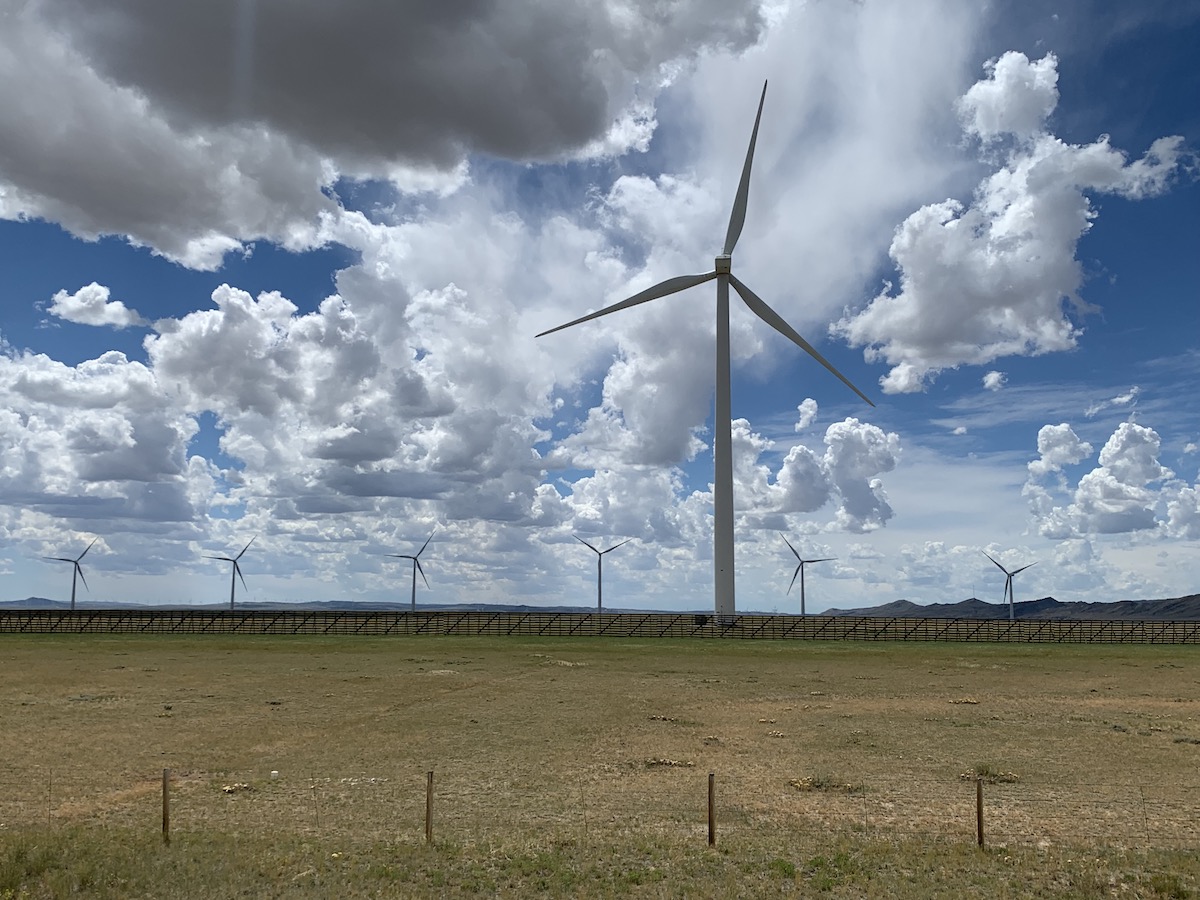
There are already thousands of wind turbines spinning in the southern portion of the state, and plans for more to come. Gosar said there’s a dearth of information for local officials like him to rely on when advocating for constituents concerned about encroaching industrial-scale renewable energy.
The Nature Conservancy’s Loyka agrees there needs to be more intentional planning and siting on behalf of federal, state and local agencies. He helped develop The Nature Conservancy’s Power of Place study, which the organization hopes will encourage developers to avoid undeveloped landscapes.
“I’ve been impressed and kind of daunted by the level of coordination that it takes to drive the things that will move these projects around,” Loyka told WyoFile. “It’s a lot of coordination to figure out, and I think that it’s going to take a while to get some of these infrastructure reuse [initiatives] to take hold.”
Meantime, the BLM has already fallen short of its promise to uphold environmental and other public land values in its efforts to permit renewable energy development, according to some.
Last year, wildlife biologist Michael Lockhart and the Albany County Conservancy filed a complaint alleging the agency had not properly solicited public input in approving a right-of-way for transmission lines to link the Rock Creek Wind Facility in Albany County to a grid interconnect in Carbon County. The BLM agreed to go back and solicit more public input.
The agency is accepting public comment on the matter through Jan. 5. Click here for more information and to submit a comment.


The BLM 30 days after agreeing to go back and do the public notification right opened public comment facing the Christmas holiday to truncate the 30 day time period. But what was worse is that they did NOT notify the sole litigant until ten days after the comment period opened. BLM sent an email to the ACC December 15th. What is worse is they never sent a public notice to the only newspaper in Albany County the Boomerang.!
I just returned from Palm Springs, CA, a place where I spent a lot of my childhood. A strikingly beautiful desert valley located between two mountain ranges, a natural wind tunnel. When I was a kid, it was a small town. Although now its full of resorts and homes, its the 4000 wind turbines with their transmission lines that have ruined the valley’s viewscape and serenity. Built mostly on BLM land around the valley floor they rise up into the foothills along the Sierra Crest trail. Joshua Tree National Park biologists asked the Feds not to put wind turbines through a bighorn sheep corridor. That was ignored.
We should accelerate solar energy, and maybe wind, but there are plenty of disturbed and toxic sites, existing highway corridors, where this can be done without ruining our federal lands that wildlife use and we recreate on.