

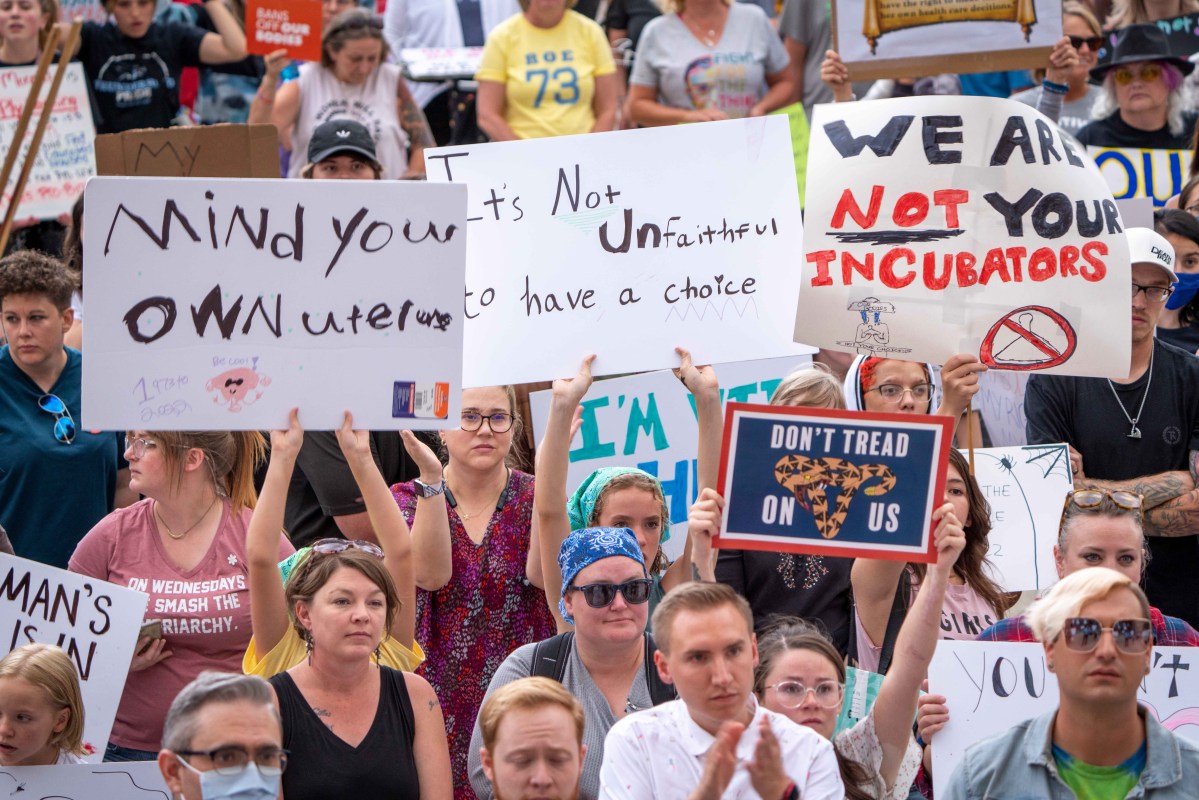
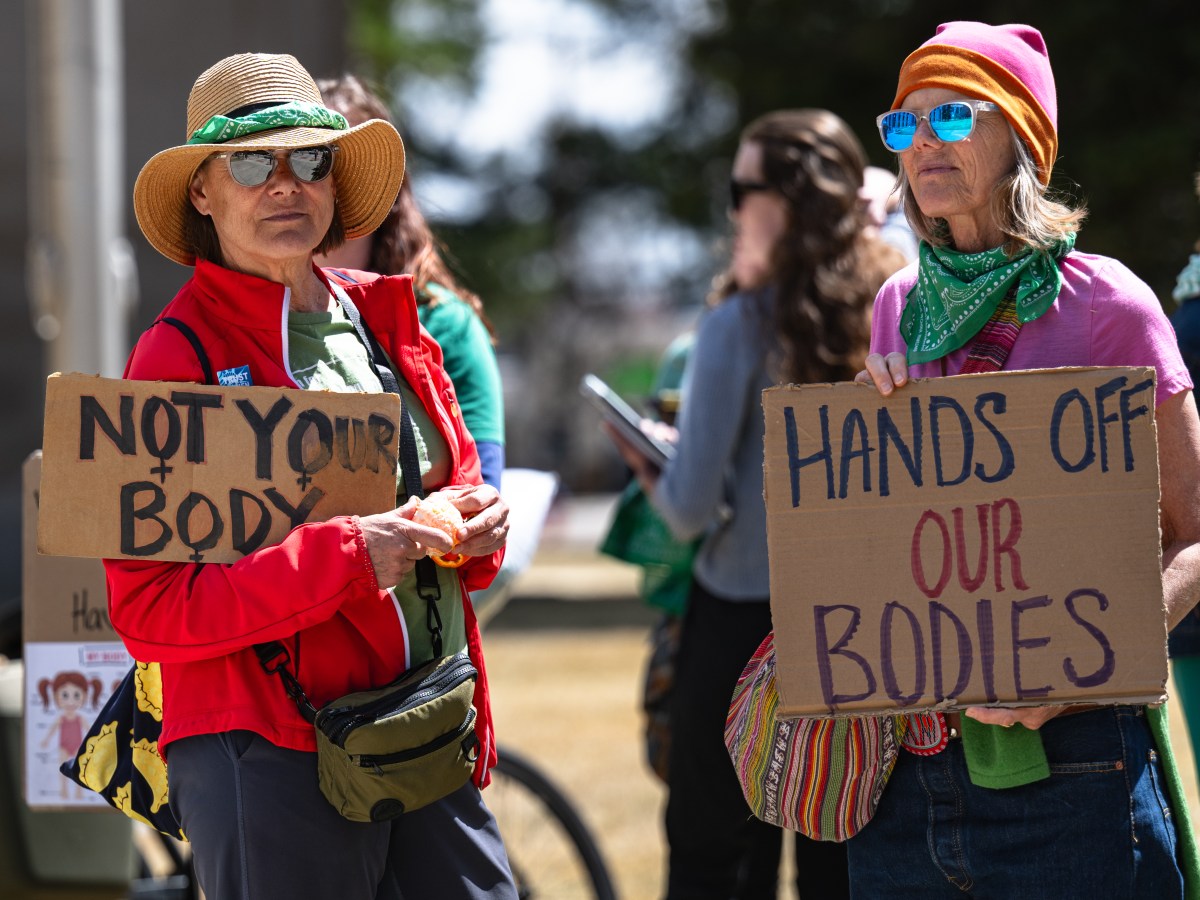
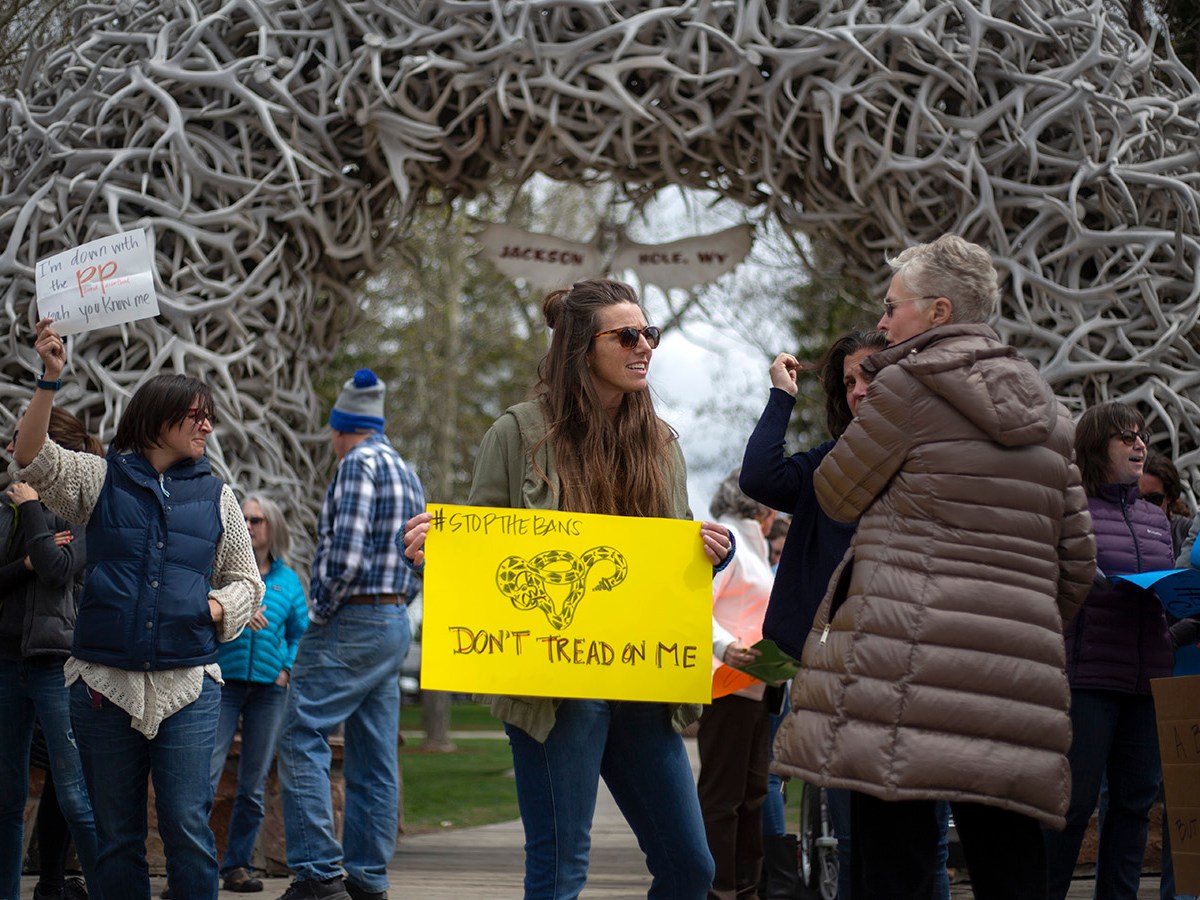
Natrona County District Judge Dan Forgey on Friday temporarily halted enforcement of Wyoming’s newest anti-abortion law while a legal challenge against it proceeds.
The law in question, which was passed by the Wyoming Legislature during the 2026 session and took effect in March, bans abortion in all but the earliest days of pregnancy. More specifically, the “heartbeat” law makes abortion illegal beyond approximately the sixth week of pregnancy, when it’s first possible to detect fetal cardiac activity.
The plaintiffs in the case, which include the few providers who perform abortions in Wyoming, argue the law is unconstitutional due to language in the state constitution that protects an individual’s right to make their own health care decisions.
Those protections were also the basis for the Wyoming Supreme Court’s January decision to strike down two previous abortion bans.
Wyoming Attorney General Keith Kautz argued at a Wednesday hearing that the new law fits within the bounds of the Wyoming Constitution and the high court’s decision. He also pushed back on the plaintiffs’ argument that the law was too ambiguous and that detection of a heartbeat was an arbitrary point to enforce restrictions.
The plaintiffs, however, “made a sufficient showing of irreparable injury,” Judge Forgey wrote in his Friday decision temporarily halting the law’s enforcement.
“The state defendants did not persuasively argue otherwise,” he wrote.
Forgey also pointed to the high court’s January ruling, known as the Johnson case.
“The plaintiffs have on this record made a sufficient showing of probable success that justifies their request for temporary injunctive relief, particularly when the statues at issue are evaluated and considered according to Article 1, [Section] 38 of the Wyoming Constitution, and how the Wyoming Supreme Court applied it in Johnson.”
This is a breaking news story and may be updated.

George Carlin’s 1996 quote about the hypocrisy of pro-lifer’s justification for controlling woman’s healthcare just rings more and more true. “Boy, these conservatives are really something, aren’t they? They’re all in favor of the unborn. They will do anything for the unborn. But once you’re born, you’re on your own. Pro-life conservatives are obsessed with the fetus from conception to nine months. After that, they don’t want to know about you. They don’t want to hear from you. No nothing. No neonatal care, no day care, no head start, no school lunch, no food stamps, no welfare, no nothing. If you’re preborn, you’re fine; if you’re preschool, you’re f***ed.”
And Mr Jones – if it’s not healthcare then why are these types of services mandated to be provided only by licensed healthcare professionals?
Wyoming citizens approved the language in our current state constitution that protects an individual’s right to make their own healthcare decisions. A fetus is not an individual as defined by our state constitution until it is born. Stop twisting the simple wording to try and make it fit your preferred point of view.
This type of woman’s healthcare should only involve the mother, her doctor, and the father if he wants to be involved. I’m sure it’s not a decision made lightly by the mother; trust and respect her personal decision(s) that she makes about her body and her pregnancy. Just as you’d want others to respect and trust the decisions you make about your own personal healthcare choices. Others should not be allowed to interfere, and should simply butt out.
All the anti-abortion arguments presume a knowledge of when life begins. Just as is for the question of whether an afterlife exists, this is unknowable. Yet the blue-noses insist their world view is the only correct one.
Embryological Texts: Many embryology experts and textbooks identify fertilization as the start of a new individual’s life, with 95% of biologists surveyed in one study agreeing that life begins at fertilization.
That is a scientific explanation not a religious one.
But the founding fathers gave each state with its people to decide and Wyoming through its Legislature has. If you need word adjustments, then do so but, the Amendments are final law not judges deciding over the people and their Legislature.
Amendment X
The powers not delegated to the United States by the Constitution, nor prohibited by it to the states, are reserved to the states respectively, or to the people.
I believe there are 25 States that consider this legal so travel is an option not mentioned.
So energized, determined and passionate about ending thousands, millions of human beings lives.
Regardless of the New Law,
The 10th Amendment makes precedence supremacy decision by the people through their legislature. As was the revised case in the 2026 Legilative session approved by the voting public of Wyoming.
Amendment X
The powers not delegated to the United States by the Constitution, nor prohibited by it to the states, are reserved to the states respectively, or to the people.
Healthcare is meant to save or prolong life. Abortion destroys life, so please stop calling it healthcare.
Pregnancy sure seems to cause multiple health challenges for a woman, including some that could result in loss of her life. Just consider the loss of females’ lives associated with pregnancy and giving birth over history, and even in the current era. I think you are missing the forest for the trees when asserting that termination of a pregnancy is the sole threat to a life with this health condition. Besides, you don’t need to make that health care decision unless you are pregnant, so your man ‘splaining seems kinda just an intellectual exercise and irrelevant.
Moot point!
When 2 heart beats are in the same body, then 2 not 1 DNA occupy that same body. Therefore, healthcare for two bodies are the Law’s definition of the “heart beat law” dubbed from this law. If that’s the argument thus protection must serve both DNA embodiments.
The 10th Amendment gave the people of Wyoming (as with other states) the voice of how to regulate lives in Wyoming. Therefore, the Legislature created the law to provide the voting public’s desire.
Were not going to force women to carry their rapists babies to term or suffer life threatening complications because you made up fancy words like “DNA embodiment”
I know transplants like you have been brain poisoned by right wing media, but here in real Wyoming we dont want the government telling doctors what they can and cant do.
90-95% of abortions are for convenience and not rape or mothers life in danger.
Again! Another moot point:
“Were not going to force women to carry their rapists babies to term or suffer life threatening complications because you made up fancy words like “DNA embodiment”.
There’s nothing fancy about DNA as we know that every new DNA has its own embodiment or human form who’s physical make up is (in this case here) different from the host or mother impregnanted.
Therefore, the 10th Amendment protects this through the wishes through our national laws.
They don’t have to have the baby, just no abortion in Wyoming as any Judge ruling unconstitutionally against this law, would overrule the 10th Amendment.
Which says:
Amendment X
The powers not delegated to the United States by the Constitution, nor prohibited by it to the states, are reserved to the states respectively, or to the people.
Therefore lawlessness begins with activist judgements ….