

CHEYENNE—Wyoming regulators will assume oversight for toxic coal ash storage and remediation at coal-fired power plants in the state — a role historically handled by federal regulators.
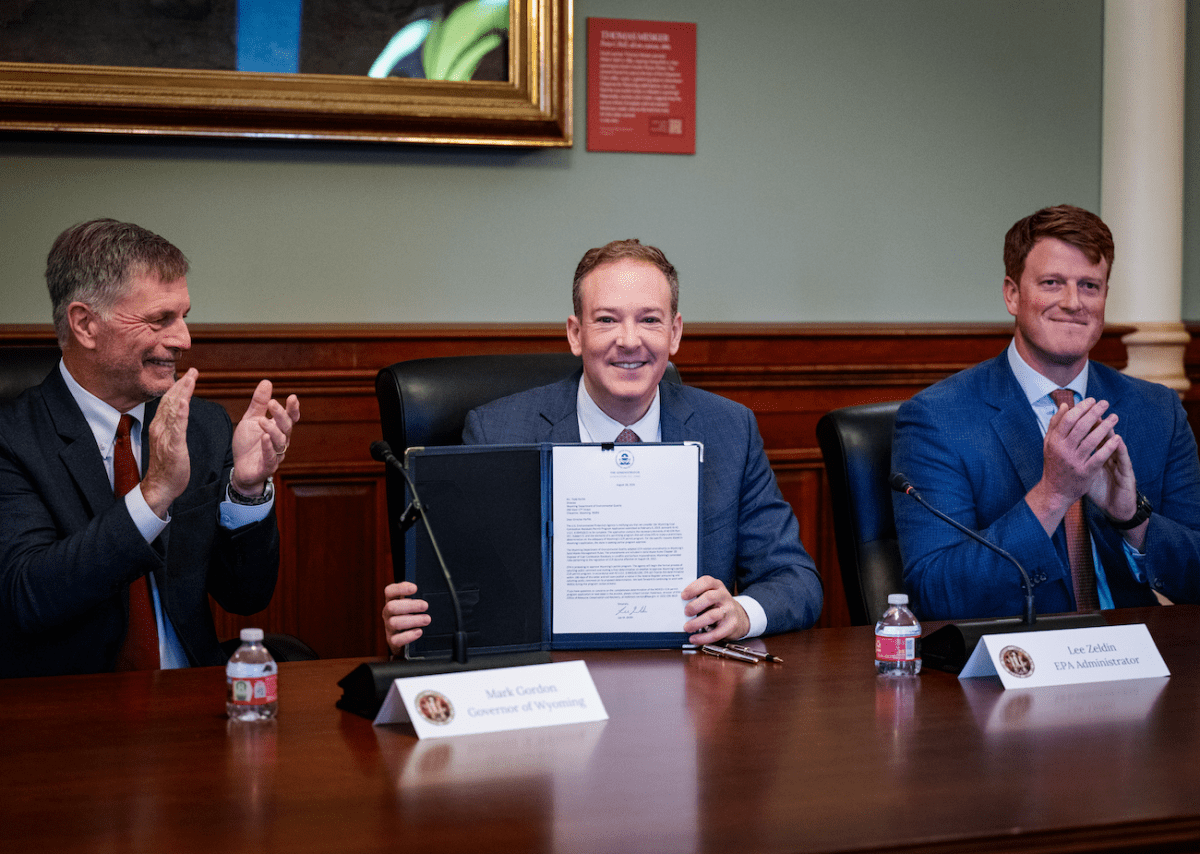
U.S. Environmental Protection Agency Administrator Lee Zeldin announced his agency’s proposal to grant primacy of the Coal Combustion Residuals program to the Wyoming Department of Environmental Quality at a press conference Thursday at the Capitol.
“Wyoming has been trying very hard for years to be able to take primacy, to take control over its own destiny in overseeing coal combustion residuals,” Zeldin told a roomful of reporters, EPA staffers and a handful of Wyoming lawmakers. “One of the principles at the EPA is advancing cooperative federalism. It is our desire to improve our relationship with states [and] local governments.”
Zeldin was joined by a trio of Republicans — EPA Region 8 Administrator Cyrus Western (a former Wyoming lawmaker), Gov. Mark Gordon and Wyoming U.S. Sen. Cynthia Lummis — along with Wyoming DEQ Director Todd Parfitt. Each praised Zeldin and the rest of the Trump administration for putting states in charge of federal environmental programs and for rolling back federal regulations on fossil fuel industries — most of which were an overreach by Democratic administrations that stifle innovation and the U.S. economy, they said.
“I couldn’t believe that Lee Zeldin was willing to take the EPA on,” Lummis said. “What a heavy lift, because it had been used in this country to thwart economic activity and to second guess the experts in this deal, and it changed in a heartbeat. It changed the minute that Lee Zeldin became the administrator.”
Gordon concurred.
“You are a marvelous breath of fresh air,” he said. “We dealt with an administration that used regulation to frustrate progress, and I think, today, it is a remarkable moment to talk about how regulation, in Wyoming, is about doing things the right way.”
Coal ash
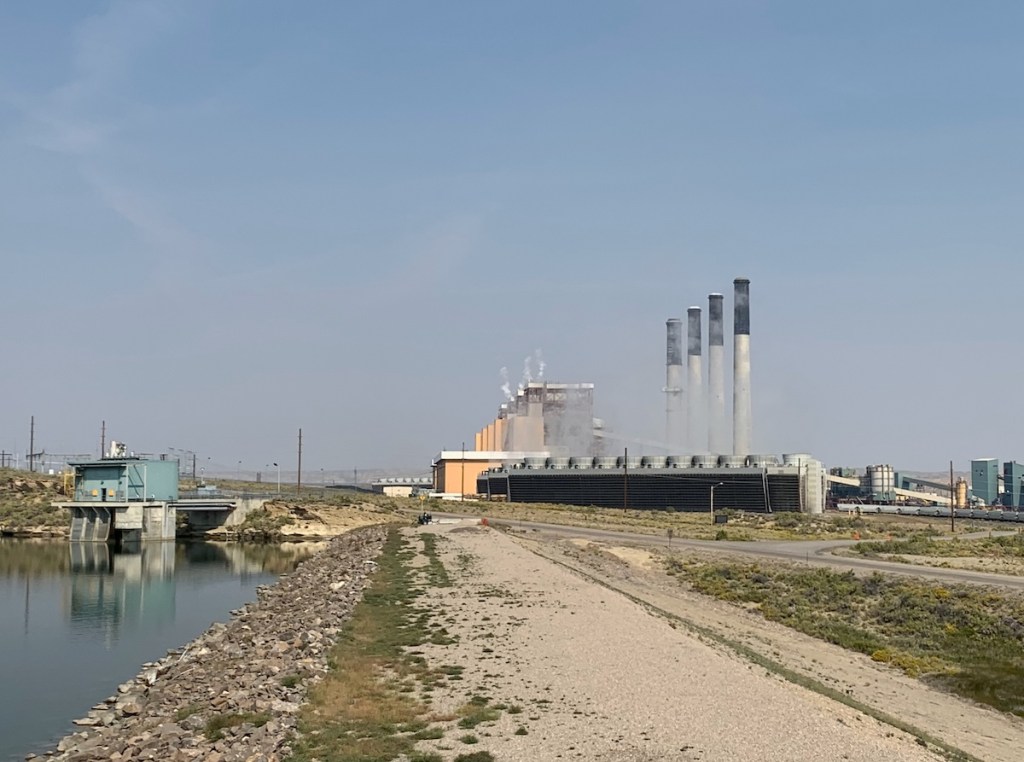
When power plants burn coal, heavy residues, known as clinker and slag, accumulate within the exhaust systems. It also produces a finer ash, most of which is captured via various filtration methods. All of those residuals are toxic. The substances are typically stored in coal ash ponds, and federal regulations — specifically, the Coal Combustion Residuals program — require that the sites be lined with materials to prevent seepage into surface waters or aquifers.

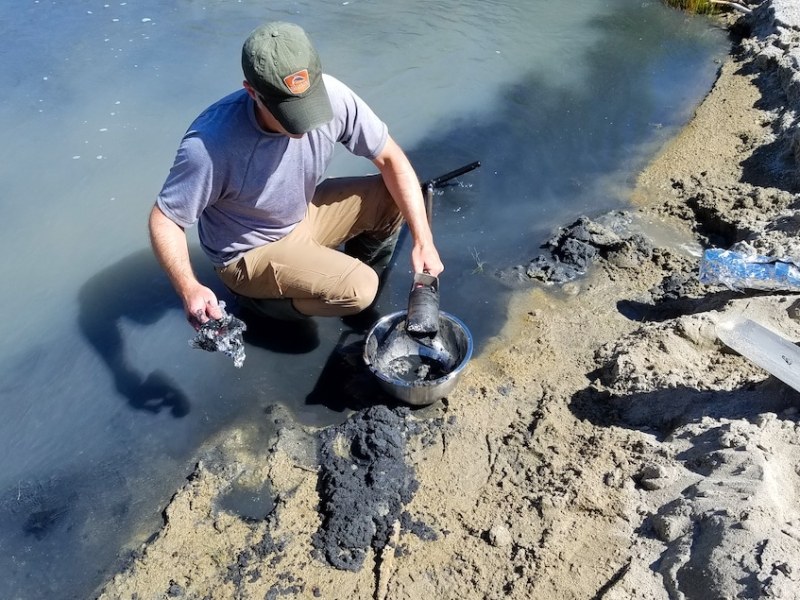
The program also requires monitoring to ensure containment.
There are only four active and two legacy coal ash sites in Wyoming that fall under the federal program, according to Wyoming DEQ. The only change in granting the DEQ primacy over the management of those sites, Parfitt told WyoFile, is that the state agency will add environmental stipulations to ensure protections.
Zeldin’s declaration on Thursday kicked off a 60-day public comment period on the proposal. The EPA will also hold a public hearing on Oct. 30 in Cheyenne. For more information about how to comment, and about the public hearing, go to the EPA’s Wyoming CCR permit program webpage.

How much will this cost the state of Wyoming? And how does the state plan to take on this additional demand? That wasn’t mentioned in this article.
Another thing the politicians don’t tell you is that there are a lot of people, I mean a lot, who owe there jobs to keeping up with all the environmental regulation of natural resources, air, and water. The current administration seems hell bent on destroying the EPA and regulation in general. Does that mean that a whole lot of Wyoming workers are going to loose their jobs?
I can probably say for certain that not one of the three smiling jokers in the photo knows one thing about fly ash and bottom ash. It’s not likely any one of them has spent one day of their lives around the stuff. I don’t think for a minute they see ash disposal as any kind of a problem.
That’s because it isn’t a problem.
It can be a huge problem.
I’m all for this . Put me in charge of ” managing ” Wyoming’s piles of coal ash . I’ll get right on it.
Each of our three Fossil Fuel fanatic Congresspersons will get 25 tons of ash dumped in their yards. Governor Gordon will get 10 tons in his yard at the Governor’s mansion and another 10 tons dumped on his ranch alongside the creek . Every Republican fossil fuel supporting zealot in the Wyoming legislature will get five tons of ash forthwith. Everything left will go on the front lawns of the fossil fuel lobbyists. I’m gonna need some of those really big haul trucks.
The Wyoming Carbon Cabal still lusts for the money coal mining has brought them for the past 150 years. They just can’t let it go. But they need to understand the true total cost of Coal abd all carbon-based energy , and pay that premium in kind. Think of coal ash as nuclear waste in slow motion.
Fossil Fuel requires Fossil Thinking , right ?
You would be surprised at the amount of fly ash and bottom ash leaves the plant sites of coal fired power plants now that you bring it up.
Now that the companies can just dump toxic coal ash on the ground, the costs of the eventual cleanup will be shouldered by you and me – Wyo taxpayers. The company will be long gone, having already made its profits and WY will be left with the toxic land.
Someone wrote a song about this, I believe: “It’s just a matter of time”.
SMDH. Wyoming has none of the resources, including funding, to successfully manage these sites.
Federal requirements exist to prevent the patchwork set of regulations that will exist when states enact their own rules. Then, it’s a race to the bottom in order to lure “development” to specific states.
A disaster waiting to happen. The coal industry controls the WYO legislature. Does anyone honestly think the state is even remotely capable of monitoring this?
We have been doing it since the rule was put in place.
Let the games begin. Lummus groveling to a trump sycophant is sickening.
Wait for it…