

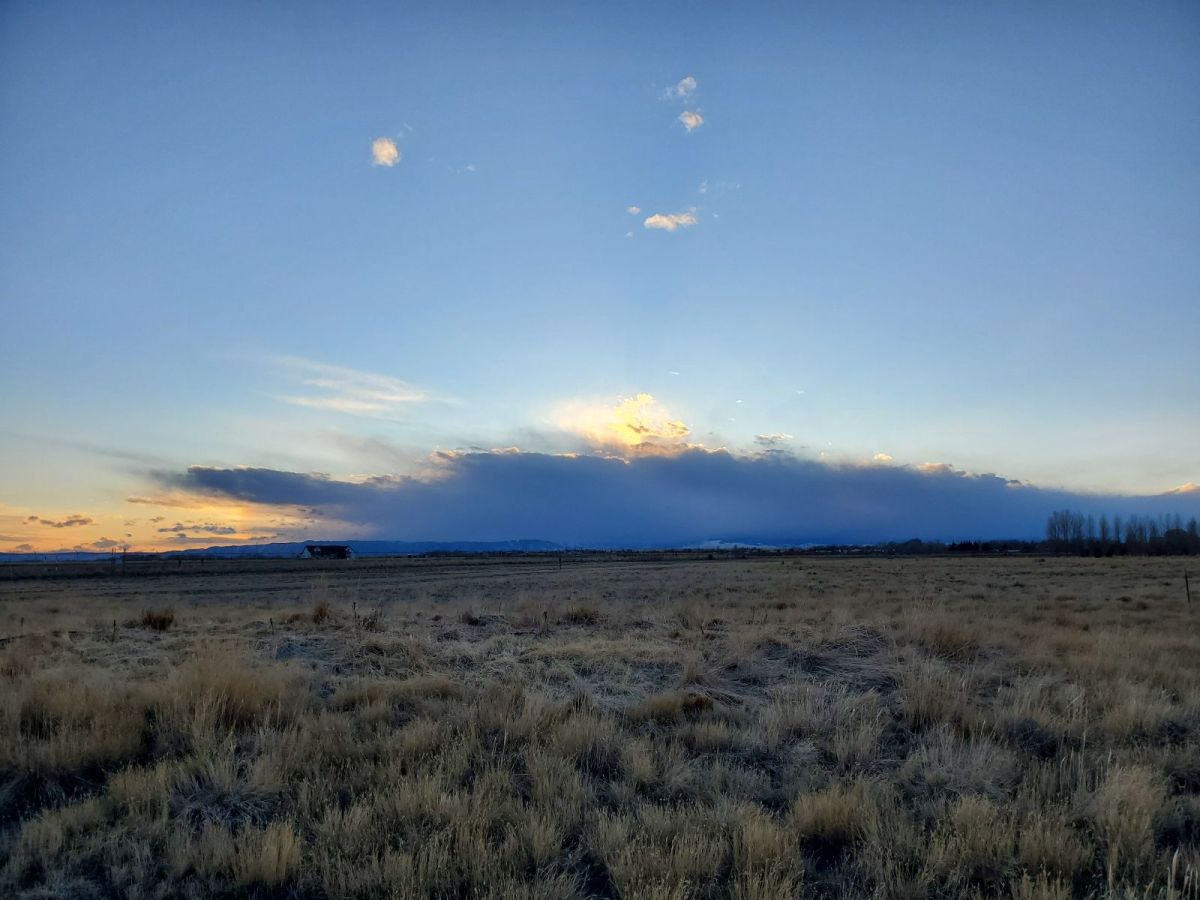
Thousands of deer and pronghorn toppled over next to fences and along roadways, unable to find food as snow piled day after day across Wyoming last year. Herd numbers dropped. The Wyoming Game and Fish Department sounded alarms. Of Wyoming’s 19 water basins, all but three were well above average.
And moisture kept coming through spring and into summer. That meant grass and plants stayed green and were packed with protein. Few fires broke out, and the animals that survived the harsh winter packed on pounds headed into fall.
This year feels like the Dr. Jekyll to last year’s Mr. Hyde. Outside of some localized storms in the western mountains and one snowy, cold front in early January, little precipitation has fallen across the state. By Monday, only one of those 19 basins had more than the median snow-water equivalent, and some were well below, including the South Platte Basin at only 24%. Temperatures this week, which climbed into the upper 50s in parts of the state, are only exacerbating the problem.
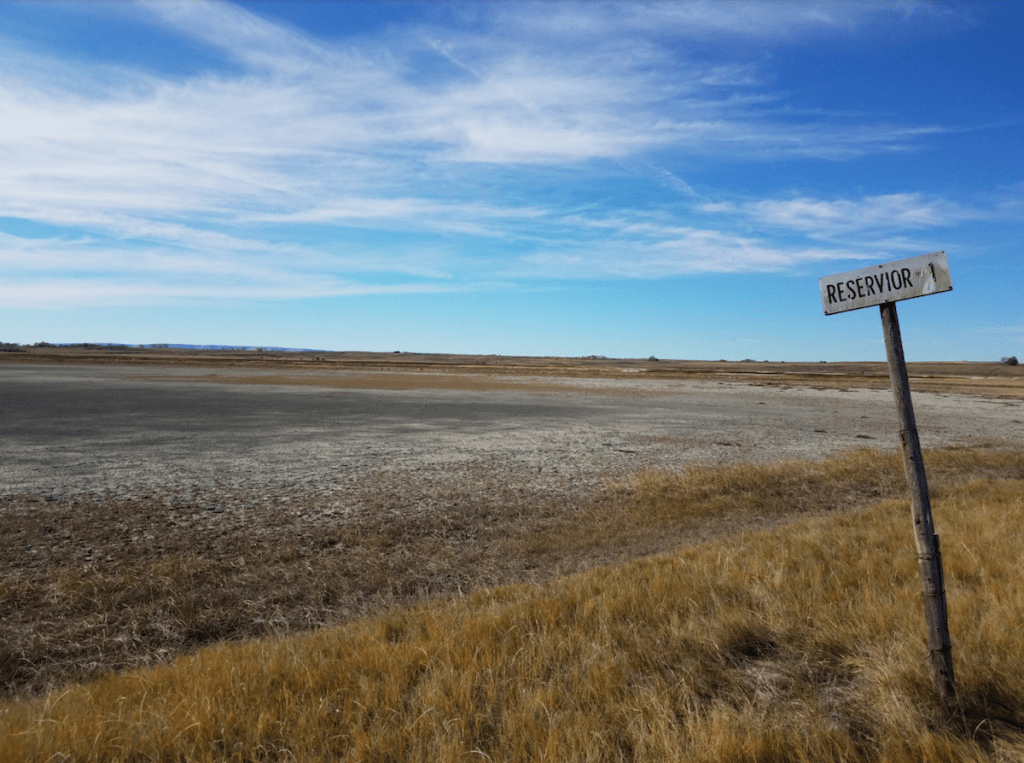
This winter’s mild weather would be jarring in a normal year but has felt particularly extreme after last year’s record snows and cold temperatures.
“There’s the old saying, ‘people remember the best year and the worst year and last year,’” said Tony Bergantino, director of the Wyoming State Climate Office. And last year was both recent and dire.
The long-term climate predictions are also for a drier and hotter West, punctuated with extremes due to climate change. What all of this means for Wyoming’s wildlife and fire season is a little too early to predict, but recent research and expert opinions offer some clues.
Waiting for snow
Wyoming’s three-month forecast calls for more of the same, said Lance VandenBoogart, a meteorologist with the National Weather Service. February through April lean toward warmer than average, with typical precipitation.
It’s not a surprise given the globe is currently in an El Nino pattern, which tends to leave the southern U.S. wetter and cooler than normal and the northern U.S. drier and warmer than average. But both VandenBoogart and Bergantino said it’s too early to begin weather-related hand wringing.
Most of Wyoming’s moisture comes between late February and early April, Bergantino said. And as the forecast moves into the spring, predictions become a bit more muddled, VandenBoogart said. The state could still experience cold snaps or big, heavy snows, though at this point, it will likely take more than one storm to bring us up to average.
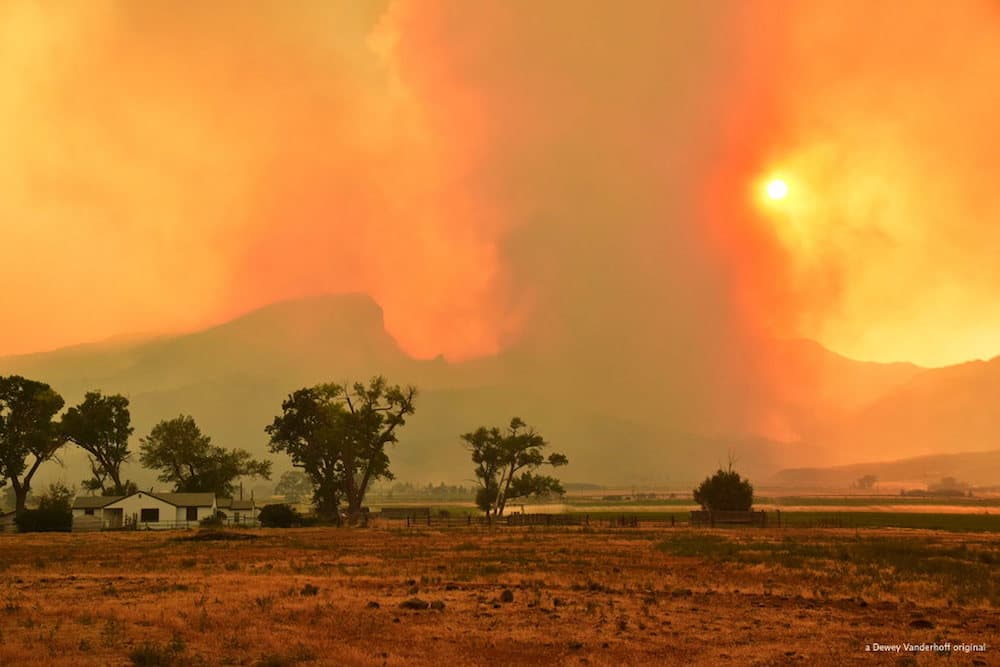
But the dry weather so far has been enough to make Jerod Delay, Wyoming’s assistant state forester and fire management officer, a little nervous.
Last year’s fire season was well below average. The mountain snowpack hung around, seeping moisture into the soil. The fine fuels, plants like grasses and wildflowers, grew lush and stayed green longer. While that was good for ranchers and wildlife, it also means the state is headed into this summer with even more plants ready to cure and ignite.
“In my experience, you have to see what March and April bring,” he said. “If those two months are pretty dry, we could have an above-average fire season.”
Evolving approaches
Tayler LaSharr, a postdoctoral researcher at the University of Wyoming, has spent almost a decade studying the Wyoming Range mule deer herd. She knows where does have given birth, and where their fawns have given birth. She studied the herd through the 2016 and ‘17 brutal winter — one that raised alarms among hunters and wildlife biologists, ranchers, and onlookers — and then watched as 70% of the does in the project died during last year’s winter.
Yet in the course of her work pressing ultrasound wands against deer rumps, measuring fat by the millimeter, and recording all the data for analysis later, LaSharr and the rest of the team in Kevin Monteith’s UW shop uncovered a few key takeaways to help us better understand the repercussions of massive winter die offs.
First, fewer mouths on the landscape means more food to go around. The deer that survived the 2016-2017 winter were fat, and the deer that survived last winter put on even more.
“The deer were the fattest we had seen them since the beginning of the study,” she said. “And the moms that were lactating were fatter than lactating moms in previous years.”
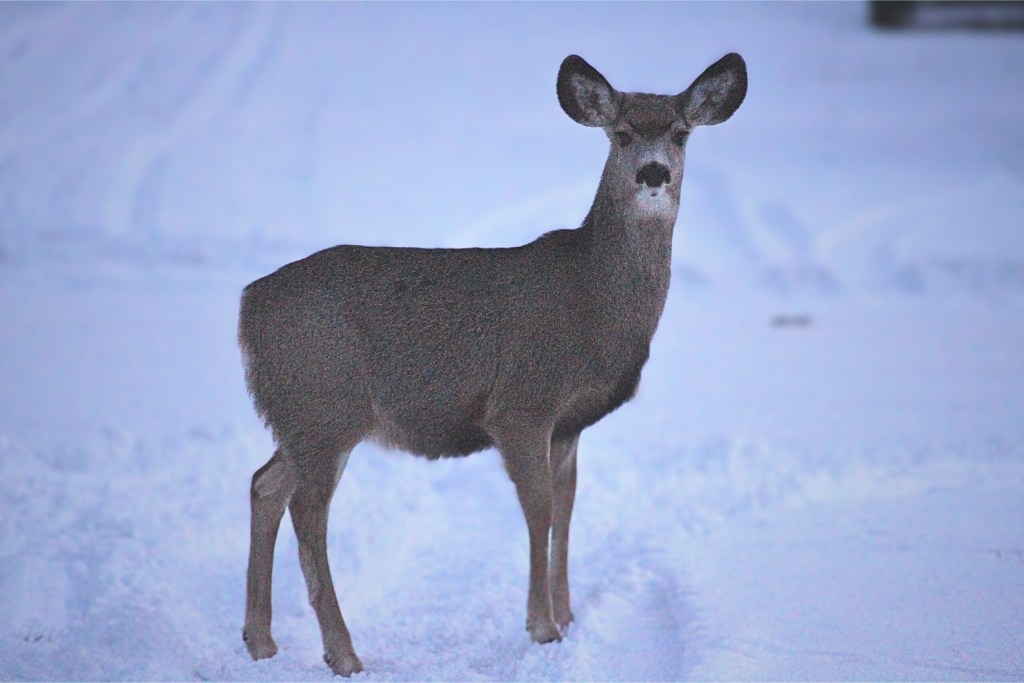
LaSharr also found that deer may have the ability to adapt to these types of winters, but not without a sacrifice.
In regular years, which still aren’t easy for deer living on Wyoming’s high plains, mule deer does will give as much as they can to their fawns. LaSharr calls them “risk prone.” They put their resources, nutrients, lifeblood, and energy into their fawns, creating a healthy and robust generation to come and increasing herd size and stability. But when hard winters hit, some does won’t deliver fawns, and the ones that do give them less.
“After they had the experience where many nearly died, they were, going forward, putting more fat on at the cost of what they gave to their fawns,” she said. “They went from being a little more risk-prone to more risk-averse so if they did encounter another bad winter they would be in better shape.”
Her findings show that deer have the capacity to survive these large swings, but also if these intense winters continue at a higher rate, the deer population will likely be smaller, and its fawns may be shaped for life by lower birth size.
As for this winter, deer have been afforded warmer temperatures, less snow and more time to eat.
It’s a net positive for the deer unless the lack of moisture continues. Then they will be facing a summer and fall with fewer munchies.
“Spring moisture results in good growth on important shrub species,” said Ian Tator, Game and Fish’s terrestrial habitat supervisor. “And if we don’t get good spring moisture, we know we will likely see lower growth in terms of leaders on important shrub species, so next winter we could be set up for a little tougher situation.”
Tator worries about the future of Wyoming’s wildlife, particularly species like mule deer, which unlike elk are less able to adapt to changing conditions.
Their ability to survive and thrive into the future ultimately comes down to one factor: habitat.
If wildlife can find food, they can survive. If they can’t, they won’t.
“What keeps you up at night,” Tator said, “is what we can do in the face of these big events to mitigate that.”


It is hard to disagree with you Seth! I too see Bureau of Livestock and Mining lands grazed down damn near to dirt and those leases should not be renewed. However, I feel they are not the majority. It is easy to drive by all the leases that practice forward thinking range management and never notice. The BLM is grossly under funded making timely lease review almost impossible.
PASTURE, RANGELAND, FORAGE INSURANCE PROGRAM: There is a tool available to grazers via private crop insurance companies and the USDA whereby grazers can initiate a drought claim and therefore get compensation for reducing grazing on the public lands. Farmers have used crop insurance for many years but it is a relatively new insurance available to ranchers. The Federal government reimburses the insurance companies for the losses they payout. The point is, if ranchers have loss protection during drought years, they should be able to reduce their herd sizes and hopefully avoid over grazing which will then benefit wildlife. I do not know how many ranchers participate in the PRP insurance program but its my understanding that the Federal government reimburses the insurance companies something like 80-90% of their losses. Wildlife can only benefit if ranchers have a safety net which allows them to reduce grazing in drought years.
What good is a “whimpering” winter when the ranchers are going to (once again) graze the range down to nothing? Good winters, bad winters, good grass growth and bad, the majority of the public lands get grazed down to the dirt, leaving little to nothing for the wildlife. Holler all you want to the governing agencies and they either deny the problem or ignore it completely. Want to witness some “prime” public lands near Cody? Check out 44.593388, -109.048044 . at the base of Heart Mountain. Critical Sage Grouse habitat nubbed down to nothing. It’s so bad, the grazing leasee has to haul hay out there for his cows, as well as uses this public land to dump off his dead livestock. While you’re out there perusing the devastation, “count” how many mule deer you see. PS: there’s also a youtube video floating around out there showcasing the abuse “Wyoming Public Lands – Use or Abuse”
In 2023 we had a really good year for moisture and there was abundant forage/grass available for everyone – deer, antelope, elk, cattle and sheep – therefore, there was very little over grazing and some pastures weren’t touched until this winter. However, previous to 2023, we had a drought year and there was significant grazing of the pastures – that includes private land, State and Federal. The problem was compounded by high hay costs which exceeded $250 per ton and commonly brought $300 per ton. Under these conditions, the ranchers needed to consider down sizing their herd size, sending some of their animals to places like the Platte River bottom to feed or leasing more pasture. The drought years certainly have a major impact on the condition of the grass lands. 2023 was a very welcome relief from the drought year and there was a major recovery to the grass lands but also to the financial health of the users of the public lands. Pray for rain.
Yup, that is how they do it in Wyoming. Give it all away for nothing and to the Rock Springs Grazing association and their ilk. B