


Despite sharing the common goal of addressing climate change, Gov. Mark Gordon has blasted the Biden administration’s plan to slash methane emissions in the oil and natural gas industry.
The administration earned accolades on both the world stage and across the country when the U.S. Environmental Protection Agency announced its final “methane rule” during the 28th meeting of the Conference of the Parties (COP) in Dubai this past weekend — a move that will not only help abate the growing climate crisis, but will potentially save the industry billions of dollars by selling the fuel instead of allowing the potent greenhouse gas to leak into the atmosphere, according to the EPA.
“On day one, President Biden restored America’s critical role as the global leader in confronting climate change, and today we’ve backed up that commitment with strong action, significantly slashing methane emissions and other air pollutants that endanger communities,” EPA Administrator Michael S. Regan said in a prepared statement.
But the federal agency has gone too far in its “heavy-handed” mandate of practices and technologies designed to curb methane leaks and flares, according to Gordon. The upfront expense is unaffordable for many small operators, he said.
“A majority of Wyoming oil and gas producers are not multinational corporations,” Gordon said in a prepared statement Monday. “While releasing the final rule regulating methane emissions from oil and gas facilities during the COP28 United Nations climate summit in Dubai is obvious and shallow grandstanding which might make for great theater among climate activists, the effect at home means higher fuel prices and additional burdens on Wyoming producers.”
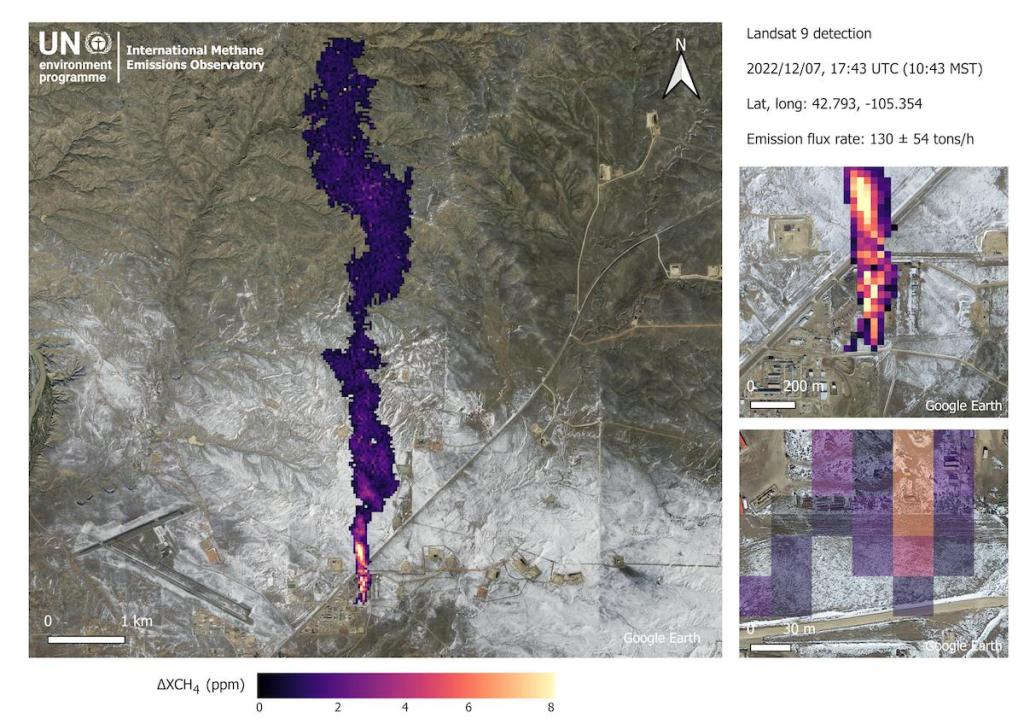
Gordon also claimed the environmental benefits of the rule — which would compare to cutting emissions from 28 million gasoline cars, according to the EPA — are “marginal.”
But Gordon’s condemnation of the federal action overlooks the fact that it is merely an extension of regulatory efforts that Wyoming itself helped pioneer years ago, according to the Sheridan-based landowner advocacy group Powder River Basin Resource Council.
“A big part of the final rule is to reduce flaring from new wells,” PRBRC attorney Shannon Anderson said, adding that the practice results in millions of dollars in lost revenue to the state. “Overall, the [federal] requirements should be complementary to what the state has, helping to bring more of this valuable resource to market and preventing it from being released as pollution where it is harmful for public health and the environment.”
Leaks and flares
Producing oil and natural gas is a leaky endeavor.
Whether a drilling crew targets oil or natural gas, they’re often tapping into a geologic reservoir that contains a mix of both — along with a lot of “fossil water.” Naturally occurring methane escapes into the atmosphere while drilling a well, while coaxing a continuous well production and while transporting petrol fuels. Such releases can occur intentionally or accidentally.
Sometimes, especially when it comes to oil wells, there’s no pipeline or collection system in place to take the gas, leaving operators with two choices: vent the lucrative commodity directly into the atmosphere or flare it. Flaring is when the gas is set alight so that it doesn’t linger and create a hazard around oil and gas facilities. Flaring also reduces methane’s greenhouse implications.
“This final rule builds off of Wyoming’s own successes in reducing harmful emissions and will limit wasted methane from leak-prone equipment.”
John Burrows, Wyoming Outdoor Council
Several conservation groups, including the Environmental Defense Fund, implored the federal government to follow Wyoming’s example and push the protocols beyond the state’s mostly voluntary approach.
“Oil and natural gas operations are the nation’s largest industrial source of methane, a climate ‘super pollutant’ that is many times more potent than carbon dioxide and is responsible for approximately one third of the warming from greenhouse gasses occurring today,” according to the EPA.
Flaring and other incidental emissions first came to a head in Wyoming in the 2000s with the proliferation of the Jonah Field shale gas boom near Pinedale. Snow cover and sunlight sometimes bake gas emissions and other pollutants into ozone — a serious human and animal health hazard. The Wyoming Department of Environmental Quality responded by implementing limits on flaring, and coordinated with operators to install leak prevention and detection protocols.
“This final rule builds off of Wyoming’s own successes in reducing harmful emissions and will limit wasted methane from leak-prone equipment,” the Wyoming Outdoor Council’s Director of Energy and Climate Policy John Burrows said in a prepared statement. “We see this rule as essential for spurring future innovation, saving taxpayer dollars and for creating a level playing field for methane regulation across the oil and gas industry.”

The new federal rule is also good news for people who live near oil and gas operations, according to supporters of the measure.
“In Converse County, there is still routine flaring at many sites — this is clearly visible from our ranch at night,” PRBRC member Maria Katherman said. “We are pleased to see EPA doing more to stop this dangerous and wasteful practice. This rule is a win for rural communities throughout Wyoming.”
Small operators at risk
Oil and gas industry leaders say that, without federal intervention, they continue to reduce methane emissions while increasing production, and that the EPA’s mandates only threaten to bankrupt small producers.
There are about 300 small, independent oil and gas producers in the state, according to the Petroleum Association of Wyoming. Together, they account for about one-third of Wyoming’s production, and hundreds of millions of dollars in revenue to the state.
“So it’s not a small concern for us,” PAW’s Vice President and Director of Communications Ryan McConnaughey said. “We have real concerns about the complicated nature of this and the cost that will be associated with it, and have major concerns about how it will impact the smallest operators in Wyoming.”
McConnaughey said the association is still poring over the 1,690-page rule, particularly to learn how the EPA might help accommodate small operators.
Gordon, however, has already declined some federal efforts billed as help for budget-strapped small operators. This fall, Gordon announced that the state chose to reject approximately $5 million in federal aid to close and reclaim low-producing “stripper” wells. The program, Gordon said, doesn’t compensate well owners for lost revenue and would have required monitoring for errant methane emissions without helping with those expenses.
“This approach — concocted by DC bureaucrats — shows a complete disregard for the importance of this industry to Wyoming’s economy,” Gordon said in October.

Actually, massive wildfires and hurricanes are the true great theater Gordon refers to in his reference to grandstanding. Who pays for the health effects of polluted air from these small operators or the clean up of water and land. Certainly not going to expand Medicaid to help with those costs. That GD federal government our leadership has labeled with so many disparaging words will be who is forced to clean up. How can these small operators say with a straight face that clean up is not a part of their business costs. Agree with Mr. Townsend. If you are polluting our world and causing climate change, let the small operators clean up their mess or move on.
I continue to be appalled at the 180 degree policy stances of the Governor. I thought I knew Mark Gordon. Politics and personal ambition must be setting his agenda??
For Governor Gordon to use small oil and gas producers as the reason to oppose this long over due rule is absurd. Small oil and gas producers have a long history of causing extensive damage to Wyoming’s land, water and air and then walking away from the mess, leaving landowners and taxpayers to clean up and pay for the mess! The large oil and gas operators are the ones who use the small producers to hand off this liability from oil and gas wells once production starts declining. Preventing methane from being flared and polluting our air is a no brainer. It is a wasteful and terribly damaging practice that harms our health and damages our planet with greenhouse gas emissions. The Governor continues to bend over forward and backward for the derelict oil and gas industry.
The daily wars in Ukraine/Israel release more harm into atmosphere every hour! All the rocket/missile/gun powder from firing 155 shells do more chemical residue damage to land atmosphere then methane. How about all the rubble and its dust issues? What is the plan for all this war caused rubble? Where it going to go? The emissions from war caused fires? Come on people. Complain to politicians about the real problems. All this is simply a distraction for the simple minded
Every wetland/slough/waste water plant even septic tanks releases much more methane then oil wells do daily. Not defending it. Just a fact. Throw in coal seam out cropping. The hot water springs in Worland/Thermopolis release methane as well. All the H2S water people soak in and say it is therapeutic? Guess what. Remove the second hydrogen molecule and you have METHANE! Methane is released daily in natural gas seeps! Yellowstone park burps thousands of MCF a day !!! Better seal everything up!! How about a cork in folks rears? John Kerry just had methane release on world stage! Better cork plug him as well!!! When we die and are buried? Guess what we produce methane!!
Sounds to me like Biden is not the only one grandstanding and looking for a headline with Gordon going off before the folks at the PAW have had a chance to read the new rules.
MEMO to Guv Gordo, the Petroleum Association of Wyoming , Wyoming Legislature , and fossil fuel diehards:
You will no longer be able to deny , deflect , or disguise the amount of Methane leaking or flaring into Wyoming skies. Currently , there are a new breed of cutting edge satellites in low earth orbit whose sensors broadly map methane near the Earth’s surface. The venerable Copernicus-Sentinel satellite with its wide field view; the European TROPOMI sat; the sharp eyed GHG ( Greenhouse Gas) C-1 sat ; the two Canadian satellites Iris and Hugo to name but a few. Later this year EDF’s MethaneSat will launch and become the sharpest methane detector in the sky , a virtual God’s Eye , that one. The combined acuity of these satellites and the swarms of small satellites to come will be able to detect methane emissions down to incredibly small point sources, like a single compressor station or tank battery anywhere on Earth . Which includes the entirety of the Upper Green River Basin’s Jonah and Pinedale fields, the area around LaBarge, and whatever is outgassing in Converse County and elsewhere in eastern Wyoming.
Methane viewed in visible light ( daylight ) is all but invisible to the human eye. It’s transparent , so the average person or fossil fuel partisan easily and purposely overlooks it. Out of sight, out of mind.
BUT— viewed in a few select bands of Infrared light, Methane is opaque. In fact it is black as the coal smoke of an 1800’s locomotive. Methane traps heat, degrading or blocking its transmission , so the infrared sensors see it as gradations of blackness. Other imaging spectrometers further analyze imagery for very fine grained detail about any sort of emission, day or night 24/7/365. The day is not far off when the entire surface of the Earth gets scanned for Methane and other gases and volatile compounds several times a day , virtually continuously. That includes scrutinizing Wyoming.
Guv Gordo’s specious argument that Wyoming’s small gas producers are being singled out against the huge multinationals corps is bogus: they are ALL culpable , root to branch to the gas meter in the alley behid your house. Methane, after all, is 50 to 80 times more potent as a greenhouse gas heat blanket than CO2 and water vapor. Just because you can’t see it with your own narrow eyes doesn’t mean it isn’t there. It’s everywhere, actually.
Typically, Wyoming’s leadership habitually or addictively comes down on the side of more, more, still more fossil fuel production of carbon based energy . All those coal, oil, and natural gas jobs and revenue are somehow more important than global health and the greater good, and Wyoming will wither and die without them. Which is a false belief system casting spells. It does demonstrate Wyoming’s boneheaded obstinance when it chooses explicitly to fight to remain on the problem side of the global greenhouse gases crisis instead of advocating strong mitigations and solutions … which would ultimately be in its own self interests. But we are victims of our innate Fossil Thinking when it comes to Fossil Fuels.
The Bottom Line: every single CH4 molecule of Wyoming methane that reaches the Earth’s surface in any way should be tagged, regulated , taxed , but most importantly restrained from freely entering the atmosphere to the fullest extent possible. The money doesn’t significantly matter.
Just keep in mind Wyoming now stands buck naked in the eyes of the methane mapping satellites. The Governor wears no clothes.
If you’re polluting my environment, then to hell with “small operators.”
I find Governor Gordon’s response interesting as he indicated that something had to be done about flaring when he attended the fossil fuel presentation by the philosopher of energy, Alex Epstein, at University of Wyoming on November 30th.