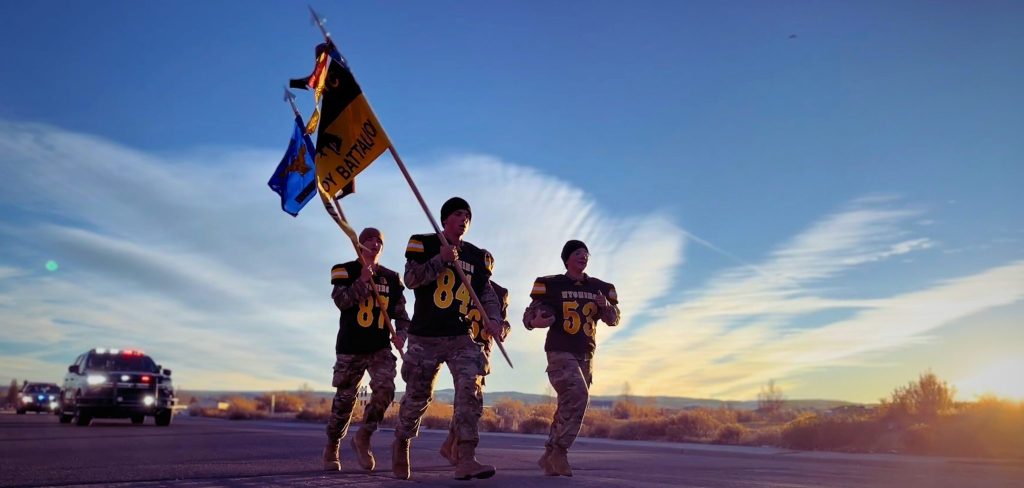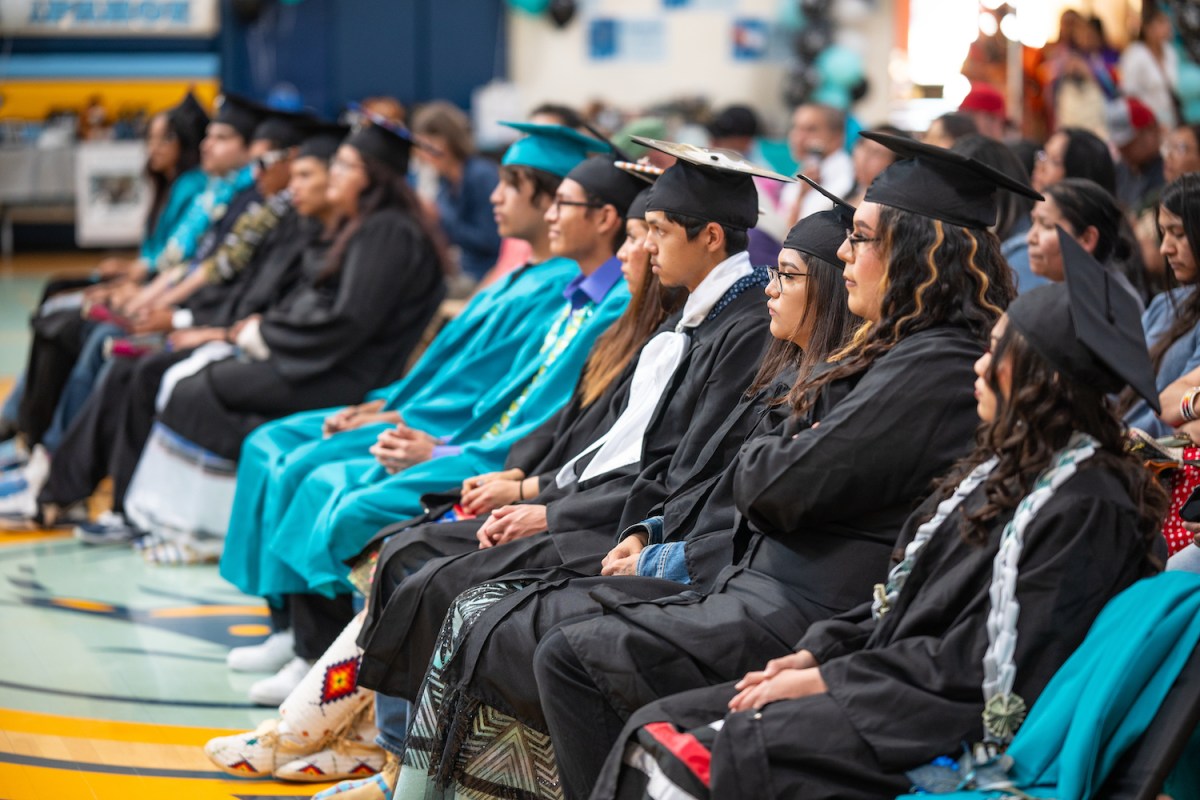
In a typical year, only a couple graduates from Wyoming Indian High School apply to attend the University of Wyoming in Laramie — the state’s only four-year college and an institution that has benefitted from ancestral tribal lands as a land-grant university.
“This year, we have like, 10,” Wyoming Indian school counselor Roland Robinson said Tuesday. That’s out of an estimated graduating class of 45.
A big factor in the spiking interest, Robinson believes, is UW’s new scholarship. The Wind River Promise Fund offers full scholarships to enrolled members of the Eastern Shoshone or Northern Arapaho tribes who graduate from a Wyoming high school and meet academic and enrollment criteria.
“I think in the past, it was just a more expensive option,” Robinson said of UW. That led many graduates of the Wind River Reservation high school near Ethete to opt for nearby Central Wyoming College or another junior college in the state, he said. The UW scholarship could extinguish the affordability concerns that have kept many students from truly considering the four-year university, he said.
“I think there’s a lot of kids who are excited about the Promise Fund,” he said. “I’m excited that our kids are getting the opportunity.”
With the Wind River Promise Fund, UW joins colleges across the country that extend significant support to tribal students. Fort Lewis College in Colorado offers a tuition waiver for enrolled citizens or their children, and the University of Montana offers a tuition waiver for students who are enrolled in a tribe within the state.
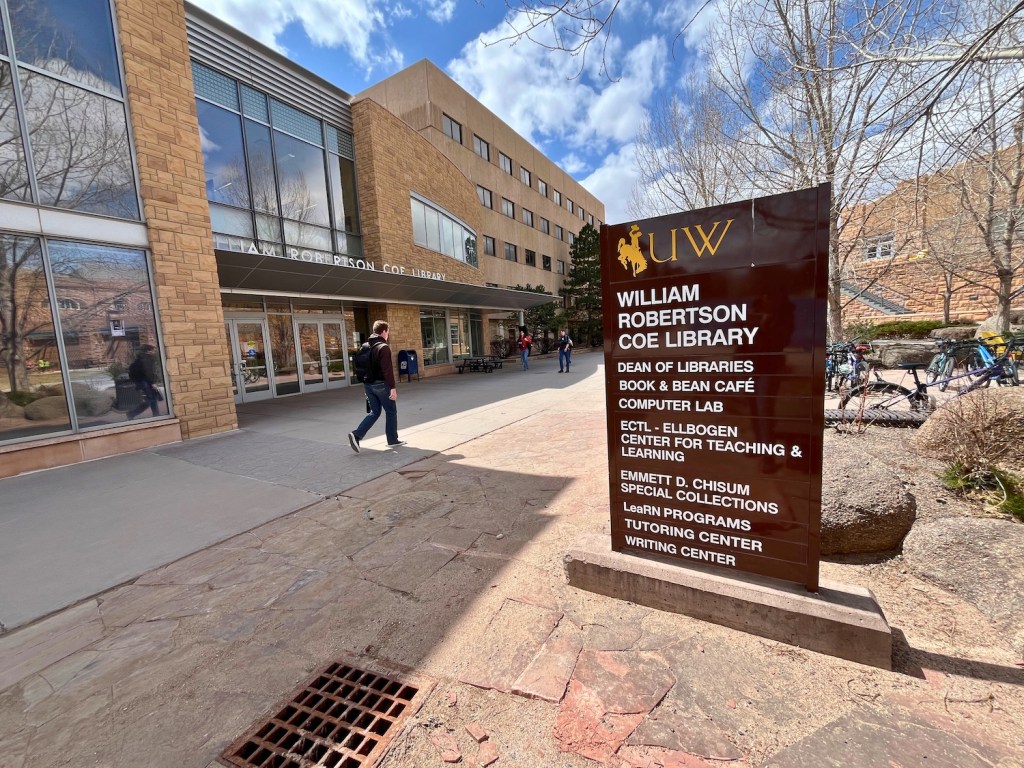
Advocates have been pushing for a Wyoming version for years, at times complaining that their efforts dragged on too long as tribal students were dissuaded by the costs of UW, even with existing financial aid.
“It was a long time coming,” Shoshone Business Council Chairman Wayland Large said in a statement after the university’s board of trustees approved the Promise Fund. “For decades, the Eastern Shoshone Tribe has voiced the crucial need for this endowment and has pressed University leadership to take a closer look at their commitment to fostering educational opportunities and increasing accessibility for a vital segment of Wyoming’s population.”
Eligibility and support
When UW trustees voted to create the fund in August, they allocated $2 million for the endowment plus $250,000 in expendable funds to launch it in 2026. In March, the board voted to make the scholarship available to returning UW students as well as first-time and transfer students.
Recipients can receive support for all tuition and fees. It’s open to students who meet the following criteria:
- Be an enrolled member of the Eastern Shoshone or Northern Arapaho tribe.
- Wyoming residency and have graduated from a Wyoming high school.
- Good academic standing.
- Enrolled as a full-time college student.
- Complete the Free Application for Federal Student Aid, known as FAFSA, annually.
Students interested in applying must first verify tribal enrollment and complete a brief application. That application is due July 1. New first-year students interested in applying must confirm their fall 2026 enrollment by May 1, while transfer students must do so by Aug. 1.
The scholarship can be renewed for recipients, but renewal is contingent on the following: continuous full-time enrollment of 12 credit hours each fall and spring semester; successful completion of 24 credit hours each academic year; maintaining a 2.0 UW cumulative grade-point average; annual completion of the FAFSA form; and annual completion of the scholarship application in WyoScholarships.
In a press release, UW President Ed Seidel stressed the importance of meeting deadlines for the program’s successful launch.
“Our Board of Trustees and university have made a tremendous commitment to students from the tribes of Wyoming’s Wind River Indian Reservation, and we want to ensure that all eligible, enrolled tribal members have the opportunity to receive this new scholarship,” Seidel said.
Historic benefits and obligations
The idea has been batted around for years. Representatives of both the Eastern Shoshone and Northern Arapaho tribes — who occupy the Wind River Reservation — proposed a tuition waiver for Indigenous UW students in 2018.
The idea behind such waivers is to remove financial barriers that keep Indigenous students from higher education and to address historical inequities.
Revenue from lands the federal government gave to Wyoming helped generate the University of Wyoming’s endowment, making it a land-grant university. The United States seized some of those lands from tribes and gifted them to the new state to benefit public education. UW still receives the funds generated from leasing the lands.
Those historic benefits, advocates say, create ethical obligations to Wyoming’s Native American residents. Supporters also argue that a waiver would encourage more Native American students to enroll in higher education, where their participation and graduation rates lag.
The 2018 proposal did not gain significant traction, but a 2022 memorandum of understanding between UW and the tribes committed to building resources to assist native students, among other things. The waiver concept reemerged in 2024, after Alyson White Eagle, a research assistant and student in the UW College of Law, zeroed in on Native tuition waivers for a research project. White Eagle, who is Northern Arapaho, presented her findings to lawmakers.
Less than 1% of the UW student body reports being Native American or Alaskan Native, which is compared to 4% of the state population holding tribal affiliations, according to her report. Retention and graduation rates among Indigenous students also lag behind the general student population.
Despite scholarships for Eastern Shoshone and Northern Arapaho students that include the Northern Arapaho Endowment, the Northern Arapaho Sky People Endowment and the Chief Washakie Endowment, White Eagle said, applicants for those exceeded the availability of funds. “So a lot of students missed out.”
All factors considered, she told lawmakers, “the financial need faced by Native students at UW extends beyond what most students can reasonably manage while they pursue a higher education.”
Months after White Eagle’s presentation, Seidel pledged to spearhead an effort to define what Native student tuition waivers could look like for the school’s undergraduates. Those efforts culminated in the Promise Fund.
More opportunity
Native students often experience culture shock as first-generation college students, Wyoming Indian school counselor Robinson said. Many students have lived their entire lives on the reservation, and Laramie represents a change that can be jarring.
“It’s a different atmosphere in a different place,” he said.
But historically, an even larger obstacle for tribal students “is affordability,” he said.
UW’s total, including tuition and fees, is $8,245 for in-state students, according to the U.S. News & World Report. While cheaper than the national average, the price tag can still be a barrier for families on the reservation, where the poverty rate is about 20% higher than in the rest of the country.
Robinson himself attended the University of Wyoming. He had a meaningful and positive education, he said, and is glad more tribal students now have that opportunity.
“I think it’s an eye-opening and enriching experience for our students,” he said.