

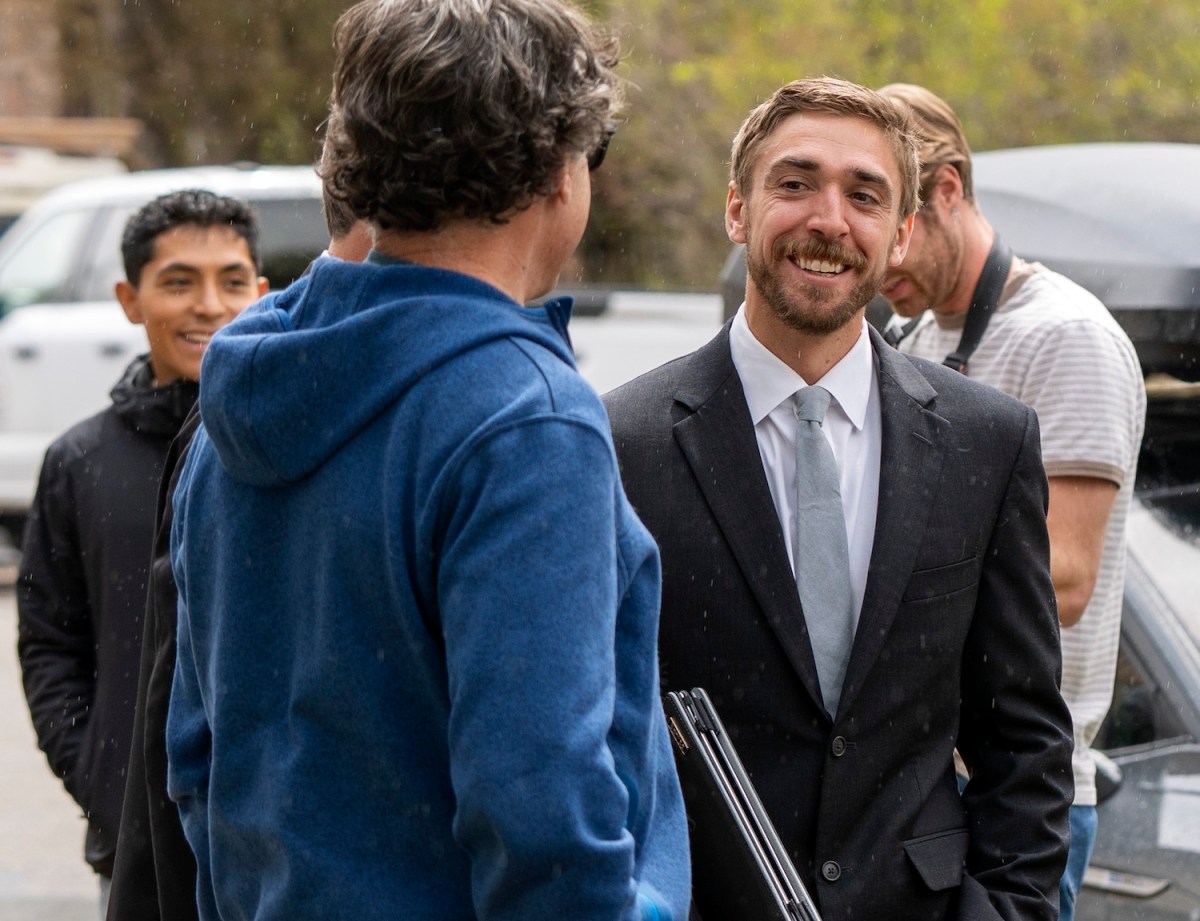
JACKSON—The trial of the United States v. Sunseri in a courtroom here delved deep into the minutiae of trail management, proper signage, law enforcement protocol and what is quickly becoming Wyoming’s most notorious switchback cut.
After a day and a half of testimony, the trial concluded Wednesday without a verdict. Magistrate Judge Stephanie Hambrick told the courtroom she will take the matter under advisement and review the copious exhibits and arguments before issuing a finding of fact.
At issue: Whether ultra-runner Michelino Sunseri was properly cited for cutting a switchback during his 2024 fastest-ever out-and-back climb of the iconic Grand Teton.
On its surface, extensive debate about a trail in the lofty and scenic Teton Range may appear frivolous. But the case has drawn intense attention in the world of alpine athletics, and the testimony underscored that both sides believe a great deal is at stake: from the preservation of a natural park landscape to the ability of public lands visitors to move about reasonably freely, how historic trail use plays into current rules and what factors should contribute to a federal misdemeanor citation.
In her closing argument, prosecuting attorney Ariel Calmes said that just because something has historically gone unpunished — in this case, climbers using the switchback in question so extensively that it became an established singletrack — doesn’t mean it can’t be punished now.
“This is somebody who made a deliberate decision to make that cut,” Calmes said of Sunseri. “He intended to do what he did.”
Jackson attorney Ed Bushnell, who represented Sunseri, said the government did not fulfill the obligations required to enforce trail closures. Those include proper notification with conspicuous signs, he said, which the NPS did not install. He refuted that Sunseri had any criminal intent.
The verdict could have implications for park law enforcement and trail norms in the increasingly popular world of elite mountain sports.
A consequential route
On Sept. 2, Sunseri ran and scrambled the 13.2 miles from the Lupine Meadows parking lot to the summit of the 13,775-foot Grand Teton and back with a time of 2:50:50 — a stunning feat that broke a 12-year-old record.

The news made waves in the mountain sports world. One of Sunseri’s sponsors, The North Face, posted an announcement to its more than 5 million Instagram followers in the days following the achievement.
But on his way down the mountain, Sunseri cut a switchback while following the route of other previous record holders. He acknowledged his decision in a post on the sports tracking platform Strava, which also published a GPS track of his route showing where he cut the trail. Fastest Known Time — the organization that arbitrates and tracks official speed attempts — rejected his submission due to the offense. Not long after, park rangers issued him a citation.
Grand Teton National Park rangers gave Sunseri a ticket for violating 36CFR2.1(b), which prohibits “leaving a trail or walkway to shortcut between portions of the same trail or adjacent trail in the national park.” The citation comes with a maximum penalty of $5,000 and six months in jail.
When offered a plea bargain of a misdemeanor conviction, five-year ban from the national park and a fine, Sunseri opted to challenge the charges, and the trial opened Tuesday morning in the Clifford P. Hansen Federal Courthouse in Jackson.
Witnesses and semantics
Over the day-and-a-half trial, eight witnesses took the stand. They included current professional athletes and older climbers who climbed the peak hundreds of times, park rangers and a trails management expert.
Their testimony offered details on the historic conversation around and use of the switchback-cutting route; the procedures by which park rangers discern whether a citation is appropriate; the private conversations Sunseri had regarding his route and the semantics around trails considered either “established,” “maintained” or “designated.”
While Calmes laid out evidence that rangers issued the citation simply because a violation occurred and Sunseri made a confession, Bushnell argued that the closure was not signed adequately enough to communicate the established route was closed.
This is a breaking news story and a follow up is planned. -Ed.

Hi Katie,
Your article on switch-back cutting is very interesting. I first climbed the Grand in 1953 with Glen Exum and we followed the original trail into Garnet Canyon and I suppose this is how Michelino descended the Grand. Does history count when we talk about the proper way up (and down) the Grand? My personal record of a leisurely stroll in1960 up & down was 8.5 hours following the 1930’s trail.
Allow me to paraphrase Mr Sunseri’s argument- “I shouldn’t have to follow the rules because I’m trying to set the world’s most worthless record so that makes me special”
Real good use of public money’s to prosecute. Seems like over reaction to one person using “public land” to accomplish a record time. I understand there are some laws about access, but some are excessive and uncalled for. What harm can a person actually do to the landscape? I am sure there are more important issues to prosecute that actually matter!
It’s called setting an example. Obviously.
The man walked on PUBLIC LAND!! No different than corner crossing.
National park land. Far different than corner crossing.
The grounds of the White House are also PUBLIC LAND. Why don’t you try to take a stroll across the lawn and see what happens…