

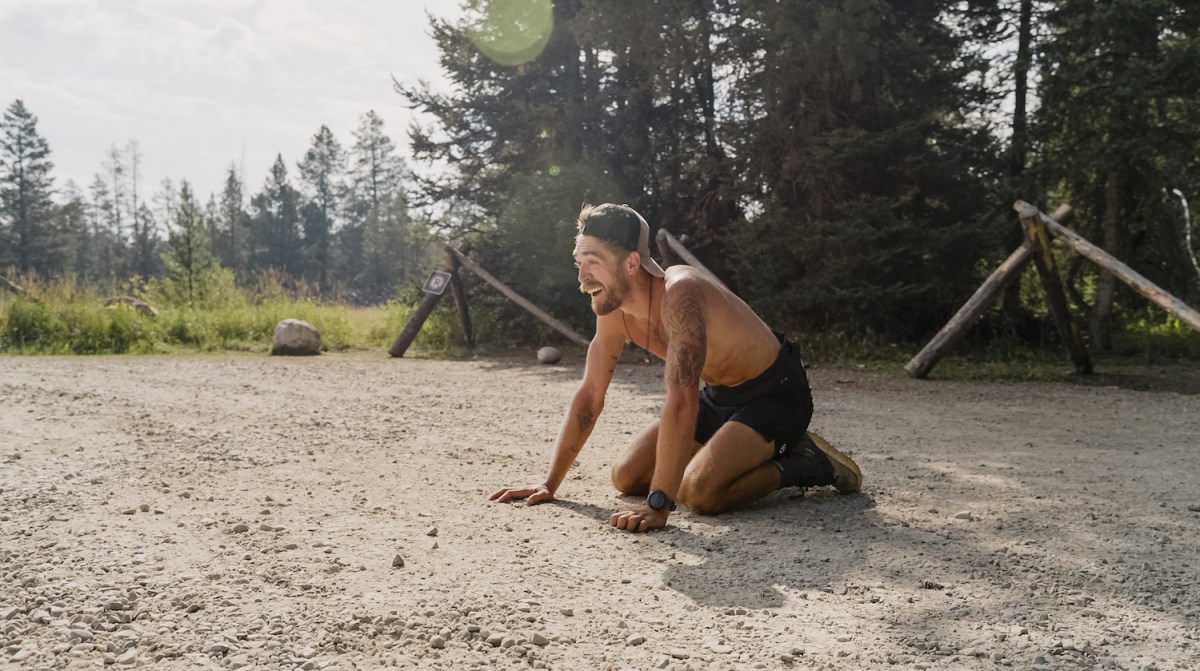
The trail runner ticketed by Grand Teton National Park rangers for cutting a switchback during his fastest-ever out-and-back climb of the Grand Teton heads to court Tuesday to challenge the charges in a bench trial.
It is the latest fallout over Michelino Sunseri’s decision to follow what he said is an oft-used and recognized route during his descent of the iconic peak.
The ultra-runner and Jackson bartender rose to infamy in the outdoor world last fall in a dizzying sequence of events. On Sept. 2, Sunseri ran and scrambled the 13.2 miles from the Lupine Meadows parking lot to the summit of the 13,775-foot Grand Teton and back with a time of 2:50:50 — a stunning feat that broke a 12-year-old record.
But on his way down the mountain, he cut a switchback while following the route of other previous record holders. Fastest Known Time — the organization that arbitrates and tracks official speed attempts — rejected his submission due to the offense. Not long after, national park rangers issued him a citation.
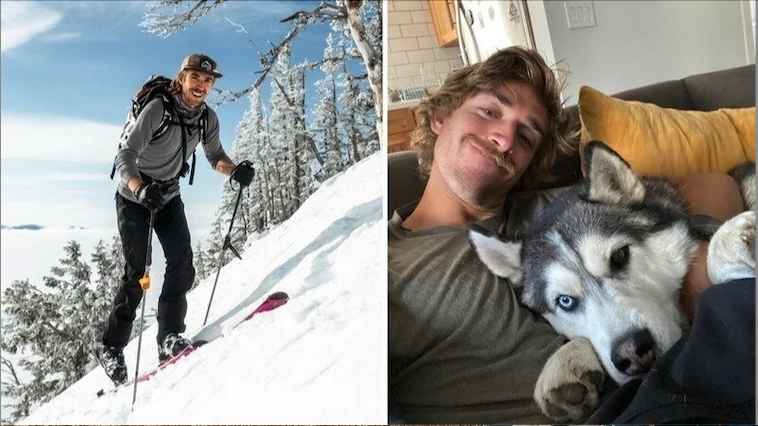
Rangers gave Sunseri a ticket for violating 36CFR2.1(b), which prohibits “leaving a trail or walkway to shortcut between portions of the same trail or adjacent trail in the national park.” The citation comes with a penalty of $5,000 and/or up to six months in jail.
When offered a plea bargain of a misdemeanor guilty plea, five-year ban from the national park and fine, Sunseri opted to challenge the charges.
The bench trial is scheduled to take place in the Clifford P. Hansen Federal Courthouse in Jackson. The high-elevation incident has stirred a lot of debate about appropriate behavior for trail users and appropriate penalties for infractions, and the trial is expected to be closely watched.
Made an example?
Sunseri, an elite athlete with several record-breaking backcountry feats to his name, trained intensely through the summer with the goal of breaking the speed record that ultra-runner Andy Anderson set in 2012. North Face-sponsored Sunseri had done much preparation, including assembling a small team of photographers to film the attempt.
Late-August snow complicated his weather window, and Sunseri set out on Labor Day, a federal holiday that can see crowded trails conditions not ideal for a speed attempt. After racing up the peak, he was behind Anderson’s pace and cut a switchback on the way down to avoid a line of hikers. Anderson, an off-duty climbing ranger at the time of his 2012 record, did not use the shortcut.
Sunseri was open about his decision to cut the switchback in a post he wrote on the personal speed-tracking website Strava, adding that “if I had to make this choice again, I would 100% make the exact same choice.”
The choice drew disapproval from some fellow runners and outdoor recreation figures, however, and was the reason FKT cited when it declined to recognize Sunseri’s record.
FKT didn’t add Sunseri’s name to the top of its Grand Teton page, but it did update the page after his climb with a new bold-faced note: “The National Park Service has emphasized that cutting switchbacks on this route is a violation of the park service regulation 36 CFR 2.1(b) … Any future attempts to cut switchbacks will result in complete rejection, and the NPS intends to pursue criminal charges against athletes who engage in this behavior.”
Not long after that, in October, park rangers cited Sunseri with a federal misdemeanor.
“Shortcutting a switchback along a trail is prohibited in the park because it causes resource impacts, like trampling vegetation, creating erosion and worsening trail conditions,” Grand Teton National Park spokesperson Emily Davis told WyoFile.

Sunseri and his defenders were quick to point to the routes of previous record holders Kílian Jornet and Jen Day Denton, both recognized by FKT. “My route retraced their exact steps for what I knew to be an accepted course to achieve a new speed record,” Sunseri said in a September statement emailed to WyoFile. There are also more blatant examples of off-trail travel for which the park doesn’t have such a heavy hand, supporters say.
Those supporters have created stickers, t-shirts and music videos under the label #freemichelino as well as a change.org petition with more than 2,000 signatures. The plea bargain offered to Sunseri is unreasonable, according to the petition’s web page.
As a professional mountain runner, a five-year ban would force Sunseri to move away from a place where he makes his living, they argue. “To him, the six months in jail threatened by the GTNP Spokesperson is more palatable, though entirely unacceptable,” the page reads, adding that “a misdemeanor on his record carries a variety of collateral consequences, impacting employment, housing and international travel.”
Sunseri’s team cited insufficient evidence of a valid closure, selective enforcement, inadequate notice and unconstitutional delegation of legislative power when it asked for charges to be dismissed, according to court documents,
Sunseri’s lawyers also asked for a jury trial, in which a panel of his peers would have determined the outcome. However, that request was not granted and instead, Judge Stephanie Hambrick will preside over a bench trial in which she will make the determination.
A message to users
While Sunseri supporters have framed the situation as a high-profile opportunity to make an example of someone, others consider it a high-profile opportunity to positively influence the public.
David Gonzales, a writer, filmmaker and creator of the Jackson-based triathlon known as the Picnic, made a video analysis of the situation he posted on Instagram.

Sunseri took the shortcut knowing the park service had closed off the route, Gonzales said. Before the speed attempt, Sunseri “did a lap on the ground with Andy Anderson, and they didn’t use the shortcut, so it seems like he was aware of the park’s rules.”
Instead, Gonzales said, evidence seems to show Sunseri’s route decision was premeditated with full knowledge of the closure.
“It does seem insane that Michelino could go to jail for taking a shortcut that hundreds, if not thousands of people have taken before him, but the park could very well make an example of him,” Gonzales said, adding that future users should heed a simple message.
“So this summer in Grand Teton National Park, don’t take the shortcut,” Gonzales said.

I feel ALL records should be null and void unless they followed the marked trail the ENTIRE WAY. Not just Sunseri’s. Anything else is clearly CHEATING. Race track drivers can’t cut across the grass. Track and field runners don’t get to cut across the field half way. Marathon runners don’t get to cut across town and cut 5 blocks off their distance. They are expected to go the ENTIRE distance, not just part of it! What makes these guys think this is ok? How can you be proud of winning something you clearly cheated to get….let alone the whole illegality of it.
It would be one thing if he was contrite and agreed to the community service trail building. But his attitude of “I’m a special elite athlete so I can do what I want” forces the Park Service to prosecute. And of course he knows better. I was chewed out once as a kid by a mule train driver for cutting a switchback in the Grand Canyon, and though I thought it stupid at the time I’ve come to understand the importance. Either stay entirely off the trail and find your own route or stay on the trail, but cutting switchbacks in a Natl’ Park is just stupid.
Many locals told him not to use the shortcut because it was illegal. For him to pretend he didn’t know is a complete fabrication. The weather for the next week after Labor Day was perfect. I ran in the park many days in the week after Labor Day, and it was quiet. He had a film team and North Face Athletes parking in the handicap spots at the Lupine Meadows trailhead to keep the trail clear. I work for Exum Mountain Guides, and if I used the shortcut, I would be fired. Not sure why he thinks he gets special treatment to break the rules for a speed record.
This racing practice should be banned altogether. Why can’t these people do something positive for wildlife and wilderness instead of turning the national park into a racetrack?
This guy thinks he is “special”. Give him “special” treatment in court.
This guy wanted to achieve the best time ever. Give him a special penalty of max fine, and max time in time-out to let him ponder just how special he really is.
Oh my god! Human footprints on the land! A taxpayer using the very land he helps supports!! Call in the National Guard and station them along the paths.
Larry – I pay taxes to drive on roads. Your logic is saying I deserve the right to drive as fast as I want. Not stop at traffic lights that are red, and not even drive on roads if I can creat a shortcut. Lovely!
I can also walk off boardwalks around hot springs in Yellowstone.. Much more lovely!
Thanks for your insight
“The primary duty of the National Park Service is to protect the national parks and national monuments under its jurisdiction and keep them as nearly in their natural state as this can be done in view of the fact that access to them must be provided” In Sunseri’s case, access was provided, there’s nothing in the NPS mandate or mission about letting athletes ignore rules to break personal speed records.
So Kim. What exactly is the lands”natural state” you speak of. Every inch of ground changes constantly! Nothing stays the same. Wind, snow, rains are constantly at work. So tell us about this natural state of land. Seems the park service has built many roads, trails, paths over the years. Build where ever they wish whenever they wish
Make an example of this loser. Lifetime ban from all National Parks, mandatory fine, and jail time. Actions have consequences.
The beauty of being half-fast from Pinedale is that we get to go down to Jackson, drive slow and watch peoples heads explode.