

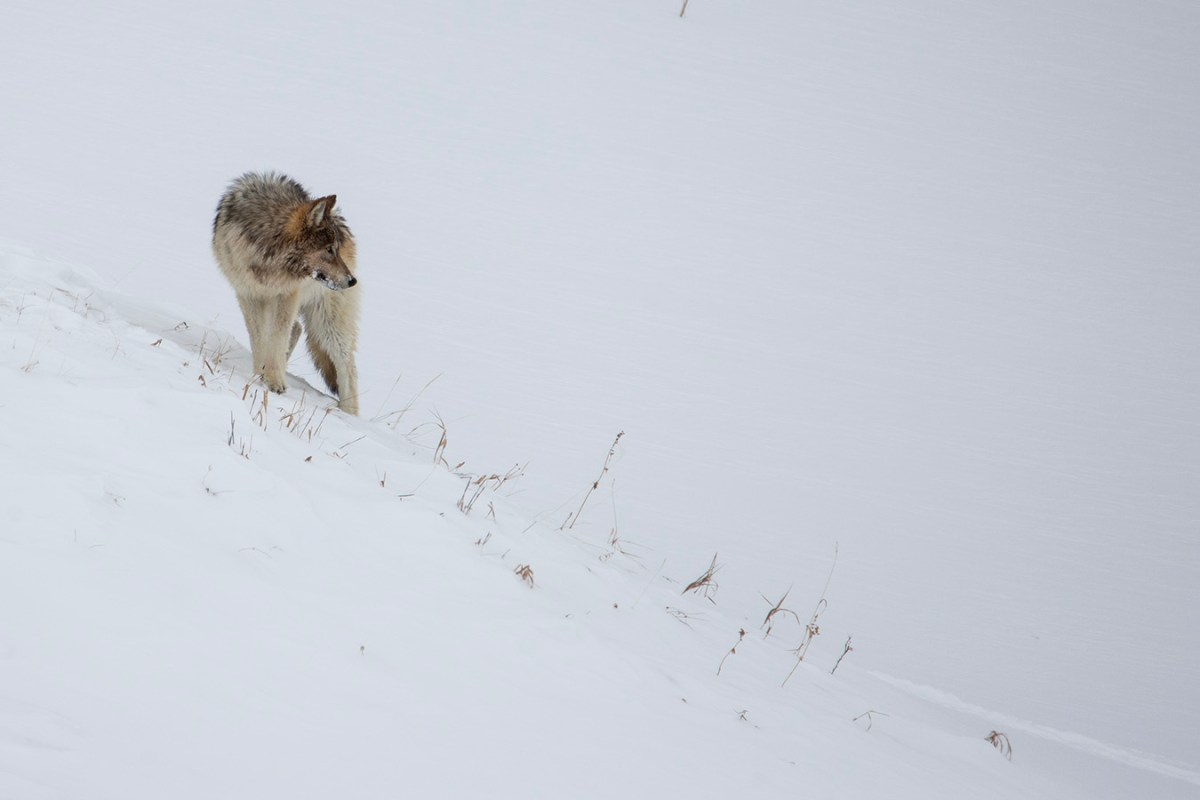
This commentary was originally published by Writers on the Range.
A case of appalling animal cruelty in Wyoming is close to being closed with a plea of guilty, setting a historic and significant example for the state and perhaps other jurisdictions.
Opinion
In 2024, Cody Roberts of Daniel mowed down a wolf with a snowmobile, dragged the animal into a bar, tormented the wolf in front of patrons while the canine was still alive and later killed the animal. The public reaction to this brutality — across the United States and abroad — was overwhelming shock, especially after learning that the Wyoming Game and Fish Department made Roberts pay only a small fine for the wolf’s torment.
But the state Legislature declined to act to make wolf-killing-by-snowmobile illegal. In Wyoming, one can still run over some animals so long as the stunned animal is “quickly” killed.
Sublette County Attorney Clayton Melinkovich, however, convened a grand jury in August 2025 to consider criminal charges. Though this was an unusual move in the Cowboy State, he secured an indictment against Roberts for felony animal cruelty, which included a maximum sentence of up to two years in prison and a $5,000 fine.
By accepting a plea deal in February, Roberts avoided a trial, and last Thursday, he appeared before Sweetwater County Judge Richard Lavery in Sublette County District Court to change his plea to “guilty.”
Judge Lavery did not immediately sentence Roberts; instead, he is waiting for a pre-sentence investigation report from a probation and parole officer, who must first conduct a substance abuse assessment of Roberts.
If the plea deal is accepted by the court, the prison sentence is suspended and the fine reduced to $1,000. Roberts would also be prohibited from hunting, fishing, consuming alcohol or entering bars or liquor establishments, and would need to complete a substance-abuse treatment plan.
Animal cruelty does not occur in a vacuum. Decades of research show strong correlations between the abuse of animals and various forms of interpersonal violence. By insisting on a felony charge, mandated treatment and strict conditions, the county attorney has affirmed that cruelty to wildlife is wrong on its own terms and has implications for the health and safety of the human community as well.
This was a disturbing case, and the victim was a wild wolf — an animal deemed a “predator” under state law and one frequently vilified by Wyoming lawmakers. Yet despite the heated rhetoric surrounding wolves, several polls show that Wyomingites did not approve of Roberts’ actions. We also know from newer surveys that hunters, ranchers, rural Wyoming residents and people calling themselves conservatives all hold a broad reverence for both wolves and grizzly bears.
The attitudes of Wyoming’s wildlife authorities appear to be shifting as well. In another case, three Wyoming men were charged with tormenting a moose by trying to ride it.
These and other developments make this a moment of reckoning for lawmakers and wildlife officials who have repeatedly resisted outlawing vehicular killing of wildlife, or who have shied away from strengthening anti-cruelty laws.
For too long, Wyoming has been an outlier in tolerating extreme cruelty toward its wild carnivores. But the disposition of the Roberts case shows that the state does have tools and even the willpower to protect animals. This case began with the malicious use of a snowmobile to run down an animal. Now, several polls show that Wyomingites oppose killing wildlife with vehicles, which gives public officials in the next Legislative session an opening to prohibit this debased practice.
When Roberts proudly showed off his maimed wolf, he made more news than he anticipated, spotlighting Wyoming’s heartless “predator-zone” policies, where wolves and other animals can be killed cruelly by almost any means.
It’s up to state legislators now to strengthen existing legal frameworks, close exemptions for animals labeled as “predators,” and do away with the “predator zone” encompassing over 80% of the state.
The plea deal does not undo the suffering inflicted on the wolf, but it does create legal precedent and moral momentum. Prosecutor Melinkovich has shown what principled enforcement of animal cruelty law can look like. Lawmakers can do their part by prohibiting intentional vehicular killing of wildlife, which would go a long way toward creating a legacy of just and compassionate wildlife stewardship.

This case shined a light on Wyoming laws (and the attitudes of some of their population) that people of most other states were unaware of and now we await the legislature’s action to make the needed changes.
First of all is Wolves are Essential to the environment! This was severe animal cruelty and this ‘Creature’ should not get away with this without being severely punished! The law needs to be stronger for animal cruelty and Murder! He really needs to have the same done to him as he did to that Precious Wolf!
Presumably his guilty plea to a felony will prohibit Roberts from owning firearms, but in a bizarre twist unless the legislature takes action at some point he’ll still be able to run wolves down with his snowmobile, at which point he could club his victim to death. Here’s my question: Will he need a hunting license to do that on private land? (Or would he have to wait until his probation is complete?)
He needs to suffer like the poor wolf
He needs prison
No leniency for him
We need to change the animal laws in Wyoming! This is a step in the right direction! We need tough laws to protect our wildlife, and our domestic animals! Stop the harassment, Stop the abuse Stop the torture! Quit letting these irresponsible people get away with a slap on the wrist! They won’t learn anything by it and will do it again! And laugh at Wyoming’s weak animal laws!
I live in Idaho and am ashamed of the way Idaho, Montana and Wyoming hunt , trap and poison wolves and other wildlife. Wyoming has an opportunity to change its draconian law of allowing wildlife to be run over and killed by a motorized vehicle. I hope they heed the public outcry this event has fostered. Do the right thing Wyoming . Repeal this law and protect your wildlife.
“Fur Whacking” is not conservation, it’s cruelty! . period!
We need to protect our beautiful wildlife no destroy them and think its funny they are sentiment being with souls and families!!!
I agree with the author. The Wyoming legislature has dodged attempts to yank them out of the 1800s, but once again they’re in the spotlight. Aside from special interests like hunters/trappers/ag-business lobby, most people oppose inflicting unnecessary suffering on animals whether they’re domestic or wild. It’s overdue to make that public policy and law.
We know better as a society to have boundaries for some that don’t
“In Wyoming, one can still run over some animals so long as the stunned animal is “quickly” killed.”
Quicker, more humane and targeted vs. poisoning wolves and coyotes.
There is no collateral damage that comes with other forms of predator control.
That still doesn’t make it right though, does it Chad.
What Cody Roberts did, no?
He’s gotten his punishment.
Predator control is needed, period. Kill the number of them that maintains a balance in ungulate populations and protects ranchers cattle. That hasn’t been done for years.
The entire snowmobile debate is based on irrational emotion.
The snowmobile (animal cruelty) issue is based on rational emotion.
Your views are, simply, archaic.
Mike, it’s not “archaic” to want to kill/control the number of animals that kill and eat the same food you do.
It’s actually called nature.
Cody Robert’s hasn’t gotten his punishment yet! What he did was unconscionable and I wouldn’t doubt he’d do it again.