

In the past decade, medical researchers have discovered how to identify specific genetic mutations in a childhood brain cancer and developed alternatives to detrimental chemotherapy, saving lives.
Wyoming families battling childhood cancers, who typically drive endless miles back-and-forth to Denver, have also found refuge in a clinic that brings pediatric cancer specialists to Casper, as well as tailored advocacy to help families navigate the struggles of caring for a sick child.
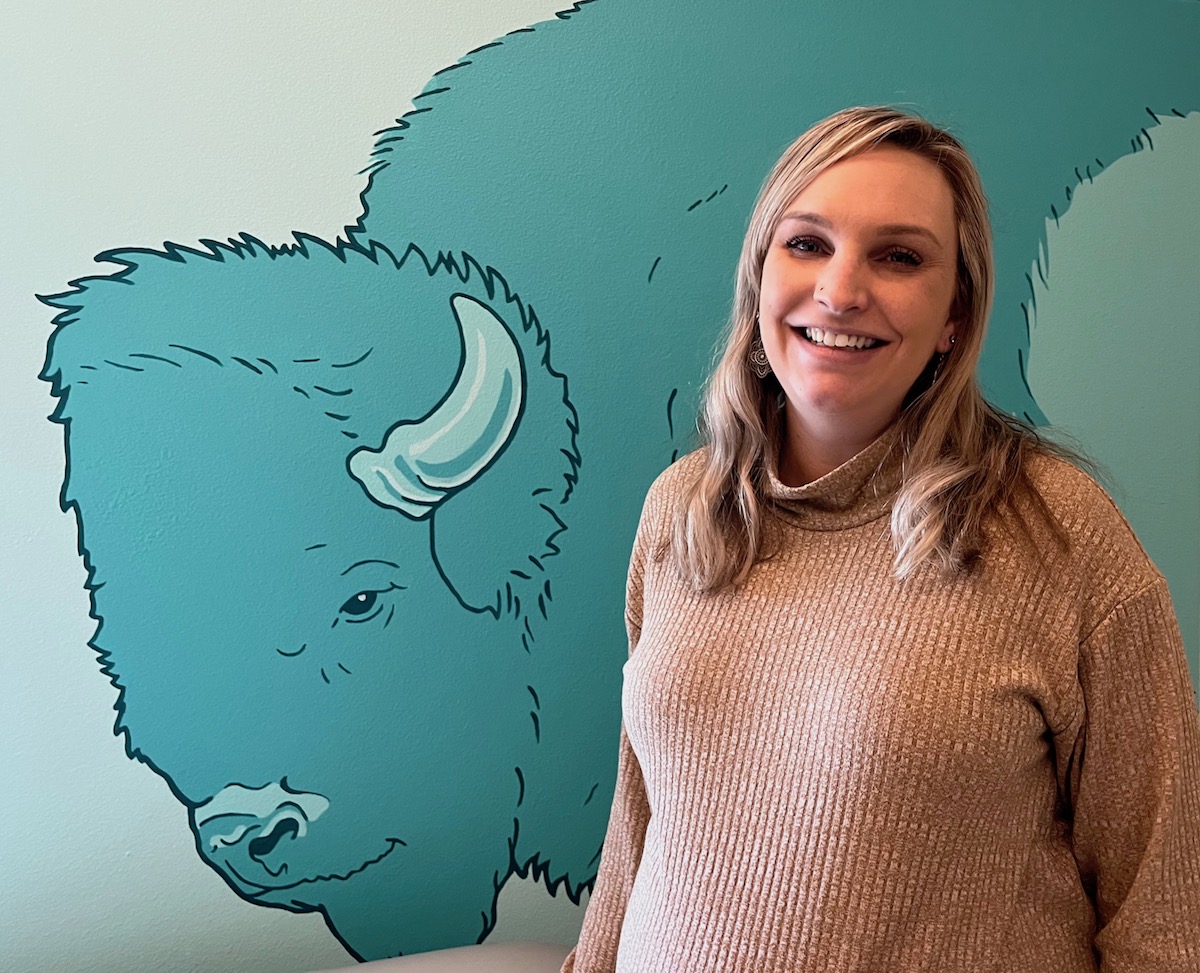
Katie Burchett and the Olivia Caldwell Foundation in Casper — named for Burchett’s daughter, Olivia, who died of brain cancer as an infant — are the driving force behind these advances.
“A lot of the inspiration of the programs we have now came from our journey,” Burchett told WyoFile.
Not long after moving with her ex-husband to Rawlins from Reno, Nevada, Burchett, then 24, gave birth to twins Wyatt and Olivia. The birth was premature and the infants required a lot of extra care, even after they were welcomed home. At four-months-old, Olivia was diagnosed with grade II astrocytoma — a pediatric brain cancer that normally, but unfortunately not always, comes with a high survival rate.
“We know what it’s like to try and learn what resources are available when you don’t have the capacity to take on anything else.”
Katie Burchett, Olivia Caldwell Foundation
“It was a lot,” Burchett, 35, said. “All of the experiences of traveling frequently [to Denver] for [Olivia’s] treatment, to learning how to do so much of her care at home. When your child is sick, the last thing you want to do is sit at your computer and Google ‘how do I make my mortgage payment this month?'”
The family found an advocate and friend in Candice Frude, a perinatal nurse who’d been assisting with their at-home health care needs since before Olivia’s cancer diagnosis. “She knew that there were resources that existed for my family,” Burchett said. “Not everybody has that when you’re going through it.”
Still, navigating life and the healthcare system was daunting. And the chemo treatment that typically results in good outcomes with astrocytoma wasn’t working for Olivia. She initially showed signs of progress, then declined. In 2013, at the age of 20 months and three days, she passed away at home in the arms of her mother and father.
“I was left with this big void and thinking, ‘OK, what do I do with all of this mothering energy that I have for my daughter who is not here anymore?'” Burchett said.
Soon after, Wyatt fell ill and was flown to Children’s Hospital in Denver. He was diagnosed with diabetes.
Through the hardship, Burchett realized that families of all income levels struggle to find help, that more resources are needed for families battling childhood cancers — and that more research is needed to save lives. “I just jumped in with both feet,” Burchett said.
She discovered that Children’s Hospital Colorado — a place the family was intimately familiar with — had a well-staffed children’s cancer research lab. But funding, she learned, was a challenge. Within weeks of her daughter’s passing, Burchett established the Olivia Caldwell Foundation. The lab asked for unrestricted financial support “so they can go off a hunch and come up with something brilliant that saves lives,” Burchett said. “And that’s worked really, really well.”
The Olivia Caldwell Foundation has raised more than $856,000 — seed money that has attracted millions of dollars and led to several breakthroughs, Burchett said. The first research breakthrough relied on tumor and blood samples from Olivia at the Denver lab. Researchers discovered her astrocytoma derived from a specific mutation.
“They were able to figure out how to develop a blood test that now identifies what that driving genetic mutation is when a child is diagnosed,” Burchett said. “Now they know that pediatric astrocytoma is not the same, depending on what type of genetic mutation, and you have to treat it completely differently.”
Rather than chemo, there are other medications that can be administered to children at home.
More breakthroughs in the arena of pediatric cancer research followed. Burchett then led the Olivia Caldwell Foundation to expand into bringing Denver pediatric cancer specialists to Casper and establishing a patient advocacy program now partnering with organizations all over the state, she said.
Next in the foundation’s sights is to support research to battle diffuse intrinsic pontine glioma, or DIPG. It’s “a horrible cancer and has a zero percent survival rate, currently,” Burchett said. A major donor from Douglas, whose child died of the disease, is helping with the effort.
A few years ago Bruchett moved to Casper, where her parents had relocated to from Reno. She set up shop at the McMurry Medical Arts Center, where the Olivia Caldwell Foundation hosts its pediatric cancer care and patient advocacy programs.
The foundation receives financial support from individual donors, businesses and organizations. It also hosts two annual events: an invitational golf tournament and the Butterfly Ball Adult Prom, which will take place Saturday at the Ford Wyoming Center in Casper.
“We know what it’s like to try and learn what resources are available when you don’t have the capacity to take on anything else,” Burchett said.
WyoProfiles examine the remarkable, notable and fascinating lives of state residents — both living and gone. If you have an idea for an individual you would like us to profile, email editor@wyofile.com.
