


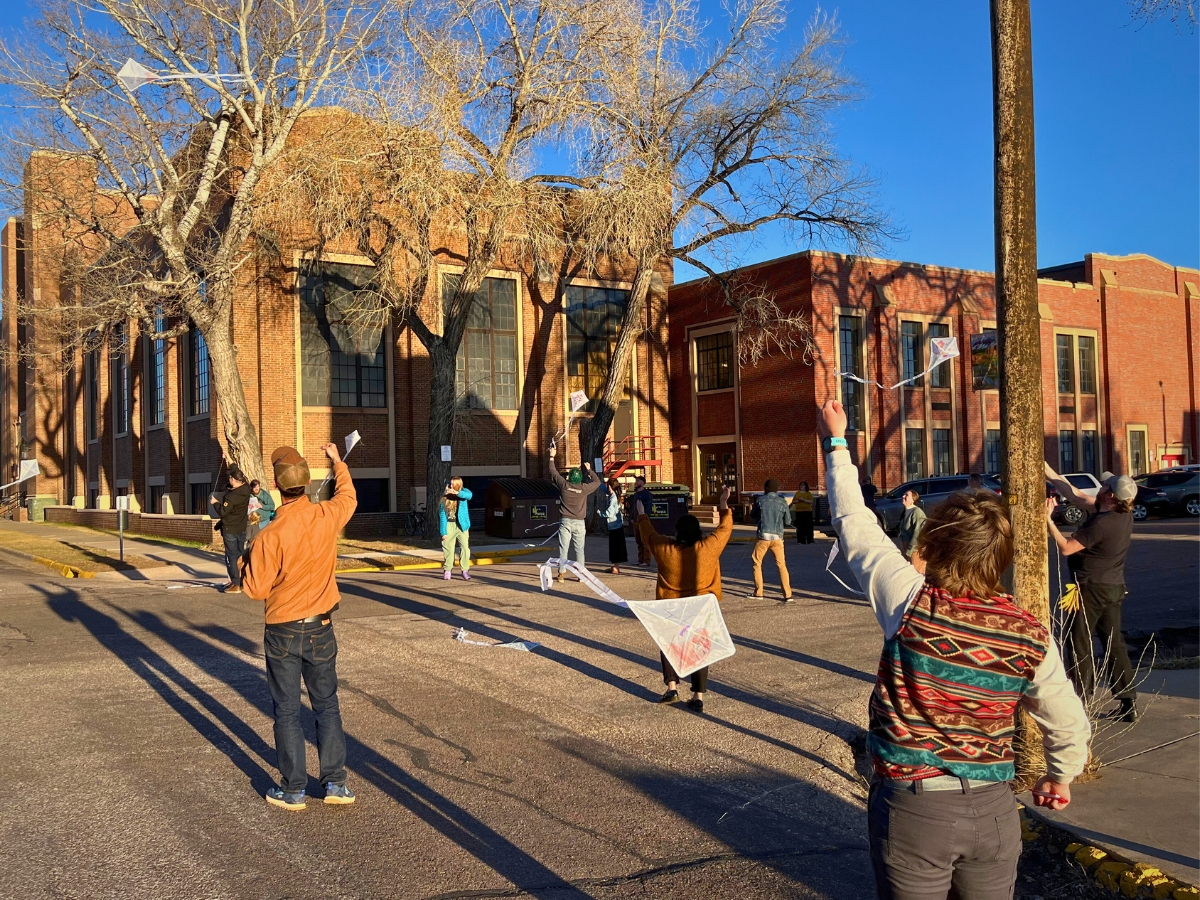
I have often heard the story of the young boy flying a kite with his dad. Together they watched as their kite flew higher and higher. Eventually, the kite ran out of string, and the boy encouraged his father to let the string go so the kite could continue to rise. The dad explained that if he let go, the kite would fall.
Opinion
The boy persisted, and eventually the dad agreed to let the string go. Immediately, the kite began to fly erratically and soon fell to the ground. The dad then explained to his son that although the string appeared to keep the kite from going higher, it was the string that kept the kite anchored and in the air.
Like the string that allows the kite to fly by providing an anchor and direction, so too does the rule of law keep society aloft.
Unfortunately, I have seen instances when groups have tried to evade the rule of law to fly without restrictions. One notable example is the recent elections of officers for the Park County GOP.
On March 13, the Park County GOP came together for the election of its executive committee. This was done even though members of the executive committee knew there hadn’t been proper statutory notice of 10 days under W.S. 22-4-105. Before the vote started, a point of order was brought stating since there had not been proper notice, the election could not take place. A motion to suspend the bylaws requiring notice was made, but the motion was ruled out of order because state statute requires the notice, and statutes cannot be suspended. The election was rescheduled for March 31.
On March 31, the party reconvened — this time with proper statutory notice — to elect officers. While adopting voting rules, a motion was made to follow the state statute, which prohibits individuals from voting if they are not precinct committee people. The statutes regarding voting in these elections have been interpreted by the Wyoming Supreme Court to specifically restrict unelected executive committee members from voting. However, members of the executive committee presented a decision by the Wyoming GOP Dispute Resolution Committee claiming that statutes cannot control political parties. A motion was made to exclude the unauthorized people from voting because the party could not suspend state statute (much like the ruling made on March 13), but the motion was killed by the executive committee without a vote.
Why does this matter?
In Wyoming, political parties are specifically recognized by statute. As such, these bodies have certain privileges and rules that other social groups do not have. Two prime examples of the privileges of political parties are the ability to nominate candidates to fill vacant elected offices, like a county assessor, superintendent of public education, state treasurer or U.S. senator, and the use of public ballots to select their precinct representatives. To balance these privileges, political parties are required to follow basic statutory requirements.
Sadly, our political parties appear to fight against statutory control, arguing that they are merely a social club like the local Elks Lodge. At the same time, political parties are uninterested in relinquishing the same statutory powers that set them apart from groups like the Elks.
However, if political parties are in fact no different from other local social clubs, it would be surprising if statutes were not amended to remove the constraints AND privileges political parties currently have. Followed to its logical end, removing political parties from our statutes would prohibit them from selecting nominees when filling vacant elected offices, resulting in a different process to fill vacancies like special elections. Primary elections would likely become more open like California’s “jungle primaries”, and parties would not be allowed to use public ballots for selecting their precinct representatives.
Perhaps some aim to remove parties from politics — an idea that George Washington likely would have supported. However, for those who do not want to see the systematic dismantling of political parties in Wyoming, I suggest we make one thing a priority: follow the law!
Just as a kite cannot have its string cut and refuse to obey the laws of physics, society cannot function to its fullest potential without laws. As for political parties, we cannot become so accustomed to our lofty privileges that we are willing to cut the statutory strings that attach us to society and not expect any consequences.

Let us also note the cost to the public – Independents, Republicans, Democrats, and unregistered citizens alike – of running Primary Elections. We the taxpayers are basically being required to fund a private event from which we are excluded if we have not jumped through the hoops demanded of us by the members of that particular club.
You would think that the law and order party would be eager to follow the law.
Thanks for thinking out loud about how citizenry is being enacted in Park County, David Hill. It’s refreshing.
I have been aligned with the same political party for more than six decades and I was the beneficiary of the process outlined under Wyoming law that preserves and protects political parties. While I don’t like some of the pettiness and anti-democratic behavior now going on in Wyoming’s dominate political party, I recognize that the existence of political parties is essential to the preservation of our democracy.
The bears reposting:
Conservatism consists of exactly one proposition, to wit: There must be in-groups whom the law protects but does not bind, alongside out-groups whom the law binds but does not protect. – Wilhoit
This should be the story of Icarus.