

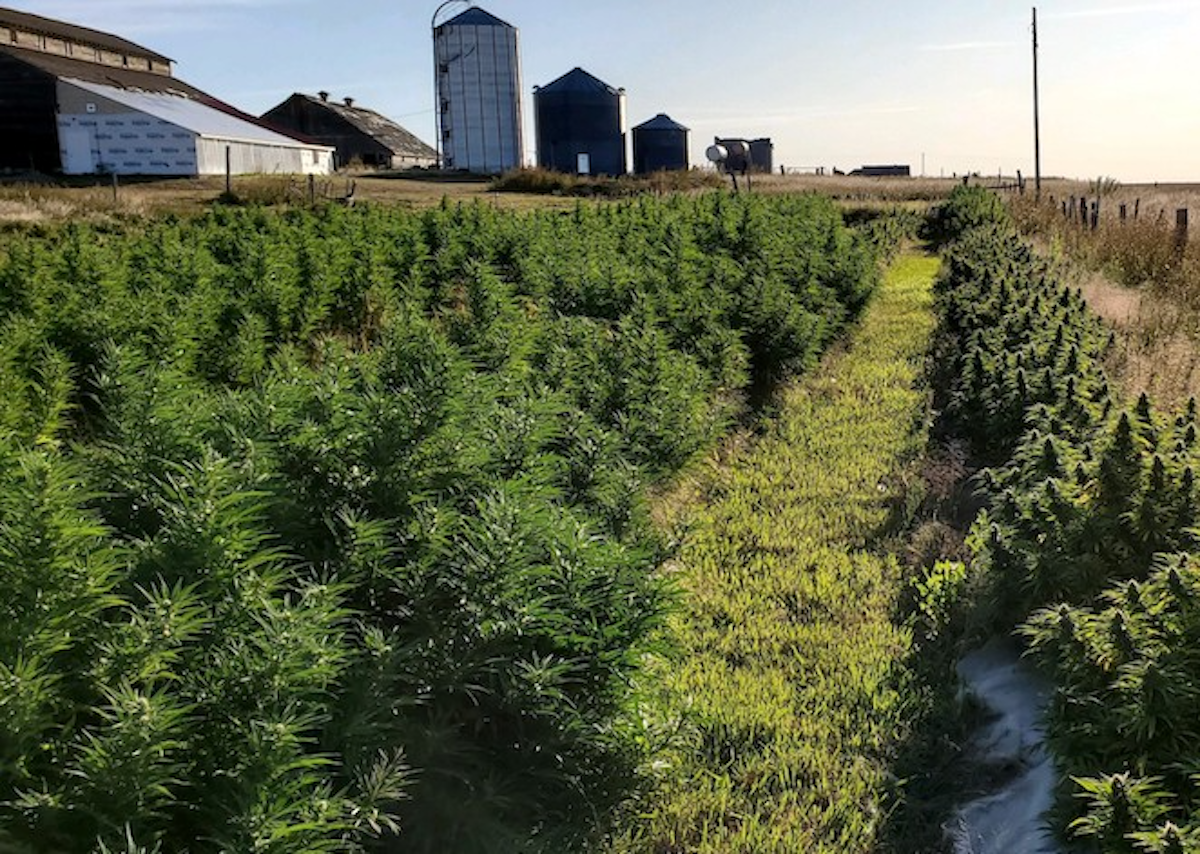
When Wyoming Division of Criminal Investigation agents raided Deb Palm-Egle’s Albin farm and confiscated her hemp crop in 2019, it kicked off a nine-month ordeal that upended her life and cost her tens of thousands of dollars in legal fees.
Prosecutors ultimately charged Palm-Egle, an elderly woman who often uses a scooter to get around, with multiple felonies related to manufacturing and attempting to distribute marijuana. After a five-month investigation, DCI agents alleged that’s what her hemp crop really was.
That investigation crumbled quickly in court. A Laramie County judge took the unusual step of tossing the case during a preliminary hearing, finding the state’s evidence too flimsy for the charges to proceed to trial.
Palm-Egle spent a little more than $54,000 in attorney fees to defend herself, court filings show. Ordered by a judge at her arraignment not to leave the state, Palm-Egle found herself stuck at the farm in Albin, though she lives in Colorado, for the better part of a year. That restriction, plus a drug test requirement, left her unable to access or use the medicinal marijuana that soothes the pain from her multiple sclerosis, according to her civil attorney Gary Shockey.
Palm-Egle declined to speak to WyoFile for this story, citing Shockey’s advice.
In May 2022, Palm-Egle sued over the lost money and hardship, in a case that has gone from federal court to the state Supreme Court and now is back in federal court with a trial set for March. But in the meantime, the Wyoming Legislature could make it impossible for others to sue the government on the grounds Palm-Egle has used — that she suffered because of a negligent investigation by law enforcement officers.
The Joint Judiciary Committee voted 8-6 in November to bring a bill that would ensure no government entity could be held liable “for damages to a criminal suspect resulting from a peace officer’s negligent investigation,” as a draft version reads. The committee is acting in response to a Wyoming Supreme Court ruling in March, where the justices found 3-2 that the state’s peace officers are legally required to conduct investigations in a reasonable manner.
The March ruling was the case’s second trip to the state Supreme Court. In the first instance, the justices found that the lead DCI investigator lied on the witness stand, and the prosecutor who tried the case was censured for allowing the false testimony to stand.
Lawmakers’ forthcoming debate on the topic shows how the prosecution of Palm-Egle, who herself spent time in the statehouse as a prominent advocate for legalizing hemp farming, continues to reverberate five years later. The tight vote margins, both in the state’s highest court and in the judiciary committee, suggest a sharp divide.

On one side of that divide are those seeking accountability from the state and remedies for someone harmed by an unfounded or flawed investigation.
“The bureaucracies and the state of Wyoming reacted pretty quickly to my case to say: ‘Our peace officers shouldn’t have to exercise ordinary care and prudence and all that,’” Shockey told WyoFile this week.
On the other side are those, like the two dissenting justices on the state Supreme Court, who worry about the precedent Palm-Egle’s case could set.
“It will invite every criminal defendant who is acquitted or has charges dismissed after a preliminary hearing to sue police officers claiming negligent investigation,” then-Justice Keith Kautz wrote in the dissent. “Officers will be reluctant to investigate, especially in close cases, for fear of being sued.”
Justice Kari Jo Gray joined Katz in dissenting.
The court majority also ruled, however, that the officer in this case, DCI agent Jon Briggs, couldn’t be held personally liable provided that he was performing his job.
U.S. District Judge for Wyoming Scott Skavdahl sent the issue to the state Supreme Court after finding the law unclear on whether Wyoming allowed for a case based on a negligent investigation. With the justices’ decision, Shockey is now able to bring his case to trial regardless of what lawmakers do. But attorneys at the Legislative Service Office flagged the court’s opinion as one lawmakers may wish to address.
The bill has support from the Wyoming Association of Sheriffs and Chiefs of Police. Wyoming law enforcement chiefs found the state Supreme Court’s decision dangerous because of the vagaries of what could be considered a reasonable investigation, that organization’s executive director Allen Thompson testified at the judiciary committee’s November meeting.
“That seems to our members a very hard thing to wrap our mind around — what is and isn’t a negligent investigation,” Thompson said. The draft bill, he said, “helps law enforcement better understand the requirements and it doesn’t absolve them from other bad actions.”
Rep. Ember Oakley (R-Riverton), a Fremont County prosecutor, said both policy and law already place checks on officers when conducting investigations. “To say that they are not … held to a legal standard unless they can be sued for negligent investigation is not correct,” she said. The state Supreme Court had gone in “a dangerous direction,” she said, but “this (bill) can fix it.”
That argument was echoed by other lawmakers, who said people harmed by law enforcement can find other grounds on which to sue. “I do believe there’s still going to be accountability for law enforcement officers. They’re not going to have free reign to do whatever they want,” said Rep. Barry Crago (R-Buffalo), who is also an attorney.
Shockey, who testified against the bill, told lawmakers his case focused on Briggs’ actions during the investigation and not on what happened during the preliminary hearing. But in his complaint, he questioned whether the state is in fact equipped to hold investigators accountable.
“Internal review of Defendant Briggs and his conduct was also conducted by the State Defendants,” he wrote. “Palm-Egle does not have all the information generated in those proceedings, but on information and belief asserts that the investigation and those individuals and agencies involved were part of a concerted effort, if not conspiracy, to protect Defendant Briggs and deprive Plaintiff Palm-Egle of her ability to address the charges and process.”

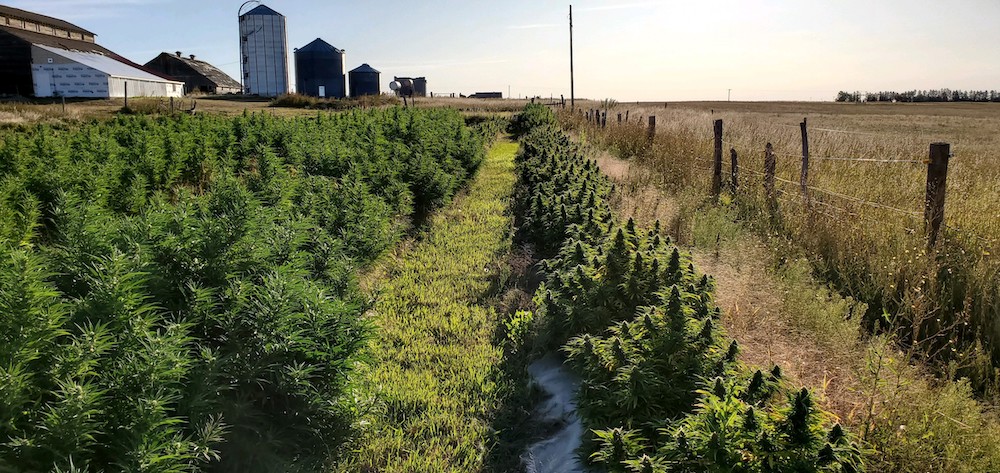
In May 2021, the Wyoming Supreme Court found Briggs testified falsely during the preliminary hearing about a critical exchange with a worker during the raid on the farm outside Albin. The worker had sought to show him test results indicating the crop was hemp, not marijuana. Briggs lied again in a subsequent hearing when he said he had not read an email from Palm-Egle’s defense attorney, Tom Jubin, that asked him to correct the earlier false testimony, the high court found. As evidence, the court cited text messages between Briggs and the prosecutor in which the DCI agent discussed specifics of the email he claimed to not have read.
But law enforcement agencies contested the court’s finding. The Wyoming Attorney General’s Office filed a motion asking the Supreme Court to remove Briggs’ name and any statements that he gave false testimony from its censure of the prosecutor. DCI conducted its own internal review, and cleared Briggs of any wrongdoing, the AG argued, and the state Supreme Court “did not have jurisdiction to determine whether Agent Briggs engaged in wrongdoing or impose discipline against him.”
The court rejected the AG’s motion.
The Wyoming Peace Officers Standards and Training Commission, which can investigate officers’ conduct statewide and issue censures or ultimately decertify an officer, opened an investigation into Briggs’ testimony. POST’s director Chris Walsh also disagreed with the Supreme Court. “I concluded insufficient evidence existed to support the claim that you perjured yourself or attempted to mislead the court,” he wrote in an August 2021 letter to Briggs. His agency closed the investigation without any discipline.
Through a spokesperson, DCI Director Robert Jones said he could not comment to the press on ongoing litigation or on draft legislation. Briggs is still employed by DCI as an investigator, the spokesperson said.


A bad cop is hated most by good cops. Usually bad cops know best when the can get away with abusing their authority when they can get away with it. Bad call on this officer, he just picked on someone who could afford to fight back. I just wonder how much money has been wasted when our government decided to fight against an unpopular law (marijuana) that many people did not agree with.
It’s disheartening to read that some member of our legislature will fight tooth and nail to protect corrupt law enforcement. Everyone should be against bad cops and we all should hold them accountable, but apparently Ember Oakley and Barry Crago believe in just the opposite. It’s written that both are employed by their respective county attorney offices. Does corruption in law enforcement reach all the way up into our county attorney departments? Police should just run rampant and stop on citizen rights? Again, I would think that most decent people would be 100% against protecting corrupt law enforcement, what do legislators / assistant county attorneys have to gain by backing the bad cops? Obtaining elite status and become untouchable? A steady list of victims to fine, incarcerate and ruin reputations? Perhaps these legislators / assistant county attorneys are also trying to shield themselves from accountability. Looks like the crooked cop is just the tip of the iceberg
Personally, I’m tired of society allowing people who lack moral compass to not suffer the consequences of their actions.
This is dangerous and I’ve seen the corruption and the misconduct this kind of “absolute immunity” breeds w/in law enforcement and the judiciary. The executive and judicial branches must not be allowed to hold themselves above the laws they enforce on citizens. To allow the executive and judicial branches grant themselves blanket immunity allowing for blatant constitutional, civil, legal and human rights violations makes law and order irrelevant and arbitrary. If there are no standards, if law enforcement and judges are bound by no codes, ethics, accountability or basic integrity it is anathema to democratic values and the constitutional rights the branches are entrusted to uphold. If the executive brand and judicial branch cannot tolerate dissent or accountability then the executive and judiciary branches need to be abolished in their current form and restructured to uphold the constitution, impartiality, and integrity of government institutions. The government has become a tool used by corporate, domestic and foreign entities to advance their own self-serving interests at the expense of and off the backs of US citizens. It’s become a cease pool of petty vindictiveness, incompetence, reactivity, and moral decay. The entitlement and arrogance pervasive w/in the executive and judiciary branches disgraces our country and our constitution.
Andrew are you back with WyoFile?
Crago and Oakley, both Assistant County Attorneys (which is about the bottom of the barrel in the legal profession), once again want to side with bad cops and stick it to their constituents. Crago was the mastermind of the ill fated “beat up an alleged trespasser” bill of a year or two ago and Oakley is on her way out of the legislature, being soundly beaten in the 2024 primary. She’d like us all to think she was simply a victim of the Freedom Caucus movement but no…HD 55 voters were tired of her support of the bad cop. All these two are looking for is job security, let the bad cops continue to be bad and bring in members of the public so they can be heavily fined, incarcerated and make two little people feel “big”
Very well said. These ‘county attorneys’ usually are the type that can’t hack it in the private sector. The low self esteem that they are clouded with must equal siding with bad cops. It’s al about job security, support the bad cops who prey on innocent people so these county types can earn their bi-monthly paycheck, paid for by the people and when the people fight back, uh, no, let there be absolutely zero recourse for the public to expose the criminals who hide behind the blue wall. Crago and Oakley should be ashamed and oh, goodbye, Ember, house dist. 55 will not miss you 🙂
Everyone should have the right to challenge any charges against them and seek compensation in cases of property or personal financial damage. If lawmakers take that right away, it’s an attack on citizens’ rights and American freedom.
Well… Its just a local continuation of the authoritarian take over of the country that WILL result in more loss of civil rights. Just creeping Fascism where those with money will control the rest of us. The majority seems to have voted for that.
No the lawsuit for bogus investigations should stand. The investigators are supposed to be trained professionals.
Sure wouldn’t want to hold them accountable.
The Wyoming legislature continues to hack away at our rights. From supporting fat cats that want to mine next to houses, efforts to steal public land and their efforts to get into your bedroom, these hacks need to be voted out of office.
It will be hard to get intelligent people in Cheyenne when the public believes the propaganda and lies that come form out of state mailings.
Attorney Tom Jubin did a great job in exposing the lie that allowed the criminal cast to even continue. Truthful testimony is demanded by the law from all witnesses, individual citizens and law enforcement personnel alike.