

CHEYENNE—Wyoming’s fish and wildlife resources are a step closer to being bolstered by a dedicated Game and Fish trust fund, with an ultimate goal of its principal reaching $500 million.
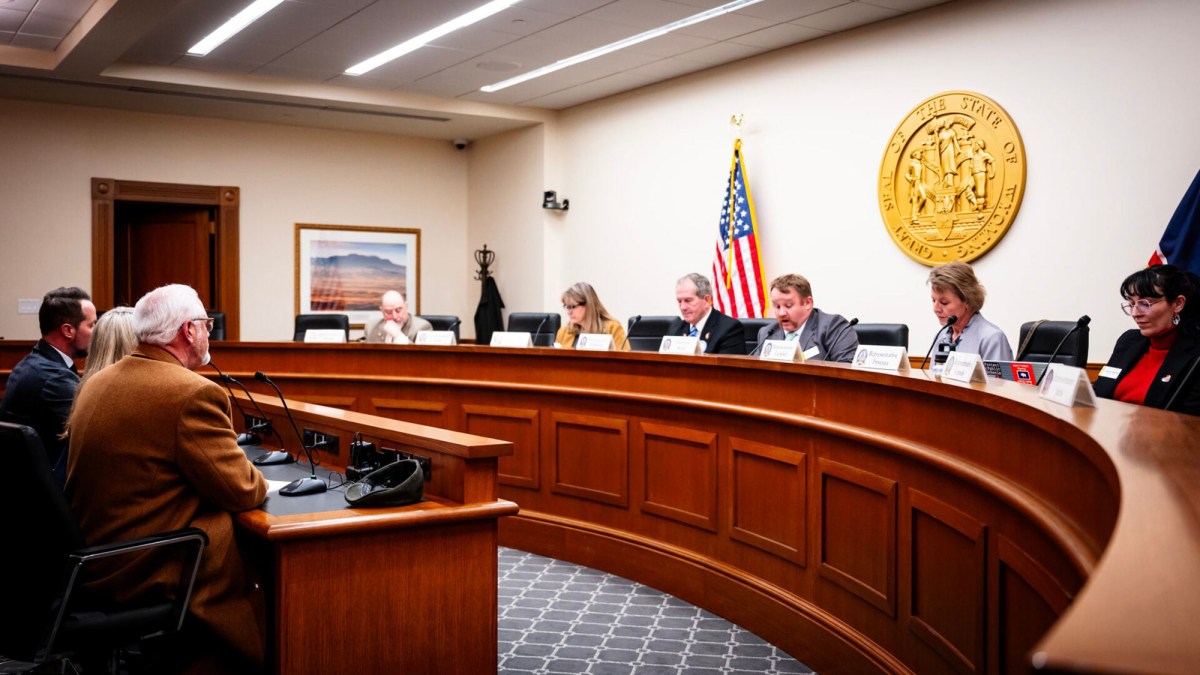
The Legislature’s Joint Travel, Recreation, Wildlife and Cultural Resources Committee met Tuesday to hear from the Wyoming Game and Fish Department about what the money would be put toward, in addition to discussing potential funding options.
The department has faced a growing financial challenge to maintain the management and sustainability of Wyoming’s wildlife resources due to inflation. Its requests for additional funding have largely been rejected in the past, but department leadership has been optimistic regarding the work the legislative committee has been doing to address the funding shortfall.
In recent years, in an attempt to bridge the gap, hunting and fishing licenses have increased in price, but that is not expected to provide enough revenue to meet the department’s needs going forward.
The fund would require a two-thirds vote of each chamber to be enacted. During testimony, Game and Fish Chief Financial Officer Meredith Wood outlined the agency’s main sources of revenue and how that money is being used. The department’s three pots of revenue are license sales, which make up 60% of total revenue; taxes on fishing and hunting equipment, which make up 22%; and the remaining 18% comes from grants and other revenue streams.
Wood also noted that the uncertainty of those revenue streams make planning for the future difficult.
“We have some future opportunities that we’ve been unable to invest in just due to the unpredictability in long-term revenue sustainability,” she said. Wood stressed that the department has prided itself on being fiscally conservative, but the pressure of rising costs and inflation forces the department to make cuts somewhere.
To make ends meet, Game and Fish has put off facility infrastructure and renovation projects that are necessary to ensure continued use of those facilities, she said.
“We are at a crossroads where that is no longer an option,” she said. “We have to invest in these things … sacrificing the investment in habitat, in surveys, in population and wildlife management and investment into the state people for conservation of the resource, the culture,” she said. “We can’t do one and not the other.”
Wood displayed a graph which showed that the department’s expenditures will exceed its revenues by 2030.
She outlined a 10-year plan to address infrastructure priorities such as annual maintenance, hatcheries, Wildlife Habitat Management Area facilities, elk feedgrounds and warden houses and offices.
Regarding annual maintenance, the department plans to invest 1.5% of its $227 million in total assets, which equals $3.4 million a year, to prevent catastrophic rebuilds.
Hatcheries would fall under major construction, as the youngest one is 50 years old and the oldest is 100 years old, which would be a total cost of $31.2 million over 10 years.
Wildlife Habitat Management Area facilities would receive $3.3 million over 10 years to update water storage and management in addition to replacing deteriorating bridges.
For the elk feedgrounds, older wooden sheds would be replaced with metal sheds at a cost of almost $1.9 million over 10 years.
Warden houses and offices, along with regional Game and Fish offices, would be replaced or remodeled at an estimated cost of $22.9 million over 10 years.
Wood noted that the department has marked $66.2 million worth of projects as high-priority. The department has also identified programs that could be enhanced through investment, including improved infrastructure for aquatic invasive species at an annual cost of $2 million annually; connectivity regarding fencing and highway crossings at $7.5 million annually; treating invasive annual grasses at $3.8 million annually; habitat restoration projects costing $700,000 annually; and conducting research and surveys about sensitive species which would cost $1.5 million annually. During public comment, the bill received unanimous support.
Jess Johnson, government affairs director for the Wyoming Wildlife Federation, expressed her belief that this fund would allow the state to reinvest in its second most profitable revenue generator: tourism. She highlighted how wildlife was a part of the fabric of Wyoming, and today’s investment would yield returns for decades to come.
“This is more than wildlife,” Johnson said. “This is about our state, our youth, our communities, and what we want in the next 100 years.”

Alex Aguirre, the Wyoming community partnerships coordinator for the Theodore Roosevelt Conservation Partnership, shared Johnson’s feelings.
“I just think being proactive and getting ahead of it is kind of our duty,” he said.
Legislators’ discussion of the bill primarily concerned what the funding mechanisms would be and the ultimate monetary amount for the fund.
Rep. Steve Harshman, R-Casper, was in full support of the fund, but he questioned what type of funding model should be used — namely, whether the fund should be inviolate or an endowment. The bill currently sets up the fund as inviolate, meaning funding could not be altered or diverted.
Harshman noted that future legislators would likely face public pushback if they considered dismantling the fund.
Rep. Liz Storer, D-Jackson, acknowledged that two-thirds of both chambers was a high bar, but it could be met if committee members educated their colleagues about the importance of this bill.
Rep. Karlee Provenza, D-Laramie, suggested a fund goal of $500 million, which was passed by the committee.
Harshman then suggested three levers for the funding, the first being any over-the-cap severance tax money, the second being any over-the-cap federal mineral royalties and the last being putting one-third of 1% of the severance tax into the fund.
Of that one-third, the first $1 million would go to the 988 trust for the suicide prevention hotline, $1 million would go to the Outdoor Recreation and Tourism Trust Fund, and the remainder would go to the Game and Fish Trust Fund, with all three of these funding options continuing until the total goal of $500 million is reached.
The committee voted to approve those funding mechanisms, in addition to voting to advance the bill overall.
Co-chairman Sen. Bill Landen, R-Casper, who is retiring at the end of this year, expressed his belief in this legislation, in addition to his hope that it will reach the two-thirds required and be enacted to support Game and Fish.
“This one is just paramount,” he said. “That’s all there is to it. It represents who we are, and it’s why everybody wants to come and visit us.”
The 69th Wyoming Legislature’s general session is scheduled to begin Jan. 12.