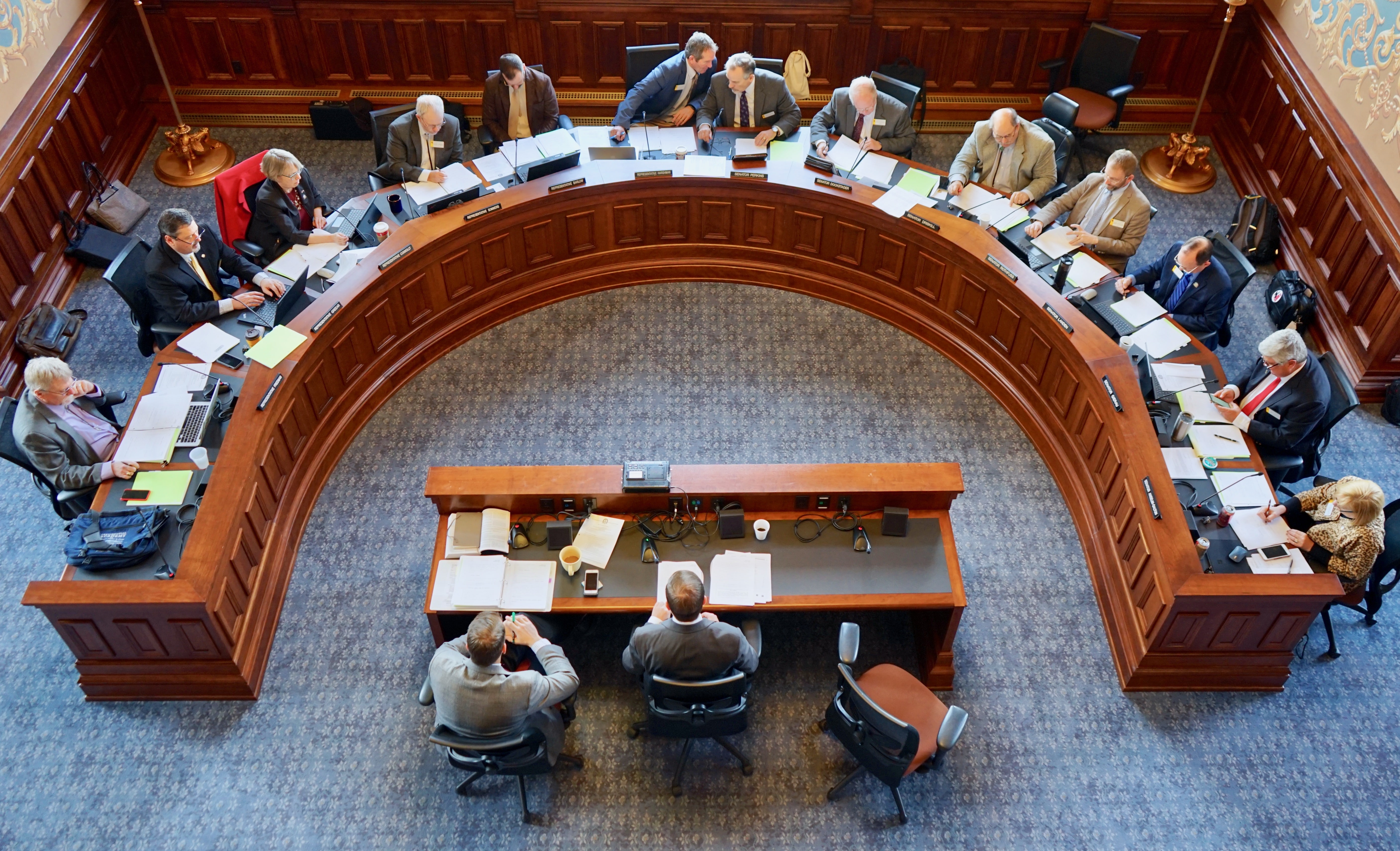

The Wyoming Legislature’s Management Council approved more than 100 topics last week for 19 committees to tackle between now and the 2023 general session. While some interim topics, including Wyoming’s trespassing laws and compensation for state employees, are familiar territory, others, such as tax evasion and maternal health, will be relatively new.
But with an ever-increasing workload, lawmakers and others expressed concern that too many topics can result in weak legislation.
Along with setting legislative priorities, the council discussed the evolving ways the body conducts business. The public as well as some of the legislature’s own members criticized the legislature during the 2022 session for cutting off testimony at committee meetings and prioritizing hot-button bills.
Scope and effectiveness
Before the council tackled issues members considered most urgent for the interim, Rep. Cathy Connolly (D-Laramie) on Friday asked the council to move an item to the very top of its agenda — remote testimony and streaming of meetings.
Balancing public participation was something the council should consider before approving topics, Connolly said, with reasonable expectations for what can be accomplished in the interim. Connolly also warned committees against spreading themselves thin across too many topics.
“Meetings that go to 8 or 9 o’clock at night, to me, are meetings that aren’t very productive,” she said.
Committees are becoming less effective by taking on too much, Rep. Albert Sommers (R-Pinedale) said.
“I don’t necessarily think that the legislation that has come out [of committees] has been as good of quality as it once was,” Sommers said. “I just think that’s because of the number of topics we try to push through committees.”
Sommers recognized that committees want autonomy, but he also said setting limits for interim committees might improve the quality of bills. Limits might also cut down on the number of interim committee days, Sommers said, which have increased substantially.
Numerous committees asked for additional days last interim, according to Rep. Eric Barlow (R-Gillette). That has a workload consequence on both lawmakers and staff as well as a cost component, he said, especially when it forces the body to dip into its discretionary funds.
Despite spending more time and more money, fewer committee bills are finding success. Only 59% of introduced committee bills survived to become law during the 2022 budget session — a 23-year low, according to the Legislative Service Office.
Ultimately, the council chose not to make any significant reductions in committee workload and approved nearly every requested topic. The Joint Revenue Committee was granted the highest number of topics with 10, while the average is closer to five.

Public participation
Remote testimony has also changed the nature of interim work, Sen. Chris Rothfuss (D-Laramie) said. The ability for people across the state to engage without having to drive long distances has been invaluable, he said. Where that could become a problem, Rothfuss said, is when that leads to out-of-state interests hogging the conversation with lengthy powerpoint presentations.
“I’m worried that we’ll find ourselves in a circumstance where we end up having national debates by proxy,” Rothfuss said and added that the council may need to create rules or guidance for giving a priority to testimony from within the state.
The current policy for interim committee meetings does not make such a distinction, but it does give discretion to committee chairs to limit remote participation as they see fit. It also requires members of the public to sign up by 5 p.m. the night before if they want to testify remotely.
Rep. Chuck Gray (R-Casper) brought an amendment to move that deadline to 11:59 p.m. the night before. Gray told the committee he had noticed “an equity issue” with preference being given to “insider-ish folks” over other members of the public. Detractors said that would create more work later into the evening for staff. The amendment failed.
Instead, the council asked LSO to take a few things under advisement. For instance, LSO will look into making a “how to testify guide” readily available to “help inform members of the public on what is expected and how it looks,” as Sen. Tara Nethercott (R-Cheyenne) suggested. Additionally, LSO will look into changing the registration process for remote testimony so that staff does not have to work late.
While LSO considers those things, Connolly asked the council to watch the workload that the legislature puts on its staff, something that has mushroomed in recent years.
The Joint Minerals, Business and Economic Development Committee will kick off the interim in Casper on April 25.
CORRECTION: This story has been updated to correct that the first interim committee meeting will be April 25. —Ed.