

Lawmakers face a heavy workload Monday when the 2022 budget session begins. Along with passing a budget, they must hammer out a redistricting plan and allocate $1 billion in federal stimulus money. It’s not likely to stop there, either, as a slew of bills continues to surface.
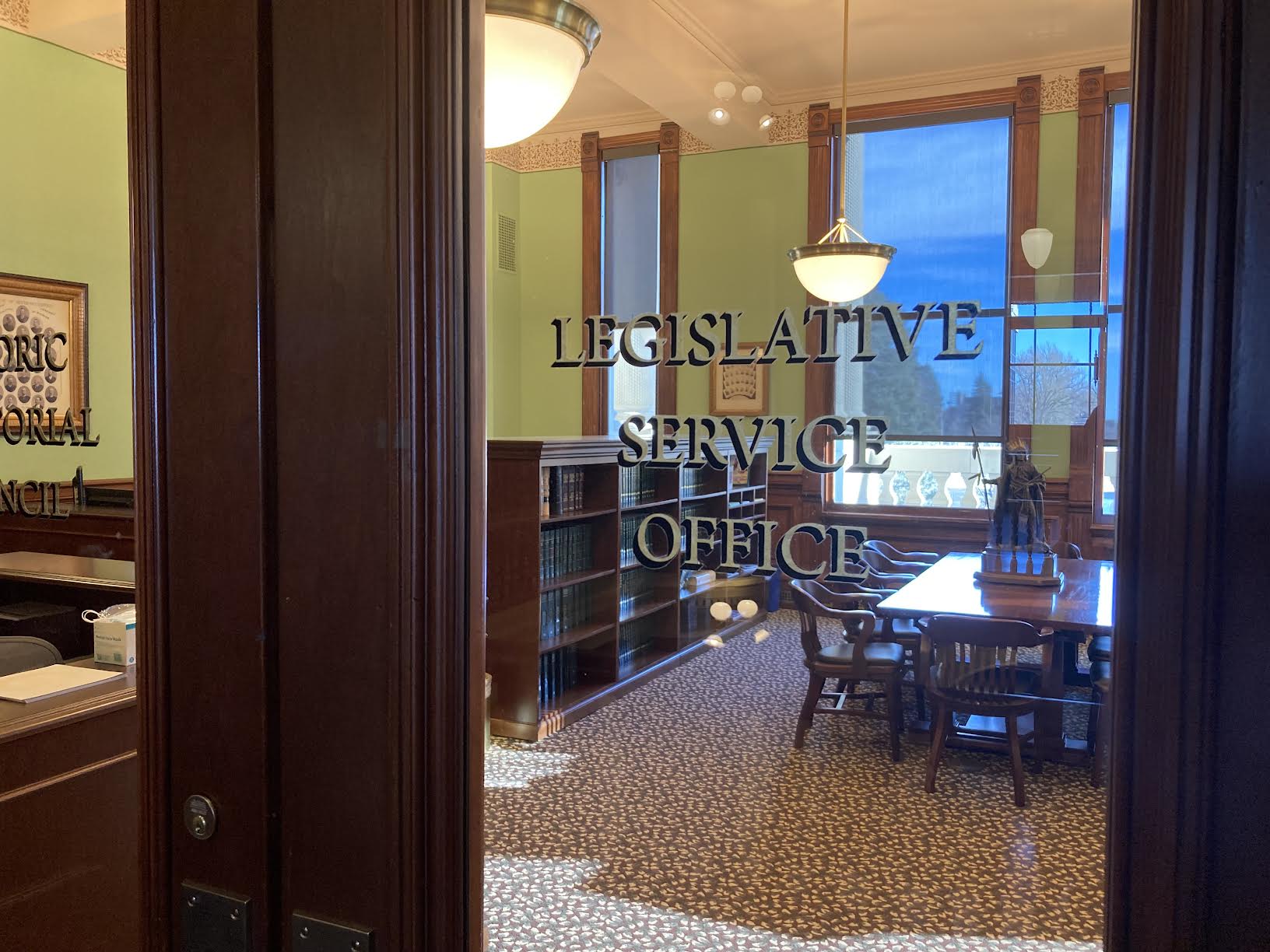
For the staff of the Legislative Service Office — the nonpartisan central office that works quietly behind the scenes to draft bills and answer lawmaker questions, among other things — the demands may be more exacting.
Demands on that office have reached new highs in recent years, leading to concerns about overworked staff and high turnover rates.
“This year might be more challenging than most,” LSO director Matt Obrecht said in a nod to the roughly quarter of the office that has either resigned or retired in the last year.
How a bill becomes a bill
The Legislative Service Office works under the direction of the Management Council. With 41 full-time employees, it is one of the smallest legislative staffs in the country. Many are attorneys or have expertise in economics and information technology. LSO staff are responsible for keeping the body a well-oiled machine, from running Zoom during virtual meetings to forecasting Wyoming’s fiscal picture. Primarily, though, the mission of the LSO is “to help members of the Wyoming Legislature identify and articulate legislative issues, develop information related to those issues and help identify possible solutions,” according to its website.
The work the LSO performs is vital to the legislative body, said Rep. Cathy Connolly (D-Laramie).
“The value is — I can’t even calculate it,” Connolly said of the LSO’s work.
Much of that comes in the form of drafting bills. And that particular part of the LSO’s role has spiked in recent years. That’s especially true for budget sessions. The 2020 session, for example, saw a 23-year high with 599 bill draft requests, according to LSO data. As for general sessions, 2019 was a record high with 721 bill draft requests.
A lot of bill-drafting work happens on the front end of sessions, beginning as early as November when the LSO begins to track overtime hours. Once the session convenes, Obrecht said everyone zeroes in on the task at hand.
“During session, actually, in a lot of ways, it gets easier because it just becomes so all-consuming. You just kind of push most other aspects of your life aside. And it’s hard, especially hard with people with young families,” said Obrecht. Despite that, Obrecht thinks a lot of the LSO staff find it extremely rewarding to work closely with policy makers, he said. An employee survey found that 75% of employees were either satisfied or very satisfied with their job.
As to what has fueled the spike in bill draft requests, Obrecht wasn’t certain.
It is important to distinguish between bill draft requests and what ends up as actual legislation, Sen. Cale Case (R-Lander) said.
“I’m not sure it’s quite as dramatic as folks talk about,” he said, though he “does not dispute the fact that the number of bills has gone up.”
Bills are sometimes filed for political reasons, Case said, and that may be contributing to the overall increase. Ahead of a legislative election, for example, Case said it won’t be unusual to see some lawmakers “posture a little bit when they file stuff at that time.”
“People think we can just ignore federal court rulings and the Federal Constitution and nullify a law,” Case said. “And that’s a big time waster.”
Regardless, Case said the budget and redistricting “will still get done.”
Connolly has another idea of why there’s been such an increase in bills.
“There has been more interest in the legislature and the legislative process,” she said. “And that has translated to legislators making more requests to LSO.”
More bills, more committees, more hours
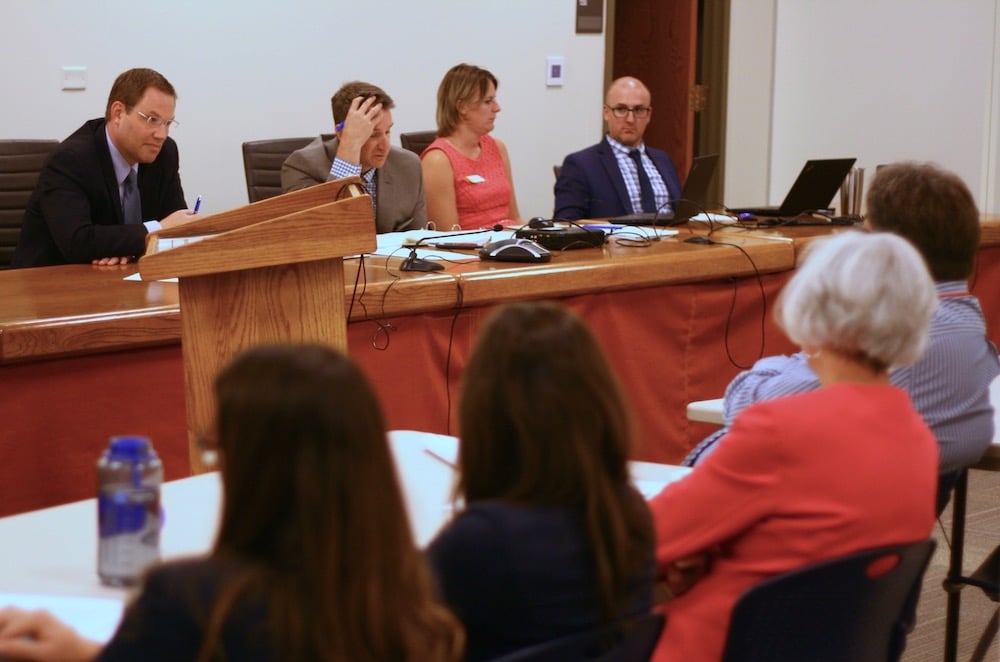
Bill draft requests make up one part of the equation, but Obrecht said it also has to do with an increase in committee meetings both during the session and the interim.
“There’s just simply more committees than there’s ever been. [Lawmakers are] getting themselves involved in more issues,” said Obrecht.
As part of the 2021 interim, the LSO was tasked with completing a recruitment and retention report to “proactively study what employees enjoy about working for the Legislative Service Office and the Wyoming Legislature and to better understand what might cause them to leave.”
The analysis, which looked at staffing data dating back to 2005, found a turnover rate of 23.8% in 2021. That was the highest rate for that time period. It also found low staff experience — which equates to less institutional knowledge — and a striking increase in overtime hours. From the 2015 interim to the 2020 interim, total overtime hours between November to the last day of each legislative session increased almost 79%. But the increase was especially acute for administrative staff — their overtime hours increased 184% between the 2015 interim and 2020 interim.
“I absolutely think they are overworked and underpaid,” Connolly said “And I regularly support efforts to increase the staff as well as compensation.”
The report also identified recommendations including “requesting an across-the-board salary adjustment to better account for the specialized skills necessary to work for the Legislature.” It also recommended setting interim-committee meeting dates earlier and establishing clearer and earlier timelines for requests. A change in pay would be up to the Legislature to decide, while a rule change would be needed in respect to the scheduling recommendation. Neither has yet to happen.
2022
Currently, the number of bill draft requests currently sits at 435, according to the LSO. While an uptick is expected in the first few days of the session, that will drop off after the third day when lawmakers hit a deadline.
“How many will actually be taking up the legislature’s time kind of remains to be seen,” Case said.
As for whether the LSO had begun to dip into overtime, Obrecht said, “you bet we are.”


I sincerely hope you will bring HJ0002 up for voting. It is the only way that this nation can be peaceful restored to what was intended by our founding fathers.
I am a Wyoming native.
I was born and raised in Wyoming and continue to love it.