

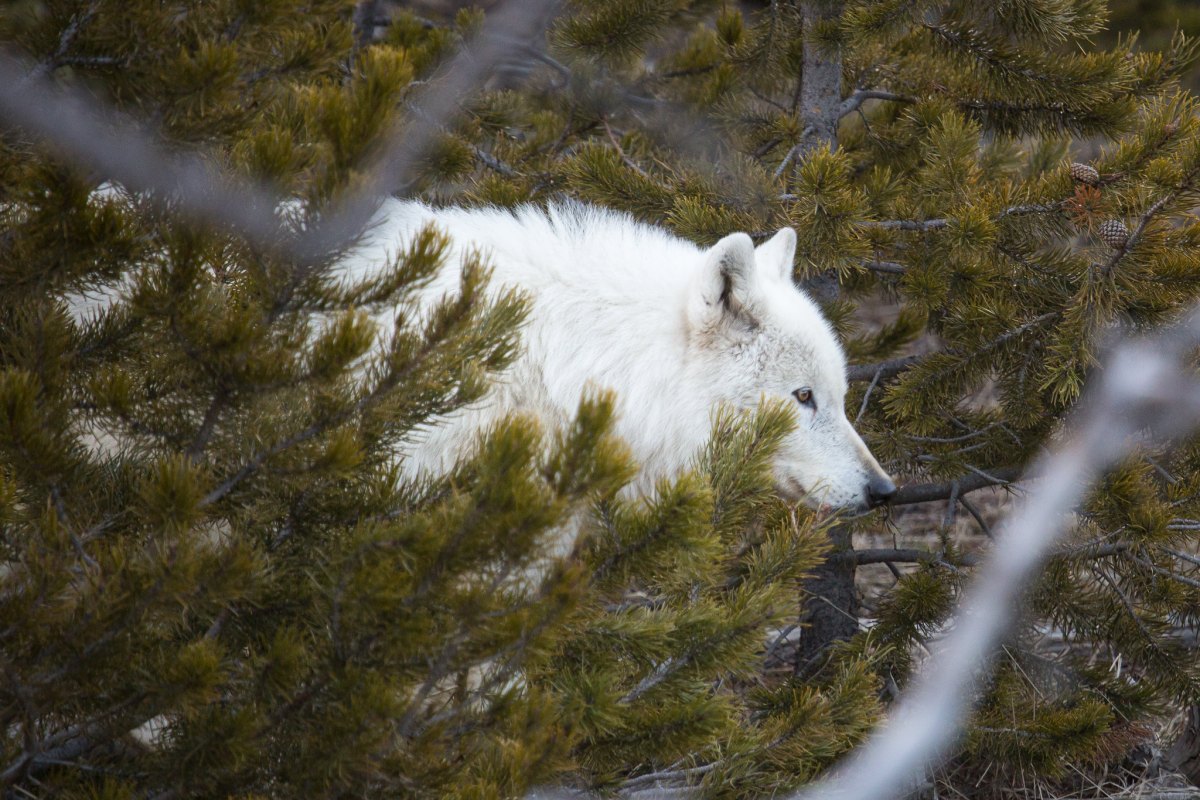
I was feeling raw and deeply angry, last April when I wrote my first opinion piece for WyoFile about the news of wolf abuse in Wyoming. That anger has not faded — especially in light of the recent bill and amendment the Wyoming Legislature passed to largely uphold this horrible manner of killing. But with time, research, and reflection, I’ve realized I made a mistake in how I framed my frustration.
Opinion
In my original article, I stated that “the Wyoming Game and Fish Department’s disgraceful management of numerous wildlife species shows that this incident reflects its values when it comes to ethics, fair chase, and basic respect for wildlife.” This statement was unfair, overly simplistic and, frankly, unhelpful. In a time when public discourse is increasingly polarized, I strongly believe that division, blame and broad-stroke accusations are counterproductive to progress.
While Game and Fish plays an important role in species management, it is only one piece of a much larger system. Legislative decisions, stockgrowers’ associations and hunting interests all hold significant influence over wildlife policy in Wyoming. As one commenter astutely pointed out, the state’s wildlife professionals are “so far below the top of the heap that their opinions don’t matter.” That is a troubling reality. The department’s research, data and expertise should be given greater consideration when wildlife policy decisions are made. But this essay is not about how to structure government — it’s about owning my words and refining the conversation.
I also failed to acknowledge the valuable work Game and Fish does. The agency has invested considerable effort in monitoring wolf populations, resolving conflicts, and providing thorough reporting. The personnel I have interacted with are hardworking, professional and deeply committed to our state’s biodiversity. My words did not reflect that, and for that, I sincerely apologize.
Since writing the op-ed, I have taken more time to study the ongoing wolf management challenges in Wyoming and Colorado, each facing different but significant struggles. I have read in-depth reports from Game and Fish, examined coverage from reputable sources like WyoFile, and carefully considered the thoughtful comments readers shared. I truly appreciate those who engaged with my writing in good faith.
The message I want to leave with now is this: Let’s approach difficult topics with curiosity and respect, even when we passionately disagree. This is something I have learned, and it is what I aspire to do in the future. My original piece felt out of character for me — I am typically a thoughtful person, and I regret that my words have not always reflected that. I hope you accept my apology, and I look forward to continuing this conversation in a way that encourages meaningful debate rather than deepening divides.
That said, there is still urgent work to be done. Wyoming needs collaborative solutions that allow wolves to coexist in regions with livestock operations, improve management practices to reduce depredation and increase acceptance of predators on our landscapes. I believe wolves should not be classified as predators across the majority of the state, and that hunting them should require a license. The way we hunt should be ethical — just like our debates.
This is a difficult conversation, but one worth having. And I remain committed to having it in a way that moves us forward, together.

I applaud your grace and humility, Hannah, and agree that the more we try to listen and learn from all stakeholders, the more likely we can build consensus, and with it a lasting, fair, and sustainable solution.
Like you, I was initially horrified at how cavalierly Wyoming treats its wolves. But you’re right, in that attacking those who don’t see things my way doesn’t help, and actually hinders getting to any real solutions.
Thank you for being willing to soften your stance – and publicly saying so – in the name of keeping the conversation alive.
How lfar can we go “protecting nature” over protecting human food supplies? Like to admit it or not, our food comes from those who work to raise and protect it. What if someone decides grasshoppers are just wonderful, and eliminates any control of them….or mosquitos? Were they created for a purpose, should we protect them beause some like listening to them buzz?
The rights and needs of our food producers should take precedence. It is one thing ot go thru a skimpy elk or deer population in YNP, but to them sic the wolves onto private property to kill what they want is way overboard.
According to Wyoming Game & Fish, of the millions of heads of livestock in Wyoming, only 49 were killed by wolves in a year. Obviously, wolves are having very little effect on the food supply and food producers. Do the math, if you can.
facts don’t matter to the low information folks
Shawn, Elk tags in the GYE have been cut by 75-100% depending on what hunting unit and season.
The wolves have decimated the meat/food supply of thousands of families in Wy/MT/ID, including mine.
ONLY 49 head? So are you saying you could/will pay for one or more of them easily? Are you saying the rancher can just lose the money and be done with it to make you and others with no0 cost to yourselves happy? That’s like saying someone throwing a rock thru your window is making it cooler for you.
What you need to realize is that you are not the only inhabitants of the state. It’s not all about you.
There is no debate, Canis Lupus Occidentalis is in fact an Invasive sub species of wolf that should have never been introduced into the GYE or lower 48.
Releasing those wolves in the GYE was as criminal as releasing Lake Trout into Yellowstone lake.
The ONLY acceptable sub species would have been Nubilus, which what few remained were wiped out by the larger invasive Occidentalis.
There’s no debate because most people know that differences in subspecies is negligible.