


Following years of underperformance and legislative wrangling, the Wyoming Department of Education has proposed a new set of rules for how the state’s public schools teach kindergarten through third-grade students how to read, and is seeking public input on the changes.
Drafted in response to a 2022 change in state law, the rules are intended to raise reading proficiency levels by the end of third grade by improving assessment and intervention practices that identify and support students’ varied needs.
This legislative debate over literacy laws began about five years ago, according to Rep. Landon Brown (R-Cheyenne), who chairs the Joint Education Committee. At that point, the Legislature proposed eliminating reading assessment instruments altogether. This came at the same time that Emily Hanford published reporting on the American reading curriculum’s widespread failure to implement evidence-based instruction methods for early literacy.
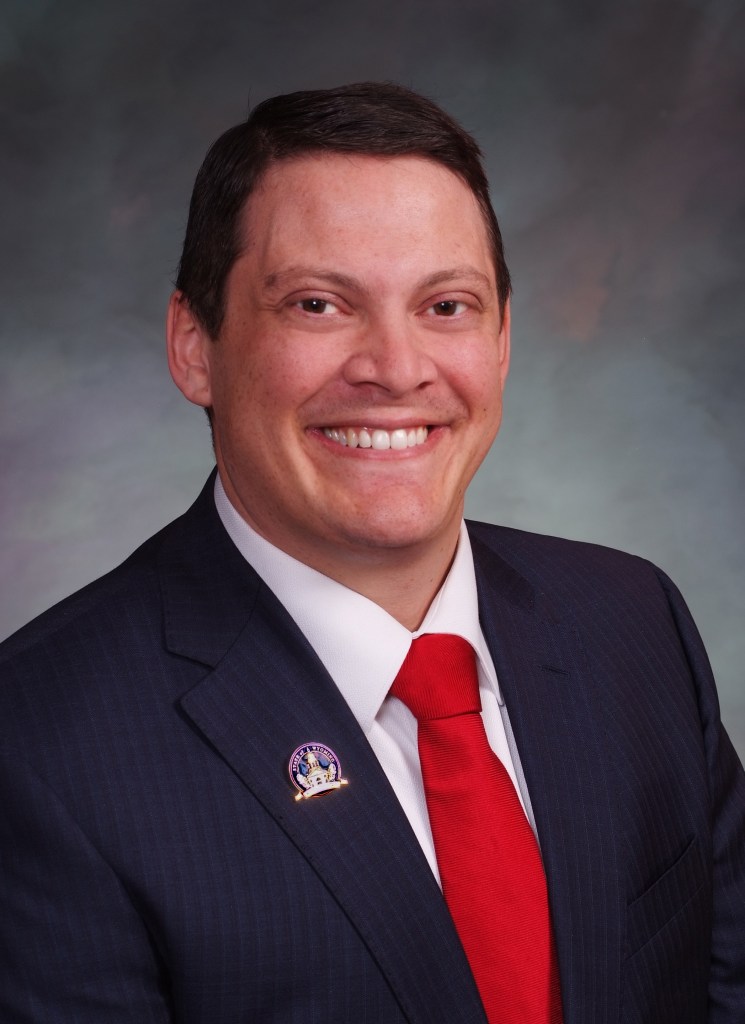
“In Wyoming we really have a K-12 and beyond literacy problem, but the major emphasis should remain in K-3,” said Megan Hesser, parent advocate for Parents of Wyoming Readers and founder of Hesser Literacy Partners, an LLC offering consulting, coaching and private tutoring using evidence-based reading practices. “The research out there shows that if you are not reading on grade level by the end of third grade, without some massive interventions, you will always be behind grade level, it doesn’t change. It’s the reason that the [National Assessment of Educational Progress] scores don’t change.”
The most recent NAEP tests reveal that not even 40% of Wyoming’s fourth graders met or exceeded grade-level proficiency scores in 2022. These students face a significant risk of lifelong reading difficulties.
Instead of abolishing standing reading assessments, concerned constituents — mostly parents of struggling readers — began fighting to fortify K-3 literacy laws in the state.
The Chapter 56 Rules up for comment are a result of their years-long efforts.
The Department of Education drafted the rules with input from a committee of stakeholders the agency selected to represent a composite of the state’s districts as well as a range of formal training and in-classroom experience.
“We wanted a full range, so we have all the way from superintendents to curriculum directors to reading interventionists,” WDE Chief Education Officer Shelly Hammel said. “Every single one of the individuals that participated in our stakeholder committee had been classroom teachers first and then moved into other roles.”
The group also included those with special education and English-as-a-second-language backgrounds.
The department will accept input online or via email through July 31. Interested parties can also weigh in via virtual comment forums July 27 from 5:30-7 p.m., or July 28, from 11 a.m.-12:30 p.m.
Literacy bedrock
Hesser became a leading advocate for better literacy legislation after her son fell behind in the classroom. For more than two years he struggled with undiagnosed dyslexia, dysgraphia, avoidance behavior and anxiety related to learning to read, she told the Joint Education Committee at its last meeting.
The problem, she said, is much larger than test scores.
“It’s time that the education committee considers that there’s a link between K-3 literacy and mental health,” Hesser said. “Reading is the root of a lot of these pieces that seem unrelated.”

If you can’t read, she continued, “how are you going to fill out a job application? Or resume? And if you can’t do that, then how are you going to take care of yourself or your family? At some point, something’s got to give.”
Though Hesser responded to her family’s experience by earning a master’s degree in reading science, she said that parents and teachers were largely left out of the rules drafting process. She hopes they now participate in the reviewing process.
“There’s so many families and teachers that don’t know what they don’t know,” Hesser said.
Committee co-chair Brown also said he would like to see the review process build a broader consensus base.
“I hope the parents that had been left behind [and] the parents that have had good processes in this system comment on this,” he said. “I hope that we have legislators that take note of this and understand exactly how important this is.”
Rules roundup
The proposed rules regulate five key aspects of reading instruction:
- Screening: Establishes a list of approved screening instruments that districts can use to catch reading difficulties, defines the criteria that alternate screeners must meet and mandates that such assessments be administered three times per year. This section also provides for regulations interpretation and needs-based decision making processes.
- Evidence-based intervention and curriculum: Orders content standards for evidence-based core curriculum and establishes standards for remediation practices in the case of intervention.
- Individual reading plan and parental notification: Defines the process by which identified reading difficulties result in individual reading plans for students, and how both will be reported promptly to parents or guardians.
- Professional development: Defines the content and quantity of professional development districts will require of K-3 educators in evidence-based literacy instruction and the identification of reading difficulties.
- Reporting requirements and documentation: Establishes that all districts will record district literacy plans, individual learning plans and professional development practices; and will report to the WDE screener data, individual schools’ progress towards the goal of 85% of students reading on grade level and other documentation upon request.
Looking forward
Hesser’s biggest concern going forward is implementation, she said.
“I know there are pockets across the state that are a little bit resistant to what’s been happening, as far as these changes to the legislation have gone over the last handful of years,” she said. “So that’s always going to be my biggest concern,” she said.
Brown notes these rules are a first attempt.
“We also need to make sure that we’re nimble enough that if this does not work, we need to be able to change our statute and change our rules package in a hurry to make sure that we’re identifying what’s wrong with our statute, what’s wrong with our rules to make sure that school districts and schools themselves are able to adapt as they need to,” Brown said.
CLARIFICATION: This story has been updated to more accurately interpret Wyoming NAEP scores. -ED.


Mr. Davis. You need to check out how many different languages are spoken by kids in Wyoming school districts. It would shock you. Greeley Colo has at least 15 languages. This Sir is huge issue all over the USA. So those kids are put behind the 8 ball first day in school. Parents of all colors are behind the economic 8 ball as well. Both work and don’t have time to spend with kids to teach them. Also Mr. Davis I am sure using electronic games to baby sit kids is playing into this as well. USA school system as whole is rated very poor. But is that all of Socialisms plan for USA Mr. Davis? Tell us your plan to solve this issue. Please tell us Mr. Davis. We wait patiently. I as taxpayer am getting tired of hearing poor results out of schools. The let’s throw more money at problem is failing.
I am the single mother of two and have been since my youngest was in kindergarten. My oldest was on an IEP beginning in preschool and ending in 3rd grade. Both ended up in the gifted program. My oldest is now in college and scheduled to graduate in 2024. My youngest just graduated from high school as a Presidential Scholar and a recipient of the Sousa Award. While I would love to pat myself on the back and claim that my children’s success is due to my brilliant parenting, I would be wrong to do so.
The fact is that my children came ‘pre-loaded’ with their academic abilities (or disabilities). I am in the field of special education, and while attending a conference on phonological awareness, the presenter made the following analogy. Please be aware that this analogy is exaggerated to make a point, so take with a grain of salt. He said, “Ten percent of children will learn to read even if they have spent their childhood locked in a closet, and ten percent of our children will never learn to read no matter how many hours of instruction or intervention they receive. The other 80 percent are spread out along this continuum and will need various intensities, modalities and levels of instruction.”
As a speech-language pathologist I know this to be true. Some children struggle because they lack phonological awareness. Some children struggle because their visual perception scrambles print. Some children struggle because they have ADHD and may process only half of the instruction because they cannot focus on the whole. Some children struggle because their IQ is such that academic learning is just hard and slower than those of us lucky enough to be functioning within the ‘normal’ range.
There is a plethora of research, with proven results, which show how children best learn reading. It is a multi-modal experience. But no one curriculum will ever catch every student. Schools must have layers of instruction. The curriculum chosen should be evidence based and have independent measures of results. This curriculum should address the whole student body. Then there are those who need something on top of the regular curriculum; this too should be a program which addresses those who are ‘behind’. It again should be evidence based and have independent results. Then there are those children who will need even more instruction and those are the kiddos on IEPs. These kids will need varied, multimodal, multilevel, and individual instruction–no one program will help them all.
I applaud the Education Committee for doing a deep dive on this topic, but I caution against thinking that a mandated curriculum will be a panacea for all.
I also wish to respond to the idea forwarded in the comments that children of single parent households and immigrants are the problem. To claim this is foolish and insulting. It is akin to stating that a child is outside of the normal range in height because he or she is being raised by a single parent, or that the reason the child has a dairy allergy is because their parents come from a different county, or that the reason Albert Einstein was intellectually superior is because he was American–oh wait–that’s right–he wasn’t. He was German and Jewish and had a learning disability, but his immigration to our country was a gift. And, yeah, he could read–in multiple languages.
Jeanne Raney I agree with you on this matter I have a daughter that is going into 3rd grade she was diagnosed with autism in 1st grade and she is on an extensive iep she struggles with everything from reading,writing,speech, the list goes on I’m greatful for the program she is in and I feel if they try to do a mandated curriculum kids like my daughter and children of all disabilities will struggle and fail!!! They need to think about all children and there well being to succeed.
Jeanne, no one is mandating a curriculum. They have narrowed the reading screeners required to be given to all K-3 students to identify those struggling. Some schools were not using evidence based programs and still using F&P as their screener. The joint education committee wants to see how districts are doing with early literacy in an apples to apples comparison, not F&P levels (which is unreliable anyway) to DIBELS benchmarks. The rules are functioning to get districts on the same page as far as evidence based goes but not forcing the same curriculum. It’s also about getting teachers training to understand the shifts that do need to happen. Just because you can give a screener doesn’t mean anyone taught what to do with the data.
Do we start reading too early in the USA? My children are dyslexic & struggled with reading until the end of third grade. How have they succeeded in life? My son has a Ph.D. in cellular & molecular biology & continued to Medical School with a residency in family practice. My daughter has a Master’s Degree in International Education.
In Sweeden & Norway, there’s little formal learning, and play is paramount. Most of the children who leave preschool at the age of six can’t read or write. Yet within three years of starting formal schooling at seven, Swedish children lead the literacy tables in Europe.
Just a thought. Sometimes a different way is a better way. Why are we frustrating our children with so much pressure?
While it wouldn’t hurt us to pull back a bit, we are on a workable track for reading if teachers are trained how our language works. It’s hard to compare us to Sweden or Norway because their languages are much more transparent than English. They have a much more direct correlation from sound to symbol than we do with our 26 letters but 44 sounds possible. Writing is where we really push too soon here.
When did schools stop teaching phonics? I am a retired college professor and have seen how the lack of reading skills affected college students. I think the method that Hesser developed using pictures and sounding out the sounds of a combination of letters (I read about her on Cowboy State Daily first) is an excellent way to teach young children.
Hi Kayne, I think you may have read about someone else. I’d actually never suggest the use of pictures except in very specific situations like English Language Learners who need vocabulary help. Pictures were part of what took over for phonics in the 70’s and 80’s that have put us in this hole of poor reading. I really just advocate for multi-modal teaching of structured literacy and use Orton-Gillingham in my own tutoring.
Interesting reporting on something as essential as teaching reading skills and no mention of Superintendent of Public Instruction, Degenfelder. Is she unreachable, or too busy, out promoting the right wing agenda of Moms for Liberty?
Lia, incredible read. Your efforts to educate the masses have not gone unnoticed!
Thank you, Lia Salvatierra and WyoFile for this excellent piece and for covering an important topic.
For anyone interested, the Emily Hanford reporting (see link) is helpful (and fascinating!) in understanding what went wrong in reading education across the U.S. — the nexus between bad / unscientific ideas, bad / unscientific practices, and the profiteering sales of these bad curriculum and textbooks to school districts. We experienced this first-hand with my daughter in Wyoming elementary school.
The new Wyoming rules on reading instruction have really addressed this head-on: they require that phonemic awareness, phonics and decoding are used (Section 3(c)).
30 years teaching early childhood readers here—and I am firmly convinced that ‘one size fits all’ reading dogma doesn’t work! A multifaceted approach works so much better. A combination of phonics, whole word, auditory, visual and tactile learning, dependent on how an individual child learns is more effective. Individualized learning plans are vital in learning instruction.
I was taught phonetically to read. My husband was taught “look see”. To this day, he struggles with pronouncing words that I can easily pronounce.
I laud these efforts by the WDE and Ms. Hesser. Having spent 36 years in the classroom as a secondary social studies teacher I fully appreciate and understand that the reading “gap” plays in students being overwhelmed, frustrated, and mentally depressed as they move from elementary school into the secondary grades. I saw in students in my classes and experienced it with our oldest daughter. What frustrates me here is that there is a factor, “an elephant” in the room, especially legislators and the WDE, folks CHOOSE to ignore. “That Elephant” is the role and importance Early Childhood Education (ECE) plays in not only developing reading skills early, but also permits early intervention. ECE is an equity issue: For one a quality ECE opportunity for children is expensive, hence parents must dig deep to pay for this service. Those children who are fortunate enough to experience ECE enter kindergarten at least two years ahead of those who haven’t the chance to experience in education (Hesser is correct with the anecdotal data that third grade reading ability is a determinant of educational and personal success later on. Data illuminates that is the resources are spent up front capital resources will be saved on the back end.). In short, family income is too often the determining factor in child readiness for school. Secondly, I was a member of the Wyoming State Board of Education from 2014-2021and I was an advocate that the WDE and the state as a whole move towards “Universal, Voluntary Early Childhood Education” from the start of my term. I saw what the opportunity of ECE afforded our grandchildren, and wanted the same opportunities for all Wyoming children. My advocacy for ECE enabled me to sit on a national committee on ECE. The work on that committee explored the salaries of ECE educators (they are certified professionals but generally paid lower than fast food workers); which states have moved to make ECE a part of their public education package; and what the data tells us of the economic boon publicly funded private ECE providers (in which the local school district partners with the private provider) yield for the communities and families. And finally, the hard lesson learned by me was that ECE in Wyoming is fragmented and struggling between agency territorial turf wars – these wars ended up leaving millions of federal dollars on the table. With Covid the crisis worsened with many ECE providers closing shop due to lack of funds/customers – these turf wars were started and pushed by one department and its top leadership. Additional fragmentation has come from a minority of religious and very conservative groups who contend that ECE is yet another interference into the family and its role in child rearing. I truly wish someone from WyoFile would do an investigative report on the disaster of ECE in Wyoming.
All fairness is this because so many migrants kids are coming into school system? They have to learn new language so it natural to struggle. All on our dime. Then a high percentage of kids will come from single parent family. So they behind 8 ball as well
Your bigotry, as usual, is ridiculous and unfounded.
It’s not just the brown skinned kids who are struggling with reading. It’s white kids as well.
When I taught in a one room school house my students had reading 3 tines a day. One session was Reading Mastery, second session was sight words and third session was the district reading program. I invested heavily in AR and kids were well rewarded for reading a book at home every night and earning candy and prizes for their efforts.
Reading ia so important. As a former resident of Wyoming, near Meeteetse, I feel as does the writer that changes must be made. Reading is enjoyable as well as important. I love to read and am thankful that I had a good education-growing up in Evanston, Il. Please follow up on Wyoming reading as well as American overall reading skills.. Courtney Depue