

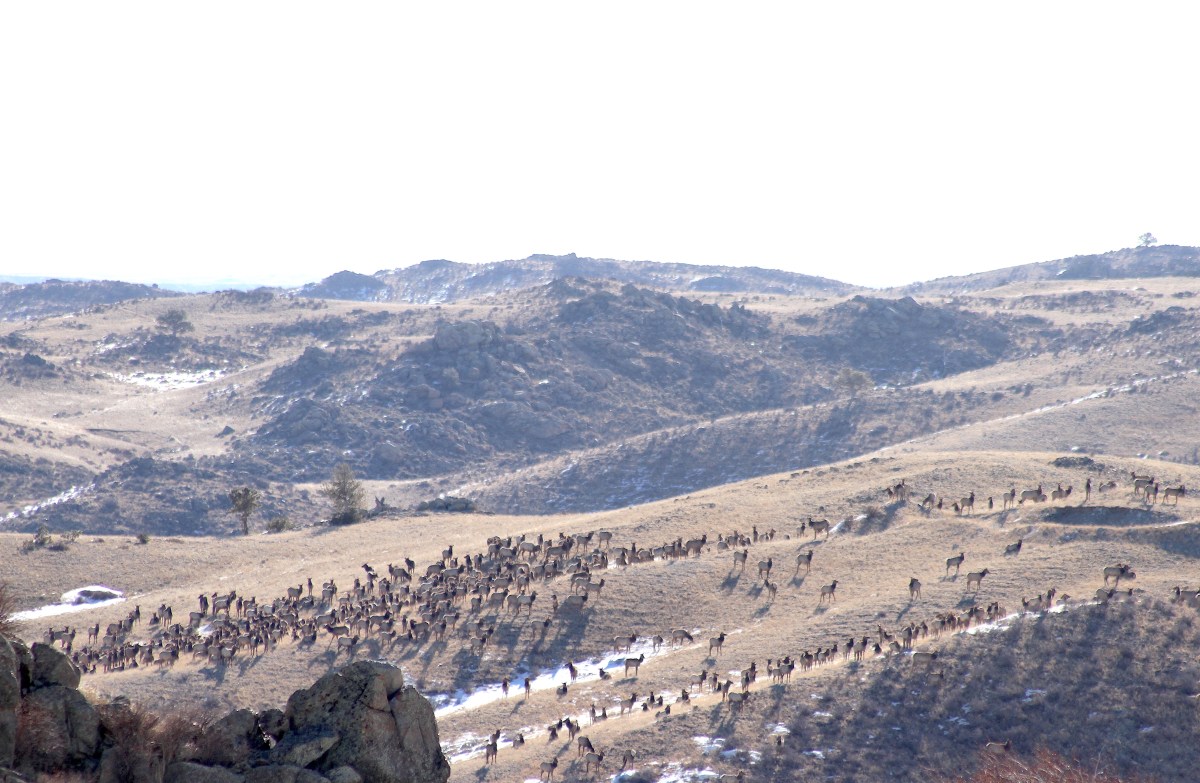
There’s been virtually no interest in a new state program to provide financial relief to stockgrowers whose rangelands are grazed by overpopulated elk herds, according to Wyoming wildlife officials.
The payment program’s slow uptake took some members of the Wyoming Game and Fish Commission by surprise at a Tuesday meeting in Lander.
“I guess I’m shocked,” Ken Roberts said.
The Game and Fish commissioner from Kemmerer noted the “urgency” portrayed by “a lot of folks” who were “adamant that this had to be done.” Most of the pressure for the compensation came from landowners who’ve struggled to run cattle amid overpopulated elk herds in central and eastern Wyoming.

Game and Fish’s deputy chief of wildlife, Craig Smith, led the conversation and was quick to note that zero claims were filed in the first year of the new policy. Some landowners had inquired about how it works, he said.
Adjustments to Game and Fish’s compensation for “extraordinary damage to rangelands” trace back to summer 2023, when there was a tense Wyoming legislative meeting about elk damage. The following legislative session, the Agriculture Committee brought an unsuccessful but controversial bill that would have mandated compensation rates for grass on dry rangeland lost to elk inside overpopulated big game herd units. Then in fall 2024, the Wyoming Game and Fish Commission voluntarily updated its compensation regulations in an effort to placate ranchers and keep lawmakers at bay.
The compensation plan is specific to non-cultivated livestock rangeland, and there are several requirements:
- Landowners can receive “extraordinary damage to grass” funds when a big game herd is overpopulated by 20% or more for three or more consecutive years and the species is consuming 15% or more of the estimated forage on private ground. (Payments are still possible when herds are not overpopulated if more than 30% of the forage is being consumed.)
- Landowners must also allow a “sufficient number of hunters” on the property. That means the necessary number of hunters to offset the “recruitment,” or the number of animals born into the population that survived one year.
When the new rules were being vetted with the public, they proved widely unpopular with sportspeople — 46 of the 48 public comments on the draft regulation that stated a position opposed the new payment program. The unpopularity stemmed partly from worries that the damage claims could exacerbate an emerging Game and Fish budget crunch.
“It was supposed to be a substantial amount,” Roberts told WyoFile.
Although perplexing, the lack of interest is also a relief, he said: “I’m glad to hear it.”

Wyoming Stock Growers Association lobbyist Jim Magagna, who was a major proponent of the legislation and Game and Fish policy change, shared the view.
“I’m certainly glad it didn’t result in a flood of demands for compensation that would overwhelm the available funds,” he said.
Magagna partly attributed the absence of claims to unfamiliarity with the new funding stream.
“Landowners are not yet fully aware of that opportunity,” Magagna told WyoFile. “As an organization, we try to keep people aware of things, but we certainly didn’t put anything out encouraging people to apply for damages— it’s an individual decision.”
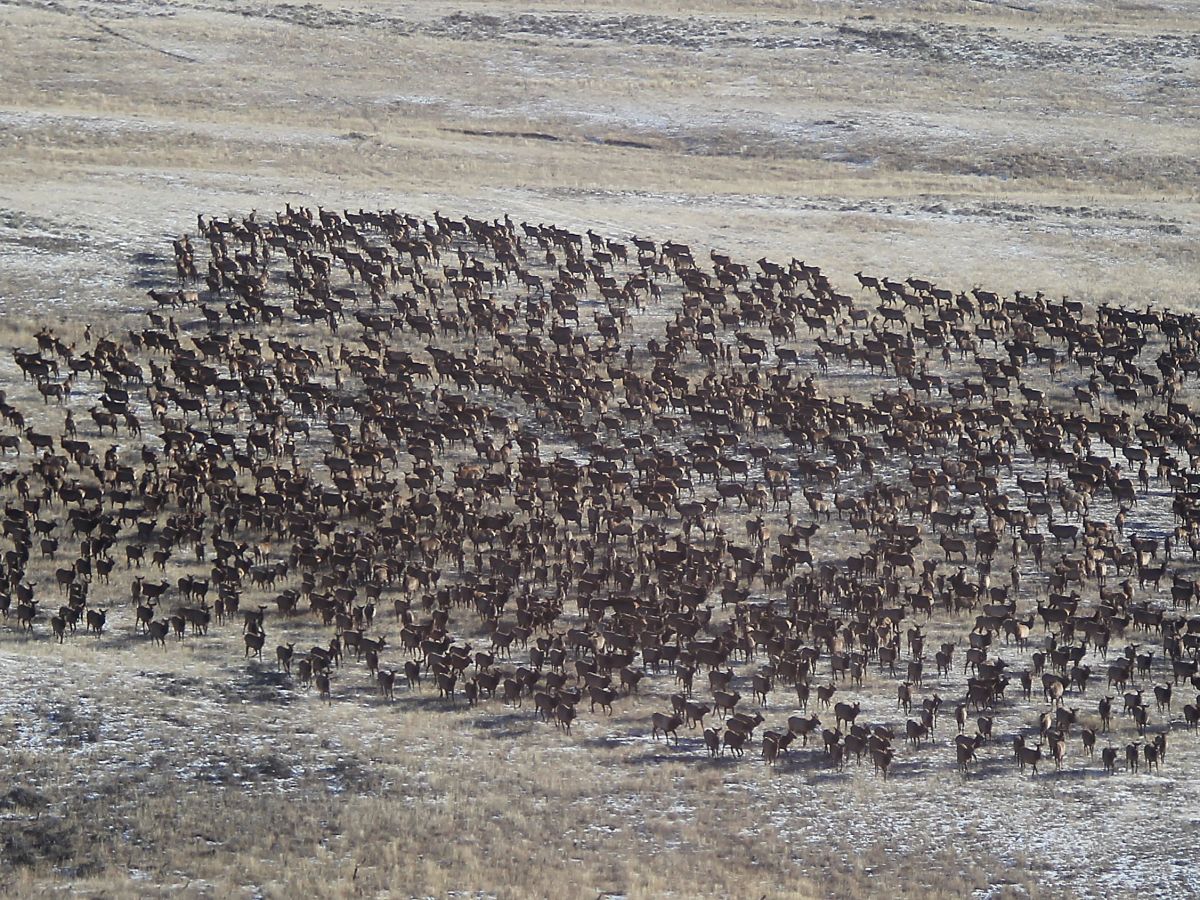
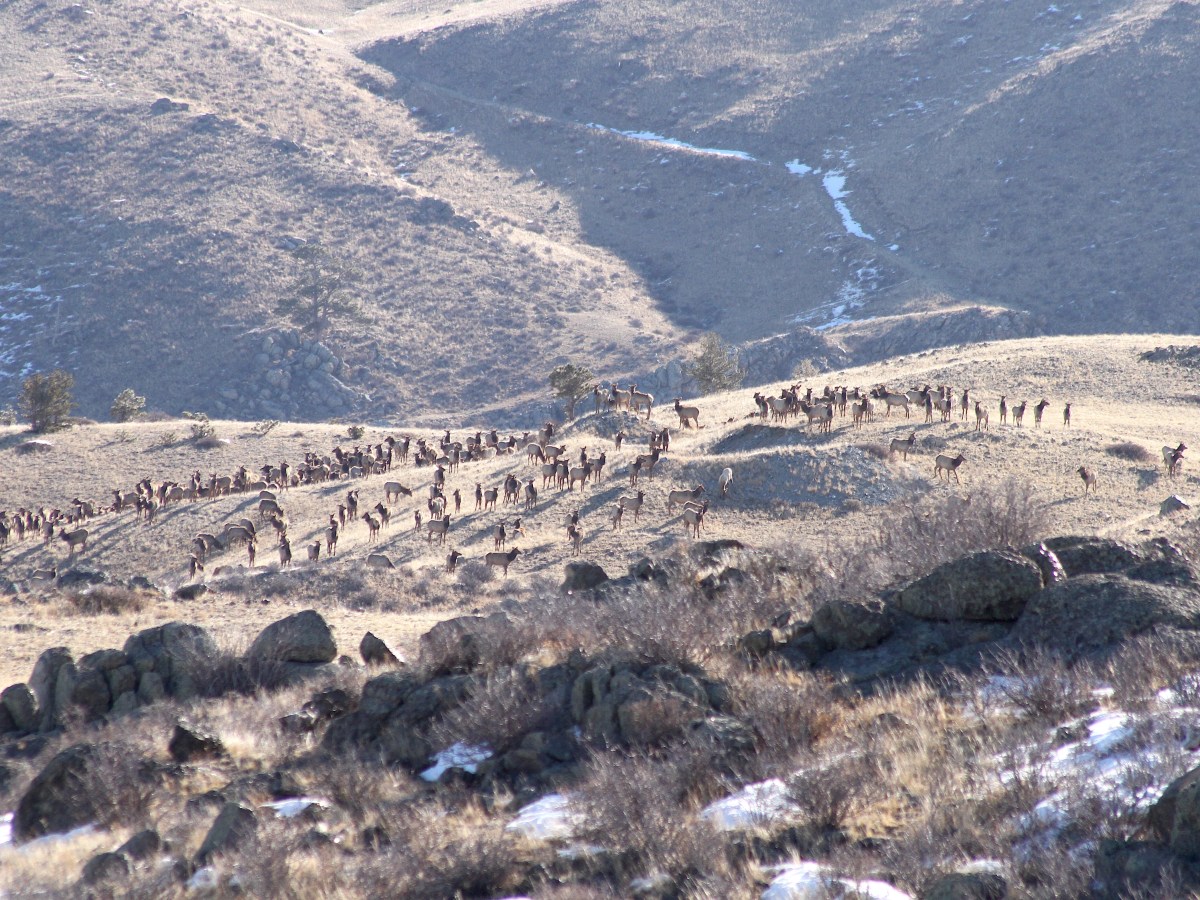
Wyoming Game and Fish, he added, has also come through in helping frustrated ranchers address overpopulated elk herds via other efforts.
“The Game and Fish have been responsive with granting licenses to landowners, and they’re even bringing in professional hunters to remove elk,” Magagna said. “If the wildlife populations can be appropriately managed and the claims go away, that’s better for everyone.”

I don’t know why ranchers would be subsidized for damage wildlife does. I know if I hit a deer with my truck. The Game and Fish does not pay me for that I pay for it or my insurance does these handouts to ranchers is ridiculous and needs to end.
So Wyoming will pay landowners for elk eaten grass and they pay to kill wolves and they comp ranchers if they say it’s a wolf kill. That’s a lot of payouts. Are these the same elk that the wolves have killed off so humans can’t kill them? Wolves eat elk for free, problem solved.
Amazing, Wyoming pays landowners because elk are eating their grass yet we can’t hunt the elk? ridiculous
Ranchers and other people complain about wild horses and donkeys. But yet it’s okay for all these elk to take the grass. And they’re not shipped to Mexico or Canada for slaughter. If there’s too many of them then up the amount that you can shoot during the season. And give the extra meat to people that are in need of food.
elk are native, horses and donkeys are not therefore they have precedence in my opinion. The problem is private land, we cannot hunt the elk on this land.
I know quite a few veterans including myself in montana who would love to come to your ranch and help cull the elkherd
Are we seeing a heretofore unknown pandemic that affects only ranchers ? I have never known a Wyoming stockgrower to turn down a generous subsidy or the easy compensation money . We should have some trusted veterinarians check in on the ranchers while they’re preg testing their heifers this fall in the current sky-high beef market. Something ain’t right with them. Turning down free one-way gubbamint money is totally out of sorts for stockgrowers .
Just curious if there is a way for hunters to get access to these overpopulated areas and hunt them. Professional hunters are not necessary. Just get the hunters out there to thin the herds.
Back in the seventy years the Deparment Of Interior slaughtered thousands of Elk around Jackson Hole Wyoming. The Game & Fish advocated open it up for hunters and also furnish some meats to the poor and needy people . The Feds said no thank you just shoot them and let them lay and their executive few and Rangers had a hayday at the range so to speak. Now sense its the Ranchers loosing out why not let them market the Elk meat and or give them the encentive to paid hunters to think the numbers. Don’t ask the Feds to handle it they will just say put more Wolves on the ground or get in some target practices. Cowboy Up Wyoming .
Glad to see every comment states the obvious…. multimillionaire ranchers aren’t going to allow hunting unless some serious money changes hands. What a joke that this article doesn’t state the same.
Private property owners should let hunters fill their tags , it would be a
” Win – win ” for both , other wise don’t complain “
Don’t worry, the El Presidente’ of the subsidy pocketers, Mr. Maganga will rally his welfare troops so G & F better get those checks printed
Of all the classified pages I have read, I have not once seen an ad for free access to hunt on someone’s ranch. Plenty of overpriced outfitters with beneficial arrangements with ranchers, but no “hey come hunt here”.
That is why the applications for this compensation is low.
Paid Professional hunters? We are footing that bill? Good grief post an add, I’ll come and take one, and for free. I will even buy my tag. Talk about mismanagement.
I think many large landowners, who have more zeros in their net worth than the entire Game and Fish budget, don’t like the idea of letting your average hunter on their property in large enough numbers to help reduce elk herds.
It seems more likely that landowners aren’t taking advantage of the new program because they don’t want hunters on their land, even though giving hunters access is the most rational and practical means of reducing elk populations on private land. Why is that? Because they want something for nothing. That is, even though it is their responsibility to deal with excess elk on their lands–this is after all a fence out state–they want to put the responsibility and the cost on G&F and its budget to deal with the problem at no cost to the landowners. That’s how it’s always been.
Introducing wolves would help, but that’s not going to happen.
That is correct
Claims will start rolling in. Welfare ranchers have never met a subsidy they didn’t like.
They kill all the Wolves who naturally keep the elk under control so they can sell hunting licenses to people to kill the elk. Can’t make any money if the wolves regulate them….
Human beings can’t feed their families the way the al says have when wolves take elk numbers to unhuntable levels.
Nonsense.
I believe that if you would check the information that Game n Fish supplies, you would see that over populated areas are all within the predator zone. It’s not wolves, move along, it’s people. Too many deep pocket ranchers tying up private property for outfitter hunting only. Im pretty sure that the thousands a rancher receives for trespass fees or hunting leases far out weighs any lost grass. Too many hunters that are trophy hunters, n not subsistence hunting. I have no sympathy for Ranchers that think we should pay them for grass foraging when they only pay $1.35 per AUM to graze federal land. Agriculture is one of the most heavily subsidized industries in the US. It doesn’t help that a lot of our “citizen” legislature is made up of Ranchers.
“The way they always have”