


When journalist Kurt Repanshek quit his Associated Press job in Wyoming in the ‘90s to freelance, he hoped to align his reporting with his environmental and public lands interests.
He wrote wildlife pieces and national park guides. In August 2005, he launched a blog as a platform for his work. He soon found that readers were hungry for any bits of news on parks like Grand Teton, Acadia or the Great Smoky Mountains.
“I think the first week I had over 400 readers, which I thought was amazing because I hadn’t told anybody about it,” Repanshek said, “and it kept growing and growing and growing.”
Two decades later, Repanshek’s National Parks Traveler had established itself as a one-stop destination for all things national parks — from enterprise pieces about climate change and invasive species to tidbits on Yellowstone bison gorings and watchdog journalism about staff morale under Trump administration cuts. The Traveler, which became a nonprofit in 2016, touted a global audience of more than 4 million readers and listeners in 2025. As the Traveler’s sole full-time employee, Repanshek wore many hats — reporter, editor, board meeting facilitator, podcast host, freelance content wrangler and flag-waving executive director.
“In so many ways, I think what Kurt was doing was a calling and a vocation, more than a job,” said Katie Nyberg, executive director of National Parks Friends Alliance, who was a faithful reader. “I don’t know where he found the energy.”
When he turned the Traveler into a nonprofit, Repanshek said, he thought a board and mission would be beneficial. “I also figured that the readers would jump on board and shower me with donations to keep it running, which never happened.”
Despite its impressive audience reach, vast archive and plaudits for public lands reporting, the publication never employed a full-time development person, which Repanshek said was its downfall. Funding sources including grants and private donations weren’t enough.
“I like to say that the Traveler was a journalistic success, but a financial failure,” he told WyoFile from his home in Park City, Utah, where he has spent recent weeks wrapping up his publication and adjusting to retirement.
When he started considering hanging up his hat, Repanshek, who will turn 70 in November, said he hoped to hand the Traveler off to another entity willing to take it into the future. Efforts to secure that were fruitless, however. The site halted publication at the end of June.

The Traveler’s demise creates a void for people like Nyberg who strive to be up to speed on parks and public lands.
“There was no better publication for me to basically have my thumb on the pulse of what was going on nationally,” she said. “It was a go-to resource for me, and still is.”
While other publications do spill ink about national parks, she said, the Traveler is the only one she knows that was entirely devoted to their sustained coverage.
Talks of a new operator aren’t entirely closed, Repanshek said. And with pressures from the Trump administration to cut park service staff, remove exhibits and shrink national monuments, he added, it’s an especially critical time for journalists to hold leadership accountable and inform the public about government actions affecting public lands.
The current state of the National Park Service is “a mess,” he said. “It’s a tragic derailment of the park service mission, the park service role, and I don’t know how long it’s going to take to recover.”
Repanshek sat down with WyoFile to talk about the value of American parks, the unique place the Traveler occupied in the mediascape and what’s at stake for America’s “best idea.”
A critical chapter
A common misconception was that as editor of National Parks Traveler, Repanshek was often on the move to locales like Montana’s Glacier National Park or the Florida Everglades.
Ironically, he wasn’t a big traveler. “Most of my stuff is over the phone, over Zoom, press releases, that kind of thing,” he said. “Just because, we never had a big budget to do a lot of travel.”
That said, a few field reporting trips stood out over the years. Repanshek went underground at Wind Cave National Park in South Dakota, snorkeled in Florida’s Biscayne National Park and toured ancient sites in Mesa Verde National Park that aren’t open to the public.
People always ask him how many parks he’s been to. But for Repanshek, “it’s not about how many parks you’ve been to.” It’s more about the quality of the experience.
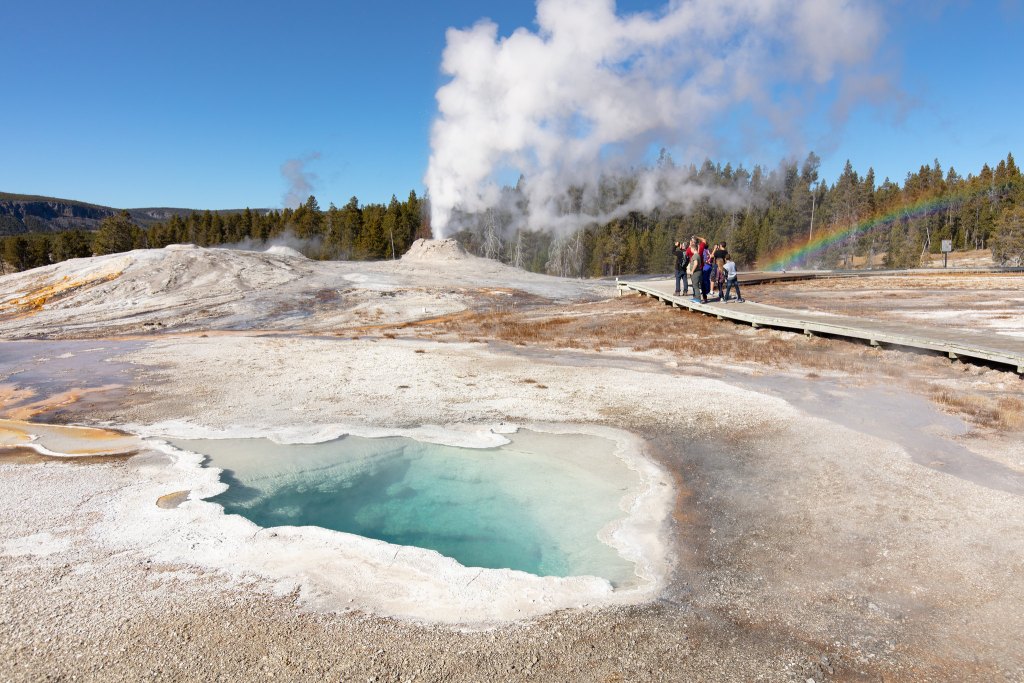
If properly appreciated, National parks, he said, “are so important in helping people reconnect with themselves, with forgetting about checking their email, checking their texts.”
And that’s only the beginning of their value.
“I think they’re incredibly important for all the roles they serve, from preserving history and protecting history and interpreting history to preserving these incredible landscapes and these vistas,” he said. “And they play such vital roles for the environment, clean water and clean air, biodiversity.”
The role of the Traveler, he said, was to inform the public not only of the stories within the many and varied parks, but also how Congress and the park service have managed them. As a watchdog, the Traveler has always taken a hard look at the way the government stewards the lands, Repanshek said, and as a result has ruffled feathers in various administrations.
The level of upheaval and uncertainty that has defined the most recent chapter, he said, is unprecedented. Along with park-service-specific tumult, attempts to roll back or alter federal regulations like the Roadless Act, Endangered Species Act and NEPA “all have ramifications for the national parks,” Repanshek said.
With high burnout and low morale, he believes the park service is in danger of lasting. And because the agency has drastically scaled back communications, trying to report on it is very frustrating. It got so bad that Traveler reporters couldn’t even secure interviews on stories of park service successes, he said.
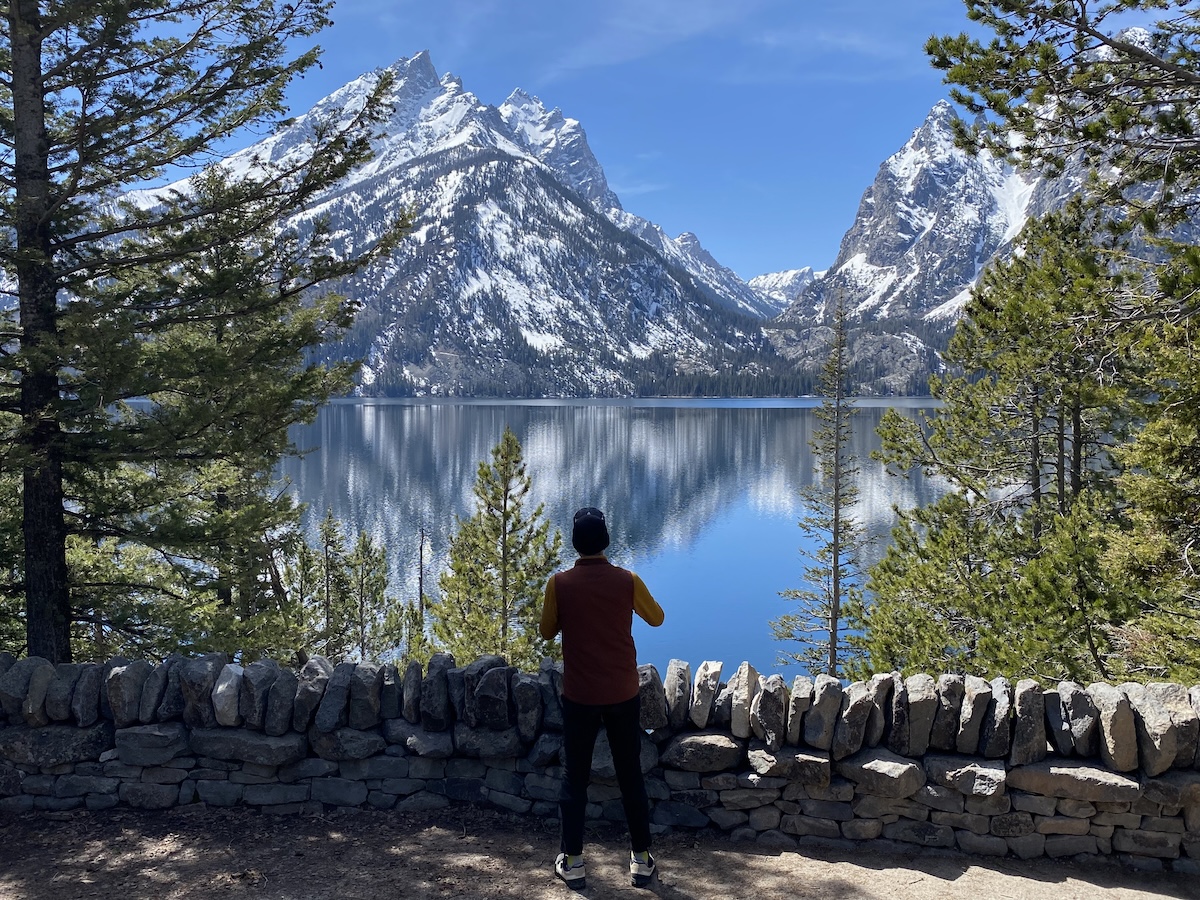

While he’s no longer posting regular Traveler updates, Repanshek’s writing impulse is still kicking. “In fact, when I get off with you, I’m going to write a letter to our Congress folks,” he told WyoFile. “…the latest in a long-running series.”
Another loss
Over his 40-year journalism career, Repanshek has also watched the industry suffer as national and local newspapers shuttered or consolidated, newsrooms hollowed out and online changes further eroded quality.
“Certainly the state of the media industry in America is in dire condition,” he said. “There’s been a loss of so much.”

The latest casualty is his own brainchild, which he said occupied a singular place as the clearinghouse for national parks news. Readers could learn about storm damage at their favorite park. They could dive deep into the history of tallgrass prairie ecosystems. Or they could read about Interior Department machinations that posed threats to endangered species.
Repanshek was disappointed, he said, that the Traveler couldn’t find financial support among the outdoor recreation industry. With their products going out into America’s public lands, he said, “they should have vested interest in seeing accurate coverage of what’s going on in these places.”
The Traveler website is still up, and conversations about reviving it haven’t entirely ceased, Repanshek said. He likened it to the scene in “The Princess Bride” when Miracle Max says of Westley, “he’s not all dead. He’s only mostly dead.”

Kudos to Kurt! Of the many accomplished journalists who later carved out an altogether different second act or middle age pivot, I can’t think of anyone who made a longer, more meaningful impact in such an overlooked and important area as Kurt did. Congrats to him. 👏
Thanks so much for your kind words, Bruce. It’s been a wild ride!
I attended a forum in Casper featuring candidates seeking the Republican nomination to fill Harriet Hageman’s House seat. Every single one of the candidates stated loudly that they will protect public lands and keep public lands in public hands. Bull pucky. The proof is in the pudding. First, they fired a large number of the employees who care for public lands and make them safe for visitors. Now they are reviewing all the possible sites for coal mining on federal lands. We see clearly what Republicans are doing with our public lands. When they speak of multiple use, what they mean is they want more lands open to mining, extraction, and grazing, with less environmental review and less public comment.
Well I guess you Trumpers will be able to go see the Trump Arch, and maybe a trump golf course or two. You can bend the knee and sing hallelujah to your orange Jesus.