


A grizzly death attributed to a fatal vehicle strike has triggered an outpouring of rage on social media about people driving too fast, but law enforcement could not determine whether speed was a factor in the collision.
The bear that died, Grizzly 1058, is one of the famous “quads” of their even more famous mom, Grizzly 399, who died last year after being fatally struck by a vehicle on a highway south of Jackson.
In the death of Grizzly 399, authorities ruled that the driver was not speeding.
As for Grizzly 1058, “law enforcement rangers were not able to determine if speed was a factor” in the collision, Grand Teton National Park spokeswoman Emily Davis said in an email Wednesday.
Nonetheless, park officials asked people to slow down and be vigilant for wildlife in a Tuesday news release confirming the bear’s death.
While reducing speeds can help protect wildlife along Wyoming highways, it’s not the only factor setting the stage for fatal collisions.
“It’s terribly unfortunate that this happened,” said Brian DeBolt, large carnivore conflict coordinator with the Wyoming Game and Fish Department. “But it’s becoming all too common with these bears that spend so much time roadside.”
The more time bears hang out near roads, the higher the probability that they’re going to be struck and killed by a vehicle, DeBolt said. Game and Fish is finding that younger bears, like the 5-year-old subadult found Tuesday, are being forced to make a living in more marginal habitat along roadsides because more prime habitat is already occupied.
What park officials have confirmed so far is that Grizzly 1058 had been spotted in the park since he and his three siblings split from their mom in 2022. But there were no confirmed sightings of him this spring, the park release said.
Park law enforcement found the bear’s remains Tuesday in a patch of willows about 125 yards from the highway, within park boundaries east of the Buffalo Fork River. The Jackson Hole News&Guide reported that a law enforcement ranger found the dead bear after spotting ravens and eagles scavenging along the highway and stopping to investigate. The park bear biologist told the News&Guide the animal had likely been there for several days.
“The investigation indicated the bear was hit by a vehicle and made it to a patch of willows about 125 yards from the road where it succumbed to its injuries,” the park’s release said.
The park relied on ear tags and a “PIT” tag to identify the 5-year-old bear, which the park release said “appeared to be in good condition for his age and the time of year.”
More to it than speed
The outer park highway sees more diverse traffic — including commuters and semis — and higher speed limits than the inner park road. Just up the highway on Togwotee Pass, where vehicles have struck roadside grizzlies, wildlife managers and law enforcement have struggled to manage traffic jams created by bear watchers.
As more bears live roadside, and get habituated to people, the more risk of collisions, DeBolt said Wednesday. “We don’t want bears to be so comfortable roadside,” he added.

The speed limit on Togwotee Pass is 55 miles per hour, but once drivers cross into Grand Teton National Park, there is a nighttime speed limit of 45 mph on that same highway. Safety concerns along that highway, where it crosses through the Bridger-Teton National Forest, prompted one retired U.S. Fish and Wildlife Service special agent to propose a “grizzly bear speed limit,” using variable speed limits similar to how the state handles blizzards on the interstate.
“Maybe we ought to consider having a grizzly bear speed limit, you know, when the bears are around the highway,” said Steve Stoinski, a retired Fish and Wildlife Service agent who spent a summer managing bear traffic jams on Togwotee Pass.
But that speed limit would only work with regular enforcement, Stoinski told WyoFile.
DeBolt said he’d be open to reducing speed limits if it would reduce wildlife-vehicle collisions and was reasonable and logistically possible. But setting speed limits is not Game and Fish’s call to make. DeBolt also sees larger factors at play.
“Although it seems like maybe a simple fix,” DeBolt said. “It’s not that simple.”
Inside Grand Teton and Yellowstone national parks where reduced speed limits are enforced, wildlife still die in vehicle strikes, DeBolt said.
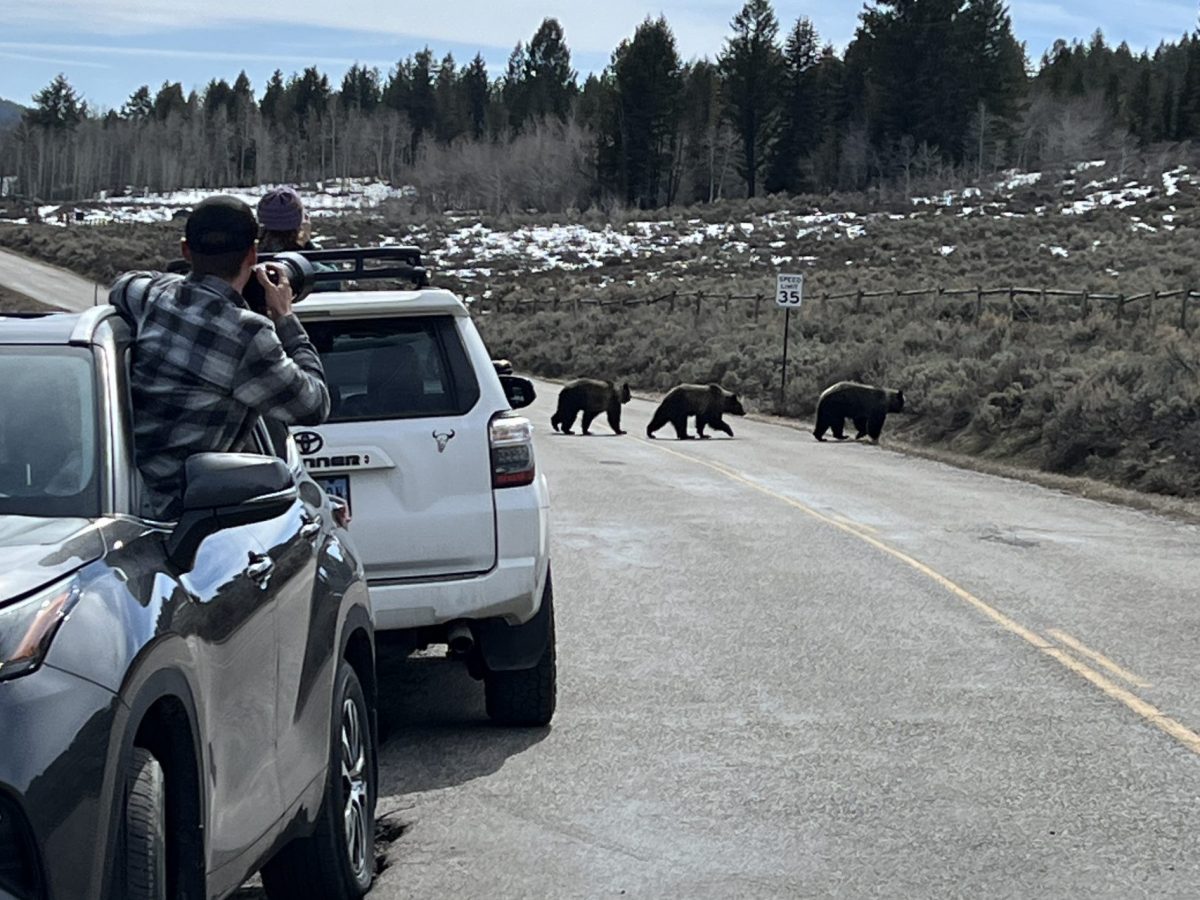

“We need to look at what we can do to promote the safety of bears long-term,” DeBolt said. “From an agency standpoint, we’re trying to discourage them from even living roadside.”
That’s one reason Game and Fish has joined forces with multiple federal, state and local partners to proactively manage bear jams on Togwotee Pass, he said.
Park law enforcement and the U.S. Fish and Wildlife Service are investigating this latest death. Grizzlies are federally protected as a threatened species.
This story has been updated to include more information about the investigation. — Ed.

Hmmm…, if only there was some way to reduce the over population of grizzly bears, maybe they wouldn’t be forced to live in marginal habitats along highways where they get killed by vehicles and suffer constant harassment by for profit photographers, for profit tour companies and bear voyeurs.
Joe you nailed it, time to delist and start hunting, need to keep a steady number of bears.