

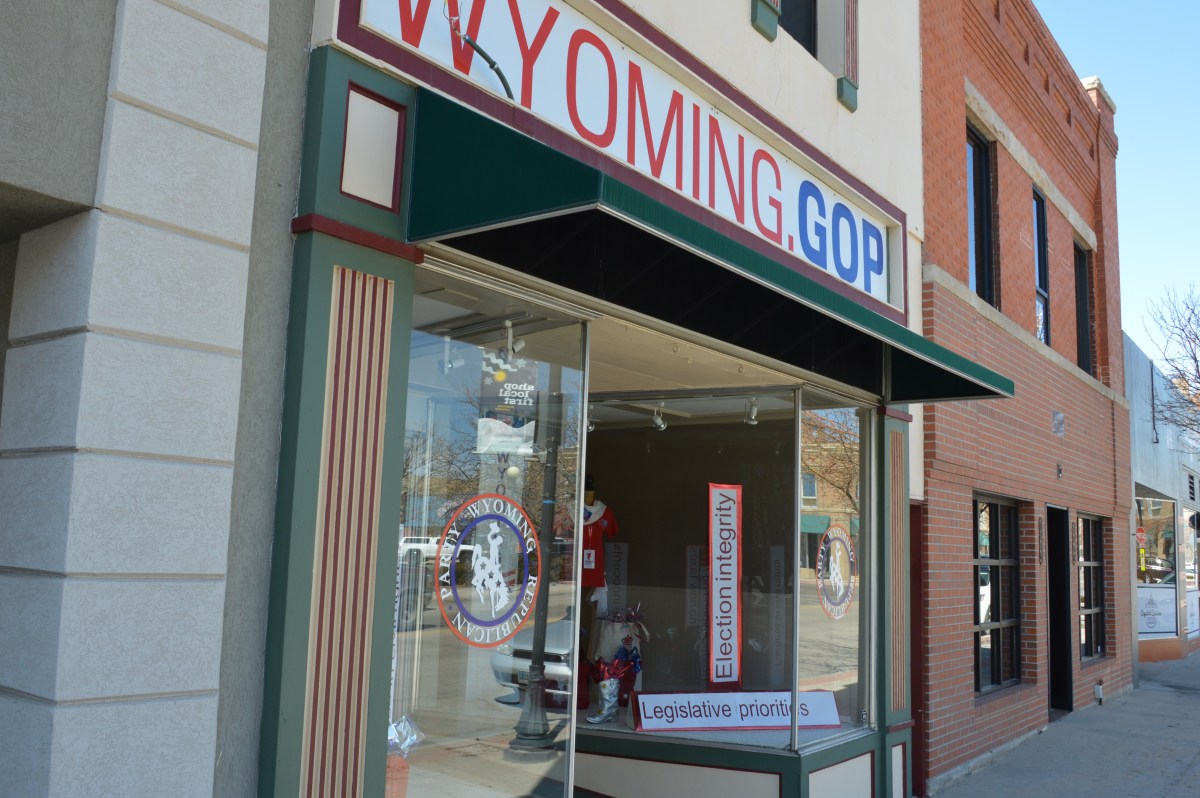
The Wyoming GOP has asked a Laramie County District Court judge to dismiss a lawsuit against the state party, arguing that the government should not meddle in a private organization’s internal matters.
The dispute stems from the state party’s recommendation that county GOPs disregard state statute and a Wyoming Supreme Court ruling, and allow ousted committee precinct people to vote in local party elections.
The Hot Springs County Republican Party initially ignored that advice, setting off a series of events that ultimately led to the ousting of two of the plaintiffs from their elected positions. As a result, four Hot Springs County Republican voters filed a complaint in April that accused the state party of interfering in their local GOP elections and asking the court to intervene.
“Should this court accept plaintiffs’ invitation to commandeer the Wyoming Republican Party’s internal affairs,” the party argued in a May 20 filing, “the court would indeed be injected into an essentially political controversy and would be forced to assume the role of ‘kingmaker…without…clear, objective standards that might insulate from charges of political meddling.’”
The plaintiffs responded in their own filings, arguing that such an intervention is needed to uphold state law and to ensure that they are not prevented from participating in party business, such as voting on nominees in the event of a vacancy in one of Wyoming’s statewide elected offices. In the past few years, the party has selected nominees to fill vacancies for both superintendent of public instruction and secretary of state.
“The relief plaintiffs seek is to compel the state party to continue to comply with statutes that have been on the books for over 50 years and with which the state party in fact complied for over 50 years, until it went rogue,” the filing states.
How we got here
The plaintiffs include Joe Martinez, Phillip Scheel, Meri Ann Dorman and Clay Van Antwerp, who were elected to chairman, state committeeman, secretary and vice chairman, respectively, at Hot Springs County GOP’s officer elections on March 17.
After the meeting was adjourned, Cheryl Aguiar, former Hot Springs County GOP chair, filed a complaint with the state party. Aguiar disputed the validity of the county party’s elections since the ousted precinct people were not permitted to vote.
Soon after, the state party’s Dispute Resolution Committee ordered the Hot Springs County GOP to conduct a recount and allow ousted precinct committee people to cast ballots. Consequently, Martinez and Scheel’s victories were overturned.
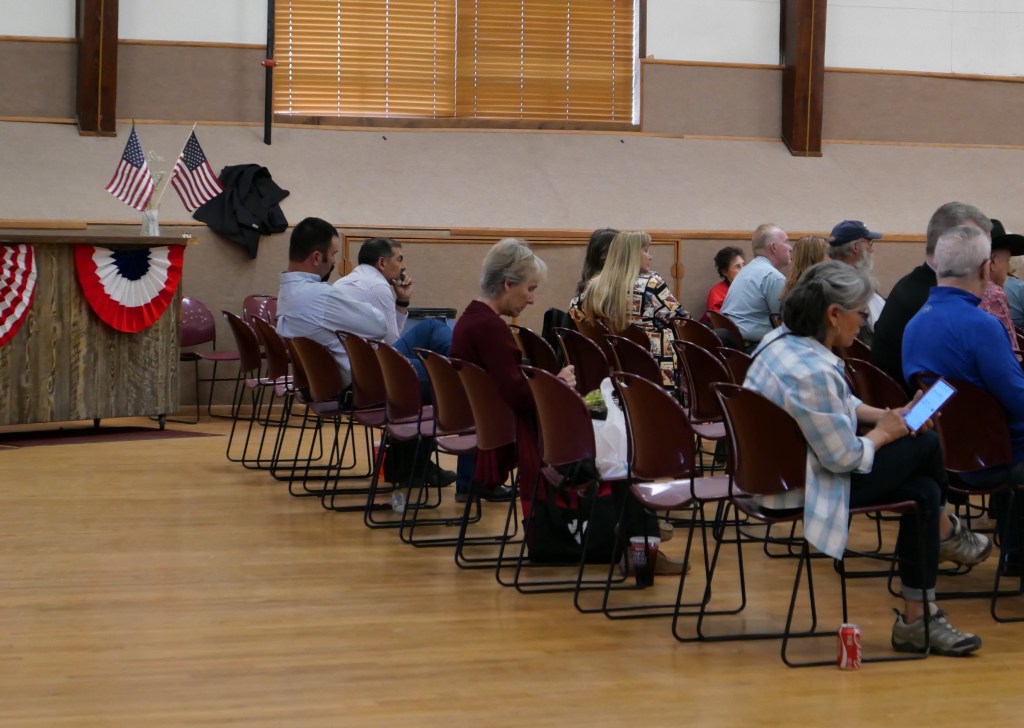
Both men attended the Wyoming Republican Party’s meeting in Cody in May, but stood at the sidelines as the party voted in new leadership.
Necessary parties
In its motion to dismiss, the state party also argues that by not naming the Hot Springs County GOP as a defendant, the plaintiffs failed to join a necessary party, and that alone is reason to dismiss the case.
“In fact, plaintiffs’ entire complaint rests upon the foundation that plaintiff’s preferred candidates must be elected members of the Hot Springs Party and acknowledged as the same,” the filing states.
“For this reason, the court must dismiss this matter unless and until [the] plaintiff joins all necessary parties.”
But even if that’s remedied, the state GOP says it will challenge the constitutionality of state law that regulates county political party elections.
Response
State law does not impose “undue burdens” on the party’s internal governance, the plaintiffs argue.
“The U.S. Supreme Court has recognized that states may enact reasonable regulations of political parties, election, and ballots to reduce disorder and ensure the integrity of democratic processes,” the filing states
As with previous filings in the case, the plaintiffs highlighted a 2023 Wyoming Supreme Court decision involving the Uinta County GOP and a party bylaw permitting ousted precinct committee members to vote in officer elections. Ultimately, the high court ruled that the bylaw “violated clear and unambiguous language” in state law.
In its decision, “the Wyoming Supreme Court recognized the state’s interest in regulating political parties to ensure fair and orderly processes, even though it abstained from ruling on the constitutionality of [the state law],” the filing states.
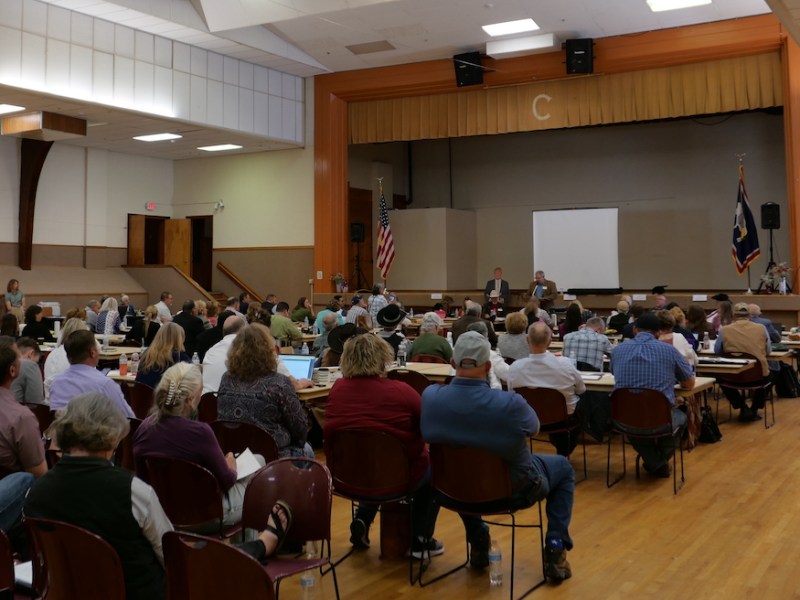

The plaintiffs also point to the GOP’s meeting in Cody, where they were sidelined, as a source of irreparable harm. In fact, they argue that the outcome of the race for state GOP vice chair would have turned out differently had Martinez and Scheel been permitted to vote.
“Plaintiffs, had they been allowed to vote, would have voted for Virginia Bennett, the candidate who lost by one vote to Bob Ferguson,” the filing states, allegedly making Bennett the “rightful winner.”
“The court should not reward the state party for its bad faith conduct. There is more irreparable harm on the horizon that the state party is ready, willing and able to inflict on the public,” the court document states.
The case was filed in Laramie County District Court, where the state party is headquartered.


They didn’t seem to mind the state interfering in the inner workings of Kappa Kappa Gamma.