


With Wyoming’s candidate filing period closed, WyoFile is taking a closer look at legislative races and how the balance of power at the statehouse could shake out. This story examines the Senate, while a forthcoming report will analyze the House.
While Wyoming’s top elected officials will be on the ballot this year, those aren’t the only races that will determine the direction of the state. Voters also will decide whether to give the Wyoming Freedom Caucus control of the Senate in the Wyoming Legislature. That possible shift in power will come down to several key races.
The caucus, which bills itself as the genuine conservative voice of the Republican Party, aims to build on its victorious 2024 election season, when it won control of the House. Now, several caucus members and allies are leaving the House to pursue Senate seats, keeping with plans the group laid out following the 2026 budget session.
After most of its top legislative goals failed this year, the caucus chalked its losses up to lacking a supermajority in the House and a lack of Freedom Caucus support in the Senate.
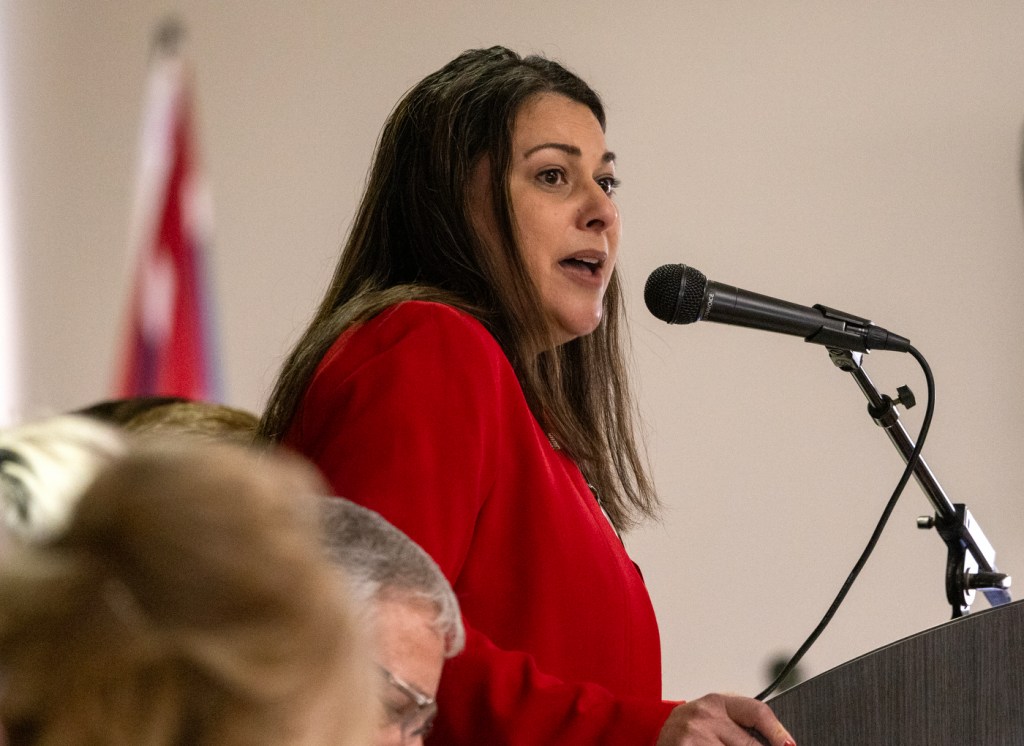
“Regardless of where our priorities failed, it’s clear that we need reinforcements in Cheyenne,” Rep. Rachel Rodriguez-Williams told reporters at a post-session press conference. Williams, who chairs the caucus, is now running for secretary of state.
Unlike the House, where there’s a distinct division between caucus-aligned representatives and other members, the Senate is more heterogeneous. The upper chamber is a supermajority Republican body, but votes there are not always predictable. That dynamic could change if the Freedom Caucus wins control in 2026.
The caucus may find itself on the defensive this campaign season after several of its members and allies were embroiled in a controversy, known as Checkgate, involving the delivery of campaign donations on the House floor, which is currently under criminal investigation. After a legislative committee determined the checks did not constitute bribery, the House unanimously voted to approve a report that said: “the conduct that occurred on the House floor was undesirable and must never occur again.”
Seventeen of the Senate’s 31 districts will be on the ballot this year. To gain a majority in the upper chamber, the caucus needs to win at least 14 of those races to bolster the two Senators it endorsed in 2024 — Sens. Tim French, R-Cody, and Laura Pearson, R-Kemmerer. Neither is up for reelection this year.
There are several other incumbents not up for reelection that the caucus can count on for votes, but their fidelity varies by issue.
Sen. Tim Salazar, R-Riverton, and Troy McKeown, R-Gillette, for example, are largely ideologically aligned with the caucus but clashed with House leadership during negotiations over a property tax bill in 2025. Or, take Casper Republican Sen. Charles Scott, one of Wyoming’s most senior lawmakers. Scott supported caucus-backed legislation to significantly expand school choice in Wyoming in 2026. However, Scott is a self-described “pro-choice” lawmaker and regularly votes against bills to restrict or prohibit abortion.
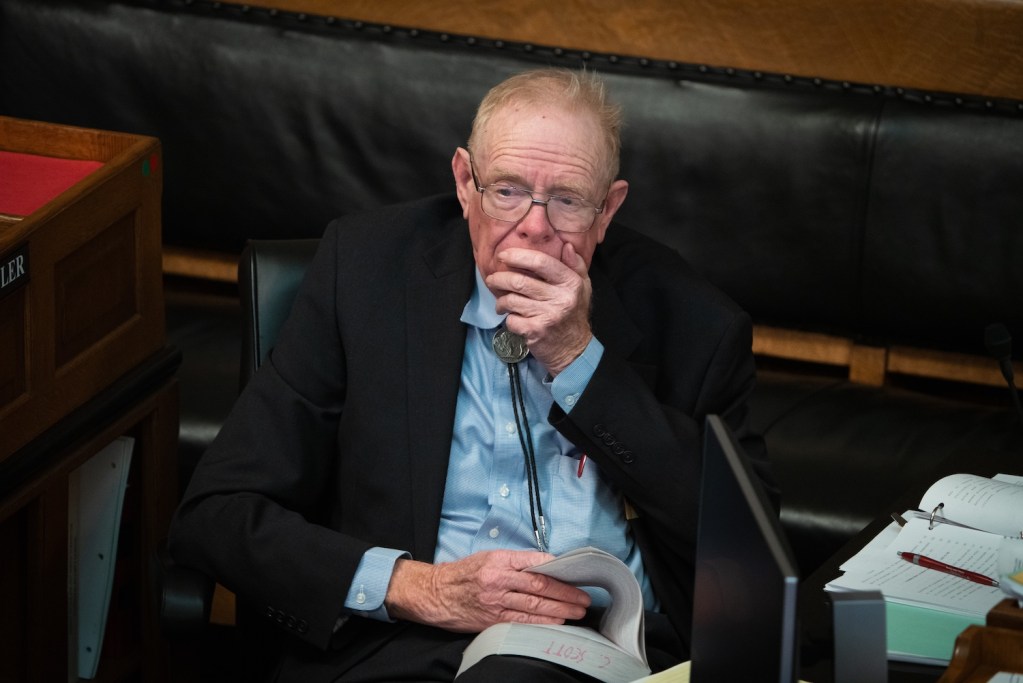
Meanwhile, at least five incumbent senators are not up for reelection who are neither caucus allies nor members. Those lawmakers include Sens. Jim Anderson, R-Casper; Ed Cooper, R-Ten Sleep; Barry Crago, R-Buffalo; Gary Crum, R-Laramie, and Tara Nethercott, R-Cheyenne.
As such, the Freedom Caucus is heading into the primary election at a slight disadvantage. Whether the group can win a majority in the Senate rests on a handful of races.
The marquee competition among those is likely Speaker of the House Chip Neiman of Hulett versus the incumbent Sen. Ogden Driskill of Devils Towers. The two Republicans will square off in the primary election for Senate District 1, which encompasses the northeastern corner of the state, including all of Crook County and sections of Campbell and Weston counties.
The two lawmakers embody the Republican split in the statehouse: Neiman belongs to the Freedom Caucus while Driskill represents the traditional wing of the Wyoming GOP.
Like Neiman, Republican Reps. Abby Angelos of Gillette, Paul Hoeft of Powell, Ken Pendergraft of Sheridan and Daniel Singh of Cheyenne will attempt to make the leap from the House to the Senate.
Pendergraft and Hoeft identify as members of the caucus, while Singh regularly votes alongside the bloc but left the group earlier this year. Angelos, meanwhile, does not identify as a member but also routinely votes with the caucus and crafted the caucus-backed budget as a member of the Joint Appropriations Committee.
Singh will challenge Republican Sen. Evie Brennan, R-Cheyenne, for her seat in Laramie County.
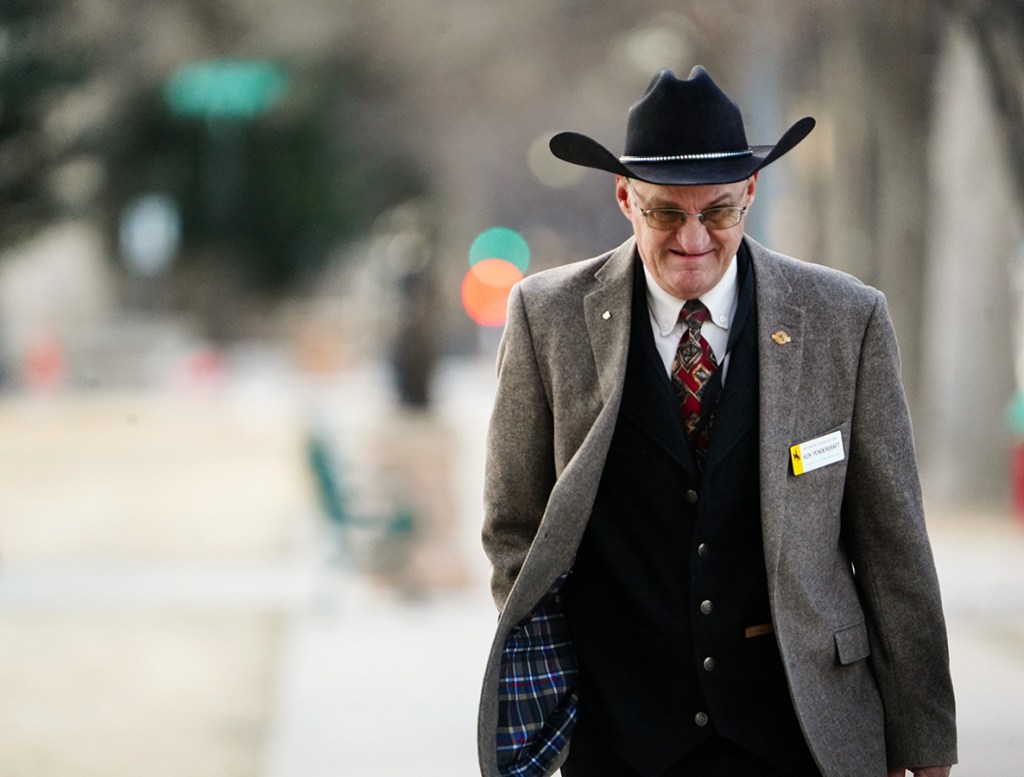
Pendergraft is running for Senate District 21, an open seat in Sheridan County. Senate President Bo Biteman has represented the district since 2019 and is now running for U.S. House. Pendergraft will face Republican Melissa Butcher, a local business owner, in the primary election.
Hoeft, a first-term representative, will compete against R.J. Kost, a former senator, in the Republican primary election for Senate District 19, which spans Big Horn and Park counties. Sen. Dan Laursen, R-Powell, is not running for reelection after representing the district since 2023.
Angelos is running for Gillette’s Senate District 23 against Dwayne Dillinger, executive director of Campbell County Parks and Recreation. The two Republicans will vie for the seat currently held by Sen. Eric Barlow, who is running for governor.
One win the caucus can likely count on will be in Senate District 3, where Sen. Cheri Steinmetz, R-Torrington, is running unopposed. She’s represented the district since 2019.
Casper Republican Sen. Bob Ide, an ally of the caucus, will face a challenger after serving his first term in the upper chamber. Republican Lisa Engebretsen, a realtor, is challenging him for the Senate District 29 seat.
Several incumbents, who are not aligned with the caucus, also face Republican challengers. That includes Sen. Taft Love, R-Cheyenne, who was appointed to Senate District 6 in September when Darin Smith vacated the seat to serve as the U.S. Attorney for Wyoming. Wheatland’s Roy Birt, who was nominated alongside Love to fill the vacancy, will challenge Taft in the Republican primary. Birt donated to Freedom Caucus members in 2024, according to campaign finance records, including Rep. Tomi Strock and Jeanette Ward, a former lawmaker seeking a rematch.
Sen. Cale Case, R-Lander, long a thorn in the side of the Freedom Caucus, will face challenger Lisa Wilson in the primary election. Sen. Wendy Schuler, R-Evanston, will face three Republican opponents — Jen Hegeman, Tina Johnson and Chris Katzl.
The Senate’s two Democratic incumbents — Sens. Mike Gierau of Jackson and Chris Rothfuss of Laramie — are running unopposed.
Correction: This story has been updated to correct Sen. Barry Crago’s district. —Ed.


It’s time for the Weenie Caucus to ride into the sunset. Although they would, most likely, pick the wrong direction.
Maggie — great article. Thanks.
As a life long registered Republican, any candidate that is MAGA, Trump endorsed FC, or affiliated with any of the “Liberty, Freedom ect” offshoots will be an automatic no. These bastards have sold out our state and our country. They screw up everything they touch. If I have to hold my nose and vote Dem for a year so be it. The outsider political cancer must be removed.
Yup, same here Sage. Although the democrats never seem to field the best and brightest candidates anymore, I’d say at the least, that they are honest, decent folks unlike most of the MAGA crowd on the other side. I’m really hoping my neighbors are getting sick and tired of all of the drama and chaos that these people generate and will vote for some moderation come August.
The UnFreeDumb Carcass aka the Epstein Glee Club needs to go. What an embarrassment to the State. They’re currently running on fumes and we need to put these grifters out of their misery come August 18th
We must ensure that the unfreedom caucus is voted out. Aren’t you sick of them? Bob Ide should be voted out. This guy is against public land. He wants to sell it-to make money for himself.