


In a highly anticipated decision, the Wyoming Supreme Court ruled Thursday that the state has failed to adequately fund K-12 teacher salaries and properly account for inflation. But the court struck down other portions of a lower court’s finding that Wyoming has a constitutional obligation to pay for school resource officers, student nutrition and computers.
The court’s decision to require more state funding for schools, but only for certain elements, largely drew praise and optimism from lawmakers, the governor and educators.
The ruling is the result of a lawsuit filed in 2022 by the Wyoming Education Association, an educator advocacy group, against the state, alleging the Legislature was failing its constitutional obligation to provide a thorough and efficient education to every student. Eight school districts joined the lawsuit as intervenors.
Association President Kimberly Amen lauded the court’s careful consideration of the case in a statement Thursday.
“The Court found that model salaries did not reflect the true costs of recruiting and retaining qualified teachers, which in turn created disparities among school districts,” Amen’s statement read. “For years, educators and school districts have told policymakers that Wyoming cannot provide the education our students deserve without the people who make that education possible.”
Rep. Scott Heiner, a Sweetwater County Republican and co-chair of the Wyoming Legislature’s Select Committee on School Finance Recalibration, was also pleased with the ruling but for different reasons. The court overturned the district court’s spending requirements for technology, nutrition and law enforcement in schools.
“They’re not elements of proper education in the state of Wyoming,” Heiner said Thursday.
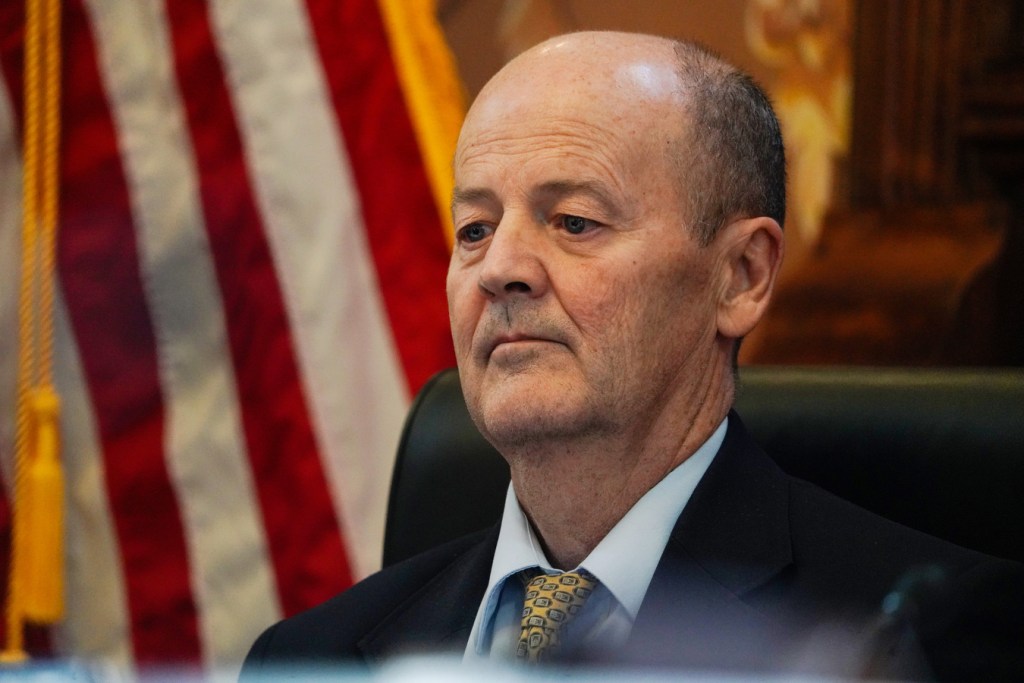
Heiner, who also served as the House majority floor leader during the 2026 session, said the ruling validates the K-12 school funding recalibration bill that lawmakers passed this year overhauling how the state funds schools. This ruling means no additional funding would be required, Heiner said, referring to ongoing efforts to fund technology, nutrition and school resource officers. The 2026 school funding bill became law without Republican Gov. Mark Gordon’s signature because the governor said it disadvantaged smaller districts, usurped local authority and failed to address essential operational funding needs.
But like Heiner, the governor praised the high court’s ruling. Gordon lauded the decision as providing communities with flexibility to determine how to best serve their students. Different districts have different needs, and mandating spending is not a guarantee for better results, he said in a Thursday statement.
“Funding is a means to an end; that end should be a Wyoming student who graduates prepared for further education, meaningful work, military service, and productive life in his or her community,” the governor’s statement read. Gordon also emphasized the need for a school finance model that is “durable, transparent and constitutionally sound … and provides predictability for schools while protecting Wyoming taxpayers.”
Heiner represents portions of Lincoln, Sweetwater and Uinta counties, which are home to four of the eight school districts that joined the lawsuit as plaintiffs. Sen. Evie Brennan, a Cheyenne Republican, also served on the School Finance Recalibration Committee and represents Laramie County, which also has a school district that joined the lawsuit.
Although the Supreme Court struck down some elements that the recalibration committee was working on, Brennan said the research already done regarding technology, nutrition and school safety remains beneficial to understanding the needs of Wyoming schools. Not having a court mandate specific to spending on those programs could allow for more flexible solutions, Brennan said Thursday.
“My hope is that we can move forward with some legislation that can help fund them, but that not so much of it needs to be done a certain way,” she said.
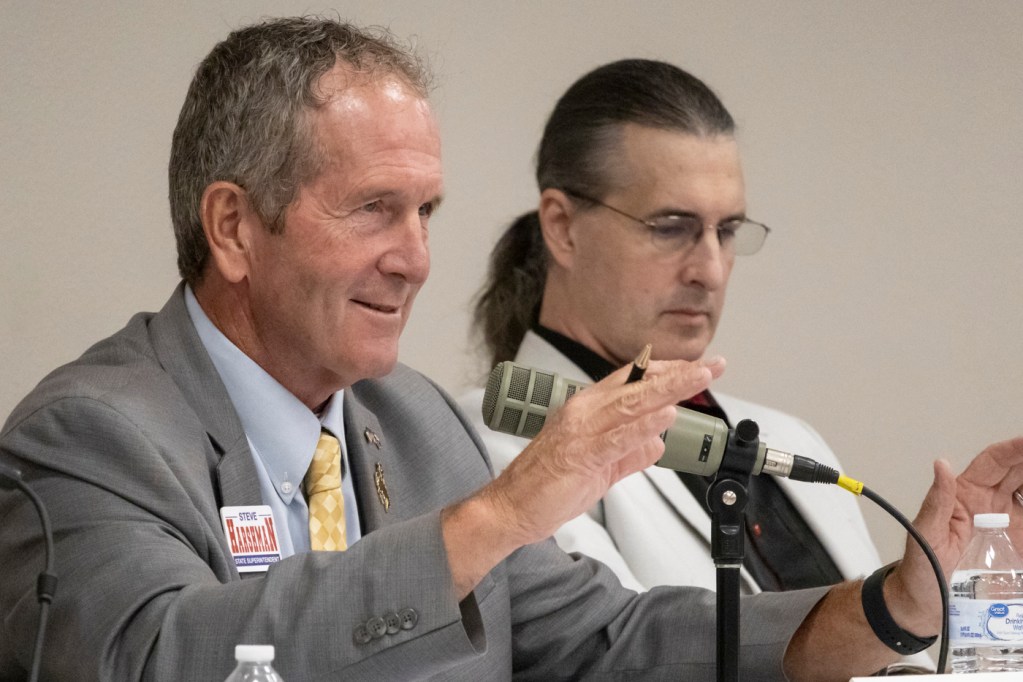
Rep. Steve Harshman, R-Casper, who’s the Republican nominee for state superintendent of public instruction, called the ruling a reasonable outcome for both sides, even though neither received everything it sought.
Plus, he’s grateful the court provided clear guidance on how the Legislature should approach school funding in the next session. A high school coach, Harshman has served as House District 37 representative since 2003, including two terms as speaker of the House. If elected state superintendent, his job would be to lobby the Legislature for good policy, and ensure it is implemented, he said.
“I think the conversation is going to continue on food service. I think the conversation is going to continue on [school resource officers],” he said. “So those will be ongoing conversations.”
The ruling
The Wyoming Constitution requires the Legislature to provide a thorough and efficient education to every student in elementary and secondary school. But funding public education through local property taxes has led to disparities based on property values.
“Efforts to purge the wealth-based disparities began in 1971 and focused on funding schools from statewide wealth to give all students, regardless of whether they lived in wealthier or poorer districts, an equal opportunity for a proper education,” Chief Justice Lynne Boomgaarden wrote in the majority opinion.

In the latest round of legal wrangling over whether the state has been meeting its constitutional obligations and correcting such disparities, Laramie County District Court Judge Peter Froelicher ruled in 2025 that the state had fallen short. Froelicher found that the Legislature had failed to adjust for inflation and to properly fund teacher and staff salaries, mental health counselors, school safety resource officers, nutritional programs and computers for students. Lawmakers also had not properly assessed school buildings, allowing inadequate facilities to remain in use for too long, he ruled.
The high court agreed with Froelicher on salaries and inflation.
“The district court correctly ruled that the legislature failed to maintain a constitutional system for financing public school operations because it did not fund teacher salaries or make inflation adjustments to the [legislative model] at levels approximating the true costs of education,” the ruling states. The court found that the Wyoming Legislature’s approach to funding created a disparity among school districts that violated “students’ fundamental right to an adequate public school education.”
But the ruling reversed the district court’s requirement that the Legislature fund one-to-one technology, nutrition programs and school resource officer programs.
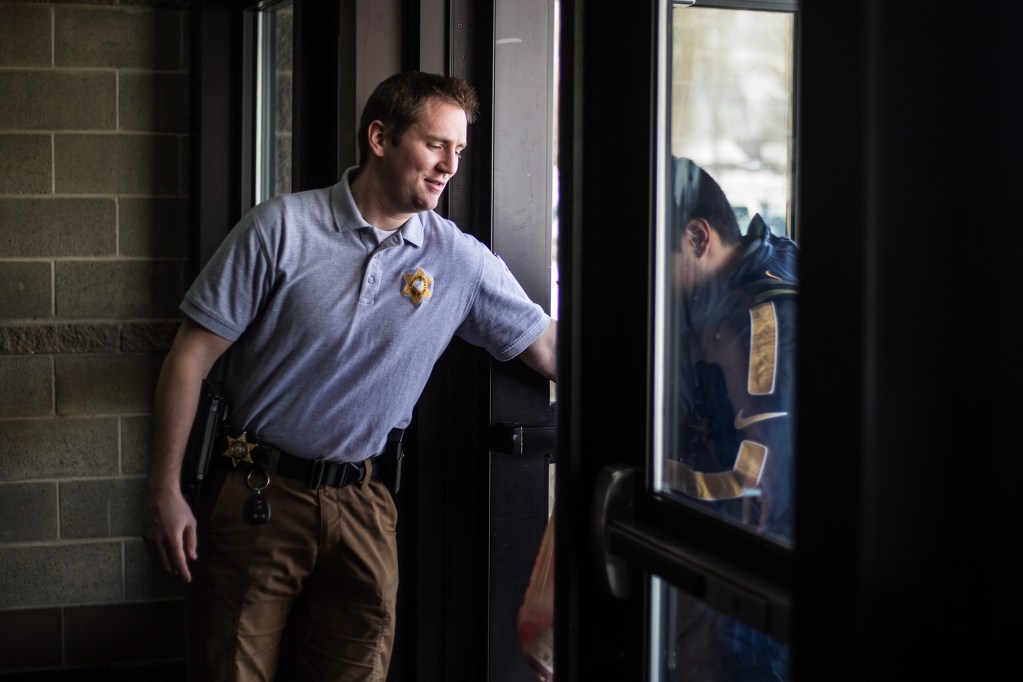
“Applying our precedent, the record does not demonstrate that the failure to fund nutrition and school resource officer programs resulted in constitutional injury,” the ruling states.
Although some of the plaintiffs’ arguments fell short in court, the education association said that more evidence could be presented in the future.
“Although this was the Court’s holding for now, the Court also recognized that additional evidence or further developments could subsequently result in a finding that Wyoming must fund such important costs,” Amen’s statement read.
The Supreme Court also said the district court erred by ordering the state to conduct a statewide assessment of school facilities for educational suitability. “The administrative process adopted by the School Facilities Commission provides an acceptable means to identify and address concerns with the educational suitability of a school building,” the ruling states.
The state did not appeal the district court’s requirement to fund elementary school mental health counselors.
Justice Kari Gray wrote a minority opinion, joined by Natrona County District Judge Joshua Eames, concurring in part and dissenting in part with the majority ruling backed by three justices.
“I would reverse the district court’s decision in its entirety,” Gray wrote.
School officials were still processing the 74-page ruling.
“We’re still in the process of reviewing the decision. So, at this point, we just feel like it’s premature to comment,” said Mary Quast, community relations director for Laramie County School District 1, the state’s largest K-12 district and a plaintiff in the case.



Not sure why they would do that. It would create smarter Wyoming voters.