


After chronic wasting disease was detected on the National Elk Refuge in May, the discovery prompted questions about one of Jackson’s water sources, also on the refuge.
Teton County Public Health Director Travis Riddell is exploring options to test the town’s water supply to get ahead of any potential concerns, he said in an interview with KHOL 89.1 in Jackson.
“People can choose to eat or not eat elk that may be contaminated with this,” Riddell said. “But your choice of where you get your public drinking water is a little bit [of a] different scenario.”
Hunters are advised against eating elk that could have been carrying the disease. All elk hunted on the refuge are required to be submitted for testing. On state lands, testing is only focused on priority herds.
“The chance that this could become an actual health threat to humans is quite low. But it’s a new and emerging problem.”
Teton County Public Health Director Travis Riddell
A spokesperson for the U.S. Fish and Wildlife Services did not respond to questions about water concerns or elk management plans by press time.
“The chance that this could become an actual health threat to humans is quite low,” Riddell said. “But it’s a new and emerging problem.”
Right now, there’s no indication that the disease — which primarily affects elk, moose and deer — can spread to humans. But the highly contagious disease kills 100% of its ungulate hosts.
Prion diseases — such as scrapie in sheep — are generally limited to species-specific boundaries, according to the Wyoming Wildlife Federation.
“That barrier seems to be stronger with CWD than the mad cow disease that made news in past decades,” the federation states on its website.
That barrier, however, is not necessarily always enough. In 2002, the fatal neurologic disorder Creutzfeldt-Jakob was found in hunters who caught a prion disease, what scientists call a “transmissible spongiform encephalopathy” like chronic wasting disease.
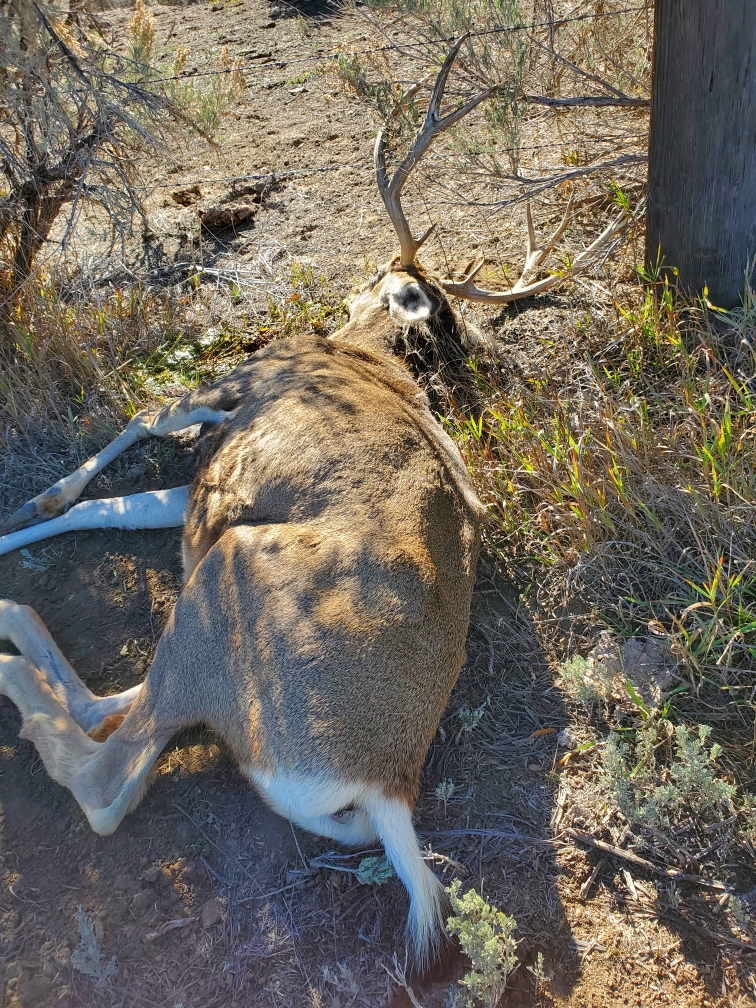
When an animal sick with chronic wasting disease expels bodily fluids, it leaves behind the damaged proteins, or prions. Those can last in soil for years, according to the U.S. Centers for Disease Control and Prevention.
Riddell wants to know if any of the prions can be detected in the water given Jackson’s proximity to the refuge. He doesn’t yet know what that process could look like.
“No decision has been made yet,” Riddell said. “You can’t just send a water sample off to a standard commercial water lab and ask them to look for prions.”
That testing requires specialized expertise, Riddell added. It’s unclear if any municipality with known local CWD outbreaks across the country has tested a public water supply.
Testing is on the county’s radar because Jackson draws water from wells at the south end of the refuge. WyoFile reported that’s also the area where a sick cow elk was found and euthanized for CWD testing in April, which resulted in the positive test.
Researchers in Wyoming have isolated prions in soil samples in other parts of the state, including where the Project Mule Deer Herd is riddled with the disease in the Wind River Basin, according to Ben Wise, the Wyoming Game and Fish Department’s disease biologist. The state has since started banking samples from feedgrounds to test for themselves.
But that doesn’t mean prions will show up in Jackson’s water.
“I’m very confident that detecting prion in water in Jackson is going to be a very, very, low probability,” said Wise. “[CWD is] new enough here. The density of prion is just not high enough to really see it in … water or the soil samples out on the refuge.”
But collecting data could still provide a helpful baseline, Wise said. Although, his department studies the implications for wildlife, not for humans.
Experts point to the high concentration of elk at the refuge as a stage ripe for disease spread. Over 11,000 elk congregate in close quarters each winter near the northern edge of town. There, they subsist on alfalfa pellets doled out on the largest of 22 feedgrounds in Wyoming.
Other states such as Montana have banned the controversial practice of artificially feeding elk and asked Wyoming to do the same to keep ungulates healthy.
CWD’s epicenter is thought to stem from northern Colorado, where the first case was discovered in 1967. Since the disease made its way to Wyoming nearly two decades later, wildlife managers have found it at five of the 21 state-run feedgrounds.

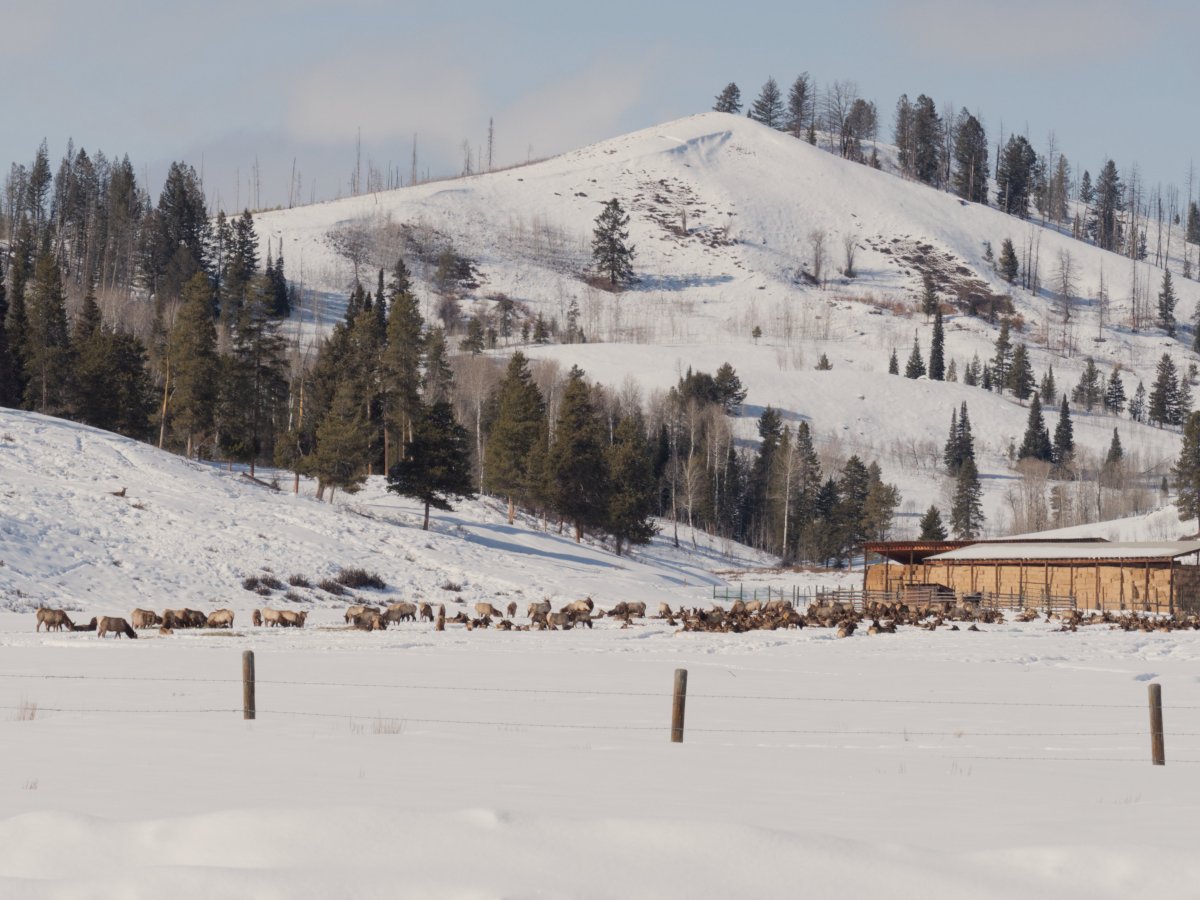
The disease was first confirmed in the Jackson herd in 2020, after an elk tested positive in Grand Teton National Park.
For the Jackson herd, Wise said experts generally believe the long-term prognosis points to population decline for the country’s largest migratory elk herd.
“What that effect is going to be, it could be very minute,” Wise said. “It could be large. We don’t know.”
An abrupt end to feeding also risks the longevity of Jackson’s famous herd, which draws visitors from all over the world. Proponents of feedgrounds, such as outfitters, don’t want to see elk die of starvation, either. Elk plan managers are yet to announce any drastic changes in response to the refuge’s first positive test.

Do a PCR test, “just to make sure”.
Keep the cycle threshold number high.
Uh oh.
Very interesting! Great journalism!
CWD in a water supply would crash the real estate market !