
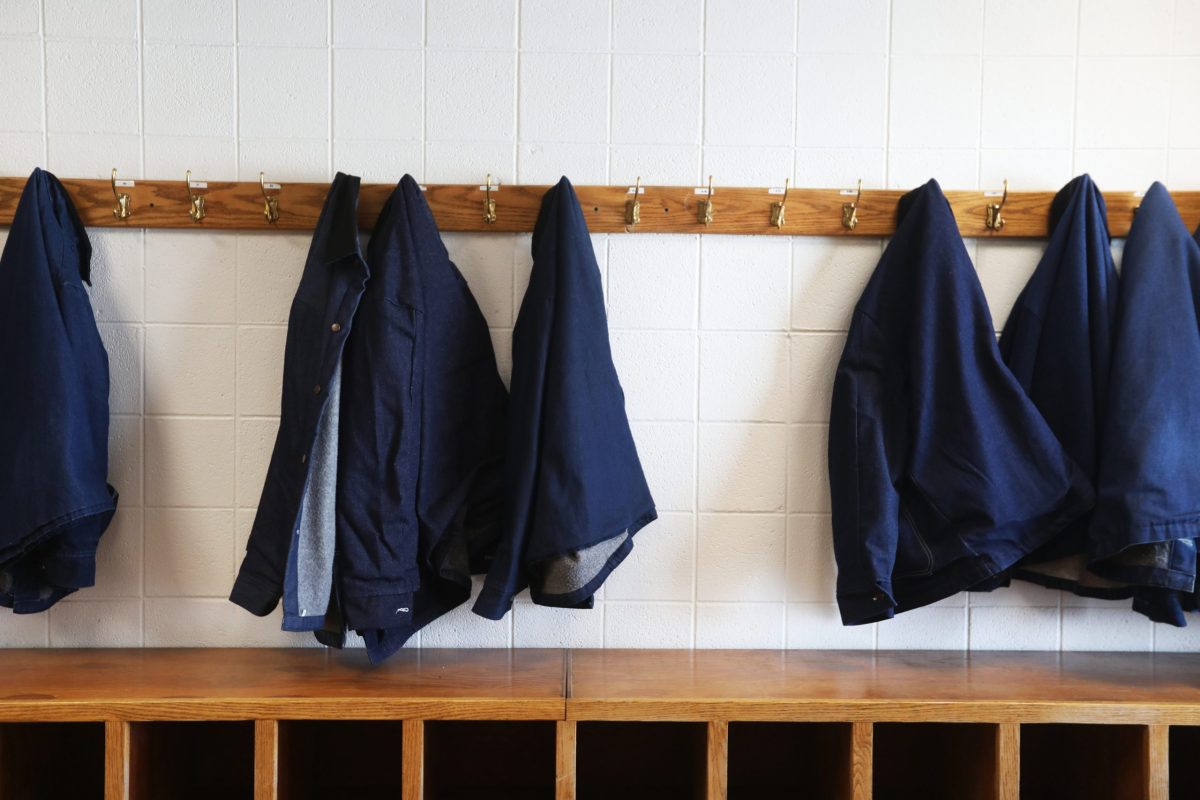

The first of six lawsuits alleging Wyoming Boys’ School residents suffered abuse and civil rights violations will move forward after a federal judge denied the state-run facility’s request for qualified immunity.
In 2024, six former residents — Blaise Chivers-King, Dylan Tolar, Charles “Rees” Karn, D.H., Haiden Willis and Koby Cranford — joined the lawsuit alleging abuse at the Wyoming Boys’ School, including extended periods of solitary confinement and physical harm. The school, which detains delinquent boys ages 12 to 21, is a 38-acre residential facility near Worland that’s overseen by the Wyoming Department of Family Services.
The defendants, which include the Wyoming Department of Family Services, the Wyoming Boys’ School and school employees, requested separate trials for each of the six plaintiffs. The court granted that request on Sept. 10 to avoid confusion for the jury, given that “the case is deeply complex and full of fact-intensive claims involving multiple plaintiffs and defendants over a four-year time span.”
In May, before the lawsuit was split into six cases, the defendants filed a motion for summary judgment, asking a judge to dismiss the plaintiffs’ claims. Friday’s ruling from U.S. District Court Judge Scott Skavdahl concerns only Chivers-King’s case, which is scheduled to go to trial first, on Nov. 9, in the U.S. District Court in Casper. Responses to the motion for summary judgment on the other five cases are expected on a staggered basis.

Chivers-King alleged the Wyoming Boys’ School staff violated his 14th Amendment rights by placing him in isolation, using excessive force and infringing on due process. Friday’s ruling allows some, but not all of his claims to go to trial.
Chivers-King, who served two stints at the Boys’ School between the ages of 15 and 17 for roughly 11 months, “was kept in isolation conditions for more than 42 days total during his first placement at WBS; and for more than 32 days total during his second placement,” the ruling states.
Defendants argue “every instance of claimed ‘isolation’ served a legitimate purpose and was not excessive in relation to that purpose” and therefore staff who placed Chivers-King in isolation should be protected by qualified immunity.
That legal principle, as the ruling explains, protects officials from lawsuits unless their conduct violates “clearly established statutory or constitutional rights of which a reasonable person would have known.”
Skavdahl disagreed with defendants, pointing to evidence that some uses of isolation “were, or became, simply punishment or unrelated to management of a safety threat.”
Skavdahl’s ruling doesn’t guarantee Chivers-King’s case will win before a jury, but suggests the court has concerns with the constitutionality of how Boys’ School staff used isolation.
While “some of these isolations may have been legitimate and nonpunitive,” Skavdahl drew attention to how staff placed Chivers-King “in isolation for predetermined amounts of time, which is at least arguably unrelated to the legitimate purpose of managing a child who is physically violent or attempting suicide.”
He pointed to one instance on Nov. 18, 2021, when Chivers-King kicked and attempted to push through a locked door and then broke a sprinkler head. In response, Wyoming Boys’ School Superintendent Dale Weber and staffer Mike Nelson signed a memorandum placing Chivers-King in isolation “at least until November 22, 2021,” the motion describes. “This fixed isolation period was imposed despite notes that Mr. Chivers-King ‘began to calm down’ the evening of November 18 and was deemed safe enough to shower and eat dinner.”
Mentioning several other examples, Skavdahl wrote that release dates “being fixed and noncontingent on behavior, were divorced from the safety risks that may have initially justified Mr. Chivers-King being placed in isolation.”
The idea that Chivers-King remained in isolation even after he changed his behavior, Skavdahl wrote, would raise questions for a jury about its use for a legitimate purpose.
He referenced two 10th Circuit Court of Appeals decisions — Milonas v. Williams and Blackmon v. Sutton, that “clearly establish such use of isolation to punish juveniles not convicted of a crime is unconstitutional.”
Boys’ School residents are adjudicated delinquents, which is a distinct legal category from convicted criminals.
Chivers-King also made several constitutional claims concerning due process and excessive force, but not all of them are cleared for trial.
The due process claims overlap with the claims that isolation was used for punitive reasons. An unconstitutional procedural due process claim against Del Olson was denied, but one will proceed against Weber.
An unconstitutional use of force claim against Mike Nelson was denied, whereas claims against Mark Nelson, Thad Shaffer and Del Olson will proceed.
Chivers-King conceded his deliberate indifference to medical needs claim, which will not go to trial. Skavdahl denied a disability discrimination claim.
After Chivers-King’s trial, Dylan Toler’s trial will begin Nov. 30, 2026, and DH’s is set for December 14, 2026.
Following the first two trials, the court will schedule the remaining three for Karn, Willis and Cranford.
All six plaintiffs asserted claims relating to isolation, resulting in deprivation of their basic human needs, in violation of their Eight and 14th amendment rights.
This story was updated to include more information about qualified immunity. — Eds.

Juvenile Rehabilitation Staff need to be held accountable for their behaviors. 30 years ago I worked in a juvenile prison in Washington State. What this series of articles has described about treatment of immature adolescents would have had the consequence in Washington of the Director of Family Services being fired, the Boys School Director being fired, and both investigated for serious dereliction of duty.
While the staff need to be brought up on charges, it is managers and administrators at the Boys Scjhool and in Cheyenne that should have the light of public scrutiny shone on them. When I visited the Boys School 20 years ago in my capacity as an internship coordinator for a UW department, I saw the bootcamp model in action, and listened to senior staff extoll its virtues. I questioned why they were using a behavioral modification model that had been demonstrated to be ineffective. My question was dismissed.
The staff who allegedly perpetrated illegal acts on children need to be prosecuted. However, it is School and DFS State administrators that need to be held to account as well. It is they, and their predecessors, who created the institutional climate that allowed line staff to behave as they did.
As Watson makes clear in the article, “Boys’ School residents are adjudicated delinquents, which is a distinct legal category from convicted criminals.” One of the primary reasons for this legal designation is based on the recognition that these are children/adolescents, that rehabilitation not punishment is the goal of incarceration.
Wyofile is doing all children in Wyoming a great service. These articles sheds light on how Wyoming treats its most vulnerable adolescents. The attitude underlying this treatment is felt by all children and adolescents. It ripples through all State institutions. The State doesn’t care about kids – it cares about punishing criminals, which legally, these “adjudicated delinquents” are not.
When adults just shrug their shoulders and say, “If you can’t do the time, don’t do the crime.” children hear. They develop a wariness at the edges of their behavior that monitors any place of perceived authority as a threat, which can include parents, teachers, and law enforcement.
DFS needs to be shaken up. It needs the rot in its institutional heart illuminated and its leaders to at least admit complicity and regret. Public admission of shame is probably too much to ask.
And then DFS needs to adopt a research based model of juvenile rehabilitation that has been demonstrated to be effective.
Qualified immunity should be completely removed from coast to coast.
It is the equivalent of “I was just following orders”.