

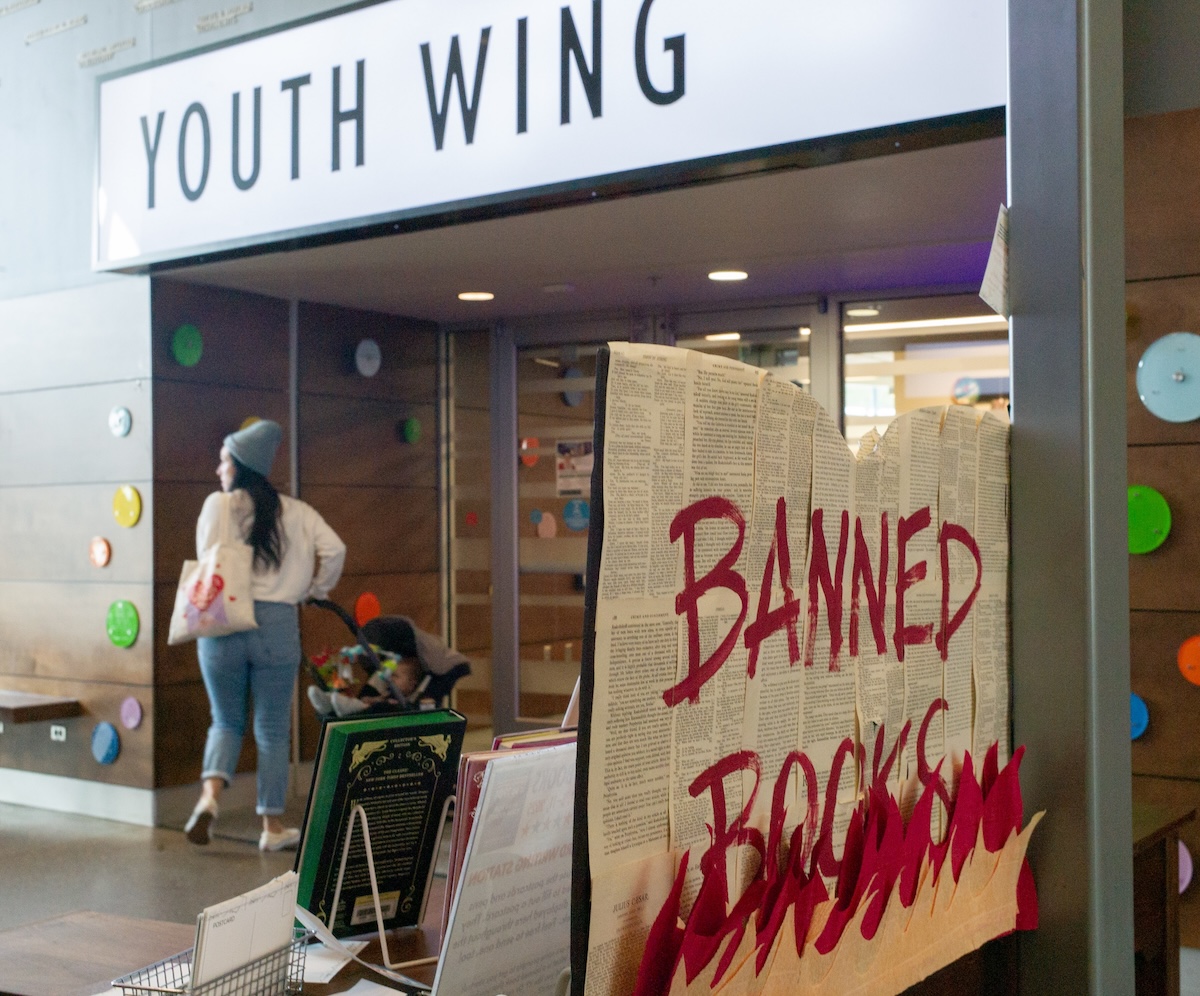
If you grew up loving libraries and respecting librarians, you’re as appalled as I am that the Wyoming Legislature spent a lot of time this year and last trying to find ways to punish libraries and the people who work there. An interim committee debated whether lawmakers should impose massive civil penalties on public and school libraries if “sexually explicit” material was “accessible” in children’s sections. In 2026, House Bill 10 sprang to life with smaller potential penalties and an excruciatingly detailed definition of “sexually explicit.”
Opinion
For good measure, Wyoming Freedom Caucus member Rep. Ann Lucas of Cheyenne filed House Bill 72, which would have made library professionals criminally liable for “promoting obscenity.” Fortunately, HB 72 had only one sponsor and died a quick death. HB 10 fared better but failed to make it past the finish line. Don’t think that is the end of the story, however.
The Aug. 18 midterms will tell Wyoming a lot about which way our Legislature will be headed next year. If the Wyoming Freedom Caucus manages to maintain control of the House and take control of the Senate, Wyoming can expect yet further attempts at oppression and repression.
Why, you may wonder, when the public itself is overwhelmingly supportive of libraries, library workers and the freedom to read freely? When the trustees of Cheyenne’s Laramie County School District 1 took up the non-issue of “sexually explicit” library material a few years ago, it did so at the behest of a small but vocal group, the local chapter of Moms for Liberty. After a little concerted effort, it got a majority of like-minded members elected to the school board. They promptly took up the rulemaking needed to identify existing so-called objectionable books and make it virtually impossible to acquire more. Despite overwhelming public opposition to such book banning, the policies are in place now.
To what end? Well, it is hard to tell. It is a lot to expect an employee to risk their livelihood by pointing out that a student might benefit by being allowed to read as they like. So far, 46 of 48 items nominated have been identified as “sexually explicit” by the school district.
Among them are Allen Ginsberg’s “Collected Poems” and Toni Morrison’s classic, “The Bluest Eye.”
Cheyenne schools are not alone; book banning has become “rampant and common” across the country, according to PEN America, a group that works to protect free expression.
One Cheyenne school district nomination that recently survived censorship concerned sound effects said to have been included in a video clip used by a classroom teacher. A prominent board officer publicly expressed her hope that the nominator might try again.
Imagine being that teacher. Are they likely to again dare using video? Or any other illustration to make a point? What if someone, anyone, doesn’t like it? And what about those teachers who formerly kept random books in their classrooms for students to read at their leisure? I’m guessing many have long since cleared out their shelves and new teachers avoid starting the practice. Who knows how many books or other materials have thus been silently overlooked? Or how many students, who might have benefitted from exposure to new ideas, have unknowingly lost that opportunity?
And what about library workers? I volunteer at my local library and sometimes pull books to be picked up later by patrons. A few months ago, a kid requested books with paintings by Degas, the French Impressionist famous for painting ballerinas, some in diaphanous attire. Are such paintings “sexually explicit”? Not in my opinion, but regardless, if parents are worried about what their child sees or reads, shouldn’t they be the ones discussing the matter with their child?
Wyomingites will remember an imbroglio that occurred in Gillette in 2023, when its long-time library director declined to remove a list of “explicit” books, citing the First Amendment. Terri Lesley was fired and successfully sued both the library board and Campbell County for civil rights violations. On Oct. 9, 2025, federal District Court Judge Alan Johnson closed the case. The defendants reportedly paid Lesley $700,000.
That’s a lot of money, but I imagine she wishes she’d never been given reason to sue at all. Ms. Lesley spoke at Laramie County Community College, where “The Librarians” was screened in January. Everyone who has ever appreciated any library should watch this disturbing documentary. It is easy to find online through PBS.
April 21 was National Library Workers Day. The Wyoming Library Association celebrated with the apt slogan, “Libraries Work Because We Do.” Visit https://wyla.org/ to learn about how library workers across Wyoming work to maintain libraries as essential community spaces.
Sadly, librarians are on the front lines in the fight against modern-day McCarthyism. President Donald Trump can’t tolerate anyone’s free speech, and lesser politicians are making everyday teachers and library professionals feel that practicing their professions is a risky business. There’s something terribly wrong with this picture, but it’s one that can be changed for the better. A good place to start is at the ballot box. Meanwhile, thank a librarian for their service.

Thank you, Ms. Yoder!
I am weary of the efforts to control library contents by people who virtually never use one.
Once again, thanks Marion for your opinion piece on just another attack by the far right to stifle free speech and learning under this Republican administration.
Steve, party in power is not really relevant as both work towards dismantling the 1st Amendment.
Democrats had shadow controls on nearly all social media during Covid, shutting down any and all unapproved speech that deviated from the Officially approved narrative.
I didn’t object to the censoring of COVID disinformation. People need to be confident that what media disseminates is actually true.
Paul, researchers were banned for stating the vaccine didnt stop infection or transmission based on the trial data.
That wasnt misinformation, it was the inconvenient truth that was a threat to the official narrative. Alex Berenson sued Twitter and won. Twitter/Facebook etc. execs all testified that Govt. was controlling what could be said on social media, that is blatant censorship by the Govt. violating the 1st Amendment.
“misinformation” was a term for anything the Govt./Big Pharma didnt want the public to hear. And depending on a persons political leanings they either disagreed or agreed, like yourself.
The covid vaccine was very effective. It saved millions.
The fool of false equivalents strikes again
Censorship is censorship, Chuck.
Partisans, like yourself, are the only ones that dont seem to think that, depending on who is squashing free speech.
Censorship is censorship, Chuck.
Partisans are the only ones that dont seem to think that, simply depending on who is squashing free speech.
Took 2 attempts for that?
Your never ending horse beating is, like you, disingenuous. You excuse stupidity and bigotry for the sole purpose to cry “what-about”…
Apples and oranges chad/jack/doug
Actually, party does matter and the REPOS under dumpy are by far the worst.
Marian, Thank you for your comments. Our libraries are a safe place to learn. Book Banning is completely off base, and preventing people from reading as they choose is not good judgment for public libraries.
Basic democratic rights are threatened under the heels of the Freedom Caucus and other antidemocratic accomplices, hatched in dark money darkness. Megan Degenfelder (a homegrown collaborator of Moms for Liberty) currently the Superintendent of Public Instruction (are you kidding me?) has entered the Governor’s race, while the quislings are lining up for other positions. In August vote! But vote carefully!
Thank you. One of my favorite places as a child was the old public library on fourth and Grand in Laramie. I have loved libraries ever since. I made sure I taught my children a love for them as well. To my knowledge not one child has ever been harmed by going to the library. To the contrary I believe they have only been enriched and made better for the experience. Libraries are a cornerstone of our liberties and attacking them is one of the most unpatriotic acts imaginable. Dave Gustafson
Thanks for saying what many of us think!
Overt book banning, as nicely outlined here, is tricky territory, indeed. But as one commenter posted in response to the ominous PEN America book ban list: “…What’s not on the list? All the books — hundreds of them — which are “weeded” (as in, removed) every year by librarians eager to “decolonize” their collections. If every administrative decision that denies kids access to certain books is a ban, then certainly the latter category deserves to be part of this story, too — as do the blanket bans of some of the most significant works in the African-American canon by well-meaning liberals who think censorship is the best way to do anti-racism.”
“One commenter” is not exactly an expert on current collection practices. “Decolonization” is a complex and controversial process which is not applied universally and should be examined closely by the communities served by each facility.