

This commentary was originally published by Writers on the Range.
This summer, millions of Americans are hiking, camping, fishing and making lifelong memories in our national parks, forests and other public lands. But something troubling is taking place behind the beautiful views: The federal agencies that safeguard these places for us are being hollowed out.
Opinion
Staffing and budget cuts at the Bureau of Land Management, National Park Service, U.S. Fish and Wildlife Service and U.S. Forest Service aren’t just numbers on a spreadsheet. They are empty ranger stations during peak season, trail crews that never arrive and wildfire teams stretched so thin that they can’t keep up.
During the four years when I led the BLM, from 2021 to 2025, I saw what it takes to care for hundreds of millions of acres of public lands. It takes committed, dedicated people — wildfire crews, wildlife biologists, planners, law enforcement rangers — and it takes funding. Today, both are being stripped away at historic rates.
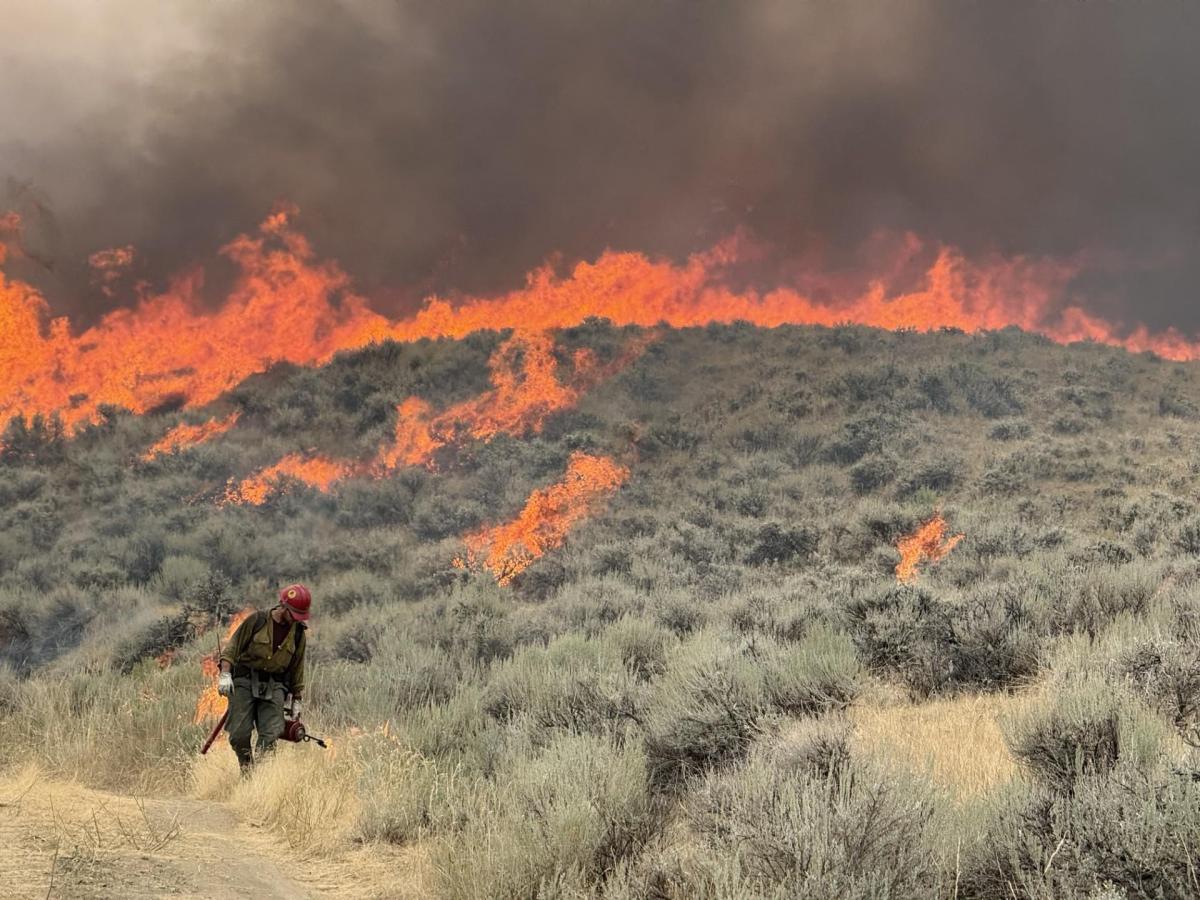
We can already see the consequences. As I write, flames tear through the North Rim of the Grand Canyon, burning down the historic lodge and scarring over 100,000 acres. The fire has raged for weeks since a lightning strike ignited it on July 4, and it may continue for weeks more.
Fire is part of the West’s natural cycle, but climate change and decades of suppression have made today’s fires hotter and more destructive. It just doesn’t make sense that the Trump administration is gutting the agencies responsible for managing fire risk when we need these experienced and dedicated people most.
More than 1,600 wildfire-qualified staff have been driven out of the Forest Service in recent months, and as many as one in four firefighting jobs remain vacant. To make it worse, firefighters are being pulled from the fire lines to tend to logistics for some forests, even in one of the most dangerous wildfire seasons in memory.
The administration has even proposed removing firefighting from the Forest Service entirely, a dangerous move that separates the rangers who know the land best from those dousing the flames. People of all backgrounds celebrated when we collectively stopped Congress from selling off our public lands earlier this summer. But now, a clear and dangerous pattern is emerging: Shrink these agencies until they break, then claim that selling off or industrializing our public lands is the only fix.
This should alarm anyone who values the freedom these lands provide. Public lands are a great equalizer — places where all Americans have the same right to hike, hunt, fish or camp. And to unplug and touch nature. If we lose the people who manage these lands, our access will shrink under wildfire closures, roads will be gated and campgrounds will close. We’ll lose our freedom to wander.
It’s also a direct threat to conservation. Our public lands deliver clean water, clean air and wildlife habitat. Cutting conservation programs and abandoning fire-smart management will leave forests overgrown and ready to burn — with wildfires too big and too hot.
Worse still, future generations are going to inherit the choices made today. When the administration guts our parks and public lands to pay for tax cuts for billionaires, they saddle the future with parks and trails that are closed, crumbling roads and buildings, forests prone to even worse fire, smoky skies and “No Trespassing” signs. The cherished traditions we pass down — teaching a child to fish or hunt, camping under a night sky, chasing butterflies — will no longer be available to all.
Westerners know what’s at stake. Poll after poll shows that people across the political spectrum want to keep our public lands public, healthy and accessible. That consensus is powerful, but only if we use it now. Either we protect the agencies that protect our public lands, or we watch the slow-motion sell-off unfold.
We must demand full staffing and funding for the agencies that manage our lands, and we must all stand together — hunters and hikers, ranchers and rafters, anglers and climbers — in defense of the places that belong to us all and to future generations.

Generations of forest and wildland fire mismanagement have led to “unnatural” fires.
Thermopolis and Grand Canyon both natural lightening caused fires running worse than natural due to the years and years of mismanagement and fire suppression.
The US Federal Government is bankrupt under the weight of 37 Trillion dollars of debt, prepare for more cuts and less services.
Trump is trying his best to destroy America. The king of bankruptcies is pretty successful because his minions believe him, even though he lies to us every single day.
Trump is so in your head lol.
“Fire is part of the West’s natural cycle, but climate change and decades of suppression have made today’s fires hotter and more destructive.” – What rubbish. Decades of mismanagement allowed for exponential fuel build up. Decades of one size fits all policies allowed for one type of forest to be managed the same as another. Litigating the timber industry out of business led to Decades of fuel building in forest of ready to ignite match sticks. Climate change makes fire hotter? Did I miss something in combustion chemistry or my thermodynamics classes?
Blame climate change and Republicans. The same old worn out narrative.
Jeez Richard you parrot the long deceased Rush Limbaugh quite well. Fires are burning hotter than before, drought has persisted in the west since the mid 80’s. The timber industry boomed in the western US after WW2 but easily cut timber sources ran out. Environmental damage / erosion in watersheds became widespread. The cost of road building and maintenance only accelerated the demise of big timber. Cheaper sources like Canadian lumber were more profitable for American home builders. I do not have a background in economics but I did live in the PNW from the late 70’s to 90’s. So I saw first hand the decline of the timber industry in the communities where I lived/ worked. I observed first hand the recession of seasonal snow and the glaciers I worked on. I began spending more time on fire assignments than time at my duty station. As far as one management style or technique for forest or public land areas that is a false assumption. What is good on the Chippewa NF won’t work on the Tonto NF. Just as the ecosystem of the Black Hills is quite different from the Bridger Teton area in western Wyoming. If conditions are hotter and drier everything burns. A drive up the eastern front of the Sierra Mountains up through the eastern side of the Cascades will reveal large fire scars from the last 30 years. A helicopter flight anywhere in the western US will show unbelievable fire scars. And yes fire is very important to ecosystems but now drought and high temperatures impede regrowth. Plus the loss of organic material leaves scorched soil. Bottom line is do yourself a favor and read current studies on on the environment.
Thank you Tracy for preaching to the choir. I was very fortunate to work for excellent resource managers in both the NPS and USFS . I was able to study and monitor alpine plant communities, map snow melt and air / water quality in the Cascades and San Juan NF. I was fortunate to work in Denali NP for the Park Botanist and witnessed first hand what is evolving way up north. From a fire perspective years spent on Hot Crews, Heli Rappel and 20 years on the N zone of the BTNF on Teton Helitack has given me a bird’s eye of the western US and Canada. Pretty easy to get emotional at 72 years old what has happened to Mother Earth since I was a child. The current administration in DC with their neglect, misinformation and cruelty will only add to our problems. Again thank you for your insightful article. Pray for rain and a normal winter.
You have the Clinton administration to thank for the devastating policy that led to this.
You did miss some things from those classes apparently. Warmer temperatures and less precipitation means dryer conditions and therefore more volatile material for fires. I realize you think that the range in increased temperatures from climate change aren’t enough to be a significant factor, but you’re simply wrong. While the cause of these fires and the fires themselves are a natural process, it’s impossible to deny that warmer temperatures cause the climate to change which does affect fire rate and intensity-ie. dryer, warmer, and windier conditions.
No, I didn’t. Yes warmer temperatures do increase fire intensity, as does drought. Neither of which is abnormal, weather patterns cycle.