

Wyoming’s 2024 omnibus water construction bill calls for $52.8 million in appropriations and account transfers to help fund a dizzying array of projects from the $118 million LaPrele Dam replacement to the $88.8 million Leavitt Reservoir expansion and the $84 million Goshen irrigation tunnel repair.
The legislation’s total spending falls shy of the projects’ overall estimated costs because some funds have already been appropriated and other monies are expected to come from different sources, including federal aid. The bill nevertheless underscores the enormity of the state’s water development projects and the importance developers and lawmakers place on them.
All told, the projects total more than $335 million, almost all to benefit Wyoming. Downstream Nebraska irrigators would contribute substantially to the Goshen tunnel repair.
Most of the LaPrele reconstruction would be federally funded; Wyoming has appropriated $30 million for that project so far. Similarly, the Goshen irrigation tunnel repair has received a $21.8 million Wyoming appropriation and part of the total $84 million cost would be shared with Nebraska.
In addition to the major projects listed above, the Wyoming Water Development Commission plans on spending $25 million to secure more water from Fontenelle Reservoir and seeks to grant $9.6 million toward the $19.3 million cost to build the North Side Tank to enable residential growth in Laramie.
More than $1.1 million is earmarked for cloud seeding in the Wind River, Sierra Madre and Medicine Bow mountains.
A variety of factors, from inflation to challenges obtaining construction materials to unexpectedly high bids, combine to swell the projects’ anticipated expenses. That’s perhaps most apparent at the proposed $88.8 million Leavitt Reservoir expansion, a project that’s grown to 223% the amount of the original 2015 estimates.
“Water resources will carve the future for our descendants.”
Frank and Caety Schmidt
The $52.8 million Senate File 75 – Omnibus water bill-construction was introduced Feb. 9. Water legislation is rarely challenged.
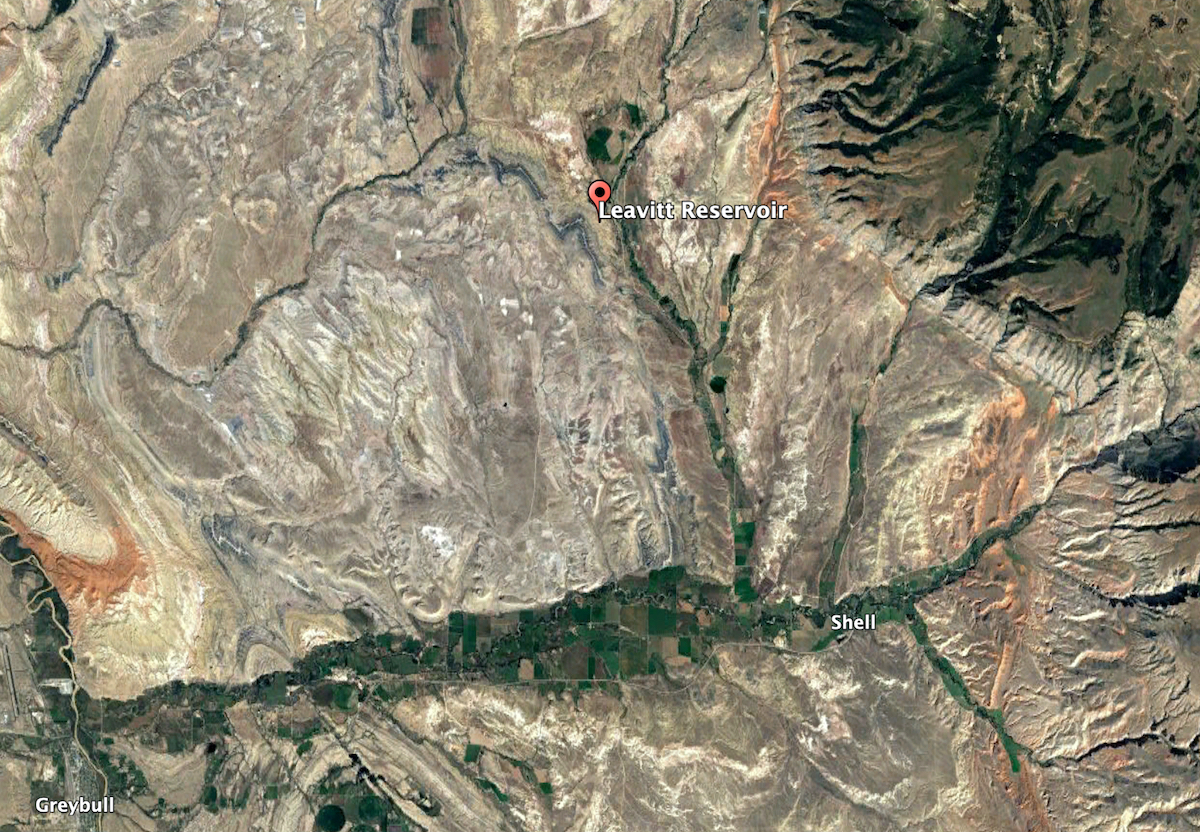
Expansion of the existing Leavitt Reservoir would see a dam 96 feet high and about a third of a mile long impounding a reservoir covering 210 acres. Located in Big Horn County’s Shell Creek drainage east of Greybull, it would supply late-season irrigation and provide some ancillary benefits.
Originally estimated to cost $39.8 million, most of the project would be funded with a grant of up to $87.1 million from the Wyoming Water Development Commission. Irrigators who would use the stored water would receive a $1.7 million, 50-year loan at 4%, a figure that adds up to no more than 1.93% of development costs.
The omnibus water bill would appropriate $56.8 million to the project. The bill also authorizes the Water Development Commission to spend $32 million from a contingency fund to build the impoundment.
Leavitt called worthy
Leavitt expansion would serve 13,143 acres of agricultural land, providing late-season irrigation. The U.S. Bureau of Land Management approved the project in 2019, after addressing criticism that some alternatives to reservoir expansion were improperly excluded because of their costs.
Legislators also resisted asking irrigators to pay for a larger share of the project. Project backers see numerous benefits of storing spring runoff from Beaver Creek, available to Wyoming from its portion of the Yellowstone River Compact, for later releases.
“It will be a tremendous asset to our great state of Wyoming as it is an example of Wyoming people developing and managing one of our most precious resources—WATER,” Frank and Caety Schmidt of the Double Doc Ranch in Shell wrote to the Water Development Commission. “As this state and our country continue to grow, it is our opinion that Water resources will carve the future for our descendants.”
Leavitt expansion remains “a very good project,” Jason Mead, director of the Water Development Office, said last March. “Economic benefits that have been determined there … are $118 plus million, $80 million of that is of a public benefit.”
The investment would help “keep[] ag relevant,” Mead said.
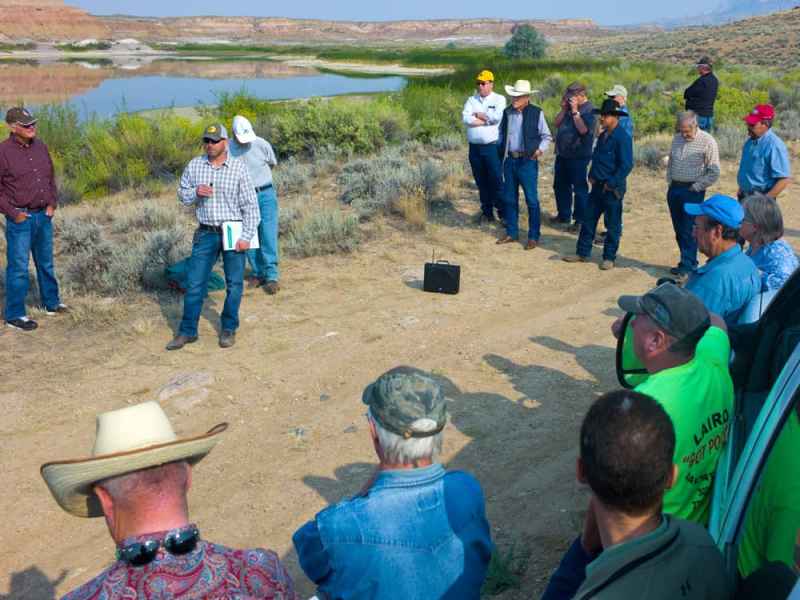



Here’s a little tidbit of information: the folks quoted in this article, Frank and Caety Schmidt, own land adjacent to the Leavitt Reservoir site and material slated for the reconstruction will be coming from their Double Doc gravel pit. The Schmidt’s have a financial interest in this project. I was near the Leavitt Reservoir recently and it appears that the project has already begun