

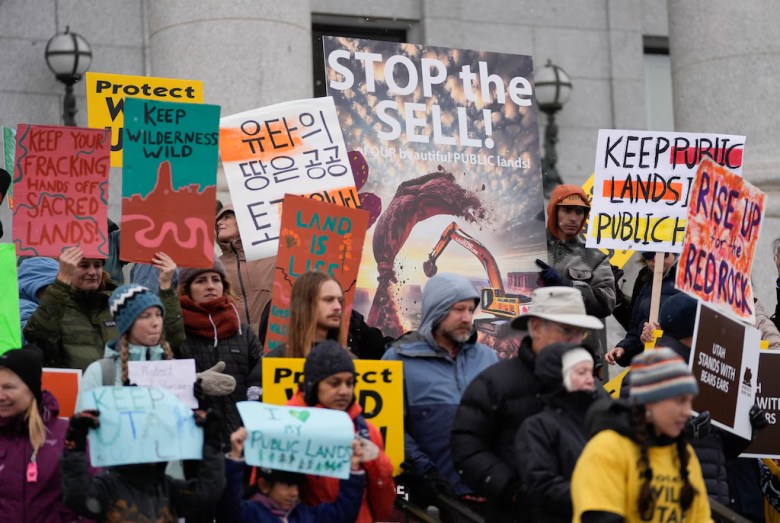
Note to readers: The following is an excerpt from the Salt Lake Tribune’s Open Lands newsletter, a twice-a-month newsletter about Utah’s land, water and air from their environment team. For a sneak peek at what they’re working on and news they’re following, sign up to have Open Lands delivered to your inbox.
Sen. Mike Lee’s public lands sell-off rider, meant to be part of the “One Big Beautiful Bill,” is officially dead.
But if history is a guide, Utah’s political leadership will likely be back with a new strategy and some new legal maneuver to gain control over at least some of its 35 million acres owned and managed by the federal government.
To get an idea of how the past informs the present, and how it might inform Utah’s future strategies, the Salt Lake Tribune spoke to Sara Dant, a professor emeritus and author of the book, “Losing Eden: An Environmental History of the American West.”
“If we look historically, of course,” Dant said, “this isn’t a new effort.”
It might come as a surprise, but the state’s Mormon pioneer settlers took a collectivist approach to land management, seeing it as a communal resource for all, kind of like our current perspective on federal lands managed by agencies like the U.S. Forest Service, National Park Service and Bureau of Land Management.
That all changed in the 1970s, when Western states with lots of public land retaliated against new federal policies that protected it from overuse.
“It was a recognition that the pendulum had swung too far toward the economy,” Dant said, “at the expense of environmental degradation.”
States’ priorities remained focused on their economies, however. Utah’s former Sen. Orrin Hatch became a prominent leader of the Sagebrush Rebellion that ensued, falsely claiming the states actually owned the lands within their boundaries and the federal government needed to return them.
The sentiment flared up in the West again in the 2010s, when legislatures in Utah, Idaho, Nevada and Wyoming drafted bills demanding the federal government hand its lands over to state control. In Utah, that included Glen Canyon National Recreation Area, managed by the National Park Service, and wildlife management areas. Utah even commissioned a study that found the state could only afford the $250 million-plus annual price tag of managing federal lands and suppressing fires if it exploited vast oil and gas resources, and even then, only if prices for those materials held steady.
In recent years, however, we’ve seen Utah shift its tone and strategy, going after smaller chunks of public lands instead of the entire federal estate. The “unappropriated lands” lawsuit it filed last year went after 18.5 million BLM acres. Utah claims the federal government is sitting on this “undesignated land” and should sell it. But it also appears a tacit admission that federal lands, including national forests, parks and monuments, do, indeed, rightfully belong to the United States, not Utah.
Then came the provisions introduced to the Congressional budget by Utah’s Rep. Celeste Maloy and Sen. Lee. They attempted to make the federal government relinquish even smaller tracts by pointing to the West’s rapid growth. Maloy asserted the federal government needed to sell off certain parcels to benefit water infrastructure near St. George. Lee ultimately claimed he wanted a sliver of BLM land to help build affordable housing.
But despite a Supreme Court that has proven its willingness to upend precedent, a friendly, disruptive administration in the White House and Republican control of Congress, Utah failed in all three attempts this year.
And even though the proposals significantly scaled back the amount of federal lands states have pursued over the decades, the backlash has never been stronger, and not just among liberal environmental groups – the fallout also included Lee’s conservative base.
“It’s going to be interesting to see what the political consequences of that are for Lee,” Dant said, “because he really whacked a hornet’s nest.”
Lee’s public lands selloff technically failed because of a Congressional budget reconciliation rule. And the Supreme Court only declined to hear Utah’s “unappropriated” lands case, leaving the door open for the state to argue it in district court.
But Utah’s latest failed attempts show how much public lands politics has shifted in the West. Some former anti-federal land conservative allies, like Nevada and Arizona, have turned purple. And even solidly red states, like Idaho and Montana, came out in strong opposition to Maloy’s and Lee’s plans. Even Interior Secretary Doug Burgum declined to offer support. Social media and pro-public land campaigns led by hunters and anglers almost certainly played a role.
“They’re so rare these days,” Dant said, “issues that elicit a bipartisan response.”
Ultimately, Utah has found itself alone with Wyoming in the fight to wrest lands from the feds. It’s quite the whimper compared to the thunderous roar behind the Sagebrush Rebellion half a century ago.

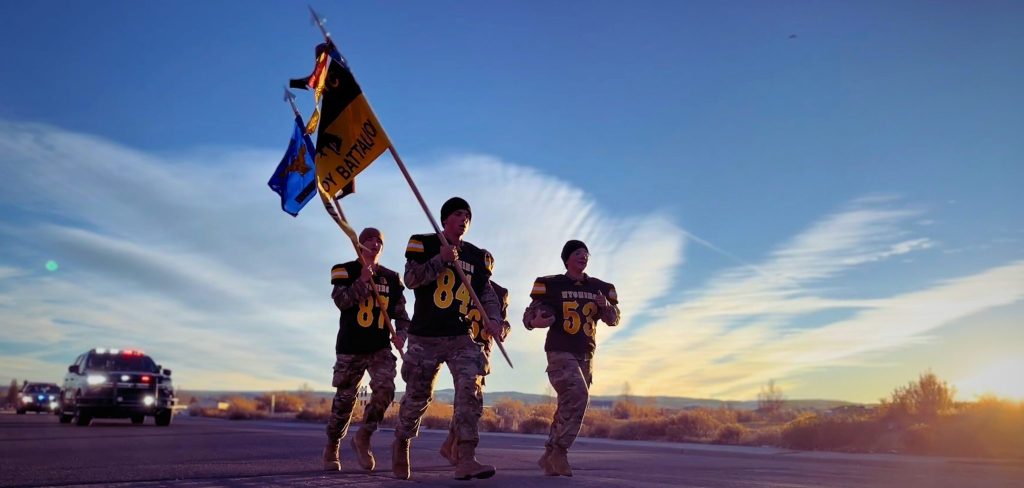
We received a “nice” letter from Sen. Barrasso thanking us for our thoughts to him on the public lands issue. I can tell he still doesn’t get it. He thinks if it comes up again it needs to be debated with committee hearings, input from all stakeholders, blah blah. You’d think the uproar from those of us who recreate on our lands would have made more of an impression on him.
The morman church is the largest landowner in the USA it only stands to reason they want more at the expense of the rest
When I saw Jason Chaffetz pushed the exact same bill some years back, I knew the public land sale was a Utah based endeavor.
Whatever they are after they will have to wait.
One big difference now versus 40 years ago is the amount of private lands sold to the wealthy for hobby ranches. Unlike previous landowners, the modern ones have no interest in providing public access. Realizing this, the public will fight any effort to limit outdoor access even further. The problem with Sen Lee and the Wyoming delegation is they themselves don’t use public lands, don’t recreate on them are driven by the agendas of wealthy donors. In many cases the very same folks who own lands now closed to public access. In many cases, such as in Carbon County, they won’t even allow the public to cross minuscule areas of private lands to access the public lands beyond. If the Wyoming delegation can’t understand this, they should be replaced by conservative politicians who do.
The “Freedom” carcass might be with Utah, but the Wyoming people are NOT. We are pretty clear that federal land belongs to the people, not the government.
I live in Utah, I have never voted for Lee and never will. That being said, most people in Utah are mormons and Lee is mormon. Many people in Utah have bought into the lie that Utah would manage federal lands better. Utah would sell the land anyway, it wouldn’t need to be managed. Utah just wants the money, nothing else.
Wyoming voters need to be more selective in who we vote to represent us. The vast majority of Wyoming citizens love and support our public lands. I, for one, will not be voting for anyone who supports privatizing public lands. That is a deal breaker!
I’m with you
Exactly, Wyoming senators and the rep were on board with Lee! They need to be voted OUT also.
The federal government owns more of Utah than Utah does. There’s literally no excuse.
No excuse for what? I am glad the Federal government owns more land in Utah than Utah does. I wouldn’t be able to recreate like I do now because Utah would sell it and abuse like Utah always has.
There’s a huge excuse- not that we need one- We the people own that land. If you don’t like PUBLIC land you should move somewhere where there is none.