


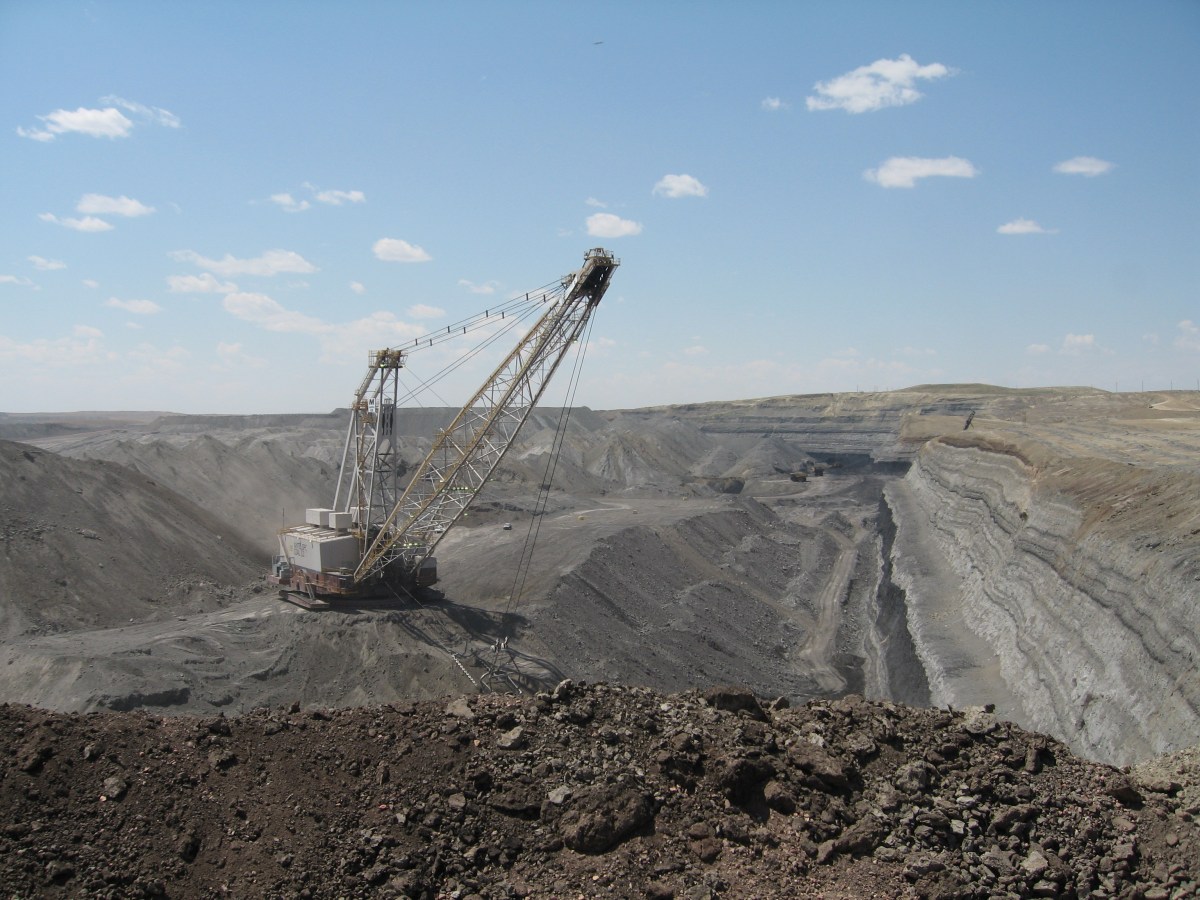
The Trump administration recently announced a broad plan to strengthen America’s coal industry. The Department of Energy, the Department of the Interior and the Environmental Protection Agency outlined new funding, expanded leasing and regulatory relief to extend the life of coal plants to meet rapidly increasing electricity demand and ensure reliable, affordable and dispatchable electricity.
Opinion
For Wyoming, the top coal producer in the nation, these actions matter. Coupled with the July decision to reduce the royalty rate for coal on federal lands to 7% and the state’s reduction of the severance tax on surface coal, Wyoming’s coal and mining industry is in a prime position to thrive after years of being tied to burdensome regulations and executive orders. Importantly, the tax and royalty burden on the industry has been “right-sized” to meet today’s competitive market conditions.
Wyoming coal has been the backbone of America’s power supply for decades, but it has also been carrying a heavier financial load than other fuels. Royalty rates directly affect whether Wyoming coal is competitive in the national marketplace. When the cost of production on coal is pushed higher than on competing fuels — in part due to its diverse tax structure — markets move away from coal regardless of reliability or demand.
The Department of the Interior is leveling the playing field for the coal fuel supply by adjusting the royalty rate downward. To have a competitive coal fuel supply, taxes and royalties must be equalized. Wyoming coal has been carrying a heavier burden, and this change ensures that when utilities and consumers make decisions, they are comparing fuels on merit, not distorted by unequal tax structures.
The stakes are not just economic. Royalty reform means Wyoming coal can remain affordable to the utilities and states that depend on it, preserving thousands of jobs and millions in revenue for schools, roads and local services. It also means stability for our rural communities that depend on coal payrolls and the spin-off economy. For too long, royalty rates have been discussed as a simple line item. In truth, they are a determining factor in whether our coal mines stay open, our plants continue to run for the long term and Wyoming coal remains a cornerstone of America’s energy supply.
The new leasing announcement is equally essential. Opening 13.1 million acres of federal land for coal production ensures that supply will be available long term. It is triple the benchmark set under the One Big Beautiful Bill Act and clearly recognizes that coal is not a resource of the past but a resource for America’s increasing present and future energy demands.
These federal actions come at a critical time. Electricity demand across the United States is rising rapidly, driven by general consumer increases, data centers, artificial intelligence and advanced manufacturing. Meeting this demand requires every reliable source of power, and coal is the backbone of that reliability. At a time when national security and energy independence are at the forefront, coal ensures our nation can generate power without depending on unstable global markets.
Along with the royalty rate reduction and leasing announcement, the Department of Energy committed $625 million in investments to extend plant life and improve reliability. These measures give coal plants the time and flexibility to continue operations while innovation and advanced technologies progress.
There are short-term pains in adjusting to and weathering the debates around coal’s future. But the long-term gains are far greater. Royalty relief, fair taxes and federal support give Wyoming coal a fair shot to compete and to continue delivering what America needs: affordable, reliable, dispatchable energy and secure jobs for Wyoming families.
Leadership at the federal and state levels has brought significant, welcomed changes to an industry that has struggled to keep up with the pendulum swings of new federal administrations over the recent decade.
Trump’s policies are about ensuring Wyoming coal remains a vital part of America’s energy future. They will strengthen our communities, secure and create good-paying jobs, and give confidence that Wyoming coal will be there to do the job and power the nation.
The Wyoming Energy Authority and the Wyoming Mining Association are proud to support these changes and initiatives together. We have long worked with Gov. Mark Gordon, Sens. John Barrasso and Cynthia Lummis, Rep. Harriett Hageman, the University of Wyoming School of Energy Resources and many across the state to ensure coal remains part of the national conversation. Recent announcements show that effort is making a difference.



Solar is making leaps and bounds in technological advancements every year. Coal, not so much, no matter how much money they throw at it.
It’ll take a wee bit more than fairy dust and happy thoughts from WEA and WMA to bring the president’s fiendish plan to fruition. Governor Gordon may need to mobilize the Wyoming National Guard to round up some potential bidders for the next round of coal leases and hold ’em at gun point until one or two of them caves in and agrees to let us pay them to take the stuff… And I suppose– if all else fails– we could always get down on our knees and beg Argentina to trade us straight across for an equal tonnage of ground beef….( or perhaps just carpet bomb them until they do)
King Coal is on his deathbed. Time to plan the wake and funeral.
Advocates for coal development have their head in the sand. Coal is in serious decline and it is not coming back. Given its many adverse health and environmental effects, we should celebrate that decline and not try to reverse it. Bad policy aside, the market may yet save us. The BLM recently announced coal lease sales in Wyoming, Montana and Utah. The Montana sale generated one bid for less than a penny a ton. That bid was rejected because the BLM can only accept a bid if it receives fair market value. A similar result occurred in Utah. All of this caused the BLM to cancel the Wyoming lease sale.
We should be thankful that the government’s shift to royalty rates that are well below market rates will not save this industry. Unfortunately, it will cost states like Wyoming that rely on coal royalty revenues dearly.
This opinion piece ignores the elephant in the room, WYO coal usage as a fuel to generate electricity has been on a constant downward trend and that’s going to continue. It’s an industry that will continue to have a smaller and smaller footprint in the energy mix.
As has been reported, it’s estimated that WYO stands to lose up to $50 million annually because of the reduction on royalty rates on coal. With the hope that money will be gained by an increase in coal production. Sorry but that ain’t gonna happen. Natural gas and other generating methods have surpassed coal. The number of power plants that burn coal to generate electrical power have shrunk and that will continue.
The goal of this reduction in royalty and tax rates is to push the use of coal and other fossil fuels to incentivize coal coal companies to produce. On the surface that sounds great but in reality the way that it is being done is going to negatively impact WYO state revenues. It’s just delaying the inevitable, coal as fuel to generate electrical power will continue to be a smaller and smaller part of the generation mix.
Coal royalty and severance taxes have been wonderful for our coffers and state government services for over 50 years but the world has changed while our leaders continue cling to the past. There won’t be another coal boom. It’s crazy that we’re willing to continue to take cuts to keep this dying industry solvent. How long until the PRB producers come back to the state and feds and ask for another reduction? The federal coal auctions earlier this month show that the coal producers deem that the market for the leased coal in the west was nothing — $186000 for 167 million tons in MT; that equates to one tenth of a penny per ton. 3 federal coal auctions were scheduled this month and 2 bids were deemed unacceptable and the 1 next to North Antelope didn’t even happen.
There are too many mines in the PRB today for the volume of coal that is being purchased, but the producers won’t close any of the mines on the federal lands as it’s cheaper to trickle out lower volumes than to have to payout to reclaim and close a mine. The market has made it clearly obvious that the best days of coal mining are in the past. WYO and the feds need to stop giving away our assets at lower and lower values to keep a dying industry afloat. Our leaders need to adapt to today’s world and figure how we’re going to financially support ourselves today and beyond. The world has changed since WYO implemented severance taxes on coal in 1969.
I think the one thing that has not been addressed is the aging infrastructure that coal fired plants have faced. They need to be upgraded and be technologically more efficient. That costs money. I’ve toured some of these facilities years ago and that was a number one problem then. What will Wyoming spend to make these facilities less polluting and more efficient?
A glowing commentary on the positivity of hanging on to burning industrial Fossil Fuels while choking and scorching the entire planet. Wyoming is on the problem side of the equations for managing Climate Change. But heck, it’s more important to keep a few hundred miner jobs on life support , trying to force the rest of the world to keep buying our Victorian Era carbon for the steampunk boilers.
Perhaps the flintknappers and the workers who maintain steam engines and the running gear on horse drawn carriages can also hold onto hope.
There is one insidious aspect to this latter day energy policy: the mineral royalty and severance rates. It’s been proven beyond doubt that the amount of tax placed on coal mined and sold does not influence the price or the amount produced ( Shelby Gerking et al study; UW 1998 ). Simply put, Wyoming coal has never been taxed sufficiently. The severance should have been increased to 15 percent back during the 1999-2009 coal boom when demand was hih and the tonnage shipped was over 400 million per year. In stead, coal royalty has steadily declined down past 10 percent, then 7.5 percent, and now around 6 percent. That is an insult. Wyoming literally gave away billions in tax dollars by supplicating to the coal corporations who claimed high royalties were harming their bottom line. Nonsense. We caved, and the Peabody’s and Cloud Peaks and Arch lined their pockets instead of the Wyoming state treasury. How stupis. Now Wyoming has neither the quantity of coal tons to provide or a sufficiently high and much fairer royalty rate to get benefit from. We shot ourselves in both feet while kicking that half dead horse King Coal with steel toed boots, to appease the lobbyists and robber barons.
It’s past the time Wyoming should have gone all-in on Wind, Solar, and Geothermal energy which are all abundant here and now produce electricity much cheaper than burning dirty black rock.
Which is why Mssrs. Creager and Deti should be taken to the woodshed. They are impeding progress and growth by insisting Wyoming still remain hellbent on hydrocarbon.
As we Wyoming ranchers struggle to find grazing for our cow/calf pairs across our increasingly drought-ravaged landscape, it’s good to know that the coal companies will pay even lower taxes/royalties to continue to contribute to climate change.
Are we the Cowboy State or the Coal Company State?
We are the coal company state. Coal is definitely past its prime but is still more important to the states bottom line by a great magnitude than the .75% of the nations beef cattle we contribute. Not the cowboy state indeed.
this opinion failed to mention the recent california state supreme court ruling !
the port of oakland is being developed to ship coal to oversea’s markets,china being the most important.
eastern coal has a shipping port out of virginia,western coal now has equal access for foreign markets.
Shameful propaganda
If coal was in demand, the royalties rate wouldn’t matter.
Why would WyoFile print this rubbish?