
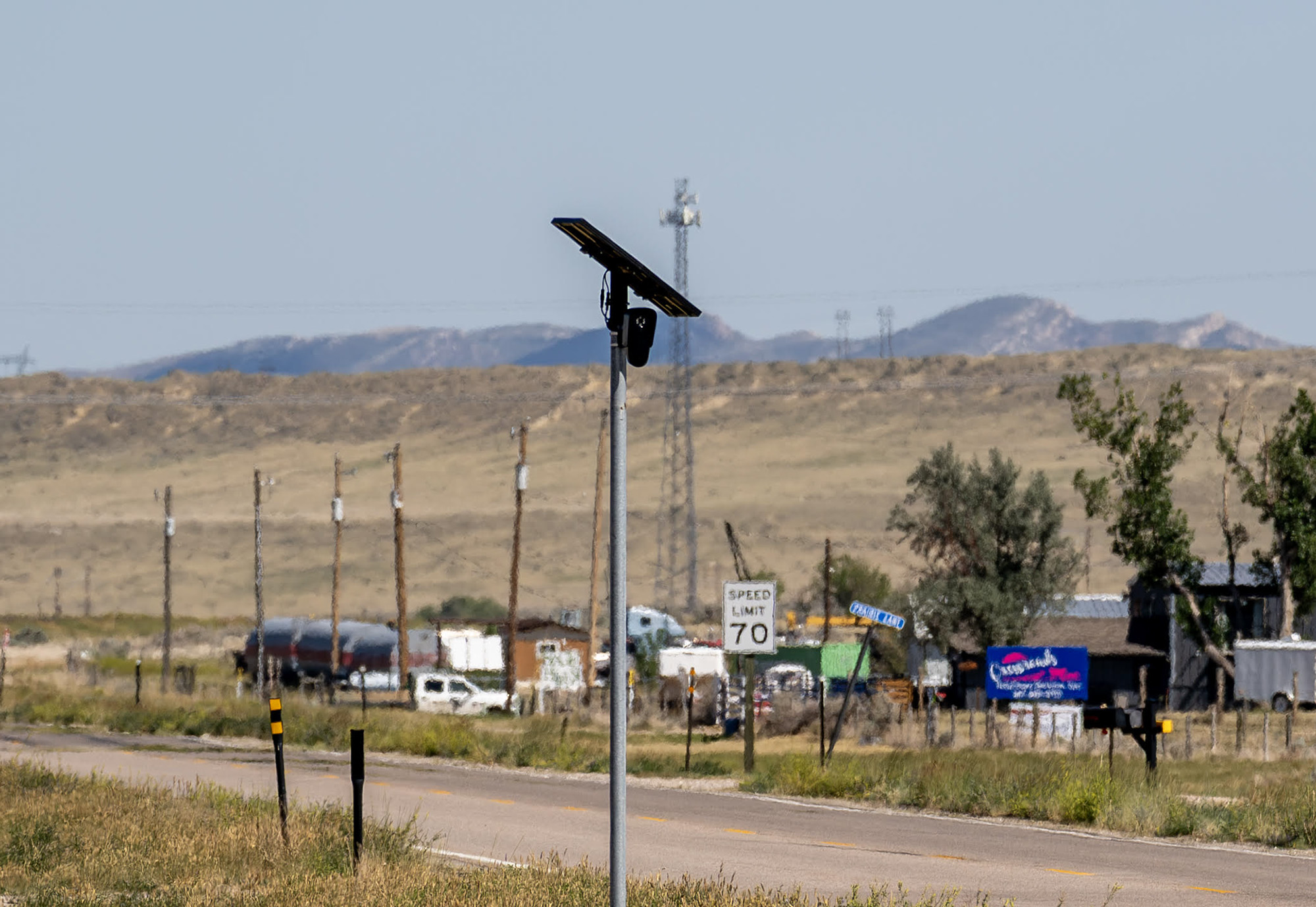

LARAMIE—Amid rising concerns about Flock-style cameras in Wyoming, a state legislative panel this week briefly discussed a draft bill that would create some of the strictest automatic license plate reader regulations in the country.
The Select Committee on Blockchain, Financial Technology and Digital Innovation Technology took no action when the draft bill came up for discussion Tuesday afternoon. The bill would severely limit the use of ALPR cameras while creating an enforcement mechanism for cases of abuse. The measure, which is preliminary and has notes for further research, will likely be updated and changed before the next legislative session begins on Jan. 12.
“This bill is drafted to be consistent with the strongest legislation in the country,” Select Committee Co-Chair Senator Chris Rothfuss, D-Laramie, said during the public meeting. The measure incorporates the best practices from around the country, intended to create strong information protections. Lawmakers sought to give law enforcement access during emergency situations while preventing “casual access,” Rothfuss said.
“The take I kind of get is that the public really doesn’t like these,” Rothfuss said.
“This is not a critique on our law enforcement, and it’s not an accusation on the practices of our law enforcement but a response to public outcry,” Select Committee Co-Chair Rep. Daniel Singh, R-Cheyenne, said before public comment.
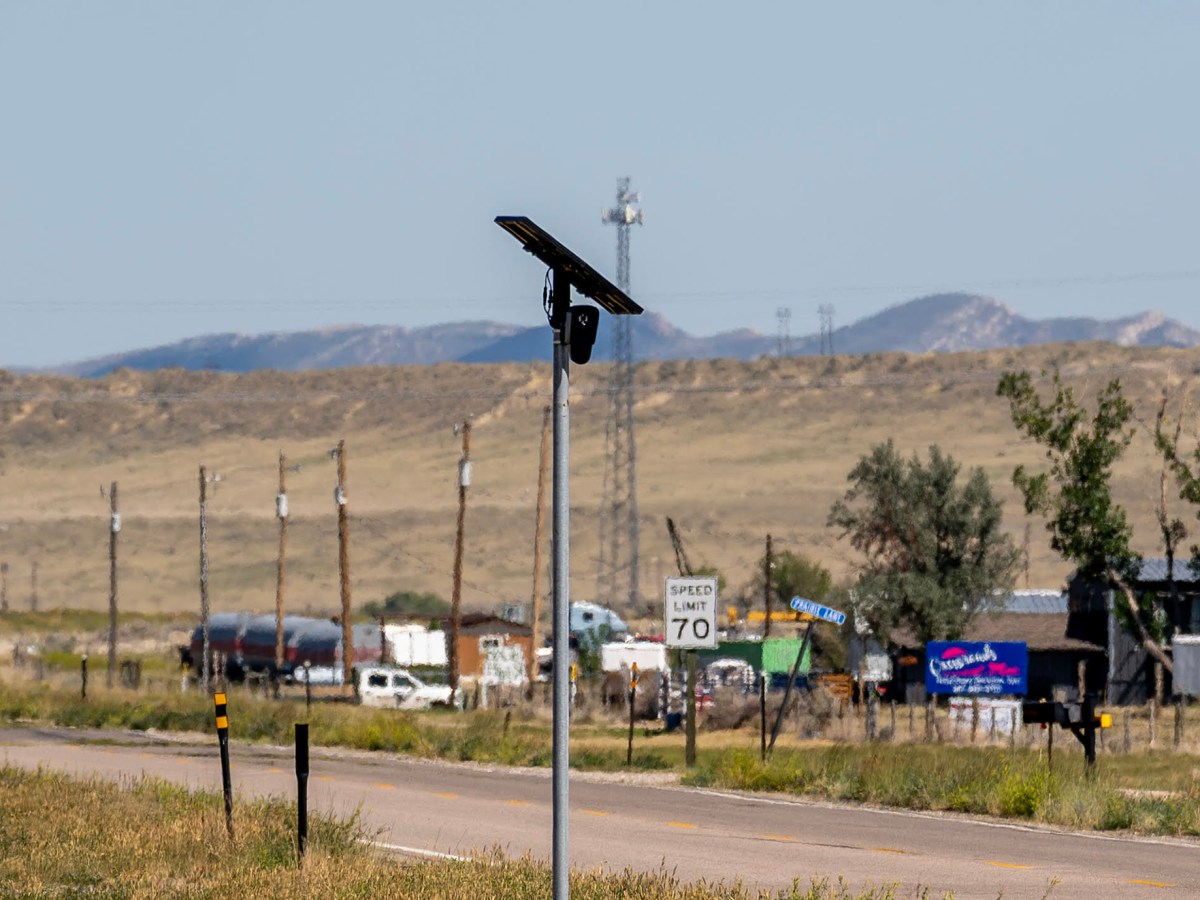
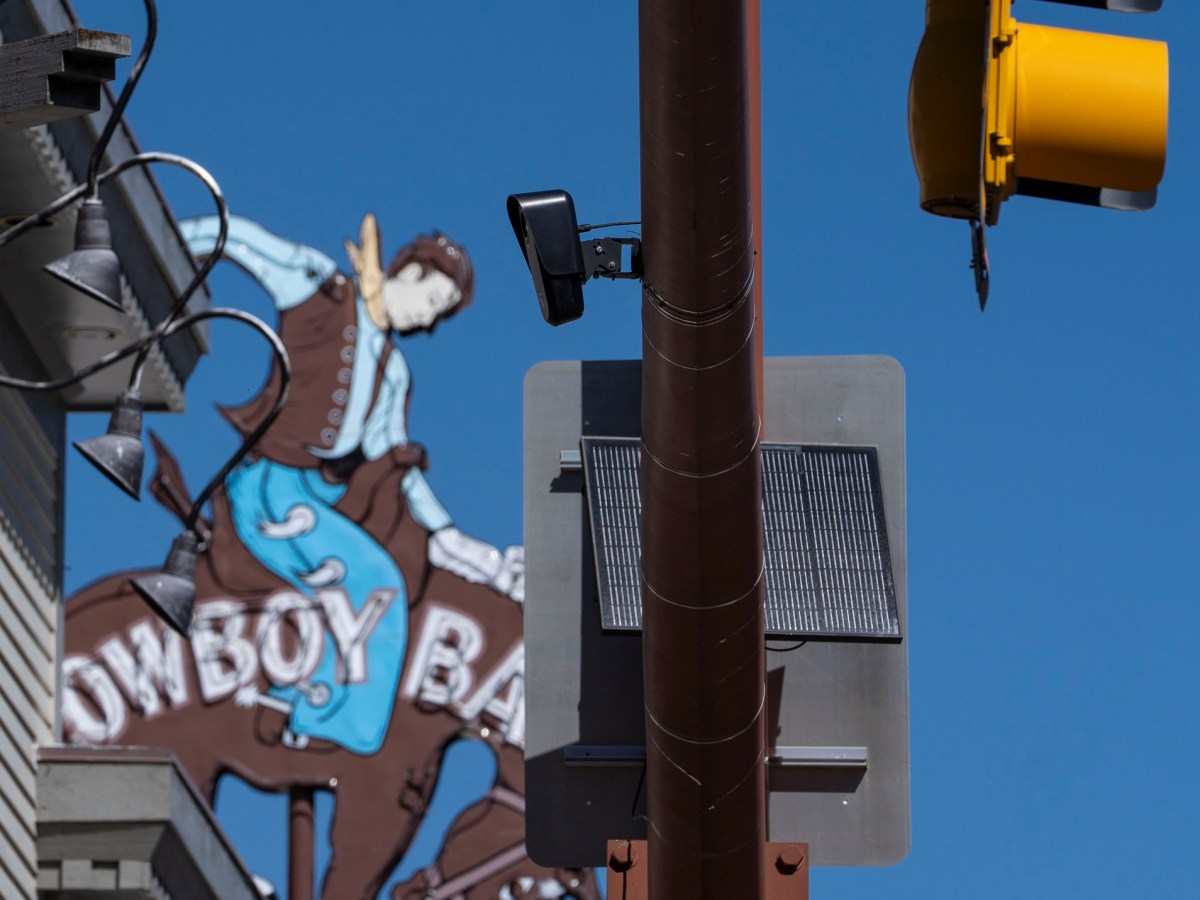
Automatic license plate readers use artificial intelligence to monitor and photograph passing vehicles. That information is usually uploaded to a central system that participating law enforcement agencies can search — though some communities opt out of participating in national databases.

The technology, in some cases, has moved faster than legislation, Singh, who pursued similar legislation during this year’s session, said in a separate interview.
“Our (Cheyenne) police department and city officials embraced the technology without really consulting the public or getting their input,” Singh said. “Because of that, now we’re facing the repercussions of that, and so we wanted to have the Legislature address it, because there are some serious implications around privacy … your Fourth Amendment rights don’t change just because technology changes.”
Allison Moore, deputy director of the Wyoming Division of Criminal Investigation’s Criminal Justice Information Services told lawmakers about the state’s process when it comes to entering information into the National Crime Information Center database. When an officer takes a report — a stolen car, for example — that information is entered into NCIC. A hot list, or the list an ALPR checks as cars pass by, is compiled by the private vendor, whether it be Motorola, Axon, Flock or others using information entered into NCIC.
The information from that federal database is called a “hot file,” which in turn, comprises the hot list. The information that is entered into NCIC is tightly regulated; a missing child report must be entered into NCIC within two hours, Moore said. DCI regulates information but does not operate any of its own Flock-style cameras, she told lawmakers.
The discussion largely focused on the language of the bill, clarifying certain points to not be overly prohibitive. Wyoming Highway Patrol Lt. Kyle McKay asked for the language to be clarified, as the state uses license plate readers on commercial vehicles during the routine course of inspection. He worried the language was broad enough to ban the state’s license plate readers, which have been in use for some time, as opposed to Flock-style cameras.
Notably, the draft bill would establish a three-minute retention period for data. When an ALPR camera records a license plate, the system would hold on to it for three minutes while the system checks it against the hotlist. After that, it would be permanently deleted.
Part of the reason for the short retention period is while it’s common in ALPR contracts for law enforcement agencies to own the data, the vendor holds it and compiles the list. Agency policies on data retention currently vary. For example, Jackson has a 90-day retention period, while Glenrock’s is 30 days.
“Privacy laws are inconvenient. Surveillance is handy. Law enforcement (is) always easier if we know where everyone was for the last year at all times, and it’s true, but it still creeps people out for good reason.”
Sen. Chris Rothfuss, D-Laramie
Wyoming Association of Sheriffs and Police Chiefs Executive Director Allen Thompson suggested the three-minute limit could hinder law enforcement investigations. Thompson said the association supports regulation of these systems, and that “nobody hates a bad cop more than a good cop.”
But Rothfuss said the public wants systems in place to protect their privacy.
“Privacy laws are inconvenient,” Rothfuss said. “Surveillance is handy. Law enforcement (is) always easier if we know where everyone was for the last year at all times, and it’s true, but it still creeps people out for good reason.”
The draft bill effectively bans ALPRs except in certain narrow instances. The “real-time” hot list matches with the three-minute deletion window, as well as eliminating the ability to search a stored database of ALPR captures. Federal or out-of-state sharing would be banned unless it’s superseded by federal law or a Wyoming court order, and would require the government to obtain a warrant for plate data held by private entities. Flock, Motorola or Axon would be prohibited from owning data collected in Wyoming. The draft bill would also include language to give the Wyoming attorney general the ability to investigate and audit these systems for abuse.
Cato Institute’s Matthew Cavedon, the final speaker, applauded the committee for regulating the retention period. He also spoke about other states’ regulations of similar systems.
Vermont will be the first state to outright ban ALPR systems come July 1, Florida has banned the systems on state highways, while Texas has halted all funding and installation of the systems across the state.
While the bill would be one of the most strict in the U.S., critics have argued that it won’t be enough.
During the U.S. Senate Subcommittee on Crime and Counterterrorism regarding ALPR usage last week, ACLU Senior Policy Counsel Chad Marlow called for an outright ban of the technology, which he characterized as an “Orwellian nightmare.”
“The time has come for Congress to ban any law enforcement entity who receives federal funding from using ALPRs,” Marlow said in his statement to the subcommittee. “And this prohibition should be without exceptions.”


While I generally agree with the anti-ALPR sentiment expressed here – and in almost any forum discussing them, I will point out again that the parents and loved ones of the victims of kidnapping and trafficking that were rescued due to evidence collected from such systems, probably and justifiably have a different opinion on the balance in the risk/benefit equation of ALPR technology.
The Flock system has proven to be an easy hack for those with the right knowledge and tools. Like the russians. There is a camera at the main gate to F. E. Warren air Force base, one of our country’s nuke missile bases. Everyone who goes on base or leaves is documented. We’re giving that national security information away.
I don’t see a major reason for more cameras in our daily lives. There have been situations where people were stopped and held for hours, then finally released with no charge and no apology. We already have cameras on us at the gas station, inside the supermarket, in parking lots, and on every doorbell camera that does a fair job of catching package thieves and identifying annoying neighbors. Enough intrusion.
Flock cameras, the information they record, and how it’s being used by government agencies (or individuals within these agencies) is a huge issue that there should be guardrails put in place to protect the privacy of all citizens! People are getting arrested for having a vehicle “in the vicinity” of a crime. Getting tickets for having an “O” vs an “0” on their license plate (and the agencies making it VERY hard to fix). Then there are police officers using them to stalk ex girlfriends or wives.
I personally think that state and national law makers should take the privacy of the citizens much more seriously whether it be Flock cameras, data collected by stores, web services etc! Many European countries are way ahead of us on this because they work for the people, not the corporations who want to use the data to increase profits!
Dont really need any laws, the citizens in many municipalities around the country have been dealing with the cameras themselves just fine.
And many are getting arrested for taking things into their own hands unfortunately.