


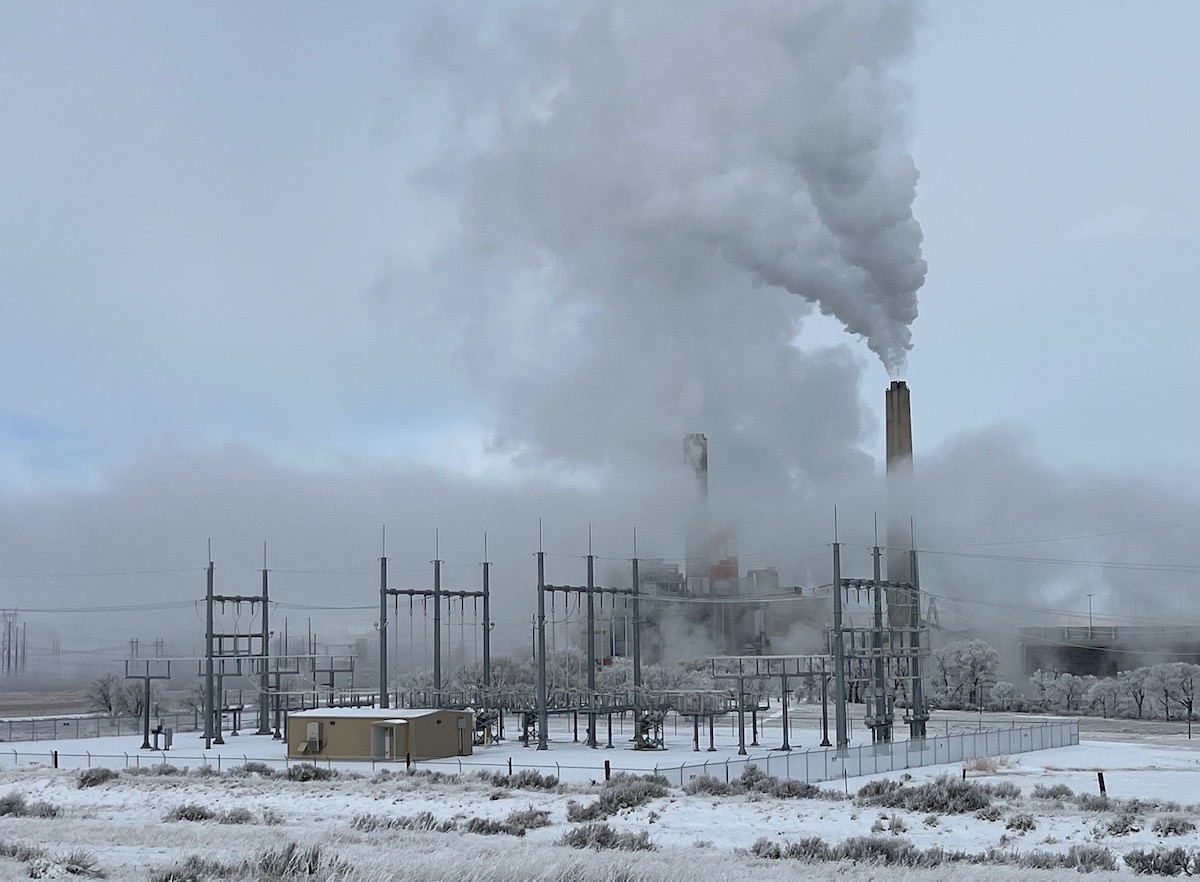
WASHINGTON (AP)—The Environmental Protection Agency said Monday it is repealing rules that limit planet-warming greenhouse gas emissions from power plants fueled by coal and natural gas and announced it is taking a separate but related step to prevent future administrations from regulating climate pollution from power plants.
The rule change, first proposed last year, represents a fundamental shift from efforts by Democratic Presidents Joe Biden and Barack Obama to address climate change and clean up industrial pollution.
Gov. Mark Gordon welcomed the move to eliminate “onerous restrictions regarding greenhouse gases,” he said in a prepared statement. “Under my administration, Wyoming litigated over the ability of the Biden Administration to regulate greenhouse gases and this is just further good news for our fossil fuel industry and our economy.”
Environmental groups decried the change, saying it would come at a cost to Americans’ health and further degrade the environment.
“Instead of prioritizing lowering energy prices, the Trump administration is set on raising them by locking in expensive, volatile fossil fuel markets that leave states like Wyoming with higher costs and fewer opportunities for jobs, investment and tax revenue,” Sierra Club Wyoming Chapter Climate and Energy Organizer Emma Jones said. “Meanwhile, wind and solar have consistently kept our rates lower and reduced risk for customers. This repeal absolutely stacks the deck to the benefit of the fossil fuel industry.”
Revoking the Biden-era power plant rule would save industry more than $300 billion in costs and help “unleash” American energy, the EPA said. The change will allow utilities to make the best decisions for their ratepayers rather than be forced to close aging or inefficient plants, said EPA Assistant Administrator Aaron Szabo.
The power plant rule, to take effect soon after publication in the Federal Register, is expected to face immediate legal challenges.

Environmental groups also are likely to challenge the separate rule proposed Monday that could prevent future administrations from regulating greenhouse gas emissions from power plants. The proposal, expected to be made final next year, follows on EPA’s action earlier this year revoking a scientific finding that long has been the central basis for U.S. action to regulate greenhouse gas emissions and fight climate change.
The February action eliminated all greenhouse gas emissions standards for cars and trucks. The new plan would apply similar logic to a broader undoing of climate regulations on stationary sources such as power plants.
In addition to health and human-caused climate warming implications, Wyoming has much at stake.
Unlike other coal-producing regions in the U.S. that sell a different type of coal to steelmakers around the globe, Wyoming coal production is dependent almost entirely on U.S. customers that burn the commodity to generate electricity, making Wyoming’s industry particularly vulnerable. Though the administration’s rollback could help extend the life of some aging coal-fired power plants in the Equality State, like the Dave Johnston plant outside Glenrock, Gordon and other local coal proponents have been fighting the Biden-era rules because Wyoming coal mines serve nearly half the nation’s coal-fired power plants.
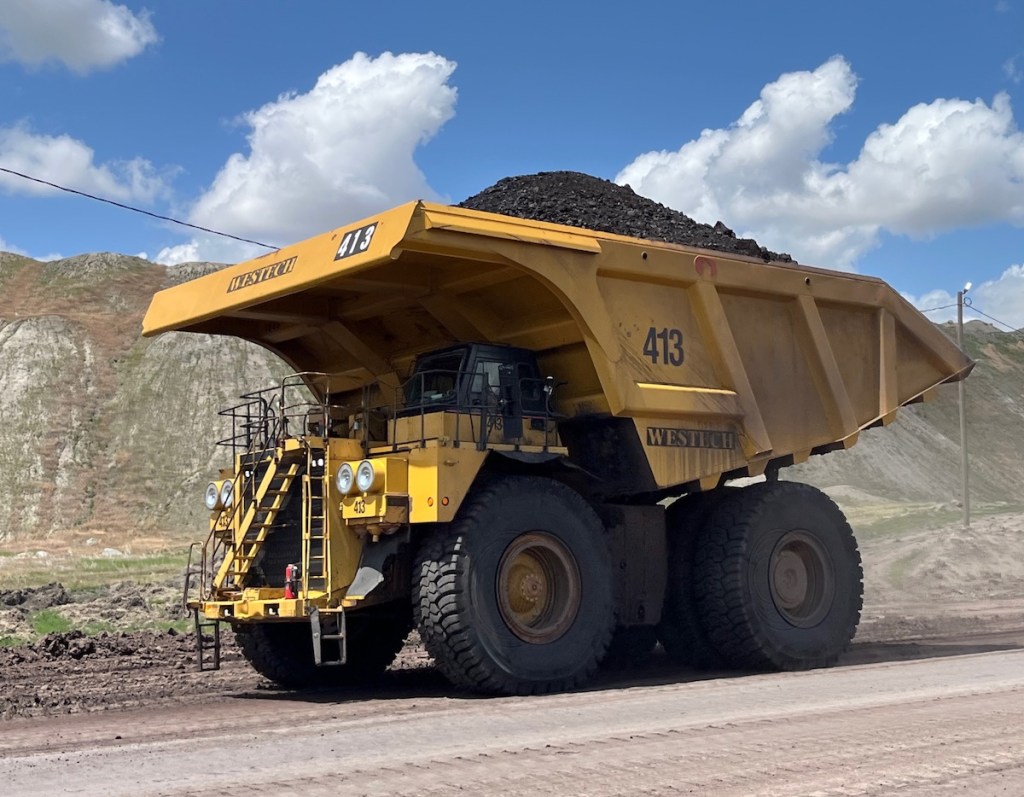
Yet, a University of Wyoming analysis suggests the average age of power plants served by Wyoming coal is 41 years. That makes retiring greenhouse gas-emitting coal plants the obvious option rather than “permanently” stripping the EPA’s authority to do so in the face of a dangerously warming plant, according to Sierra Club’s Wyoming Chapter.
“While wildfires rage, floods devastate communities and families struggle to afford skyrocketing electricity bills and insurance premiums, the Trump administration is handing the fossil fuel industry a license to keep polluting,” Sierra Club Chief Program Officer Holly Bender said. “This is full-throated climate denial while the climate crisis happens in real time and a shocking betrayal of the American public.”
The Obama- and Biden-era rules were intended to push coal plants to retire before technology could catch up to eventually commercialize carbon capture throughout the fleet, Wyoming Mining Association Executive Director Travis Deti said. Eliminating the rules gives the industry the opportunity to reduce its greenhouse gas emissions while still meeting booming electrical demand.
“We’re going to need all the energy we can produce in this country in the coming years, and we’ve got to have coal as part of the mix,” Deti said.

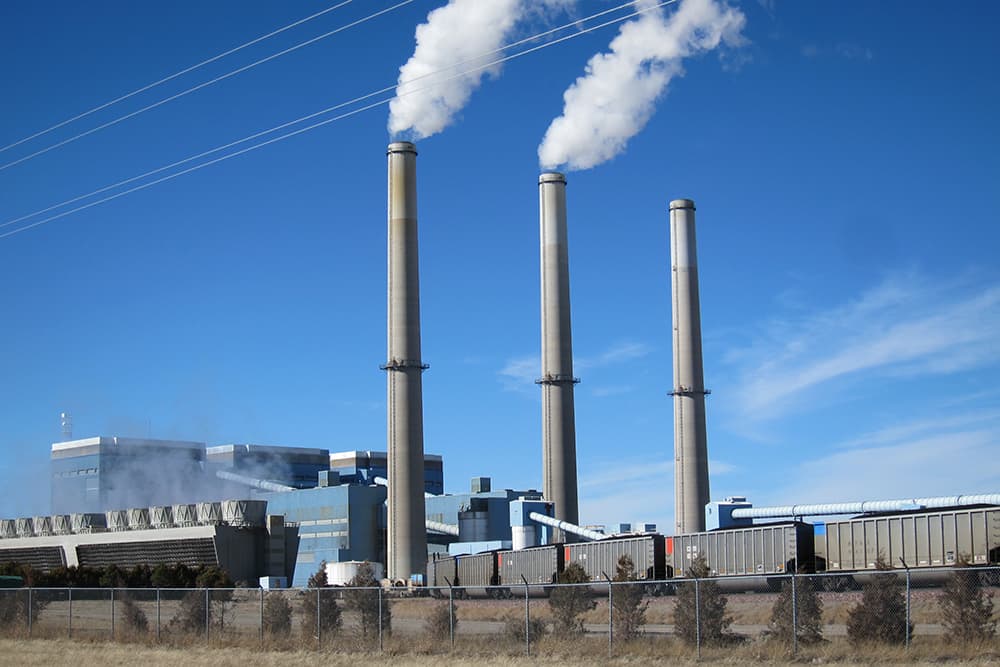


Probably the largest competitor of coal for power generation is natural gas. It has a lot to do with the decline of coal production in the past 20 years or so. Boards of directors of utilities decide which energy source they will use to generate power not politicians. You can’t forget that.
MBLGA – Make Black Lung Great Again. Thanks a lot Governor.
How can you profit off your salves it they have health issues and can’t produce?
I had always thought of Governor Gordon as a reasonable and decent sort of chap. He didn’t have to react the way he did, or better yet not at all on this issue. How stupid.
What job does Trump have for Gordon on January 2nd for drinking all that Kool-Aid?
Mark Gordon will be back to hardscrabble beef ranching soon enough .Come January we will no longer have to endure his astounding bipolar socioeconomic ambivalence , his perplexing partisan dogma , his pavlovian patronage about the true nature of hydrocarbons. I believed Mark Gordon to be moderate and open minded when I voted for his the first time. I downplayed the fact he was a Republican of mainstream conservative demeanor. That turned out to be a mistake. Gordon quickly got infected with the faux-Republican rapture pathogen.
However, we still have the likes of Travis Deti of the Miner’s Cult, and Cyrus Wester the former Wyoming lawmaker who now heads the western region of the EPA in our part of the world, the jekyll and hyde persona . Who like Gordon got infected. Went full MAGA , that guy did. Cyrus is just a Trump sycophant now… actually believes that ‘ big beautiful clean coal’ crock and bull propaganda. I no longer recognize him. But we obviously have to deal with him going forward. He’s on a long list of mercenary moguls.
The two bottom lines are 1. Climate Change is real ; it is due to excessive use of fossil fuels for the past 200 years ; its man-caused propagation threats the entirety of the biological world. Every earthly biome – land, sea, air – is in peril from the wanton ways of Homo sapiens. And 2. Wyoming is on the wrong side of any mitigation or solution to dealing with Climate Change. Wyoming is the PROBLEM. We make and sell the stuff that’s harming the whole planet, transacting the slo-mo hellfire hydrocarbons. Wyoming is in bad company , the legion of mercenary marauders who are plundering the planetary resources for coin and material gain.
The silence of Wyoming leadership and public policy on Alternative Energy and the state’s future without coal, oil, and natural gas is frankly deafening. If we stay on the present path, our grandchildren will curse us.
Wrong. Climate change is not caused by CO2. Try physics.
Wrong, It definitely does.
While I am always for a clean environment, there are some inaccuracies in statements by Emma Jones of the Sierra Club. She contends that green energy is cheaper and provides more jobs. Stats don’t support that. Also states that have incorporated green energy initiatives have at least 20% higher electricity costs.
I prefer to be honest and say that while I support green energy, it is simply going to cost more.
So much for your legacy, Gov. Gordon. A science and climate change denier, to our peril.
Makes me wonder if being a politician among the Republican Party mandates that one do everything in their power to be anti-environment to maximize corporation profits. The kickbacks for towing the party line must be really attractive. I don’t see how anyone, much less a Wyoming native, Republican Governor or not, can decide that the best program is to allow degradation of our beautiful state and health of our citizens. Trumps “power” must really scare these folks into boot licking to maintain status. It’s high time for a state and national change to progressive, humanitarian and environmental policies that focus on Making America Kind Again.
Well, I guess if you can revoke scientific findings, we don’t have to worry about anything! What an upside down America. Trump must go.
This is the world we live in now where we think it is ok for companies to pollute more and the air we breathe gets worse. Wow, I am glad I lived when I did. I would like to know what will be better on this planet in 10 years considering this administration is degrading the ecosystem significantly which is already messed up.
Its going to get worse before it gets worse. The US Federal Govt is wholly corrupted, and the corruption is bipartisan.
What a sad, sad move by Gov. Gordon. He is leaving office with a terrible action. I am truly sorry for supporting him for governor. Has he not heard about climate change. He wants to fill our clean air with pollution.
….we just committed to converting to natural gas instead of coal at the bridger plant and coal is worth less than its been in ages because of trumps back and forth tarriff shittery. who does this even help in theory?
Absolutely baffling. Mind numbingly so.
Is the Sierra Club a non-profit focused on saving the planet or just another DC lobbying group with propaganda focused talking points? Does WyoFile fact check anything that the Sierra Club states or just accept their propaganda as fact? Ms. Jones comment in the article is laughable. Prior to the Obama Administration and the Administration’s goal to “bankrupt coal” the energy markets were pretty stable with most of the utilities using long term contracts to keep costs/rates reasonable. If what Ms. Jones states is in fact the case and now with the “rates consistently lower with solar and wind” why is my electric bill climbing faster than inflation? Its up over 30% the last 5 years – and never climbed that fast in the 15 years prior.
Then later in the article, another propagandist from Sierra Club proclaims the rule change impacts the “skyrocketing utilities.” So if the rates are so stable and low with wind and solar, why the skyrocketing rates? Or just it not fit the narrative?
The only reason solar and wind are even part of the mix is due to significant Federal and in some cases state subsidies. Not arguing about wind and solar being part of the energy mix, they certainly have their place, but this article is nothing but propaganda by the Sierra Club.
The United States: Out out of pocket, the U.S. federal government provides between $20 billion and $35 billion annually in direct tax breaks and financial handouts to oil and gas companies. When factoring in the International Monetary Fund (IMF) standard for implicit costs, the U.S. total subsidy is valued at about $757 billion. AI.
Is that the only reason the fossil fuel industry exists?
Two can play the AI game…….
According to the U.S. Energy Information Administration’s FY 2016-2022 subsidy study:
Renewable energy subsidies reached $15.6 billion in FY 2022.
Fossil-energy subsidies totaled about $3.2 billion in FY 2022.
The EIA study also found renewables received nearly half of all federal energy-related subsidies during that period, while traditional fuels (coal, oil, natural gas, and nuclear combined) received about 15%.
And not AI generated, keep in mind that Oil, Gas and Coal all pay Federal and State mineral royalties (taxes) that wind and solar do not.
Gordon, how are you going to have all the stuff you own without coal, oil, and gass? Are you going yo reply on a phone made from hemp?
I’ve never said I’m against fossil fuels. But I am pro green.
Rate increases wouldn’t be tied to the utility operator’s decisions to kick the generation plant maintenance/upgrades, and regular grid maintenance/upgrades can down the road for years because the utility regulatory boards and customers wouldn’t stand for larger increases in rates at that time, would it? And for the generation company to consistently make “shareholder value”.
As the article states the average age of a coal generation plant in the US is 41 years. Maybe the plants are reaching the end of their planned life and have to be either upgraded or replaced? When the plant owners run the numbers what is most cost effective? Maybe the grid has to be upgraded, and again when the numbers are run what is the most cost effective option? The last new coal plant that came on line in the US is the Sandy Creek Energy Station in TX and that plant has been offline since April 2025 and is not expected to resume operations until March 2027. Since 2000 only 2 new coal plants have come online in the US. When the Dept of Energy has to put it’s fingers on the scale and force coal plants to remain on the grid it should be telling us all something.
Dig a bit deeper to understand why your rates have risen. There was never a “war on coal” it was/is economics that have made coal and other fossil fuels a very expensive way to generate electricity. And that increased expense gets passed on to the user.
Pretty simple. Anyone who is on the side of increased pollution is on the wrong side. The rest of the world is changing how they produce electric power maybe we should join them?
What do you mean by the rest of the world?
Could you be a little more specific?